














Summary:
Legendary Pokemon in Pokemon Pokopia are not handled like ordinary town recruits, and that is exactly what makes them so memorable. Some are woven into the main story, giving you a dramatic first meeting that feels impossible to forget. Others are tucked behind late-game systems, hidden pathways, crafted items, or side mechanics that are easy to overlook if you are simply wandering around and decorating your settlements. That mix gives the game a strong sense of discovery, but it also means plenty of players will miss major encounters unless they know where to look.
This walkthrough pulls all of those methods into one place and turns them into a clear path you can actually follow. Kyogre begins as part of the story, but tracking it down again depends on a special ocean message and your Surf unlock. Volcanion asks for a very specific setup involving a second party, a Pokemon with the Hype ability, and a well-aimed firework. Raikou, Entei, Suicune, and Mewtwo shift the focus toward Dream Islands, where understanding the plush system and Pokedex filters saves a huge amount of time. The Legendary Birds are tied to Palette Town and its giant building projects, while Ho-Oh and Lugia rely on feather drops and crafted bells that only become available after recruiting other major Legendaries first.
Then there is Mew, which may be the most satisfying unlock of the bunch. Its route sends you into a hidden passage, introduces a mural puzzle, and pushes you to collect all 27 Mysterious Slates before the encounter can happen. Put it all together and you get a late-game loop that feels less like ticking boxes and more like gradually unsealing the world’s best-kept secrets. If you want every currently known Legendary Pokemon, this is the route to take.
Legendary Pokemon in Pokemon Pokopia are easy to miss
Pokemon Pokopia does a clever thing with its Legendary Pokemon. Instead of dropping giant warning signs in front of every rare encounter, it treats many of them like secrets you are supposed to stumble across, piece together, and finally unlock through persistence. That gives the game a stronger sense of wonder, but it also means some of the best recruits are hidden behind mechanics that many players may not fully understand the first time around. One minute you are building habitats, gathering materials, and chatting with familiar faces, and the next you are hunting special weather signs, rebuilding hidden paths, or waiting for the cry of a Legendary overhead. It is charming, but it can also feel like trying to find a single glittering pebble on an entire beach.
The good news is that each Legendary currently available in the game follows a discoverable pattern. Some are tied to story beats, some open up only after the main campaign, and others depend on settlement expansion, crafted items, or special exploration zones. Once those systems click into place, the hunt becomes much more manageable. You are not just wandering and hoping anymore. You are following clues, preparing the right abilities, and turning scattered mechanics into a clear route forward.
Kyogre appears during the story and returns at sea
Kyogre is the first Legendary many players will meet, and that early introduction gives it a huge presence. You encounter it during the main story after completing the quest to make the rain fall, so the game naturally treats it like a milestone rather than a hidden bonus. Even so, the first meeting is not the end of the road. Later on, players can receive the message that says they sense a large presence coming from the ocean. That is the signal that Kyogre is back out there somewhere, and it is your cue to stop whatever you are doing and head for open water.
Once Surf has been unlocked, the process becomes fairly simple on paper. Move in the direction the message points you toward and continue swimming around the ocean until Kyogre appears. The part that throws some people off is that this is not framed like a traditional marked quest. There is no giant arrow, no glowing banner, and no overly dramatic checklist. You need to trust the hint and search the sea for a while. At the moment, Kyogre seems to function more like a recurring encounter than a permanent settlement resident, so you can interact with it, but there is currently no confirmed way to keep it living in town for good.
What makes the Kyogre encounter stand out
Kyogre is a great example of how Pokopia blends calm life-sim systems with rare-event hunting. The encounter starts in a story-heavy way, then later becomes something closer to a natural phenomenon. It feels less like recruiting a normal resident and more like being allowed a second audience with a creature far bigger than your settlement plans. That difference matters because it changes your expectations. If you are wondering why Kyogre does not seem to behave like Volcanion or Mew, that is because the game appears to treat it more as a special visitor than a traditional long-term recruit.
Volcanion requires a second party and the Hype ability
Volcanion is where Pokopia starts showing its mischievous side. This unlock is not especially difficult once you know the trick, but without that knowledge it feels like the sort of secret schoolyard rumor people used to whisper about on the playground. After clearing the Rocky Ridges part of the main story, you need to host a second party and make sure a Pokemon with the Hype ability is involved. During that party, fire a firework toward the volcanic rock where Volcanion first appeared. If everything lines up, Volcanion returns and joins your settlement permanently.
The method is oddly specific, and that is exactly why it is so easy to miss. Plenty of players will host parties. Plenty will use fireworks. Plenty will finish Rocky Ridges. But combining those pieces in the right place with the right ability is the real key. That makes Volcanion feel less like a random spawn and more like a secret ritual. It also makes the reward satisfying because once you do it properly, you are not just triggering a cameo. You are unlocking a permanent resident, which gives Volcanion extra value compared with Legendaries that still seem tied to temporary appearances.
Dream Islands are the key to Raikou, Entei, Suicune, and Mewtwo
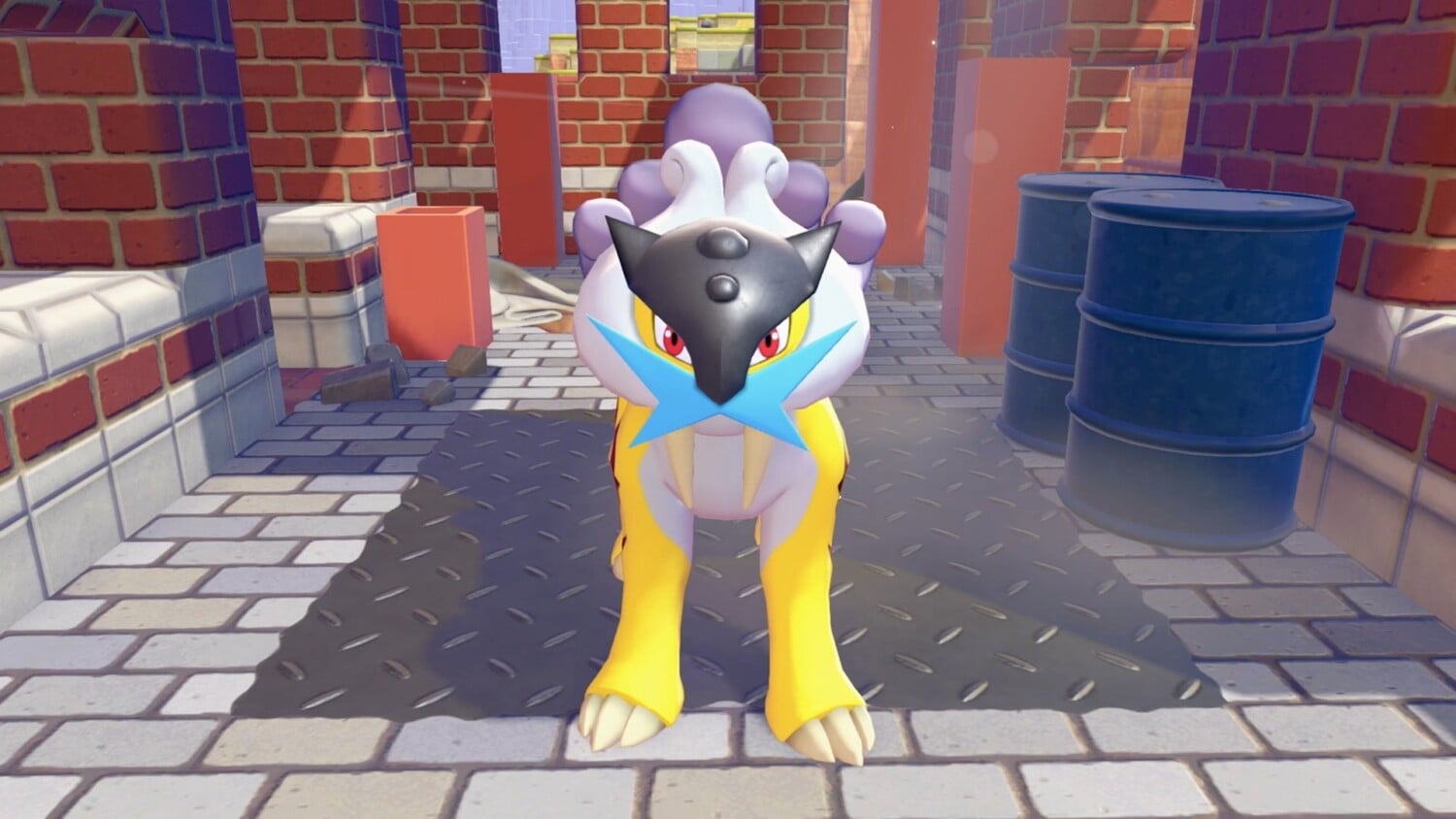
After the main story, the hunt opens up in a big way through Dream Islands. This is where Raikou, Entei, Suicune, and Mewtwo can appear, but they do not all show up in the same place or under the same conditions. First, you need access to Dream Islands by interacting with a Pokemon Plush after befriending Drifloon. Once that system is open, different plush choices lead to different Legendary possibilities. The Pikachu Doll can lead to Raikou, the Eevee Doll to Suicune, the Arcanine Doll to Entei, and the Dragonite Doll to Mewtwo.
This is one of the smartest late-game systems in Pokopia because it turns decorative or toy-like interactions into meaningful progression tools. On the surface, it is cute and playful. Underneath, it is a routing mechanic for some of the game’s rarest creatures. That dual purpose fits the game perfectly. Pokopia loves to smile at you while quietly hiding major progression inside something that looks harmless. If you are trying to complete your Legendary set, Dream Islands are not optional side curiosities. They are central to the entire chase.
How to check whether a Dream Island has a Legendary Pokemon
Dream Islands would be far more frustrating without the Pokedex filter trick. Once you land on one, open the Pokedex, press Y to access the filters, and set Registration Status to All and Location to In this area. If you then see a mystery entry marked with a question mark alongside the usual Ditto and Drifloon entries, that means a Legendary Pokemon is present somewhere on that island. It is a small trick, but it turns blind searching into something far more efficient.
Even if the check comes up empty, the visit is not wasted. Dream Island caves can still reward you with habitat information, CDs, Ditto customization options, and other useful items. That design is important because it keeps the system from feeling punishing. You are still making progress, even on a dry run. When the Legendary is present, head into the caves, keep exploring, and speak to it once you find it. That interaction lets you befriend the Pokemon and bring it back to your settlements, where it can be placed in a habitat or home. It is a neat balance between chance and control, and thankfully it lands on the fun side rather than the hair-pulling side.
Which plush links to which Legendary
The plush pairing is worth memorizing because it saves time and keeps your search focused. Pikachu Doll points toward Raikou, Eevee Doll points toward Suicune, Arcanine Doll points toward Entei, and Dragonite Doll points toward Mewtwo. It sounds simple once written down, but without a clean reminder it is easy to mix them up, especially after a long session of exploring, crafting, and trying to remember where you left half your materials. Pokopia can be cozy, sure, but it can also turn your brain into mashed berries if you are juggling too many systems at once.
Palette Town unlocks the Legendary Birds
Articuno, Zapdos, and Moltres are tied to one of the most interesting expansion systems in the game. West of the Withering Wastelands Pokemon Center, there is a broken pathway leading off into the distance. Rebuild that path and you unlock Palette Town, a separate settlement zone that can be customized and also serves as a multiplayer-focused area. This is not a tiny side room or a quick little detour. It is a meaningful area with its own purpose, and it becomes the home of the Legendary Bird unlock sequence.
Inside Palette Town, you can find Building Kits for giant superstructures that need a lot of open space and a lot of Pokemon help to complete. This is one of the better examples of Pokopia making you earn a reward through town development rather than simple battle strength or luck. You are literally building the stage for these Legendaries to appear. It is a fun idea because it turns civic planning into Legendary recruitment. Who knew zoning and mythical birds would make such a good team?
Articuno, Zapdos, and Moltres each need a different superstructure
Each of the three birds appears only after its matching superstructure is completed. Articuno is tied to the Freezing Chambers, Zapdos appears at the Abandoned Power Plant, and Moltres arrives at the Altar of Flame. Once these structures are finished, you can speak to the corresponding bird and befriend it, allowing it to live in a habitat or home back in your broader settlement setup. There is something especially satisfying about this chain because it feels visible and earned. You can point to the completed structure and say, yes, that is why this Legendary is here now.
This route also encourages a different kind of progression from the Dream Island hunt. Instead of chasing random chance and checking filters, you are gathering resources, managing space, and committing to long-term builds. That variety is a strength. Not every Legendary should come from the same template, and Pokopia seems to understand that. By the time you finish all three structures, the birds feel like rewards for your planning rather than prizes handed over after a single lucky run.
Ho-Oh and Lugia depend on feathers and crafted bells
Ho-Oh and Lugia have one of the most layered unlock methods in the game, and that makes them feel especially prestigious. While playing, you may hear one of them crying overhead. When that happens, they will drop either a Rainbow Feather or a Silver Feather. On its own, that seems like a neat little collectible moment. In reality, those feathers are the foundation of a larger recruitment chain. After befriending the Legendary Beasts and the Legendary Birds, you unlock recipes for the bells that can call Ho-Oh and Lugia down to you directly.
The Clear Bell is linked to Ho-Oh and requires Raikou, Suicune, and Entei to have been befriended, along with five Rare Pokemetal Ingots and five Rainbow Feathers. The Tidal Bell is linked to Lugia and requires Articuno, Zapdos, and Moltres, along with five Rare Pokemetal Ingots and five Silver Feathers. Once you have the appropriate bell, ring it when Ho-Oh or Lugia is flying overhead and the Legendary will come down to speak with you. After that, you can befriend it. Right now, though, neither appears to be permanently added to a settlement, so these feel more like summoned audiences than ordinary resident unlocks.
The Clear Bell and Tidal Bell recipes matter more than you think
These two items are more than crafting recipes. They are proof that Pokopia connects its late-game systems together in layers. You cannot rush straight to Ho-Oh or Lugia without first handling other major Legendary lines. That creates a satisfying sense of sequence. The beasts unlock one bell. The birds unlock the other. Feathers gathered from overhead flybys supply the rare ingredient theme, and Rare Pokemetal Ingots make sure the recipe still asks something tangible from your progression. It is a tidy chain that rewards broad engagement with the game rather than tunnel vision.
It also means players should keep every feather they find. Selling or ignoring them would be a painful mistake once you realize what they are actually for. In a game full of charming distractions, the bell path is one of the best reminders that even small moments can feed into massive payoffs later.
Mew is hidden behind one of the strangest puzzles in the game
If some Legendary routes feel like scavenger hunts, Mew feels like a whisper behind a locked wall. North of the Withering Wastelands, just left of the tunnel leading to the windmill area, there is a cracked dirt wall hiding a secret passage. Head through it and you will find an incomplete mural featuring all 27 Unown. Approaching the mural triggers a message about Mysterious Slates, and from there the puzzle officially begins. It is one of the most atmospheric secrets in Pokopia because it takes you from ordinary overworld exploration into something that feels ancient, symbolic, and just a little eerie.
To complete the mural, you need to collect Mysterious Slates by breaking glowing blocks. The odds of finding those blocks improve if you bring along a Pokemon with the Search ability and use the Dowsing Machine. Each slate has an Unown engraved on its back, and every one must be placed in the matching slot on the mural. Once all 27 are correctly set, Mew appears and can be befriended, after which it can be housed in your settlements. It is the sort of unlock that feels tailor-made for players who love secrets with a little archaeology flavor. Less smash-and-grab, more mystical jigsaw puzzle.
Mysterious Slates and the mural unlock Mew
The real beauty of the Mew method is that it asks you to pay attention. You are not only farming items. You are interpreting them. Every slate matters, every symbol matters, and the mural itself gives the process a sense of ceremony. That is why Mew stands out even among other Legendary unlocks. It is not just rare. It feels intentionally hidden in a way that matches Mew’s long-standing mystique across the series. When Mew finally appears, the moment feels earned because the puzzle demanded patience, observation, and follow-through.
Why Mew may be the most satisfying recruit
Unlike some methods that rely on one condition or a lucky appearance, Mew asks for a complete sequence. Find the wall. Enter the passage. Understand the mural. Gather the slates. Use the right support tools to improve efficiency. Place every symbol correctly. That rhythm gives the unlock a stronger emotional payoff. It is the difference between opening a door with a key and assembling the key from scattered pieces first. Both get you inside, but one story is much more fun to tell afterward.
Conclusion
Pokemon Pokopia gives each Legendary Pokemon a distinct identity through the way you unlock it. Kyogre leans into story and sea exploration, Volcanion turns a party setup into a secret trigger, Dream Islands make Raikou, Entei, Suicune, and Mewtwo feel like rare discoveries, Palette Town ties the Legendary Birds to ambitious building projects, Ho-Oh and Lugia reward long-term progression through crafted bells, and Mew hides behind a puzzle that feels wonderfully mysterious. That variety is what makes the full hunt so satisfying. You are not repeating one task with different names attached. You are learning how the world itself works, one secret at a time. For players chasing every currently available Legendary, the smartest approach is simple – treat every mechanic in Pokopia as potentially important, because the game loves hiding its best surprises in plain sight.
FAQs
- Can Kyogre live permanently in a settlement?
- There is currently no confirmed method for adding Kyogre to a settlement permanently. It appears to function as a special encounter that can be revisited after the ocean message appears.
- What do I need to unlock Volcanion?
- You need to complete the Rocky Ridges section of the main story, host a second party with a Pokemon that has the Hype ability, and fire a firework toward the volcanic rock where Volcanion first appeared.
- How do I know if a Dream Island has a Legendary Pokemon on it?
- Open the Pokedex, press Y for filters, set Registration Status to All and Location to In this area, and look for a question mark entry in addition to Ditto and Drifloon.
- How do I get Ho-Oh and Lugia to come down?
- Craft the Clear Bell for Ho-Oh after befriending Raikou, Suicune, and Entei, and craft the Tidal Bell for Lugia after befriending Articuno, Zapdos, and Moltres. Ring the correct bell while the Pokemon is flying overhead.
- Where do I start the Mew unlock?
- Head north of the Withering Wastelands and look to the left of the tunnel leading to the windmill area. A cracked dirt wall hides the secret passage that leads to the mural puzzle.
Sources
- Guide: How To Befriend All Legendary Pokemon In Pokemon Pokopia, NintendoSoup, March 14, 2026
- Pokémon Pokopia, Pokémon, accessed March 14, 2026
- Bouw je paradijs met deze vijf tips voor Pokémon Pokopia!, Nintendo Nederland, March 6, 2026
- Pokémon Pokopia Is Available Now on Nintendo Switch 2, Pokémon, March 5, 2026
- Pokémon Pokopia, Launching on March 5, 2026, Is Available for Preorder Now, Pokémon, November 11, 2025