














Summary:
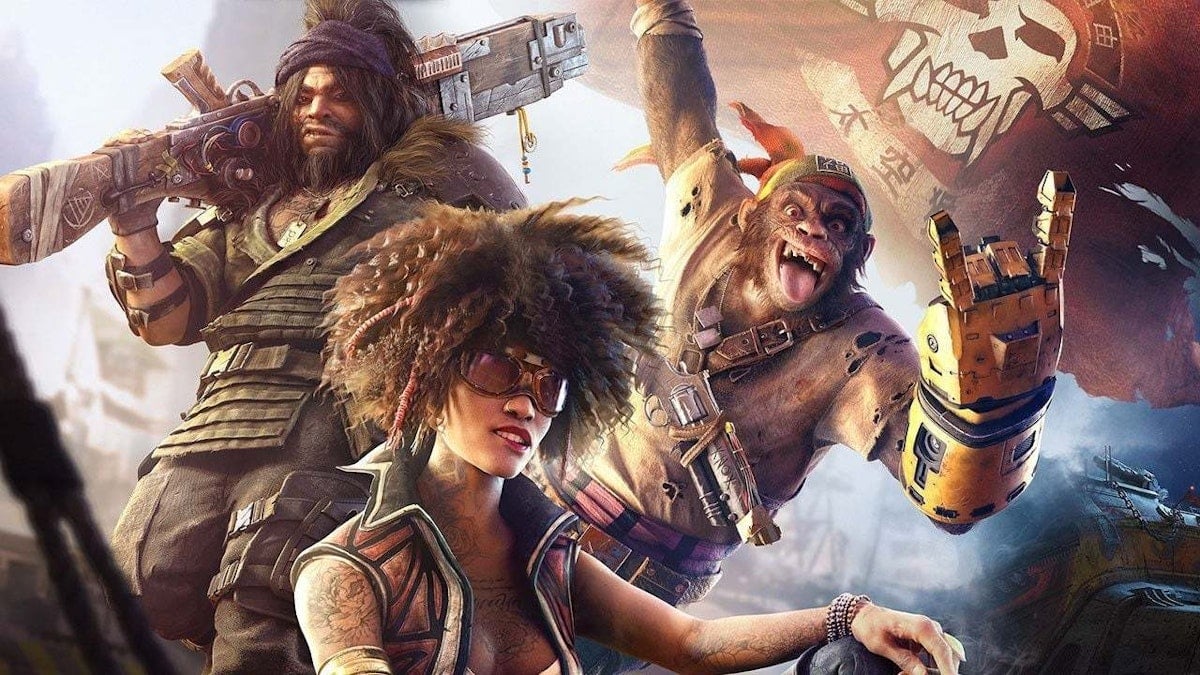
Ubisoft’s January reset landed like a thunderclap because it mixed two things that always make players uneasy: cancellations and workforce changes. In that kind of moment, any long-running project becomes a question mark, and Beyond Good & Evil 2 has lived under a question mark for so long that it might as well have its own postal code. That’s why Fawzi Mesmar’s LinkedIn statement mattered. He didn’t tease a trailer or toss out a release window. He did something more basic and, honestly, more useful: he said he, his team, and Beyond Good & Evil 2 are unaffected by the recent changes, and he pointed people toward Ubisoft’s official press release for the broader organizational details. In the same breath, he acknowledged the pain elsewhere, saying he’s saddened by cancellations affecting colleagues and urging people to support those impacted.
So what does that mean for anyone who has been waiting, watching, and periodically sighing into a cup of coffee? It means the project remains active within Ubisoft’s reshuffled structure, at least as of this statement and the company’s own communications. It does not magically create a launch date, a platform list, or a gameplay reveal, because none of that was provided. What it does do is narrow the conversation: instead of “Is it dead?” the more grounded question becomes “What should we look for next that signals real momentum?” We can also place the message in context. Ubisoft has said it is reorganizing around five Creative Houses, canceling six games and delaying seven others to meet quality benchmarks. Against that backdrop, a clear “we’re still working” message is a small anchor in choppy water – not a finish line, but a signpost that the road continues.
Ubisoft’s January reset – what changed for Beyond Good & Evil 2
When a big publisher hits the reset button, it is never just “studio talk” for executives and investors. Players feel it immediately because it tends to show up in the only places that really matter to us: the games that get made, the games that get shelved, and the teams that suddenly have to reintroduce themselves to a new org chart. Ubisoft’s January announcement landed in that exact zone. The company described a major organizational and operational shift aimed at reshaping how it builds and supports games. In practical terms, this was not framed as a minor trim – it was a structural change with real consequences, including the cancellation of multiple projects and the delay of others. That combination is why the reaction was so intense. Cancellations are like a red stamp on a passport that says “you are not going anywhere,” and delays can feel like the same stamp, just written in pencil. Add reports of job impacts and closures, and the mood shifts from curiosity to concern very quickly.
Six cancellations and seven delays – the headline moves
The most concrete part of the reset was the part with numbers attached to it. Ubisoft confirmed that six games were discontinued, and it also said seven additional projects were delayed to ensure quality benchmarks are met. One of the most visible cancellations was the Prince of Persia: The Sands of Time remake, a project that had already lived through multiple public restarts and timeline changes. Ubisoft also indicated that several canceled titles were unannounced, which is a tricky detail because it means players can feel the impact without even knowing what was lost. It is like hearing your favorite restaurant closed three locations, but they won’t tell you which ones until you try the door. The delays matter too, because they signal a pipeline that is being re-timed and re-scoped, not just lightly adjusted. In short, Ubisoft wasn’t only moving pieces around – it was taking pieces off the board and pushing others further down the calendar.
The new operating model – five Creative Houses and a new structure
Ubisoft also laid out a new operating model structured around five Creative Houses. The idea, as presented, is to organize teams around creative “genres” and key brands, supported by shared services and a reshaped central structure. In plain language, Ubisoft wants clearer ownership, faster decisions, and tighter alignment between what gets built and how it is supported and released. Whether that works in practice is something only time can prove, but the intent is easy to understand: reduce friction and focus resources where Ubisoft believes it can compete best. This matters for Beyond Good & Evil 2 because the game sits in the part of Ubisoft’s identity that leans on imagination, worldbuilding, and adventurous tone. During any reorganization, projects that do not neatly fit a short-term business target can feel vulnerable. That’s why, in the middle of this shift, a direct statement from the creative director carries extra weight. It becomes a small but meaningful “we’re still here” flag planted in a moving landscape.
Fawzi Mesmar’s message – the reassurance fans needed
Fawzi Mesmar’s LinkedIn post cut through the noise because it was not written like a marketing beat. It read like a human response to a messy week – the kind where your phone buzzes with messages, your colleagues are anxious, and fans are trying to figure out whether years of waiting just turned into a dead end. Mesmar thanked people who reached out, said that he, his team, and Beyond Good & Evil 2 are unaffected by the recent changes, and pointed readers to Ubisoft’s official press release for details on the latest organizational structure. Then he shifted tone, acknowledging he is saddened by cancellations affecting colleagues across Ubisoft and the broader industry. The final line is the one fans have already latched onto: the team remains committed and focused on delivering a remarkable game for players to enjoy. It is a simple message, but it hits because it addresses the core fear directly – cancellation by silence – without pretending everything is fine everywhere.
“Unaffected” in plain language – what that statement does and does not say
“Unaffected” is a powerful word, and it is also a word people can accidentally over-interpret. In the most grounded reading, it means the project was not among the titles Ubisoft discontinued, and Mesmar’s team was not presented as being directly altered by the specific changes he was responding to. That’s the reassurance, and it matters. But it does not automatically mean the project is close to release, that it has escaped all production risk forever, or that nothing about its schedule will ever change. In large publishers, projects can remain active while still being reshaped, re-planned, or re-evaluated later. So the healthiest way to read the statement is as a status update, not a promise of a near-term launch. Think of it like a lighthouse flash in fog. It tells us the coastline is still there and the ship hasn’t vanished, but it doesn’t tell us exactly when we dock. That might sound less exciting than a trailer drop, yet it is far more useful than speculation dressed up as certainty.
The human moment – supporting colleagues during layoffs and closures
The most important part of Mesmar’s message might be the part that is easiest to scroll past if you are only hunting for game news. He explicitly pointed to the people affected by cancellations and urged support “whenever and however” we can. That matters because the industry context is not abstract right now. Job uncertainty changes how teams work, how confident they feel taking creative risks, and how willing they are to stick around for the long haul. When a leader publicly acknowledges that, it signals empathy and awareness, not just project management. It also helps set expectations for how we talk about these situations as fans. Yes, we want games. But games are made by people, and a reorganization is not a scoreboard update – it is a workplace upheaval. If we want better outcomes, we can hold two ideas at once: we can hope Beyond Good & Evil 2 becomes something special, and we can also care about the real humans dealing with the fallout elsewhere. Those are not competing emotions. They are the same basic decency wearing two different hats.
Where Beyond Good & Evil 2 stands right now
Beyond Good & Evil 2 exists in a strange category of anticipation. It is famous for being awaited, which is a weird kind of fame, like being known as “the friend who’s always five minutes away” while we have all aged several console generations. That history is exactly why a clear status statement matters. As of Mesmar’s message and Ubisoft’s broader communications about its reset, the game remains in development and was not identified as one of the discontinued projects. That is the cleanest takeaway. Beyond that, Ubisoft has not used this moment to share a new release date, a platform list, or a fresh gameplay reveal. So the status is simultaneously reassuring and restrained. We can say the project is active, and we can say the team leadership has publicly reaffirmed its focus. We cannot responsibly invent details that were not shared. In a world where rumors travel faster than patch notes, that restraint is not boring – it is the difference between a helpful update and a hype balloon that pops the moment reality shows up.
A long road and a loud silence – why updates hit differently for this game
Most games are announced, shown, marketed, and released on a timeline that allows excitement to build naturally. Beyond Good & Evil 2 has not followed that pattern, and that changes the emotional math. When a project stretches across many years, every new piece of information carries extra weight because it has to compete with the memory of all the times we waited before. That is not cynicism – it is conditioning. We learn patterns. We learn what “soon” can mean. We learn how a publisher can be confident one year and cautious the next. So when Ubisoft announces cancellations and delays across its lineup, it is natural for fans to wonder whether a long-running sequel is safe. Mesmar’s statement doesn’t erase the history, but it does give the moment a shape: the project is still alive inside a company that is actively reshuffling its priorities. That context also explains why the reaction is so intense. With shorter projects, uncertainty is a brief storm. With this one, uncertainty has been the climate.
What we know for sure – and what Ubisoft has not confirmed
Here is the clean line between known facts and open questions. We know Ubisoft announced a major reset that included discontinuing six games and delaying seven others, alongside a shift to a Creative Houses operating model. We know Mesmar publicly stated that he, his team, and Beyond Good & Evil 2 are unaffected by the recent changes, and that the team remains committed and focused on delivering a remarkable game for players. We also know he pointed readers to Ubisoft’s official press release for broader structural details, and he expressed support for colleagues impacted by cancellations. What we do not have from these statements is equally important: there is no new release date, no confirmed launch window, no platform list, and no official “here’s the next reveal” schedule attached to the message. That might feel frustrating, but it is also clarity. The project status is reaffirmed, not reintroduced. The best way to handle that is to treat the update like a temperature check, not a countdown timer. If we keep that framing, we stay informed without getting yanked around by every whisper that hits a timeline feed.
Why the statement matters beyond one game
It would be easy to treat this as a niche update for a single fanbase, but it is actually a useful snapshot of how modern publishers communicate during turbulence. Ubisoft made a wide organizational move with cancellations and delays, and then a project leader for one of its most scrutinized games stepped forward to clarify status and acknowledge the human cost elsewhere. That sequence matters because it shows the two layers players care about most: the corporate layer that decides what gets funded, and the creative layer that decides what kind of experience we eventually get to play. For fans, the statement reduces uncertainty. For the industry, it highlights a reality that often gets flattened in headlines: reorganization is not only about pipelines – it is also about trust. Players invest attention for years, and attention is not free. It is time, hope, and community energy. When a leader acknowledges that and speaks plainly, it can soften the edges of a rough news cycle without pretending the roughness does not exist.
Trust, morale, and momentum inside big publishers
Trust is the invisible currency of long development cycles. Once it dips, everything feels harder – announcements feel slippery, silence feels ominous, and even good news gets greeted like a suspicious email asking for your password. Morale works similarly. Teams do their best work when they feel stable enough to take creative swings, and stability is exactly what reorganizations threaten. That is why Mesmar’s tone matters. He did not posture or brag. He reassured, pointed to official information, and encouraged empathy for those affected. That is leadership communication in a pressure cooker, and it is not trivial. Momentum also matters, both internally and externally. Internally, teams need a clear mandate and steady support. Externally, fans need a reason to believe the wait is moving somewhere, not just looping in circles. A message like this can help align both sides for a while. It is not a substitute for gameplay or dates, but it is still a real tool in maintaining a relationship between creators and the people who eventually pick up the controller.
What to watch next if you care about Beyond Good & Evil 2
If we want to stay grounded, we should watch for signals that are concrete, repeatable, and hard to fake. The easiest trap is to treat every rumor like a breadcrumb trail, then get angry when it turns out to be someone’s imagination running laps. Instead, we can focus on the kinds of developments that usually indicate real progress: official Ubisoft communications that mention the project by name, leadership interviews that provide specific production context, and event moments where Ubisoft chooses to put the game on stage rather than in a footnote. Another practical signal is whether Ubisoft’s new operating model clarifies who is responsible for the brand and how it fits into the company’s revised roadmap. Organizational changes can either create clearer lanes or cause projects to fight for oxygen. So the question is not “Will we hear something soon?” The better question is “What kind of update would meaningfully change what we know?” A fresh trailer, a firm release window, or a platform confirmation would all qualify. Anything less is mostly mood lighting.
Signals worth tracking in 2026 announcements
In 2026, the most useful signals will likely come from official channels that are tied to Ubisoft’s new structure, not from vague chatter. Watch for Ubisoft press materials that explicitly reference Beyond Good & Evil 2 in the context of its revised roadmap, because that places the game inside a planning horizon rather than outside it. Watch for showcase lineups where the game is named ahead of time, because that indicates confidence in showing something substantial. Watch for developer-facing details that are specific rather than poetic – things like “here’s what we are building now” is more meaningful than “we are working hard,” even if both can be true. Also watch for consistency. One mention can be a courtesy. Repeated mentions across different moments, especially tied to Ubisoft’s Creative Houses model, suggest ongoing prioritization. Finally, keep your expectations tuned like a radio. You want a clear signal, not a loud hiss. If we approach updates with that mindset, we stay excited without getting whiplash. And yes, we can still crack a smile about it. After all, if waiting for Beyond Good & Evil 2 has taught us anything, it’s patience – and maybe the fine art of refreshing a news feed like it owes us money.
Conclusion
Fawzi Mesmar’s statement did exactly what it needed to do in a tense moment: it confirmed Beyond Good & Evil 2 is not part of Ubisoft’s latest cancellations, it pointed to official information for the wider restructuring context, and it acknowledged the people impacted elsewhere. That combination is rare because it is both practical and human. It also gives us a cleaner way to talk about the game right now. We do not have a new release date or platform list from this update, so we should not pretend we do. What we have is a reaffirmed status and a clear message that the team remains focused on delivering something they believe players will enjoy. In a week dominated by cancellations, delays, and job anxiety, that clarity matters. The next meaningful step will be an official reveal that adds specifics – until then, the smartest move is to watch for concrete signals, keep expectations realistic, and remember that real people are doing real work behind every logo and every headline.
FAQs
- Did Ubisoft cancel Beyond Good & Evil 2 during its January reset?
- No. Fawzi Mesmar said he, his team, and Beyond Good & Evil 2 are unaffected by the recent changes, and Ubisoft’s reset did not name the project among the discontinued titles.
- What did Ubisoft confirm in the reset announcement?
- Ubisoft confirmed it discontinued six games and delayed seven others, and it outlined a new operating model built around five Creative Houses.
- Did Mesmar announce a release date or platforms for Beyond Good & Evil 2?
- No. The message focused on project status and support for affected colleagues, without providing a release date, launch window, or platform confirmation.
- Why did Mesmar point to an official press release?
- He directed people to Ubisoft’s press release for details on the latest organizational structure, keeping his own message focused on his team and project status.
- What should we watch for next if we want a real progress signal?
- Look for official Ubisoft communications that mention the game by name, a showcase appearance with substantial new material, or a specific update like a release window or platform list.
Sources
- Ubisoft announces a major organizational, operational and portfolio reset to reclaim creative leadership and restore sustainable growth (PDF), Ubisoft, January 21, 2026
- Ubisoft Cancels Prince Of Persia Remake And 5 Other Games As Part Of Major Organizational Reset, Game Informer, January 21, 2026
- Following its major restructuring announcement, Ubisoft begins a collective voluntary mutual termination agreement at its Paris HQ, TechRadar, January 27, 2026
- Beyond Good and Evil 2 director says Ubisoft is committed to its launch despite reorganization, Shacknews, January 30, 2026
- Beyond Good & Evil 2 lead promises to deliver a remarkable game as he confirms it is unaffected by recent changes at Ubisoft, GamesRadar+, January 30, 2026
- Beyond Good & Evil 2 creative director says team delivering a remarkable game, My Nintendo News, January 30, 2026