














Summary:
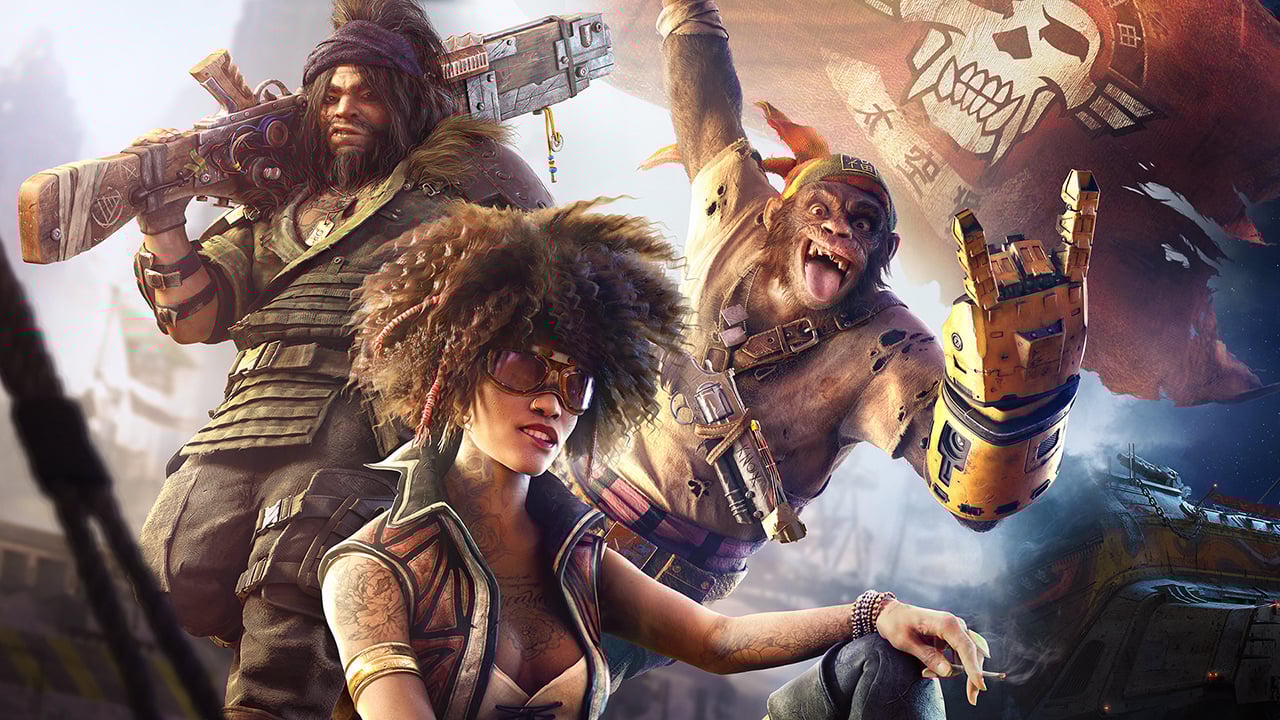
Beyond Good & Evil 2 has spent so long in development that it almost feels like gaming folklore, yet Ubisoft is quietly proving that System 3 is still very real behind the scenes. Fresh job listings at Ubisoft Montpellier for roles like technical sound designer, lead quest designer and technical lead network programmer show that the studio is not packing up its tools, but rather bringing new specialists on board for the next stretch. At the same time, the project has shifted under new creative leadership, moving from the late Emile Morel to industry veteran Fawzi Mesmar, known for work on Star Wars Outlaws and other big productions. We see an ambitious open world space opera, built on the Voyager engine, that still promises seamless movement from dense city streets to open space while supporting solo play and co-op. Instead of treating Beyond Good & Evil 2 as a ghost, we can now look at what Ubisoft is actually communicating through these roles and descriptions and what that means for anyone still dreaming of sailing the stars with a crew in System 3.
Why Beyond Good & Evil 2 is back in the spotlight
Every few years, Beyond Good & Evil 2 resurfaces just long enough to remind everyone it exists, then slips back into silence. This time feels different, because Ubisoft has updated its own messaging and opened a batch of visible roles attached directly to the project. Instead of vague reassurances in investor calls, we have detailed descriptions that talk about a space opera universe, open world structure, space piracy and a direct prequel to the 2003 classic. The latest wave of recruitment tells us that Ubisoft Montpellier is still investing real money and people into System 3 rather than quietly phasing it out. It also refreshes the official blurb, lining up what players can expect: exotic locations, colorful characters, mysteries to uncover and the choice to play alone or with friends. For a game many had written off as vaporware, that mix of specifics is an important signal that development is alive, even if the finish line remains out of sight.
A project first announced in 2008 that never truly vanished
It almost sounds like a joke to say that Beyond Good & Evil 2 was first announced back in 2008, when consoles like Xbox 360 and PlayStation 3 were still new and social media looked completely different. Since then we have seen early trailers, an impressive 2017 E3 reveal, co-op demos behind closed doors and long stretches where nothing seemed to move. Over time, the game broke records for one of the longest public development cycles in the industry, outlasting even infamous projects that spent more than a decade in the oven. Yet Ubisoft never actually declared the project cancelled. Instead, it acknowledged restarts, leadership changes and internal investigations while occasionally repeating that Beyond Good & Evil 2 remained in development. When the 20th Anniversary Edition of the original game added new narrative links to the prequel, it served as another quiet reminder that the sequel was still part of the long term plan. Put together, the history feels messy, but it also shows a studio that repeatedly chooses to adjust and continue instead of walking away.
From Emile Morel to Fawzi Mesmar: how leadership has changed
The creative side of Beyond Good & Evil 2 has been through painful change, especially in the last few years. After Michel Ancel departed Ubisoft amid reports of internal turmoil, Emile Morel stepped in as creative director to steward the space opera vision forward. His sudden passing in 2023 at just 40 years old shook the team and the wider community, with colleagues describing how passionate he was about the project and the BGE universe. That tragedy left a gap that could easily have signaled the end of the game. Instead, Ubisoft later confirmed that Fawzi Mesmar had taken on the role of creative director, bringing experience from leading roles across Mario + Rabbids Sparks of Hope, Star Wars Outlaws and other major releases. Mesmar publicly spoke about joining the project and praised the team’s ambition, framing his role as someone building on the work of those before him. For players, that handover matters because it reassures us that there is a clear creative owner guiding System 3 rather than a ship adrift without a captain.
What the new Ubisoft job listings actually tell us
Job pages might look dry at first glance, but in a project as secretive as Beyond Good & Evil 2 they are one of the clearest windows into what is really happening. Ubisoft’s latest listings highlight multiple positions tied directly to the game, including a technical sound designer based in Montpellier, a lead quest designer and a technical lead network programmer. Each description outlines responsibilities inside a living production rather than a concept on paper, talking about integration with Voyager engine tools, collaboration with level design, writing and animation, and ownership over gameplay experiences. The listings repeat Ubisoft’s invitation to “join forces with us to build System 3,” using the same phrasing across roles, which helps connect them to the space opera prequel the company has been pitching since 2017. When a company actively fills specialist positions like these, it signals ongoing production work, not sunset plans, which is a key reassurance after so many years of speculation about cancellation.
Roles like technical sound designer and lead quest designer
Looking closer at the roles themselves reveals what stage parts of Beyond Good & Evil 2 might be in. A technical sound designer is not just dropping music files into a timeline. They are building systems in tools like Wwise and the Voyager engine so that ambiences, dialogue, engines, weapons and spacecraft sound responsive and alive as players roam cities and space. That kind of role suggests the team is focused on how the world feels minute to minute. A lead quest designer, meanwhile, is responsible for shaping main and side quests, coordinating with level designers, writers, animators and gameplay teams. This position indicates that stories, objectives and pacing across System 3’s solar system are still being refined and expanded. When you combine those two with associated roles like senior character artist and associate producer, you get a picture of a project that is still building and polishing key layers of experience rather than simply wrapping up old tasks on a skeleton crew.
Why a technical lead network programmer matters for co-op
One of the standout roles is the technical lead network programmer, because it quietly confirms that online systems sit at the heart of Beyond Good & Evil 2’s design. Ubisoft’s job descriptions and related coverage reference multiplayer and co-op, along with drop in and drop out play, which lines up with the co-op demos shown years ago. A technical lead in networking does far more than plug in basic online functionality. They guide how players connect, how missions and exploration sync between participants, how latency is handled and how the game scales when friends join or leave a session. In a solar system sized playground, reliable networking is the spine that holds group play together. The fact that Ubisoft is hiring specifically for that leadership position suggests that co-op is not being cut as development drags on. Instead, it appears to remain a core promise, one that the studio wants to reinforce with specialists who can design and maintain robust infrastructure for years of play.
Voyager engine and the promise of seamless space piracy
Beyond Good & Evil 2’s official blurbs keep coming back to the Voyager engine, and for good reason. Ubisoft Montpellier has spent years building a custom toolset aimed at simulating a full solar system with seamless transitions between ground and space. Rather than locking players into tiny hubs, the goal is to let crews hop from packed markets to the skies above and out into orbit without obvious loading interruptions. That kind of structure is especially important for a game that treats you as a space pirate captain, juggling exploration, smuggling, battles and alliances across multiple worlds. Voyager’s blend of hand crafted design and procedural generation underpins this vision, stitching together planets, space routes and city districts while keeping performance under control. When job listings mention onboarding newcomers into the Voyager pipeline, they hint at an engine that is not experimental anymore, but maturing into a platform that Ubisoft expects new hires to learn, use and help refine as System 3 continues to grow.
From crowded cities to open space without loading walls
The most eye catching part of the Voyager pitch is the seamless movement from dense urban areas into open space. Early demos showed characters leaping onto ships, blasting through clouds and punching past the atmosphere with no hard cuts, and that promise still appears in the current Ubisoft blurbs. For players, that kind of flow matters because it keeps the fantasy intact. You are not just selecting “launch” from a menu, you are physically lifting off with your crew, seeing the city shrink beneath you and the curvature of a planet fade into the background. Designing worlds to support that jump is tricky, since cities need verticality, navigable rooftops and sightlines that guide you toward departure points without disorienting you. It also ties directly into how missions are structured, since a daring theft might start in a crowded street market, escalate into a chase across highways and finish as a dogfight above the stratosphere. The current focus on core systems, audio and quests suggests that Ubisoft is still committed to making that chain feel natural, not stitched together.
What System 3 and the prequel setup mean for players
Beyond Good & Evil 2 is pitched as a direct prequel to the 2003 original, set in the distant System 3 rather than the more contained environments fans remember. That framing carries a lot of weight. Narratively, it opens the door to exploring the roots of familiar factions, species and conspiracies while introducing a wider cast of smugglers, rebels and corporate powers. System 3 is described as a solar system full of exotic locations and colorful characters, which gives the team freedom to blend grounded, industrial hubs with stranger, more spiritual or surreal spaces. For players who love the first game’s blend of humor, heart and conspiracy, the prequel angle offers a chance to see how that universe expanded into something much bigger. It also signals that this project is not just a remixed sequel, but a broadening of the original ideas into a full blown space opera, with all the big questions about exploitation, resistance and who really controls the flow of information in a colonial system.
Solo play, drop in co-op and long term ambitions
Ubisoft’s latest wording is careful to stress that Beyond Good & Evil 2 can be enjoyed solo or with friends. That balance matters more than ever after years where players have pushed back on games that felt like they forced online play. By emphasising both modes, the team acknowledges that some players want to soak up the story and atmosphere alone, while others dream of forming crews of friends to raid space lanes together. The implied drop in co-op structure means a solo run does not lock you out of shared moments. Friends can join for a heist, a boss fight or a round of exploration, then peel off without breaking your progress. Behind that flexibility sits an always online foundation that earlier presentations discussed, which is a double edged sword. It allows for persistent systems and shared events, but it also means Ubisoft needs to prove that servers, netcode and long term support are priorities, not afterthoughts bolted onto an already complex project.
What this all means for fans waiting on Beyond Good & Evil 2
For fans who have been watching this saga since the late 2000s, it is completely understandable to feel exhausted or cynical. New job listings and fresh blurbs do not magically erase years of delays, leadership shifts and reports about internal difficulties. At the same time, these updates represent more than yet another press statement saying “development is progressing.” They show recruitment for key roles, a clear creative director in place and a reaffirmed vision built around System 3, Voyager and seamless space piracy. That combination tells us Ubisoft is still treating Beyond Good & Evil 2 as a living project worth hiring for, training people on and talking about in specific terms. While it would be reckless to pin hopes on a particular launch window, it is fair to say that the game is not abandoned in a vault. Instead, it remains a long term bet, slowly absorbing new talent and ideas in the hope of eventually delivering something that feels worthy of the original’s legacy.
How to keep expectations realistic while staying hopeful
So where does that leave anyone who loved the first Beyond Good & Evil or simply enjoys ambitious, messy passion projects in general? The healthiest place is probably somewhere between cautious optimism and self preservation. It makes sense to be intrigued by Voyager’s tech, the space opera setting and the chance to run a crew in System 3, while also remembering that long development cycles often bring compromises. We can recognise that fresh leadership and active recruitment are positive signs without assuming that release is just around the corner. In practical terms, that means treating every official update as a small piece of a very large puzzle, not as a promise that everything is suddenly fixed. If Beyond Good & Evil 2 does eventually arrive, the years of waiting and adjustment could turn it into one of the industry’s most fascinating case studies. Until then, keeping expectations grounded while enjoying each new little signal of life might be the best way to stay engaged without burning out.
Conclusion
Beyond Good & Evil 2 has spent nearly two decades walking a tightrope between dream project and cautionary tale, but Ubisoft’s latest recruitment drive proves that the line has not snapped yet. New roles around sound, quests and networking show that teams are still building core experiences inside Voyager rather than tidying up leftovers. The transition from Emile Morel to Fawzi Mesmar brings a fresh but experienced creative voice to System 3, backed by official descriptions that continue to sell a seamless open world space opera where solo captains and co-op crews can chase mysteries across a solar system. None of this erases the long and difficult road that led here, and it does not guarantee a smooth final stretch, yet it does justify a renewed, careful interest. For players who keep a soft spot in their hearts for the original game and its world, the smartest move is to stay curious, stay informed and let System 3 surprise us if and when the voyage finally reaches our hands.
FAQs
- Is Beyond Good & Evil 2 still in active development at Ubisoft?
- Yes, current information points toward ongoing development. Ubisoft Montpellier is openly hiring for multiple roles tied directly to Beyond Good & Evil 2, including a technical sound designer, lead quest designer and technical lead network programmer. Official job pages and recent coverage repeat that the game is set in a space opera universe, acts as a direct prequel to the 2003 original and invites applicants to help build System 3. Those are not the signs of a shelved project, even if the team is moving at a slower, more cautious pace than anyone originally imagined.
- Who is the current creative director of Beyond Good & Evil 2?
- Following the passing of Emile Morel in 2023, Ubisoft confirmed that Fawzi Mesmar has taken over as creative director on Beyond Good & Evil 2. Mesmar has a long track record as a designer and creative leader, with previous work across series like Battlefield, Mario + Rabbids and Star Wars Outlaws. Public comments describe how he has been collaborating with the team for years and now aims to carry the project forward, building on the foundation laid by earlier leaders while trying to finally bring System 3 to life in a way that feels unique and true to the original’s spirit.
- What kind of game is Beyond Good & Evil 2 supposed to be?
- Beyond Good & Evil 2 is positioned as an action adventure open world experience set in a space opera universe, acting as a direct prequel to the first game. Players step into the shoes of spacefaring outlaws and captains operating in System 3, a solar system packed with exotic locations, eccentric characters and corporate powers to push back against. The Voyager engine underpins a structure that aims to let you move from dense city streets to orbit and beyond without harsh loading walls, supporting both solo play and co-op so you can explore and pull off heists on your own or with friends.
- What does the Voyager engine actually do for Beyond Good & Evil 2?
- Voyager is Ubisoft Montpellier’s proprietary engine built specifically to handle the scale and flexibility Beyond Good & Evil 2 demands. It combines hand crafted design with procedural tools to simulate a full solar system, generate planets and connect bustling city hubs to surrounding space. For players, that translates into the promise of seamless transitions when you jump from a market to a ship and into orbit, as well as varied environments that still feel cohesive. Job listings mention onboarding new hires into the Voyager pipeline, which suggests the engine is now a concrete production tool rather than an experimental prototype.
- Will Beyond Good & Evil 2 focus on single player or co-op play?
- Ubisoft’s messaging emphasises that Beyond Good & Evil 2 can be experienced solo or with friends, which indicates a hybrid approach. You can expect a structure where you can tackle the story and exploration on your own while still having the option to enable drop in co-op so friends can join your crew for specific missions, raids or free roaming sessions. The presence of a technical lead network programmer role highlights how central online systems are to the design. That said, players who prefer to play alone are not being sidelined, since solo play remains an explicit pillar of the overall vision.
Sources
- Ubisoft still working on Beyond Good and Evil 2 as new job listings emerge, My Nintendo News, November 26, 2025
- After 17 years, Ubisoft is hiring up for Beyond Good and Evil 2, a definitely real videogame that exists, PC Gamer, November 26, 2025
- Beyond Good & Evil 2 todavía vive: la aventura espacial de Ubisoft da señales de vida tras 17 años desde su anuncio, MeriStation, November 26, 2025
- Beyond Good and Evil 2, Wikipedia, updated 2024
- Beyond Good and Evil 2 creative director Emile Morel has died, PC Gamer, July 6, 2023
- ‘Beyond Good and Evil 2’ Gets New Lead, Promises ‘Unique’ Game, Vice, October 24, 2024