














Summary:
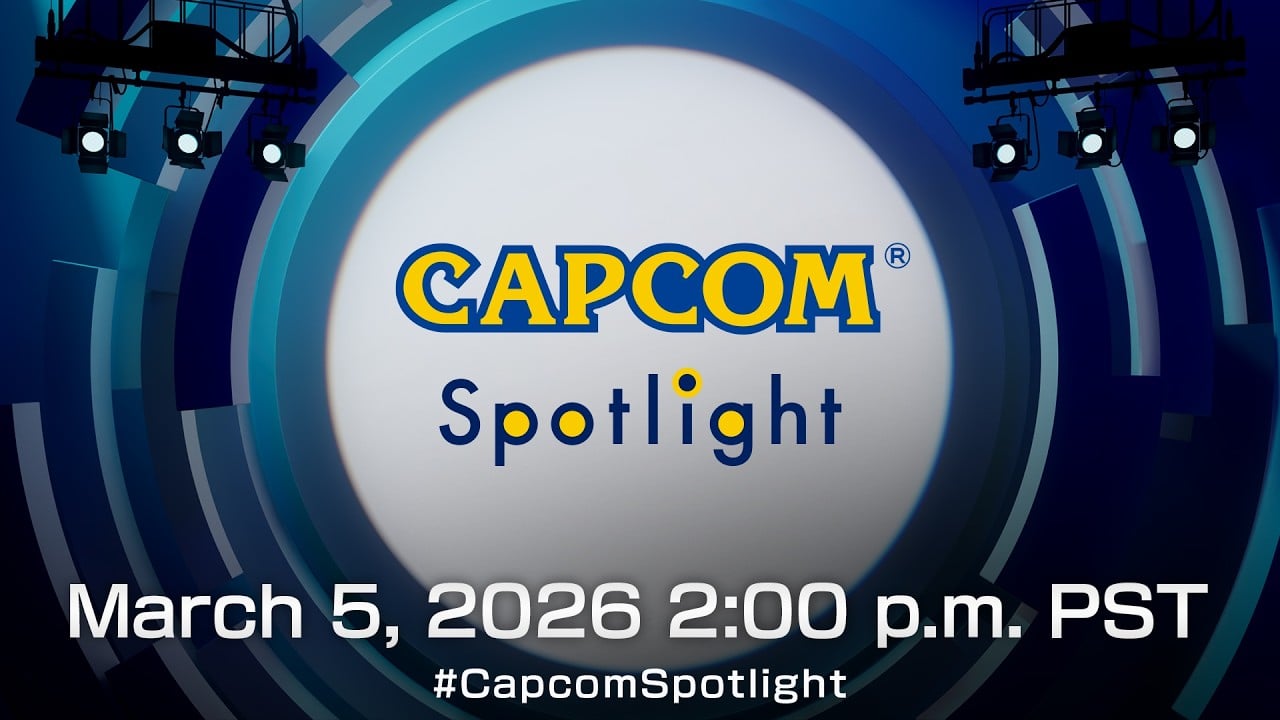
Capcom is lining up another Spotlight presentation for March 5, 2026, and the setup tells us a lot before a single trailer rolls. The runtime is planned to be around 30 minutes, which is long enough for meaningful updates but short enough that every minute has to count. The confirmed list is doing the heavy lifting here: PRAGMATA, Monster Hunter Stories 3: Twisted Reflection, Mega Man: Dual Override, Mega Man Star Force Legacy Collection, and Street Fighter 6 are all on the slate. That mix is interesting because it blends “we need a proper status check” games with “we can drop a tight feature rundown” games, plus one live service staple that can always produce fresh headlines.
Timing-wise, it’s also straightforward to plan around. The broadcast starts at 2:00 p.m. PT and 5:00 p.m. ET on March 5, which lands at 23:00 CET for a lot of Europe and 7:00 JST on March 6 for Japan. That matters because it shapes how news spreads and when clips and recaps start appearing. We should expect a teaser-led pace: quick introductions, a focused chunk per game, and then a wrap that nudges us toward wishlists, release windows, or the next update date. If we go in with realistic expectations, we can get a lot out of 30 minutes without doing that thing where we build a castle of hype on a foundation of vibes.
Capcom Spotlight is locked in for March 5, 2026
Capcom’s next online Spotlight is officially scheduled for March 5, 2026, and it’s positioned as a tight, update-driven presentation focused on upcoming releases. That framing matters because it signals “news you can use” rather than a long, meandering show full of side quests. We’re not talking about a marathon stream that needs intermissions and snacks. This is the kind of event where we show up, get the headlines, and walk away with clearer expectations about what Capcom wants us paying attention to next.

The planned runtime tells us how the pacing will feel
The broadcast is planned to run for about 30 minutes, which is a sweet spot for a lineup like this. It’s enough time to give multiple games real screen time, but not enough time for endless filler or ten-minute detours that say nothing. The practical implication is simple: if five major items are already named, each one likely gets a focused segment rather than a blink-and-you-miss-it cameo. That usually means fewer surprises, but stronger clarity on what’s already announced.
The exact start times across key time zones
If we want to watch live without doing last-second math in a panic, the start time is clean and consistent across regions. The Spotlight begins at 2:00 p.m. PT and 5:00 p.m. ET on March 5, 2026. For Central Europe, that lands at 23:00 CET on March 5, which is late but still “stay up with a drink” late, not “call in sick tomorrow” late. For Japan, the start time is 7:00 JST on March 6, 2026, which is the kind of morning slot that makes the news cycle feel immediate.
Quick time check so we don’t miss the opening seconds
It’s worth setting a reminder a little early because these streams often start right on time, and the first minute can include the “here’s what’s coming” slate that people screenshot and share everywhere. If we show up late, we risk missing the quick confirmation cards that sometimes include platform callouts or tiny notes that never get repeated. And yes, it’s mildly annoying that the internet will debate a one-second slide for three days, but that’s how these things go. Better to catch it live than chase clips later.
The confirmed lineup and why it matters
Capcom has already named multiple titles that will appear, and that’s the best clue for the show’s tone. When a company pre-confirms a list, it usually means the segments are planned, polished, and ready to deliver specific updates. Here, we’ve got PRAGMATA and Monster Hunter Stories 3: Twisted Reflection carrying the “big anticipation” energy, Mega Man: Dual Override and Mega Man Star Force Legacy Collection covering the “here’s what you’re getting” angle, and Street Fighter 6 acting like the reliable heartbeat that can always generate momentum.
Why this mix feels deliberate
This is a lineup that balances different kinds of excitement. Some games thrive on a single strong trailer that resets the conversation. Others thrive on practical details: modes, features, online options, release timing, and what’s included. Put them together, and the show can feel varied without feeling messy. It’s like a playlist that goes from hype track to chill track to hype track again, keeping attention high while still delivering information you can actually remember after the stream ends.
PRAGMATA: what an update can realistically look like
PRAGMATA is the kind of title where even a small update can feel like a big deal, mainly because people want clarity and confidence. In a Spotlight format, the most realistic win is a focused segment that shows current gameplay direction and reinforces that the project has a clear identity. We might see a trailer that leans less on mystery and more on how it plays, even if it’s still presented in a cinematic wrapper. If Capcom wants to calm nerves and build momentum, a short “here’s what you do, here’s why it’s cool” slice can go a long way.
What would count as a meaningful PRAGMATA moment
A meaningful update doesn’t need to be a release date tattooed in stone. A meaningful update can be a clearer gameplay loop, a stronger look at the main pair’s dynamic, and a better sense of pacing and tone. If we come away understanding what moment-to-moment play looks like, that’s progress. If we also get a timing update that narrows the window, that’s the cherry on top, not the minimum requirement.
Monster Hunter Stories 3: Twisted Reflection: what we might learn
Monster Hunter Stories 3: Twisted Reflection has the advantage of belonging to a series with an established rhythm, so updates can be very concrete. When Capcom puts a game like this in a Spotlight, we’re often looking at a mix of story framing and systems talk. Think new monsters, new partner dynamics, traversal or exploration upgrades, and a clearer sense of how progression is structured. If the segment is done right, we’ll leave with a better answer to a simple question: what makes this entry feel new, not just bigger?
Why Stories updates usually land well in showcases
Stories games are easy to show. They have strong visuals, clear combat beats, and that satisfying “one more reveal” structure where every new monster or mechanic is inherently shareable. In a 30-minute show, that’s gold because it creates clip-friendly moments without needing long explanations. If Capcom wants social media to do free marketing for the next week, a Stories segment can practically do it on autopilot, as long as the footage is strong and the details are specific.
Mega Man: Dual Override: the kind of spotlight it’s built for
Mega Man: Dual Override is a perfect fit for a presentation like this because it can deliver a tight burst of excitement without demanding a massive time commitment. In this Spotlight, Capcom has indicated the game will be featured, and one of the key points tied to it is the Robot Master Design Contest results. That’s a very “event” style reveal, the kind where we get a celebratory moment, a showcase of the winning designs, and then a quick tease of how those ideas translate into in-game bosses or themes. It’s the gaming equivalent of opening the envelope and letting the audience yell at the screen.
What to watch for in a Dual Override segment
Beyond the contest angle, the real question is how Capcom positions the game’s identity. Are we seeing a fast gameplay montage that highlights movement and combat options, or are we getting a more deliberate introduction to characters, bosses, and the overall vibe? If we get both, even in a compact form, that’s a strong showing. And if we get a clear next step, like a date for more news or a playable demo mention, that’s the kind of practical detail that helps keep the conversation alive.
Mega Man Star Force Legacy Collection: why “online features” is the clue
When a company specifically calls out “online features,” it’s basically waving a flag that says, “Hey, this isn’t just a bundle, listen up.” Mega Man Star Force Legacy Collection has been framed as a key item in the Spotlight, and the emphasis on online functionality suggests the segment will focus on how modern connectivity enhances these classic RPG experiences. That can mean multiple things depending on implementation, but the important point is that Capcom wants us thinking about more than nostalgia. They want us thinking about how the collection fits into modern play habits.
Small feature details can be the biggest deal for collections
Collections live or die on the little things. Menus, save options, convenience features, how smooth it feels to jump in and out, and whether multiplayer or connectivity elements are handled cleanly all matter more than people admit. If Capcom uses this segment to clarify exactly what the online pieces look like and how they work, it removes uncertainty and boosts confidence. Nobody wants to buy a collection only to discover the feature they cared about is awkward or limited. Clear explanations here can be the difference between “maybe later” and “day one.”
Street Fighter 6: the evergreen slot that always brings news
Street Fighter 6 showing up in a Capcom Spotlight is like seeing fries on the menu at a burger place. It’s expected, but it still matters because it keeps the broader community plugged in. A fighting game thrives on cadence: characters, balance updates, events, collaborations, and competitive storylines. In a 30-minute show, Street Fighter 6 can deliver a sharp segment that either reveals what’s next or reinforces a near-term plan the player base can rally around. Either way, it tends to generate immediate discussion.
Why even a short Street Fighter segment can dominate headlines
Fighting game communities are wired for analysis. A single character tease, a move snippet, or a date can spawn breakdowns, match-up debates, and reaction clips within minutes. That means Capcom doesn’t need to spend a huge amount of time here to get a big impact. If the Spotlight gives Street Fighter 6 a clean, focused update, we should expect it to trend in its corner of the internet almost instantly, even if the segment is only a few minutes long.
How to watch live and what to do if you miss it
The Spotlight is designed to be watched online, and Capcom typically hosts these broadcasts on official channels where the replay remains available afterward. The practical move is to watch live if we care about real-time reactions and instant clips, but the replay is usually the better experience if we want to pause, rewind, and catch details without the noise of chat flying by at light speed. Either way, we should plan to grab the official stream link from Capcom’s Spotlight page or official social posts so we’re not relying on random re-uploads with questionable quality.
A simple “watch plan” that keeps things stress-free
If we’re watching live, showing up five minutes early is enough to avoid scrambling. If we’re watching later, waiting for the official upload or replay link avoids spoiler thumbnails from third-party channels that love to scream the biggest reveal in all caps. And if we’re the type who likes recaps, it’s smart to compare at least two summaries afterward, because different outlets focus on different details. One will care about release timing, another will care about features, and together they paint a clearer picture.
A realistic expectations checklist so we don’t get burned
Spotlight shows are better when we treat them like a highlight reel of confirmed topics, not a magical wish-granting machine. The lineup is already strong, so we don’t need surprise cameos to justify watching. A healthy expectation is that each confirmed title gets a purposeful update, and the show ends with a neat wrap rather than a shock reveal that changes the entire year. If we go in expecting clarity, we’ll probably leave happy. If we go in expecting every rumor to be validated, we’re basically setting ourselves up to argue with strangers online for no reason.
Quick checklist
We should expect updates on the named games, a runtime that keeps segments tight, and at least a couple of moments designed for easy sharing. We should not assume that “and more” automatically means a brand-new blockbuster reveal, because that phrase can also cover quick mentions, reminders, or small updates to existing plans. If we keep that mindset, the show becomes fun instead of frustrating. And honestly, fun is the point.
What “and more” usually means in a 30-minute runtime
When a company says “and more” in a short presentation, it often means one of three things: a brief additional update, a quick tease that points to a future date, or a short segment on something already known but not highlighted in the headline list. In a 30-minute runtime, “and more” rarely means five extra games with full trailers, because there simply isn’t enough time. The smart way to interpret it is as a buffer. It gives Capcom flexibility to include a small surprise or a quick reminder without rewriting the show’s entire structure.
Why “and more” is still worth paying attention to
Even if it’s small, “and more” can be the spice that makes the whole thing feel fresh. Sometimes it’s a single extra trailer. Sometimes it’s a collaboration note. Sometimes it’s a “here’s the next time we’ll talk” message that helps us plan what to watch next. The key is to treat it as a bonus, not a promise. That way, if it’s meaningful, great. If it’s modest, we still got what we came for.
Conclusion
Capcom Spotlight on March 5, 2026 is shaping up to be a tightly packed half hour built around updates people actually want: PRAGMATA, Monster Hunter Stories 3: Twisted Reflection, Mega Man: Dual Override, Mega Man Star Force Legacy Collection, and Street Fighter 6. The start time is easy to plan around across regions, and the format suggests focused segments rather than drawn-out filler. If we show up expecting clear information, a couple of punchy trailers, and at least one clip-worthy moment, we’ll probably walk away satisfied. The best approach is simple: watch live if you love the moment-to-moment buzz, use the replay if you want to catch details calmly, and let the confirmed list set your expectations instead of rumors.
FAQs
- When does the Capcom Spotlight start in Central Europe?
- It begins at 23:00 CET on March 5, 2026, which matches 2:00 p.m. PT and 5:00 p.m. ET.
- How long is the Capcom Spotlight expected to be?
- The broadcast is planned to be approximately 30 minutes, so we should expect a quick pace and focused segments.
- Which games are confirmed to appear?
- Capcom has named PRAGMATA, Monster Hunter Stories 3: Twisted Reflection, Mega Man: Dual Override, Mega Man Star Force Legacy Collection, and Street Fighter 6 as featured titles.
- What’s the most likely kind of update we’ll get for PRAGMATA?
- The most realistic expectation is clearer footage and a better sense of the gameplay direction, possibly alongside a tighter timing update rather than a dramatic surprise.
- What does “and more” usually mean for a short showcase like this?
- In a 30-minute show, it typically means small extras like brief additional updates, quick teases, or short reminders rather than multiple full new game reveals.
Sources
- Capcom Spotlight, CAPCOM, March 3, 2026
- Capcom Spotlight set for March 5, featuring Mega Man: Dual Override, PRAGMATA, and more, Gematsu, March 3, 2026
- Capcom Showcase Set For March 5 With Mega Man, Monster Hunter Stories 3, And Pragmata, GameSpot, March 3, 2026
- Capcom Spotlight Taking Place Later This Week, Here’s A Teaser Trailer, Nintendo Life, March 3, 2026