














Summary:
A leadership change at Nintendo of America can sound like a corporate footnote, but this one arrived with a moment that felt surprisingly personal. Doug Bowser’s retirement set the stage for Devon Pritchard to step into the president role on January 1, 2026, and her first widely shared message did not lean on hype, teases, or product talk. Instead, she chose a creator-first tone at the New York Game Awards, a show that has spent 15 years celebrating games, the people who make them, and the communities that grow around them. Introduced by former Nintendo of America president Reggie Fils-Aimé, Pritchard used the spotlight to congratulate the event, point to the value of storytelling, and underline a simple idea that cuts through industry noise: “every dream matters,” and people deserve a real chance to do meaningful work in games.
That framing matters because it speaks to a real tension many developers and aspiring creators feel – the desire to belong, the fear of not being “enough,” and the grind of building skills while the industry keeps moving. Pritchard also highlighted “Playing With Purpose,” a program connected to the New York Videogame Critics Circle, which reinforces that her first message was not just applause from a distance. It was a nudge toward opportunity, mentorship, and practical support for people who want in. If you’re a fan, it’s also a reminder that big companies are still made of humans making choices about tone, priorities, and what they publicly value. This debut did not try to be flashy. It tried to be welcoming – and sometimes that is the boldest move.
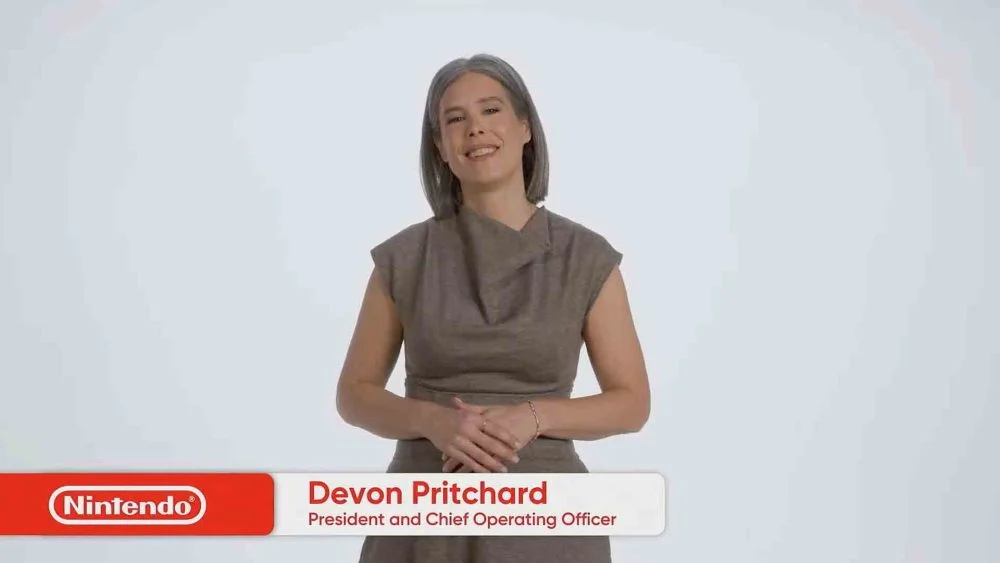
NY Game Awards – Nintendo Of America President Devon Pritchard
Nintendo of America changing presidents is one of those moves that sounds quiet until you remember how many conversations flow through that office – from marketing and partnerships to how Nintendo shows up at events and speaks to players in North America. Doug Bowser’s retirement and Devon Pritchard’s promotion mark a clean baton pass: one era closing on December 31, 2025, and the next beginning January 1, 2026. That kind of calendar clarity is rare in a world where leadership shifts sometimes happen in a fog of “effective immediately.” Here, the timing gives teams and partners a stable runway, and it gives the public a simple storyline to follow. New leader, new year, same mission – but with a different voice holding the mic.

Doug Bowser’s exit, and why timing matters
Bowser’s retirement matters less because of headline drama and more because of what the role represents: continuity during big platform moments, steady relationships with retailers and partners, and the day-to-day responsibility of keeping Nintendo’s North American business running smoothly. When a president steps down at the end of the year, it creates a natural transition point for budgets, planning cycles, and internal leadership rhythms. It’s like finishing a long game session at a safe point instead of quitting mid-boss fight. You save, you breathe, you hand the controller over cleanly. That doesn’t mean everything resets – it means the next person starts with a stable file, not a scrambled mess of half-finished quests.
Devon Pritchard’s promotion, in plain terms
Devon Pritchard stepping into the president role is notable for two reasons at once: she represents continuity inside Nintendo of America, and she also represents a visible shift in who gets to be the face of the company in the region. She had already been part of Nintendo of America’s leadership team before the promotion, which matters because it suggests she is not arriving cold, learning names, and figuring out where the bathrooms are. She is arriving with context, relationships, and a working understanding of what Nintendo’s priorities have been. For anyone watching from the outside, that signals steadiness. For anyone inside the industry, it signals that this is a planned transition, not a scramble.
A first public message, delivered on purpose
If you only take one thing from Pritchard’s debut, let it be this: she did not use her first big moment to sell you something. No trailer energy. No wink-wink tease. No “we have exciting announcements.” Instead, she took a stage adjacent to the business – the New York Game Awards – and talked about people. That choice is a tone-setter. It suggests she understands what the room needed in that moment: recognition, encouragement, and a reminder that games are made by humans with dreams, bills, insecurities, and a stubborn need to keep going. It’s the corporate version of showing up with snacks instead of a slideshow. Small move, big message.
The New York Game Awards as a stage
The New York Game Awards are not just another trophy night. They are tied to a community that cares about criticism, storytelling, and the cultural weight of games, and the show has built a reputation around celebrating creators and the broader industry. That context matters because a first public appearance is always about framing. Where you speak becomes part of what you’re saying. By choosing this event, Pritchard positioned her first message inside a space that highlights voices, stories, and dreams rather than product cycles. It also let her address developers and aspiring creators directly, not just fans. That’s a different audience with different pressures, and she spoke their language in a way that felt intentionally welcoming.
Reggie Fils-Aimé’s handoff moment
Having Reggie Fils-Aimé introduce Pritchard added a layer of symbolism you do not need an MBA to understand. Reggie is one of the most recognizable former presidents Nintendo of America has had, and his presence functions like a stamp of legitimacy for the wider audience. It’s the friendly version of, “Yes, this is real, and yes, this person belongs here.” It also connects Nintendo’s public-facing history across generations of leadership – a reminder that the company’s identity is built over time, with each leader adding their own tone. In a single introduction, the moment tied together continuity, mentorship, and a passing of the spotlight without making it feel stiff or ceremonial.
The line that set the tone: “every dream matters”
Pritchard’s message opened with celebration of the New York Game Awards and its 15-year legacy, and then landed on a line that feels simple until you sit with it: “every dream matters,” and everyone deserves a chance to do meaningful and creative work in games and storytelling. That idea is powerful because it speaks to the reality of the industry without pretending it is easy. Not everyone gets the internship. Not everyone gets the first job. Not everyone has a safety net. So when a major company leader says this out loud, it can feel like a door being held open rather than a speech being delivered from a balcony. Words are not a job offer, sure, but words from leadership still shape what people think the room is supposed to feel like.
Why “Playing With Purpose” keeps coming up
One of the most concrete parts of Pritchard’s message was her shoutout to “Playing With Purpose,” a program connected to the New York Videogame Critics Circle. This matters because it moves the message from pure sentiment into a specific example of support. It’s easy for public speeches to stay fluffy – inspiring music, vague encouragement, and then everyone goes home. Calling out a real program signals that she is paying attention to the practical side of “opportunity.” It also puts a spotlight on pathways into the industry that are not just “know the right people” or “move to the right city.” When leadership highlights real initiatives, it nudges more eyes, more support, and more legitimacy toward them.
What the New York Videogame Critics Circle supports
The New York Videogame Critics Circle is closely tied to the awards show, and its work has emphasized community programs and initiatives that encourage young people and aspiring creators to engage with games as a creative medium. When Pritchard referenced creators, coders, writers, and anyone “dreaming big” to join the community, she was speaking to the full pipeline of game-making, not just the people already inside the walls. That matters because games are not made by one job title. They are made by teams with different strengths, backgrounds, and entry points. Highlighting a program like “Playing With Purpose” reinforces the idea that storytelling and creativity are skills worth nurturing early, and that the industry benefits when more people get a fair shot at building them.
What this kind of program signals to the industry
When a Nintendo of America president publicly praises an initiative like “Playing With Purpose,” it sends a signal beyond the room and into the wider industry ecosystem. It tells other companies and organizations, “This is the kind of work that deserves attention.” It also tells aspiring creators that their first steps do not need to be glamorous to be real. Workshops, community programs, learning opportunities – these are the early levels where people collect skills, confidence, and connections, even if it feels like grinding for experience points. The signal is not that success is guaranteed. The signal is that the industry is healthier when opportunity is widened, and that creative work in games is worth taking seriously as a life path.
What a Nintendo of America president actually touches
To understand why a short video message can matter, it helps to remember what Nintendo of America represents. This office is not “Nintendo the whole company,” and it is not the development teams in Japan making the next first-party game. It is a major regional hub responsible for operations across the Americas, and it intersects with marketing, retail, partnerships, events, and how Nintendo communicates publicly in the region. That means the president’s tone is not just vibes – it can influence internal culture, external relationships, and what the company chooses to prioritize in how it shows up. Even if the average fan never reads a corporate org chart, they still feel the ripple effects in messaging, community engagement, and the way Nintendo presents itself in public-facing_attach to people rather than just products.
A quick reality check on titles and responsibilities
Corporate titles can sound like alphabet soup, so here’s the plain version: the Nintendo of America president is a top executive for the region, and the job is part leadership, part coordination, and part accountability. It’s not a role where you personally greenlight every game, but it is a role where you help steer how the business runs in the region and how the company communicates with the public and partners. Think of it like being the conductor, not the entire orchestra. You are not playing every instrument, but you are responsible for the tempo, the cohesion, and whether the performance feels confident or chaotic. That’s why a first message matters – it hints at the tone of leadership people can expect.
Why the message resonated with creators
Creators are tired. That’s not a dramatic statement, it’s just the reality of an industry that has been through layoffs, shifting budgets, rising costs, and constant pressure to deliver. So when a major figure speaks directly to creators and frames them as people on an “adventure,” it lands because it respects the emotional truth of the work. Pritchard’s message also did something subtle: it acknowledged difficulty without romanticizing suffering. “Gnarly bosses” is a playful phrase, but it points to real obstacles – rejection, burnout, imposter syndrome, and the slow grind of getting better. By pairing that with the idea of supportive friends and rewards for perseverance, the message balanced realism with encouragement, which is exactly what most people need when they’re tempted to quit.
Belonging, mentorship, and the “gnarly bosses” metaphor
The “gnarly bosses” metaphor works because games have taught generations of players how to handle failure. You try, you lose, you learn, you try again. That loop is basically creative work in a hoodie. What makes the metaphor feel more than cute is that it connects to belonging. Pritchard’s closing line – “know that you truly belong in this game” – speaks to the fear many people carry when they enter creative fields. Do I fit? Am I good enough? Does anyone like my voice? When leadership says belonging out loud, it helps shift the perceived default from “prove you deserve to be here” to “you have a place here, now build.” That’s a meaningful psychological nudge, especially for people early in their careers.
How leaders can turn pep talks into policy
A speech is not a strategy, but it can be the start of one. If a leader says they care about creators and opportunity, the next question is whether actions align – internally and externally. That can show up in how teams are supported, how community initiatives are amplified, how partnerships are shaped, and how the company chooses to show up in spaces that celebrate storytelling and creativity. It can also show up in what kind of public messaging becomes normal: more human, more welcoming, and less “corporate robot reading a script.” The best version of this moment is not that it becomes a one-off clip people share for a week. The best version is that the tone becomes consistent, and people inside the company feel it too.
What fans can reasonably take from this moment
Fans sometimes treat executive changes like they’re plot twists in a soap opera, but the realistic impact is usually slower and more cultural than immediate. Pritchard’s debut did not promise specific games or announcements, and that is actually the point. It was a statement about values, community, and creative opportunity, delivered in a space designed to celebrate the people behind the screen. For fans, the smartest takeaway is not “this means X game is coming,” because that would be guessing. The smarter takeaway is: Nintendo of America’s new leader chose to introduce herself by uplifting creators and celebrating a program aimed at helping people enter the field. That is a tone worth noticing, and it’s okay to appreciate it without turning it into a prediction machine.
What we can celebrate without guessing
We can celebrate the clarity of the transition timeline, the fact that Pritchard’s first widely shared message was focused on creators, and the symbolic warmth of Reggie introducing her. We can also celebrate the fact that the New York Game Awards reached its 15-year milestone and continues to spotlight games as stories and cultural work, not just products to ship. Most importantly, we can celebrate what the message offered to anyone watching who feels stuck: a reminder that creative work is meaningful, that community matters, and that the industry needs diverse voices to keep evolving. If you’ve ever stared at a blank page, a half-finished prototype, or a rejection email and thought, “Maybe this isn’t for me,” this message was a gentle counterpunch: keep going, keep playing, and keep believing you belong.
Conclusion
Devon Pritchard’s first public message as Nintendo of America president was short, but it was carefully chosen. She stepped into the role on January 1, 2026, following Doug Bowser’s retirement at the end of 2025, and she introduced herself by celebrating the New York Game Awards and the people who build games. With Reggie Fils-Aimé teeing up the moment, her words focused on voices, stories, dreams, and opportunity, and she highlighted “Playing With Purpose” as a concrete example of supporting creators and aspiring creators. The biggest takeaway is not a tease or a promise – it’s tone. She showed up with a message about belonging and perseverance, and that matters in an industry where those two things can feel painfully fragile. If this is the baseline for how she wants to speak publicly, it’s a strong start: human, encouraging, and grounded in the people behind the work.
FAQs
- When did Devon Pritchard become president of Nintendo of America?
- She stepped into the role on January 1, 2026, following Doug Bowser’s retirement at the end of 2025.
- Where did she make her first public appearance in the role?
- Her first widely shared appearance was a pre-recorded video message shown during the New York Game Awards, introduced on stage by former Nintendo of America president Reggie Fils-Aimé.
- What was the focus of her message?
- She congratulated the New York Game Awards on 15 years of celebrating the industry, emphasized storytelling and meaningful creative work, and highlighted the idea that “every dream matters.
- What is “Playing With Purpose” in this context?
- It’s a program associated with the New York Videogame Critics Circle that Pritchard called out while speaking about supporting creators, coders, writers, and people who want to join the games community.
- Did her message include any Nintendo game announcements?
- No – the message was centered on celebrating the event and encouraging creators, rather than revealing products or teasing specific future releases.
Sources
- Nintendo of America’s new president makes her first public appearance since stepping into the role with a pep talk for devs: “Keep believing, keep playing, and know that you truly belong in this game”, GamesRadar+, January 19, 2026
- Nintendo of America’s new president Devon Pritchard makes her first industry appearance since taking on the role, Video Games Chronicle, January 19, 2026
- Nintendo of America president Devon Pritchard makes first industry appearance at New York Game Awards, Nintendo Wire, January 19, 2026
- Today Is Doug Bowser’s Final Day As Nintendo Of America President, Nintendo Life, December 31, 2025
- Nintendo of America boss Doug Bowser is retiring, The Verge, September 25, 2025