














Summary:
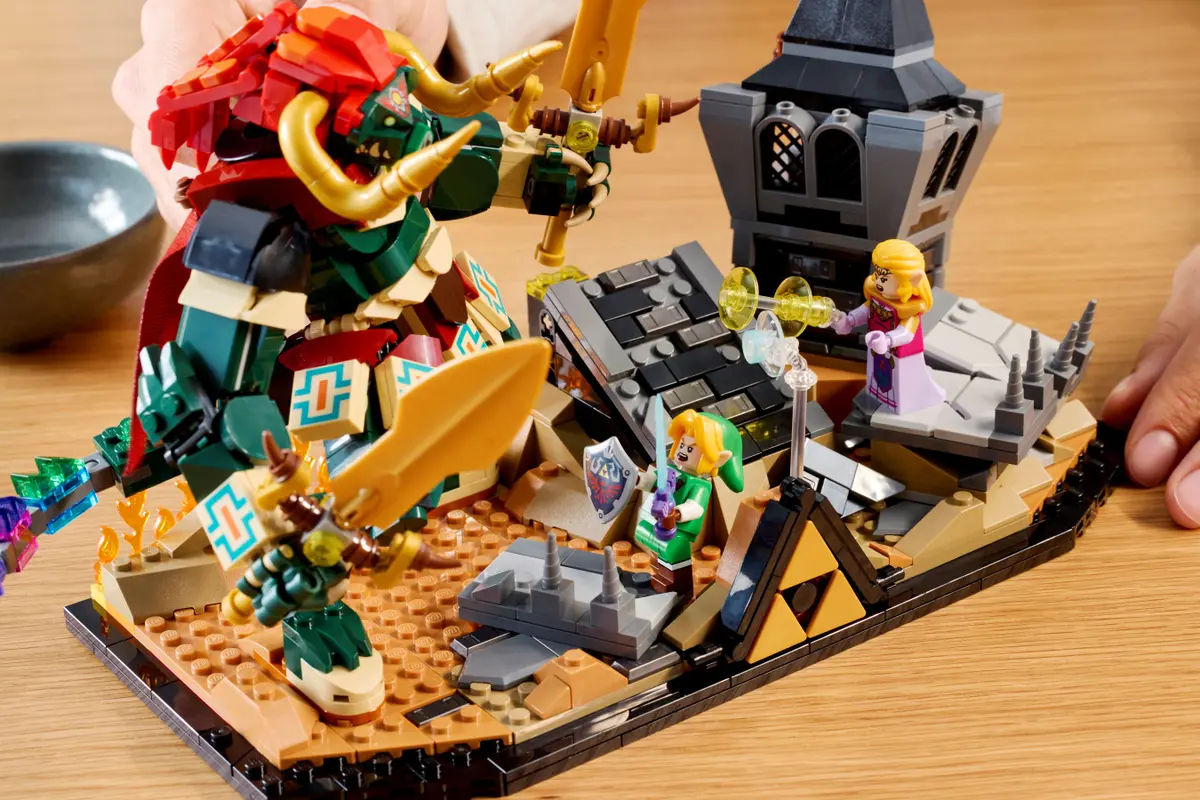
LEGO has officially pulled back the curtain on a The Legend of Zelda set that goes straight for the moment everyone remembers: the climactic confrontation from Ocarina of Time. The set is titled Ocarina of Time – The Final Battle and is scheduled to ship from March 1, 2026, putting a clear date on the calendar for collectors, builders, and anyone who still hears boss music in their head when they see Hyrule Castle. This reveal lands with a very specific promise: we’re not building a vague tribute or a collage of references. We’re building a scene with tension, recognizable silhouettes, and a clear story beat, anchored by Link and Princess Zelda facing off against Ganondorf, with a larger brick-built Ganon bringing that final-boss energy to the display. The fun part is how this kind of set can serve two audiences at once. If you love shelf-ready dioramas, it’s a dramatic centerpiece. If you love fiddly character details, it’s a lineup that invites close-up admiration and plenty of “wait, they included that?” moments. We also get the practical side: pre-orders, region storefront choices, and a few simple strategies that help you avoid the classic launch-day scramble.
What LEGO revealed about Zelda Ocarina of Time
LEGO’s official reveal makes the situation refreshingly simple: the set is real, the theme is locked, and the launch timing is not a mystery box. Ocarina of Time – The Final Battle is positioned as a major display set tied to a specific scene, and the launch date is set for March 1, 2026. That matters because it tells us how to pace our hype like adults who have learned the hard way that “sometime soon” is not a plan. If you’re budgeting, it’s a clean target. If you’re spacing out purchases, you can actually map it to the rest of your year instead of winging it. LEGO is also treating it like a serious collector build with an 18+ label, which usually signals a calmer, more deliberate building rhythm rather than a quick afternoon snap-together. In other words, we’re not just getting a shiny announcement – we’re getting enough official structure to plan.
Why the final battle works so well in bricks
Some scenes translate into bricks better than others, and the final confrontation from Ocarina of Time is basically built for this format. It’s a showdown with strong shapes: hero, princess, villain, and the transformed threat that looks like it could stomp across your shelf if you blink. That’s perfect for LEGO because the medium loves silhouettes you can read from across the room. It also helps that the scene has a built-in sense of place. Even if you strip it down to the essentials, you still have “ruined castle energy,” a sense of height and danger, and that storybook contrast of courage versus chaos. And let’s be honest – building a peaceful village is cute, but building a dramatic battle scene feels like turning your desk into a tiny stage. If you want a display that sparks instant recognition, this is the kind of pick that does the job without needing a caption.
A scene built for drama, not just nostalgia
We all love nostalgia, but nostalgia alone can be a flimsy foundation if the build doesn’t have presence. The good news is that this scene is naturally theatrical. Link and Zelda aren’t just standing around posing for a photo – the premise is conflict, and conflict is the secret sauce of a display that people actually stare at. The scene gives LEGO designers an excuse to include motion, tension, and asymmetry, which is a fancy way of saying “it won’t look like a neat little rectangle.” The final battle also carries emotional weight because it’s the payoff of an entire adventure, and that feeling can translate through small details like posture, spacing, and how the environment frames the characters. If you’ve ever placed two minifigures too close together and accidentally created a comedy sketch, you know spacing matters. Here, spacing can sell the story: heroes braced, villain looming, danger centered.
The castle setting that frames the showdown
The environment is what turns a character lineup into a scene you can feel. A castle setting, especially a damaged one, gives the build permission to be jagged, uneven, and visually loud in the best way. That kind of framing makes a display look intentional from multiple angles, not just straight-on like a postcard. It also gives you “negative space” for the eye to rest, which helps the figures pop instead of blending into a wall of bricks. Practically, a castle backdrop also works as a stability trick. When you connect scenery into a base, you often get a sturdier platform for posing characters, especially larger builds that need a confident stance. If the set uses castle elements to anchor the larger Ganon build, that’s not just cool theming – it’s structural common sense. Nobody wants a display where the final boss faceplants during a mild table bump.
Who’s included and why the lineup matters
Character choice can make or break a themed set, and this one goes straight for the core conflict. We’re not talking about a crowd scene or a “pick your favorite version” mashup – we’re talking about the central players of the climax. That’s important because collectors often care as much about who is included as they do about what is being built around them. A scene like this needs its emotional triangle: Link as the player’s courage, Zelda as the stakes and the hope, and Ganondorf as the villain with personality, not just a generic monster. Then you add the transformed Ganon element, and suddenly the display has scale. Scale is the thing that makes your shelf feel like a world rather than a row of toys. When the villain literally takes up more space, the scene reads instantly: this is the moment where the threat is bigger than the hero, and the hero has to win anyway.
Link and Zelda as the emotional center
Link and Zelda are the heartbeat of the scene, and that’s not just sentimental talk. In a battle display, the heroes are the entry point for the viewer. You look at them first, you recognize them, and you mentally step into their perspective. That’s why it matters how they’re presented, even in tiny plastic form. Adult Link is especially iconic in Ocarina of Time because he visually represents growth – the kid who pulled a sword and became the hero. Zelda’s presence matters because she’s not just a side character in this moment; she’s tied to the story’s identity and the stakes of the confrontation. When a set includes both, it’s telling us the scene isn’t only about “big monster looks cool.” It’s about the narrative beat people remember, the one that makes your brain go, “Oh right, this is the endgame.”
Ganondorf and the brick-built Ganon factor
Ganondorf is one of those villains who carries charisma even before the transformation, so including him alongside a larger brick-built Ganon creates a satisfying one-two punch: the mastermind and the monster. From a display perspective, that’s gold because it lets the scene communicate escalation. You can almost feel the “this got worse” moment, which is exactly what a final battle should do. A brick-built Ganon also gives the set a centerpiece that can dominate the shelf, and that’s often what collectors want from a premium build – something you can spot instantly across a room. It also gives builders more variety. Minifigures scratch the detail itch, but a larger creature build scratches the engineering itch, where you’re curious how the shape holds together and how the pose is achieved. That mix keeps the build from feeling like a flat diorama and more like a living snapshot.
Navi and the small touches that sell the moment
Small touches are what turn a “cool idea” into a set people obsess over, and Navi is the kind of detail that instantly signals care. Even if you’ve joked about being told to listen for the millionth time, Navi is inseparable from the Ocarina of Time experience. Including a representation of Navi gives the display a bit of that fairy-tale shimmer that contrasts nicely with the darker, ruined setting. Details like this also help collectors feel like the scene is “complete,” not just the minimum viable lineup. And beyond Navi, the best themed sets usually hide little nods that reward a closer look, like recognizable items or environmental callbacks. Those touches don’t need to be huge to matter. They function like seasoning – you might not notice the salt first, but you definitely notice when it’s missing.
What the build experience will likely feel like
The 18+ labeling and the choice of a climactic diorama scene point toward a build that’s meant to be savored, not rushed. Builds like this often rely on layered scenery, texture work, and clever shaping to make the environment feel like more than a boxy backdrop. That usually means repeated patterns that become oddly relaxing once you get into the rhythm, mixed with occasional “how did they do that?” moments where a small technique changes the look dramatically. The character mix also suggests variety in the build flow. You’re not only building walls and floors – you’re also building a creature form that likely uses different joints and structure ideas than the environment. That shift in build style keeps things fresh and prevents the “same brick, different day” feeling. If you like builds that alternate between calm assembly and exciting payoffs, this scene is set up to deliver that kind of pacing.
Display-first energy with smart interaction
Sets designed for display still benefit from interaction, not because we need to swoosh them around the room, but because interaction makes the finished build feel alive. Even subtle features like pose options, slight movement, or alternate arrangement choices can turn a static display into something you can tweak based on mood. One week you might want Link positioned as if charging forward, and another week you might want a more defensive stance. That’s the fun of a battle scene – it can tell slightly different versions of the same moment depending on how you pose it. Display-first also tends to mean the designers care about the “all angles” test. If you’re paying premium-set attention, you want a build that looks intentional from the side and back, not just from the front like a theater set with no backstage. A scene like this should invite you to rotate it and find new details.
Posing, stability, and shelf planning
Practicality is the unglamorous hero of any large display set. Posing is only fun if the pose holds, and stability is only satisfying if it doesn’t require constant babysitting. A brick-built creature like Ganon needs a stance that feels powerful while still being structurally confident, especially if the build includes any elevated elements or dramatic angles. Shelf planning also matters more than people admit. This isn’t a tiny desk trinket – it’s the kind of display that can become the “center of gravity” for a whole shelf arrangement. If you’ve ever played LEGO shelf Tetris at midnight, you know the struggle: one new set arrives and suddenly everything has to move. Thinking ahead about where it will live, how much breathing room it needs, and what angle you want facing outward can save you that late-night reshuffle. The goal is a display that feels curated, not crammed.
Pre-order and buying tips that actually help
Pre-orders can be exciting, but they can also be a trap if you treat them like a reflex. The smarter approach is to use the official launch date as your anchor and make a calm plan around it. Since the set is listed for shipping from March 1, 2026, you can decide whether you care about day-one delivery or whether you’re happy to wait and avoid any launch-week stress. If you’re the type who loves the ritual of building as soon as possible, pre-ordering early can remove uncertainty. If you’re more patient, you can still keep an eye on availability closer to launch. It also helps to remember that LEGO storefront pricing and availability can vary by region, so the best move is often to buy through the official LEGO site for your country, where shipping dates and local terms are clear. Clarity is underrated, especially when hype is loud.
Choosing the right storefront and region
The simplest rule is usually the best one: if you want fewer surprises, buy through the official LEGO storefront for your region. That’s where you’ll see the clearest local shipping language, the most direct availability status, and the correct regional pricing without conversions or guesswork. It also helps if you’re collecting Insider points or you care about official customer support if something goes wrong. Third-party listings can be fine, but they can also introduce confusing delivery windows, inflated pricing, or vague restock promises that feel like they were written by a fortune cookie. If you’re in a region with multiple LEGO storefront options, stick with the one that matches your address and currency. It keeps the checkout process straightforward, and it makes it easier to track launch-day changes without juggling different pages and different policies.
How to avoid missing launch-day stock
If you’ve ever watched a popular set flip to “temporarily out of stock” faster than you can type your address, you already know the pain. The easiest way to reduce that risk is to prepare like you’re doing something boring and responsible – because you are. Create your LEGO account ahead of time, make sure your payment method is ready, and confirm your shipping details before launch week. That’s not glamorous, but it’s effective. You can also decide in advance whether you want to order immediately when the date hits or whether you’re comfortable waiting for a steadier stock situation. Another tip is to avoid mixing too many other items into the same order at launch if you’re worried about delays. Sometimes one out-of-stock extra can complicate shipping, and suddenly your big set is waiting on a tiny add-on. Keep it clean, then treat yourself later.
How this fits into the LEGO Zelda line so far
The LEGO Zelda line is taking an interesting path: it’s not racing through a checklist of random scenes. Instead, it’s picking iconic, high-recognition moments that look good as display builds. That’s a smart strategy because Zelda has decades of beloved imagery, but not all of it translates into a satisfying physical build. A big, dramatic scene from Ocarina of Time does, because it has characters, stakes, and architecture that can form a strong base. This also signals that LEGO is comfortable leaning into Zelda’s legacy entries, not only the newest releases. For longtime fans, that’s a relief, because it means the line can celebrate the series’ history rather than chasing whatever is newest. For collectors, it suggests the line is aiming for shelf-worthy pieces that stand on their own, even if you only buy one. This set is positioned like a statement piece, not a filler entry.
Where it sits next to The Great Deku Tree
When you place a final battle set next to a build like The Great Deku Tree, you get a nice contrast in tone and display energy. One feels mythic and serene, like a sacred landmark you’d visit with quiet awe. The other feels like the room is about to shake, like you should probably back up your save file just in case. That contrast is good for a collection because it gives your shelf variety. It also shows LEGO understands that Zelda isn’t one-note. The series can be cozy and mysterious, and it can be intense and dramatic, sometimes within the same game. From a collector perspective, having both styles available makes the line feel more alive. You’re not only building “things” – you’re building moods. And if LEGO keeps alternating between landmark builds and story-scene builds, that could make future releases feel fresh rather than repetitive.
What fans will probably ask for next
Fans always ask for the next thing the moment the current thing is revealed, because that’s how fandom brains work. Once a line proves it can handle big scenes and iconic characters, expectations grow fast. People will likely want more major landmarks, more character-heavy moments, and more variety in eras. That doesn’t mean every request will happen, but it does mean the conversation will shift from “Will LEGO do more Zelda?” to “Which Zelda moment deserves the next slot?” That’s a fun place to be, because it turns the line into an ongoing celebration rather than a one-off novelty. The most realistic hope is that LEGO continues choosing scenes that make sense in bricks – strong silhouettes, recognizable locations, and builds that look good without needing a full playset ecosystem. If the line stays focused on display strength, it can build a reputation for quality rather than quantity.
Conclusion
Ocarina of Time – The Final Battle feels like LEGO picking a moment that can carry a whole display on its shoulders, and that’s exactly what a Zelda-themed collector set should do. With a clear March 1, 2026 launch date, a character lineup that hits the core of the story, and a dramatic scene that naturally fits the LEGO format, we’re looking at a set designed to be talked about, photographed, and proudly parked on a shelf where it can menace your other builds in the most charming way. The best approach now is simple: decide whether you care about building it right at launch, plan your purchase route through the official storefront that matches your region, and give yourself the gift of being prepared instead of panicked. If you’ve been waiting for LEGO Zelda to go beyond landmarks and step into story moments, this is the signal. The line isn’t tiptoeing – KM-level boss energy is officially on the shelf.
FAQs
- When does Ocarina of Time – The Final Battle release?
- The set is listed to ship from March 1, 2026, with that date shown on official LEGO product pages for the set.
- What is the set number for Ocarina of Time – The Final Battle?
- The set is listed as #77093 on official LEGO product pages.
- How many pieces are included?
- The official LEGO listing shows 1003 pieces.
- Which characters are included?
- The official listing and coverage describe minifigures of Link, Zelda, and Ganondorf, alongside a larger brick-built Ganon and a small Navi element.
- Is this more of a display set or a play set?
- Everything about the presentation points toward display-first design, including the diorama-style scene choice and the 18+ labeling, while still leaving room for posing and arrangement fun.
Sources
- Ocarina of Time – The Final Battle (77093), LEGO.com, January 2026
- Lego’s new Legend of Zelda set revealed, up for pre-order, Polygon, January 16, 2026
- LEGO The Legend of Zelda 77093 Ocarina of Time – The Final Battle revealed!, Brickset, January 2026
- Zelda’s Next Lego Set Is Based On Ocarina Of Time’s Final Battle, Out March, Nintendo Life, January 16, 2026
- LEGO OCARINA OF TIME Set Hits Us Right in the N64 Heart, Nerdist, January 16, 2026