














Summary:
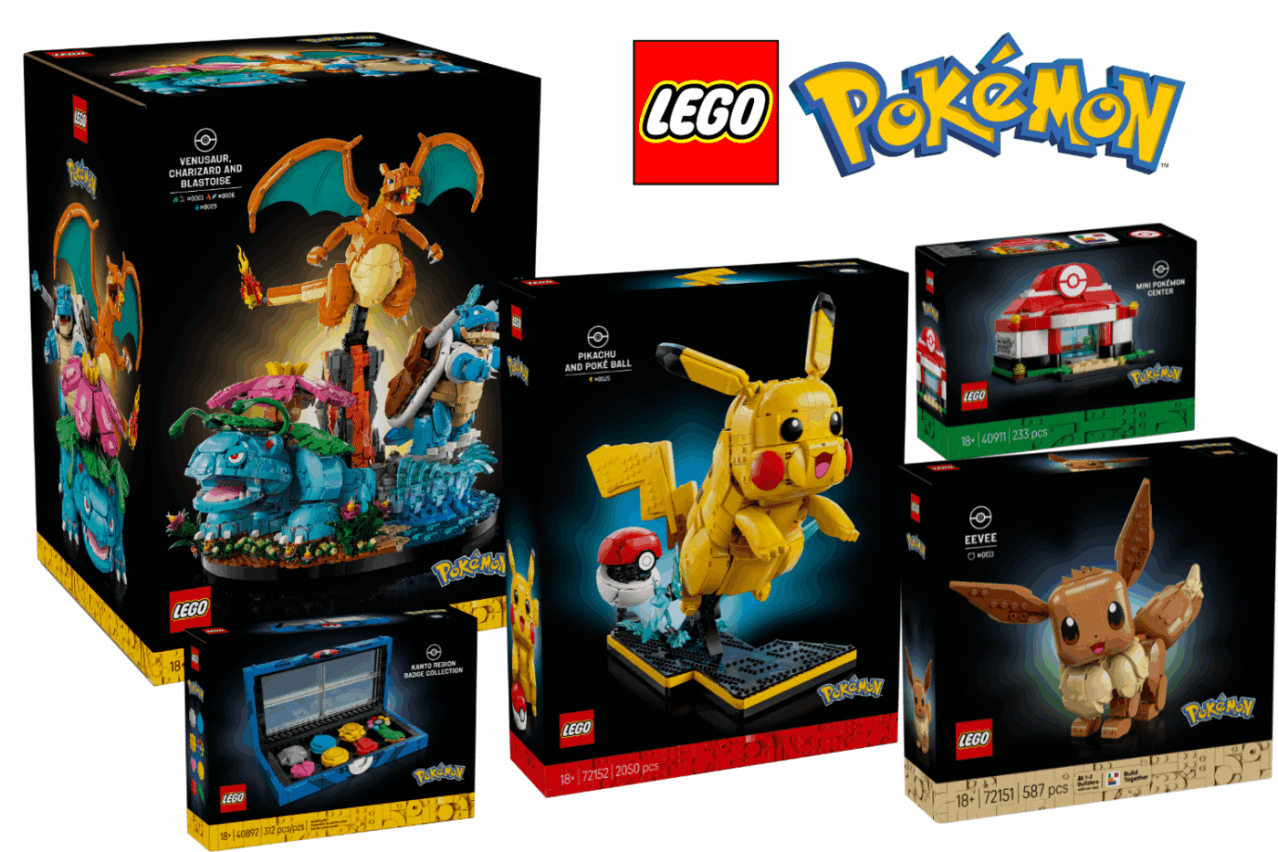
LEGO and The Pokémon Company have finally opened the Poké Ball on their long-awaited collaboration, and the first wave lands with a very clear personality: these are display-first builds designed for people who enjoy the slow, satisfying process as much as the finished shelf moment. We’re getting three sets featuring five familiar faces: Eevee, Pikachu, Venusaur, Charizard, and Blastoise. The pricing ladder is just as bold as the nostalgia, starting at $59.99 for Eevee (set 72151), jumping to $199.99 for Pikachu and Poké Ball (set 72152), and then launching into orbit at $649.99 for the Venusaur, Charizard, and Blastoise diorama-style build (set 72153). Each set is marked 18+, which is LEGO’s way of hinting at “take your time, enjoy the details, and maybe don’t hand this to a kid right before bedtime.”
What makes this reveal fun is how differently the three options fit into real life. Eevee is the friendly entry point: cheaper, smaller, and easy to imagine on a desk. Pikachu and the Poké Ball feels like the statement piece most fans will debate, because it’s big enough to look premium without requiring a spare mortgage. Then there’s the Kanto trio set, which is basically LEGO saying, “Yes, we know exactly what you’re feeling right now,” and offering a giant centerpiece for anyone who wants their childhood memories rendered in thousands of bricks. If you’re trying to decide which one to grab, we can treat it like choosing a starter: it’s less about “best,” and more about what kind of builder you are and how much room you’ve got to show it off. You can browse the official LEGO Pokémon lineup here: LEGO Pokémon sets.
LEGO x Pokémon is official, and the first wave is aimed at display lovers
It’s real, it’s brick-built, and it’s arriving with the energy of a curtain drop at a sold-out show. LEGO and The Pokémon Company are kicking off their partnership with three sets that are clearly designed to look good on a shelf, not to be tossed into a toy bin with last year’s mystery minifigures. The big tell is the 18+ label across the board, which usually means more focus on sculpted shapes, display bases, and a build flow that rewards patience. Think of it like cooking a slow stew instead of microwaving noodles: both feed you, but one is about the experience. That choice also makes sense for a first wave, because the audience is guaranteed to include long-time Pokémon fans who now have adult money, adult taste, and adult storage problems. If you’re already imagining where you’ll put Pikachu, you’re in the target zone.
Why the first three builds lean “collector shelf” instead of “toy box”
LEGO could’ve started with smaller, kid-focused sets, but the first trio feels like a statement: “We can do this at a premium level right away.” That approach is smart because it sets expectations about quality and detail, and it also gives collectors a reason to jump in on day one. These sets aren’t shy about being display pieces, either. We’re looking at a lineup that includes an articulated Eevee, a dynamic Pikachu bursting out of a Poké Ball, and a massive Kanto trio arrangement that’s built to be the centerpiece of a room. If you’ve ever seen a friend’s shelf with one carefully lit model that makes you whisper, “Okay, that’s sick,” this is that vibe. The tradeoff is obvious: they cost more, they take longer, and they demand space. But for a lot of fans, that’s not a downside. That’s the point.
What the 18+ label usually signals about build style
When LEGO marks something 18+, it’s usually telling us a few practical things. First, the build tends to prioritize curves, shaping, and a more “sculptural” result, even when the subject is cute and familiar. Second, the experience often includes longer sessions and more repetition, because detailed models use lots of similar pieces in careful patterns. Third, the finished build is meant to be handled gently, like a display statue rather than an action figure. That doesn’t mean you can’t enjoy it if you’re younger, but it does mean the design is optimized for people who like taking their time and appreciating the little choices. If you’ve built an adult-focused set before, you know the feeling: the last step clicks in and suddenly it looks like it belongs in a studio photo. That’s the kind of satisfaction these sets are chasing.
Meet the first five Pokémon recreated in bricks
For the debut wave, LEGO and Pokémon didn’t overthink the character selection. They went straight for recognizability and emotional impact. Eevee is basically a walking “awww,” Pikachu is the franchise’s global mascot, and the Kanto starter final evolutions are the kind of trio that can turn a casual fan into a storyteller in ten seconds. “I picked Charmander.” “No, Bulbasaur was better.” “Squirtle Squad forever.” We all know how it goes. The clever part is that these five cover different kinds of appeal: cute, iconic, and legendary-in-your-own-head. It’s also a nice balance of forms and silhouettes, which matters for LEGO builds. Tails, ears, wings, shells, and plant textures give designers more visual tools. And for us as builders, that means each set should feel distinct rather than like three variations of the same blocky animal.
Why this lineup feels like a greatest-hits starter pack
This first wave is like the opening track list of a greatest-hits album. Even if you haven’t played a Pokémon game in years, you know these characters, and you probably have memories attached to at least one of them. That matters because premium LEGO sets often sell on feeling as much as function. You’re not buying “plastic bricks,” you’re buying the moment your brain goes, “Oh wow, it’s actually them.” And by choosing the Kanto starter evolutions, LEGO is leaning into a shared cultural memory that spans generations. It’s also a strong hint about where future waves could go: if this launch sticks, we can easily imagine more starters, more evolutions, and maybe some fan-favorite legendaries down the line. For now, though, the message is simple: the door is open, and the first step is intentionally familiar.
Set one: Eevee (72151) keeps it charming and approachable
Eevee is the set that feels most like an easy “yes,” even if you’re trying to be responsible. At $59.99, it’s the lowest-cost entry into the lineup, and it comes with the kind of character design that makes brick building feel forgiving. Eevee’s shapes are soft and rounded, which LEGO can translate into a model that looks cute even when you notice the studs. The official details position it as a poseable build with movable parts, which is perfect for a desk or a shelf where you might want to tweak the stance once in a while. It’s also the kind of gift you can give without needing a long explanation. You don’t have to justify it like a giant collector piece. You can just say, “It’s Eevee,” and watch someone’s face do the rest of the talking.
What you’re paying for at the $59.99 tier
At the entry level, the value is mostly about personality and display flexibility. You’re not paying for sheer size, you’re paying for the joy of building a recognizable character and ending up with something that looks great in a small footprint. Eevee is listed as a 587-piece set with an 18+ label, which suggests it’s still designed to be a satisfying build rather than a quick snap-together toy. That’s important, because “small” doesn’t have to mean “cheap-feeling.” If you like the ritual of building, the calmer pace can actually be a plus. It’s like choosing a shorter hike with a beautiful view instead of a mountain climb that leaves you sweating and questioning your life choices. Eevee is also a smart pick if you’re new to display builds and want to learn what you enjoy before committing to bigger, pricier sets.
Set two: Pikachu and Poké Ball (72152) is the “centerpiece” middle option
Pikachu and the Poké Ball is the set that screams “main display,” without immediately jumping into the ultra-premium tier. At $199.99, it’s clearly meant to feel substantial, and the official description leans into an iconic moment: Pikachu bursting out of a Poké Ball, ready for action. This isn’t a quiet pose, it’s an “entrance” pose. The set also includes a base designed to support that motion, which matters because dynamic models need stability. If Eevee is the friendly desk buddy, Pikachu is the living room conversation starter. It’s the one your friend notices from across the room and says, “Wait, that’s LEGO?” and then walks over like they’re being pulled by a magnet. And honestly, that’s half the fun of a display build: it starts conversations you didn’t plan to have.
The base, the “25” nod, and why it’s built to be posed
This set is packed with little design choices that are clearly aimed at fans. The base includes a “25” detail, a nod to Pikachu’s Pokédex number, which is the kind of thing that makes builders smile because it feels like an inside handshake. The build is also described as poseable, which is crucial for a character like Pikachu. A static Pikachu can still look good, but a poseable one feels alive, like it’s mid-scene. The Poké Ball element is also doing a lot of emotional work here, because it’s one of the most recognizable symbols in gaming history. Put it together and you get a display that doesn’t just say “Pokémon,” it says “the moment Pokémon happens.” If you want a single set that feels premium without needing a massive dedicated shelf, this is likely the sweet spot.
How to think about space before you start building
Let’s talk about the least glamorous part of buying a big display build: where it’s going to live. This is the part where we all pretend we have more shelf space than we do, and then reality shows up like a strict gym coach. Before you commit, it helps to pick the location first and treat it like reserving a seat at a concert. The Pikachu and Poké Ball set is designed as a display with a base, which means it wants a stable, flat surface and a little breathing room around it. You’ll also want to consider sight lines. A dynamic pose looks best when it’s not crammed against a wall like it’s being punished. Give it a little space so the silhouette reads clearly. If you’ve got pets, small kids, or an especially dramatic roommate, consider putting it somewhere safe. Nothing ruins the magic like Pikachu face-planting at 2 a.m.
Set three: Venusaur, Charizard and Blastoise (72153) goes full Kanto showpiece
This is the big one. The “we’re really doing this” set. At $649.99, the Venusaur, Charizard, and Blastoise build is priced like a premium centerpiece, and it’s also sized like one. It’s described as one of LEGO’s largest display sets, built around the final evolutions of the original Kanto starters, with an action base designed to bring them together in a single scene. The appeal is immediate if you grew up with Gen 1: it’s nostalgia, rivalry, and playground debates turned into a museum-style display. And because it’s a diorama-style build, it’s not just three figures standing there politely. The base is part of the storytelling, with details inspired by each Pokémon’s environment. It’s the kind of set that feels like it’s meant to be stared at, not just owned.
What makes the $649.99 set feel like a diorama, not just three figures
The difference between “three models” and “a diorama” is context. A diorama gives the characters a stage, and this set’s action base is designed to do exactly that. Official details describe environmental inspiration tied to each Pokémon, plus hidden Easter eggs for builders to discover. That matters because it turns the building experience into something more playful than simply stacking bricks until it looks right. It’s also a smart way to justify the scale: you’re not only paying for three large characters, you’re paying for a unified display that has depth and layers. Think of it like the difference between buying three framed posters and buying a full wall mural. The mural changes the room. That’s what this set is aiming for. If you want a centerpiece that feels like a tribute to Kanto itself, this is the one.
Display options: together, separate, or somewhere in between
A huge set can be intimidating, but the display flexibility helps. According to the official product details, the three Pokémon can be displayed individually or together on the action base. That’s a big deal for real homes, because not everyone has space for a full diorama footprint forever. You might build it as the complete scene for a while, then later decide to separate the figures across shelves. That kind of modularity makes the purchase feel less like a single moment and more like something you can keep refreshing. It also makes the build feel more personal. You can set up a “starter shrine,” or spread them out like guardians of different corners of your room. And yes, we all know Charizard is going to try to steal the spotlight. Let it. Charizard has never been good at sharing attention.
Prices in plain language: why $60, $200, and $650 hit differently
Even if you love LEGO and Pokémon, those price jumps can feel like stepping on three different rungs of the same ladder. $59.99 for Eevee feels like a treat purchase. You can justify it as a birthday gift, a weekend project, or a “I survived this week” reward. $199.99 for Pikachu and Poké Ball is the “serious hobby” tier. It’s not impulsive for most people, but it’s still within the realm of a planned buy. Then $649.99 is a full commitment. That’s the kind of purchase you think about, clear space for, and maybe warn your partner about like it’s a weather event. The good news is that the lineup is structured so you can participate at your comfort level. Nobody is forced into the premium tier to feel included. Eevee is the gateway, Pikachu is the statement, and the Kanto trio is the crown.
Release timing and pre-orders: what we know for February 27, 2026
The launch timing is refreshingly straightforward. The official announcement lists a February 27, 2026 release for the first three sets, with pre-orders beginning in mid-January 2026. That date matters for two reasons. First, it helps you plan, especially if you’re budgeting or lining it up as a gift. Second, it hints at the cultural timing, because late February is a familiar window for Pokémon celebrations. If you’re the type who likes to build the moment something arrives, you’ll want to think about shipping and delivery schedules, not just the release date itself. Pre-orders can help lock in your place, but they also come with the usual realities: stock limits, household limits, and the chance that popular items move fast. If you want the big Kanto set, planning ahead is the calmer route.
How to plan around shipping dates and availability
The simplest plan is to pick your target set now, then decide whether you want to pre-order or wait for release day. If you pre-order, you’re trading flexibility for peace of mind. If you wait, you keep your options open, but you might be dealing with sellouts or backorders depending on demand. It also helps to think about your build schedule. These are not “build in 20 minutes before dinner” projects, especially the larger sets. If you’re aiming for a specific moment, like building on a weekend or unveiling it as a gift, give yourself buffer time. The calmest builder is the one who doesn’t have to rush. Rushing turns LEGO into stress, and nobody wants to discover they’re missing a piece while the clock is ticking. Plan like a trainer. Prepare. Then enjoy the battle.
Where to buy: LEGO.com, LEGO Stores, and what “selected retailers” can mean
For the cleanest, most direct option, LEGO’s official shop and LEGO branded stores are the obvious starting points, and the official announcement also mentions availability through selected retailers in some regions. In practice, that usually means the most reliable place to find accurate listings, set numbers, and launch timing is LEGO’s own site. That’s also where you’ll typically see official purchase limits, membership perks, and any special promotions tied to the release window. If you prefer buying in person, LEGO Stores can be a fun choice because you get the “spot it on the shelf” thrill and you can inspect the box like a detective. If you’re shopping through other retailers, the main tip is to double-check set numbers and pricing against LEGO’s official listings. With a launch this anticipated, clarity is your best friend. Confusion is how wallets get hurt.
Choosing the right set for you (or for gifting without panic)
If you’re stuck between the three, the trick is to choose based on the builder, not just the Pokémon. Eevee is perfect for someone who wants a charming display build that doesn’t dominate a room. It’s also a great “first dip” into the lineup. Pikachu and Poké Ball is ideal for someone who wants a single centerpiece that feels iconic and substantial, but still manageable. The Kanto trio set is for the person who loves the idea of a premium, museum-style display and actually has somewhere to put it. It’s the difference between buying a poster, buying a framed print, and commissioning a mural. All three can be great, but they fit different lives. If you’re gifting, it’s also worth thinking about space and time. A $650 set is exciting, but it can become a burden if the person doesn’t have room to display it or time to build it. The best gift is the one that feels joyful, not stressful.
Match the build to the person, not just the Pokémon
Here’s a simple way to choose without overthinking. If the person likes quick wins and cute desk displays, Eevee is the safest pick. If they like showing off a single bold piece and talking about it with friends, Pikachu and the Poké Ball is the crowd-pleaser. If they’re the type who enjoys long builds, collects premium sets, and gets weirdly happy about hidden details, the Kanto trio is the dream. Also, don’t underestimate the emotional factor. Some people have a “starter for life,” and buying against that preference can feel like giving someone a cake in a flavor they don’t like. Yes, it’s still cake, but it’s not their cake. If you know their favorite, lean into it. If you don’t, Eevee is the neutral pick that almost nobody argues with.
Building tips that keep the fun high and the frustration low
Big builds are a bit like long road trips: the destination is great, but the experience depends on how you pace yourself. Start by giving yourself a clean workspace with good lighting, because hunting for tiny pieces in a shadowy corner is a fast path to irritation. If you’re building with someone else, treat it like a shared activity, not a race. One person can sort pieces while the other builds, and suddenly it feels smoother. Take breaks before you get tired, not after. Tired building leads to mistakes, and mistakes lead to backtracking, and backtracking leads to you saying words you don’t want your neighbors to hear. Also, keep drinks at a safe distance. Spilled coffee and LEGO instructions are not a romantic pairing. The goal is to make the process feel relaxing and satisfying, not like assembling furniture with a mysterious missing screw.
Sorting, pacing, and making long builds feel lighter
Sorting is the secret weapon that makes big builds feel less overwhelming. Even a basic approach helps: group similar pieces, keep frequently used parts within reach, and clear away packaging as you go so your workspace doesn’t become a chaotic nest. Pacing is just as important. If you’re tackling the $650 Kanto set, consider splitting it into sessions and giving yourself mini milestones. “Tonight we build the base.” “Tomorrow we build Charizard.” That turns a giant project into a series of satisfying wins. And if you’re building the Pikachu set, don’t be afraid to pause and admire progress. It sounds silly, but it’s motivational. You’re literally watching a character appear out of bricks. That’s magic. Let it feel like magic, instead of turning it into a sprint that ends with you exhausted and unable to enjoy the finished model.
What this collaboration signals for the future of LEGO x Pokémon
This first wave looks like a deliberate foundation, both creatively and commercially. LEGO and Pokémon are proving they can handle iconic characters with attention to detail, and they’re starting with a lineup that has broad appeal and strong emotional pull. The fact that the first releases are premium, display-focused builds suggests confidence in an adult collector audience, and it also sets a high bar for future waves. If this wave performs well, it’s easy to imagine expansions that go in multiple directions: more starters, popular evolutions, legendary Pokémon, or even region-themed sets that feel like locations rather than characters. The key is that LEGO now has a design language for Pokémon in brick form. Once that language exists, the possibilities multiply. For fans, that’s exciting and slightly terrifying for the wallet. For builders, it means we’re likely just at the beginning of a very long, very fun road.
Conclusion
The first LEGO x Pokémon reveal gives us three clear ways to join in, and each one scratches a different itch. Eevee (72151) is the warm, affordable entry point at $59.99, perfect for a desk, a shelf, or a gift that doesn’t require a long speech. Pikachu and Poké Ball (72152) sits in the middle at $199.99 and feels like the iconic centerpiece most fans will seriously consider, especially with its dynamic pose and playful nods. Then the Venusaur, Charizard, and Blastoise set (72153) is the premium Kanto celebration at $649.99, built for people who want a true showpiece and have the space to let it shine. If you’re deciding, pick based on your building style, your display space, and how much you want this to be a casual joy versus a big event. Either way, it’s a satisfying moment for fans. Pokémon has always been about bringing creatures to life in your own story, and now we’re doing it one brick at a time.
FAQs
- How many LEGO Pokémon sets are in the first release wave?
- There are three sets in the first wave, featuring five Pokémon in total: Eevee, Pikachu, Venusaur, Charizard, and Blastoise.
- What are the prices for Eevee, Pikachu and Poké Ball, and the Kanto trio set?
- LEGO lists Eevee at $59.99, Pikachu and Poké Ball at $199.99, and Venusaur, Charizard and Blastoise at $649.99 in the official product details.
- When do the first LEGO Pokémon sets release?
- The official announcement lists a launch date of February 27, 2026 for the first three sets.
- Where can we buy the LEGO Pokémon sets?
- They’re available through LEGO.com and LEGO branded stores, with the announcement also noting availability through selected retailers in some regions.
- Which set is the best pick if we’re buying as a gift?
- Eevee is the safest gift for most people because it’s the most affordable and easiest to display. Pikachu is a strong choice for someone who wants a centerpiece. The Kanto trio set is best for dedicated collectors with space and patience.
Sources
- Can You Catch and Build Them All? The LEGO Group Reveals First-Ever LEGO Pokémon Sets and Trainer Challenge, LEGO Newsroom, January 12, 2026
- The first three Lego Pokémon sets launch in February and include a $650 diorama, The Verge, January 12, 2026
- Lego’s first Pokémon sets are now available for pre-order, Engadget, January 12, 2026
- Gotta build ‘m all: LEGO kondigt eerste Pokémon-sets aan, Tweakers, January 12, 2026
- Lego Pokemon finally revealed, but what have they done to Pikachu, GamesRadar+, January 12, 2026