














Summary:
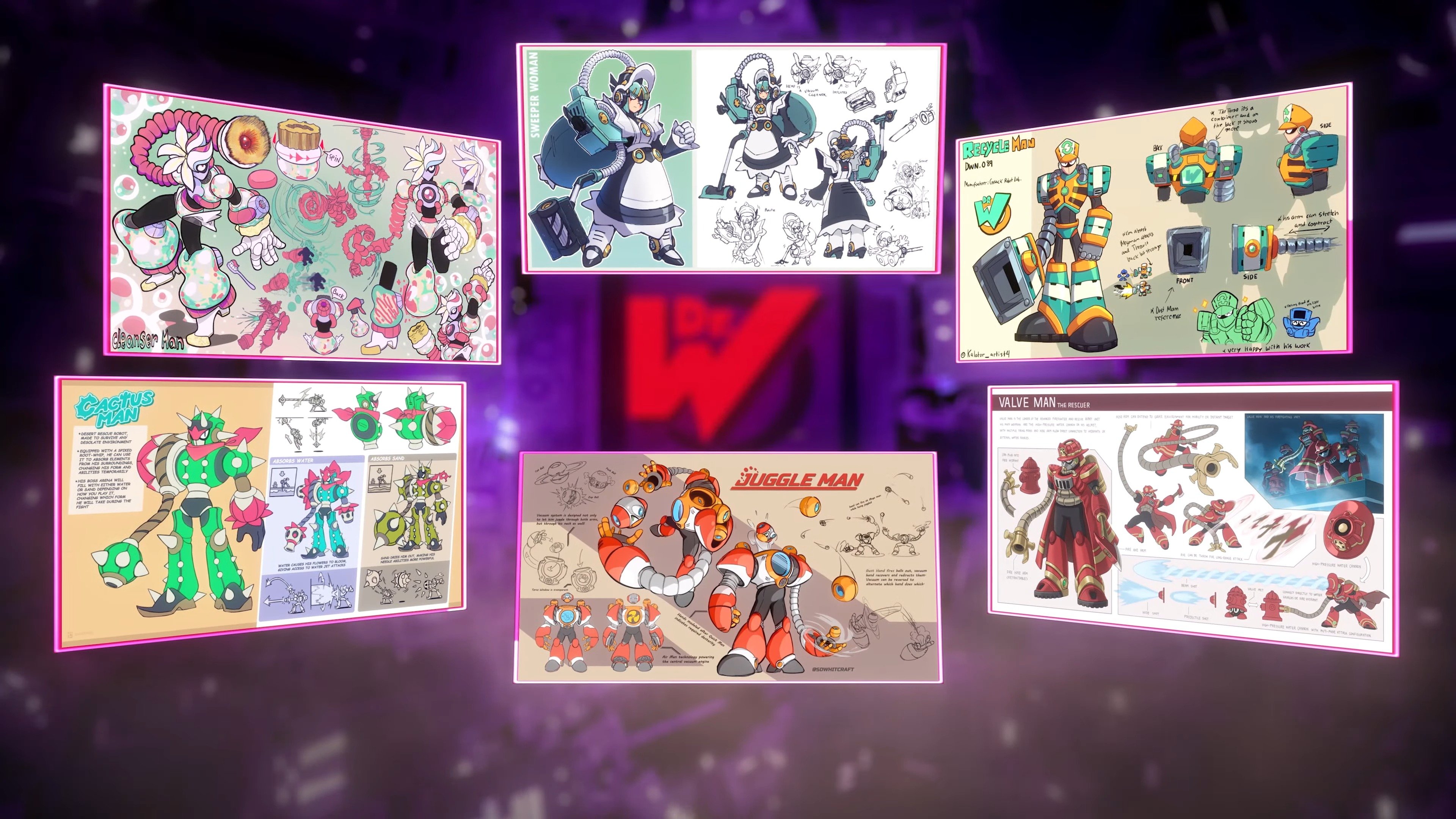
Capcom has handed Mega Man fans the kind of update that instantly gets people talking. After receiving more than 10,000 entries for the Robot Master Design Contest tied to Mega Man: Dual Override, the company has narrowed the field down to six finalists. That alone is a strong sign that the new game is trying to do more than simply lean on nostalgia. It shows a series willing to invite its community into the creative process while still keeping final control over what makes it into the finished release. For a franchise built on memorable boss designs, distinct powers, and the thrill of figuring out a stage order that works in your favor, that approach feels like a natural fit rather than a publicity stunt.
The update also arrives with another detail that matters just as much: the silhouettes of the seven robot masters designed by Capcom have now been revealed. That means fans are not only looking at a fan contest with a real prize, but also beginning to speculate about the full shape of the boss lineup. It is exactly the kind of breadcrumb trail that works for Mega Man. You do not need a full release date to keep people interested when the series has such a strong visual identity and such a loyal audience for every reveal. A shadow, a pose, or a strange mechanical gimmick can be enough to set message boards on fire.
What makes this moment especially notable is timing. Mega Man: Dual Override is still scheduled for Nintendo Switch and Switch 2 in 2027, which gives Capcom room to build momentum without burning through all its surprises too early. The contest finalists, the silhouettes, and the promise that one winning fan design will appear alongside the main set of robot masters all help frame this return as something lively and collaborative. Mega Man is not creeping back onto the stage. He is charging in with sparks flying, and for fans who have waited a long time to see the Blue Bomber lead a brand-new adventure again, that matters a lot.
Mega Man: Dual Override has finally given fans something real to talk about
There is a big difference between a logo reveal and an update that actually gives people something meaty to chew on. Mega Man: Dual Override just crossed that line. Capcom has now confirmed the six finalists of the Robot Master Design Contest after more than 10,000 entries, and that immediately gives this upcoming release a stronger identity. Instead of feeling like a distant project floating somewhere out in 2027, the game suddenly feels active, shaped, and very much alive. Fans can now point to specific designs, discuss which one should win, and start imagining how that fan-created robot might function inside a real Mega Man stage. That is the kind of momentum a long-running series thrives on. Mega Man has always been built on memorable enemies and creative powers, so revealing finalists for a contest centered on Robot Masters is not some side activity. It cuts right to the heart of what people love about the series.
Capcom’s Robot Master Design Contest became bigger than many expected
Getting over 10,000 entries is not the kind of number you brush aside with a polite nod and a corporate smile. It points to a fanbase that is still deeply attached to Mega Man and still eager to take part in its future. That matters because the series has had long quiet stretches where fans had to live on collections, rereleases, and pure stubborn hope. A response this large tells a different story. It says that even after years away from a brand-new mainline-style release, Mega Man can still pull artists, long-time players, and casual supporters into one giant burst of enthusiasm. In practical terms, it also gave Capcom something valuable: proof that this comeback still has reach. You can almost hear the gears turning. When that many people send in ideas for a Robot Master, it means the character formula still works. It still sparks imagination. It still makes people want to sketch, vote, and argue over which weird mechanical menace deserves a spot in the final lineup.
The six finalists show how flexible Mega Man’s boss design formula still is
One of the reasons Mega Man endures is that Robot Masters can be almost anything, as long as the idea is strong and the execution clicks. That formula is sturdy enough to survive decades because it balances structure with freedom. You know the broad shape going in. There will be a themed boss, a stage built around that gimmick, and a special weapon that changes how you play. Inside that framework, though, the possibilities are wide open. The finalists reflect exactly that. Some lean into quirky household or environmental themes, others feel more aggressive or eccentric, and together they remind people why Mega Man boss speculation is half the fun. A good Robot Master is not just a cool drawing. It is a promise. It hints at level hazards, attack patterns, weaknesses, music style, and even where that boss might sit in the traditional ladder of difficulty. These finalists do not merely fill space in a contest gallery. They reignite the central question every Mega Man player loves asking: which one are you taking on first?
Why one winning fan design matters more than it might seem
At first glance, letting a fan-created Robot Master into the finished game sounds like a fun extra. In reality, it carries more weight than that. It creates a bridge between Capcom and the audience in a way that feels fitting for this series. Mega Man has always inspired fan art, fan game projects, stage concepts, and endless home-made boss ideas, so formally making room for that creativity feels almost overdue. There is also a symbolic side to it. By giving one fan design a place next to seven Capcom-created robot masters, the company is telling players that community imagination is not just noise on the sidelines. It has value. It can stand beside official work. That is powerful, especially for a franchise with such a passionate and creative following. It turns the final selection into more than a winner announcement. It becomes a statement about what kind of return Dual Override wants to be.
The seven official Robot Master silhouettes add another layer of curiosity
Few things trigger Mega Man speculation faster than silhouettes. It is the gaming equivalent of hearing a locked door click open somewhere down the hall. You cannot see everything yet, but you know something good is waiting. By revealing the silhouettes of the seven Robot Masters designed internally, Capcom has given fans a puzzle to stare at frame by frame. Shapes matter in Mega Man. A strange shoulder outline, a weapon profile, an oversized helmet, or a dramatic stance can send people spinning into theory mode in seconds. That is part of the series’ charm. Bosses are not just challenges, they are icons. Even before names and powers are confirmed, players start building expectations based on visual language alone. One silhouette might scream speed, another might hint at a heavy industrial theme, and another could look so odd that it instantly becomes the fan favorite. This kind of reveal works because Mega Man history is packed with unforgettable robot designs, and people know that a strong silhouette often leads to a strong boss identity.
Capcom is using mystery in a way that suits Mega Man perfectly
Not every game benefits from this kind of controlled teasing, but Mega Man is almost built for it. The series thrives on anticipation that arrives in small, sharp bursts. A stage name. A boss portrait. A weapon reveal. A music sample. Piece by piece, a larger picture starts to form. That drip-feed style works because each reveal feeds the imagination rather than exhausting it. In Dual Override’s case, the silhouettes help Capcom keep the spotlight moving without needing to unload a huge trailer or a full release date. It is a clever rhythm. Fans get enough to discuss, but not enough to settle down. The conversation keeps moving, and for a game still set for 2027, that matters. A project can feel far away until it starts creating rituals of speculation. Mega Man now has that again, and it fits like an old glove that still somehow feels new.
Nostalgia is part of the appeal, but it is not the whole story
It would be easy to frame Dual Override as a simple nostalgia play. Blue hero returns, old fans cheer, familiar formula rides again. But that undersells what is happening here. Nostalgia may get people through the door, but it does not keep them standing in the room discussing silhouettes, finalist designs, and future boss abilities. What keeps attention alive is the sense that Capcom is not just replaying the greatest hits. The contest structure, the fan involvement, and the fresh reveal cadence suggest a release that understands its history without being trapped by it. Mega Man does not need to pretend it is something else to feel exciting. It just needs to show that the old strengths still have room to breathe. That is where Dual Override seems promising. It looks like it wants to honor the blueprint while also letting new ideas climb onto the workbench and start buzzing with electricity.
The Blue Bomber’s long wait makes every update hit harder
When a series goes quiet for a while, each new reveal lands with extra force. That is exactly what is happening here. Fans have had time to miss Mega Man, to replay older entries, to imagine what a modern return might look like, and to worry whether it would happen at all. Because of that, even a contest finalist update carries unusual weight. It is not just another routine news cycle moment. It feels like confirmation that the comeback is real, moving, and gathering shape. There is emotion baked into that. Mega Man is one of those characters who lives in gaming history with an almost impossible level of recognition, yet new releases have not exactly arrived like clockwork. That gap changes how people react. Every screenshot, every silhouette, every reveal has a little extra voltage behind it. Fans are not merely observing progress. They are enjoying the feeling of having something new to believe in again.
Nintendo Switch and Switch 2 players are clearly part of the plan
The confirmed 2027 launch on both Nintendo Switch and Switch 2 says a lot about how Capcom views the audience for Dual Override. Mega Man and Nintendo systems have a relationship that feels almost stitched into gaming history, so seeing the game positioned for both platforms makes immediate sense. It keeps the door open for long-time Switch owners while also giving the newer hardware a high-profile platformer from one of Capcom’s best-known brands. That kind of cross-generational approach can be tricky, but it also broadens the reach of the release in a way that suits Mega Man’s wide appeal. Younger players, returning players, collectors, and people who simply want a classic action platformer on Nintendo hardware all end up in the conversation. There is a practical upside too. Mega Man does not need to be fenced off behind only the newest box under the television to generate excitement. The series works because of design clarity, challenge, rhythm, and personality. Those strengths travel well.
A 2027 release window creates patience, pressure, and possibility
A release window without a specific date can feel frustrating, but it also gives Capcom room to shape expectations properly. In this case, 2027 does not come across as empty air. It feels like a marker that the company is willing to keep feeding information over time. The finalist reveal supports that impression. Rather than going silent, Capcom is laying down stepping stones. That helps because fans can see a path forming even if the destination is still a little foggy. It also creates pressure in a good way. Once a project starts sharing concrete details, the audience expects a cadence. They want the winner announcement. They want boss names, stage footage, maybe music, maybe a clearer look at the central hook behind the title Dual Override. The good news for Capcom is that Mega Man is a series where even small reveals can carry surprising mileage. You do not need to kick down the whole door when a silhouette, a weapon clue, or a stage gimmick can already send excitement buzzing through the walls.
What this contest update says about Capcom’s confidence in the project
Companies do not put fan-driven features this close to the spotlight unless they believe the surrounding release can support it. That is one of the more interesting takeaways from the finalist reveal. Capcom could have kept the contest tucked away as a side promotion and quietly named a winner later. Instead, it made the finalists and the broader Robot Master conversation part of the game’s growing identity. That suggests confidence. It suggests the team knows boss design is a strength worth highlighting and that the community response is an asset, not a distraction. It also hints that Capcom understands the emotional side of this return. Mega Man fans are not only waiting for a launch date. They are waiting for signs that this revival has heart, personality, and some spark in its wiring. Letting the community help shape one of the boss encounters is a strong way to show that. It feels collaborative, but it also feels very deliberate.
Why fans will keep watching every reveal from here
Once a Mega Man lineup starts to take shape, it becomes almost impossible for fans to look away. That is the beauty of this series. Each reveal is like adding another colored piece to a machine that is slowly coming together in public view. Right now, people have the six finalists, the promise that one of them will enter the final release, and the silhouettes of seven official robot masters. That is already enough fuel for debates, rankings, mock stage orders, and all kinds of wishful theorizing. As more details emerge, that energy is only likely to grow. A confirmed winner will change how people view the full roster. More official boss reveals will sharpen predictions. Eventually, gameplay details will begin connecting those visual ideas to real mechanics. Until then, the contest finalists serve an important role. They keep the conversation warm, they make Dual Override feel more tangible, and they remind fans that Mega Man’s return is not drifting in from a fog bank. It is taking shape with sparks, steel, and just the right amount of mystery.
Conclusion
Mega Man: Dual Override has moved from hopeful promise to something much easier to picture. The six Robot Master Design Contest finalists give the game a stronger identity, the official silhouettes deepen the mystery around the boss lineup, and the 2027 release window now feels filled with potential rather than empty waiting. Capcom has managed to turn a fan contest into a meaningful part of the game’s early momentum, which suits Mega Man better than almost any other series. Boss design has always been one of the franchise’s defining strengths, so putting that front and center is a smart move. For Nintendo Switch and Switch 2 players, this update adds another reason to keep watching closely. The Blue Bomber is back on the radar, and this time the signal feels loud, clear, and impossible to ignore.
FAQs
- How many finalists were chosen for the Mega Man: Dual Override Robot Master Design Contest?
- Capcom narrowed the contest down to six finalists after receiving more than 10,000 entries, with one final design set to appear in the game.
- Will the winning fan design actually appear in Mega Man: Dual Override?
- Yes, one of the finalist Robot Master designs will be selected as the overall winner and included in the finished game alongside Capcom’s main set of robot masters.
- Did Capcom reveal any other robot masters besides the fan finalists?
- Capcom also revealed the silhouettes of seven robot masters designed by the development team, giving fans an early tease of the broader lineup.
- Does Mega Man: Dual Override have a release date yet?
- No exact release date has been announced yet, but the game is currently planned for release in 2027.
- Which Nintendo platforms is Mega Man: Dual Override coming to?
- The game is set to launch on both Nintendo Switch and Nintendo Switch 2, making it part of Capcom’s cross-platform plans for the series’ return.
Sources
- Mega Man: Dual Override Robot Master Design Contest, Capcom, accessed March 6, 2026
- Mega Man: Dual Override, Capcom, accessed March 6, 2026
- Mega Man: Dual Override ‘Robot Master Design Contest’ finalists announced, Gematsu, March 5, 2026
- Mega Man: Dual Override Reveals Robot Master Contest Finalists and Robot Master Silhouettes, Noisy Pixel, March 5, 2026
- Mega Man Returns In 2027 With A “Brand-New Entry” For Switch And Switch 2, Nintendo Life, December 12, 2025