














Summary:
Nintendo has refreshed trademarks for Mario & Wario and Rhythm Heaven Groove, with renewal dates landing on February 17 and February 24. That kind of detail is catnip for fans because it feels like a breadcrumb trail, like the company is quietly setting the table for a reveal. Sometimes, though, a trademark update is exactly what it looks like: a giant company keeping its folders tidy so nobody else can claim a name that still matters to it. The tricky part is that both ideas can be true at the same time. Nintendo can protect a brand just because it wants to, and also keep the door open for future plans without committing to anything right now.
With Mario & Wario, the curiosity comes from the game’s oddball status and how rarely Nintendo references it in big modern moments. Even so, the name carries history, and Nintendo tends to treat even its weirder corners like they’re part of the family photo album. Rhythm Heaven Groove is a different vibe entirely because it’s already an active, living name tied to an officially announced rhythm series return. That makes its trademark activity feel less like mystery and more like maintenance around something Nintendo has already put on the record. The safest read is simple: renewals confirm Nintendo still cares about these names. Anything beyond that belongs in the “fun to speculate” bucket, not the “locked in” bucket.
Mario & Wario trademarks, renewals, and Nintendo’s paperwork rhythm
When Nintendo updates a trademark, it can feel like hearing footsteps upstairs in a quiet house. Something is happening, right? Sometimes yes, sometimes it’s just someone grabbing a snack. Trademarks are business tools, not hype tools, and renewals are often routine. A company the size of Nintendo holds a huge library of names, logos, and phrases, and it regularly refreshes them so they remain protected. That protection matters even if a game isn’t actively on store shelves, because the name still has value, history, and recognition. The main point is that renewals are usually about ownership and control. They keep the brand from slipping into a legal gray area and make it harder for copycats to move in. That’s not exciting, but it is how long-running entertainment brands stay long-running.
Mario & Wario, the oddball that still gets people talking
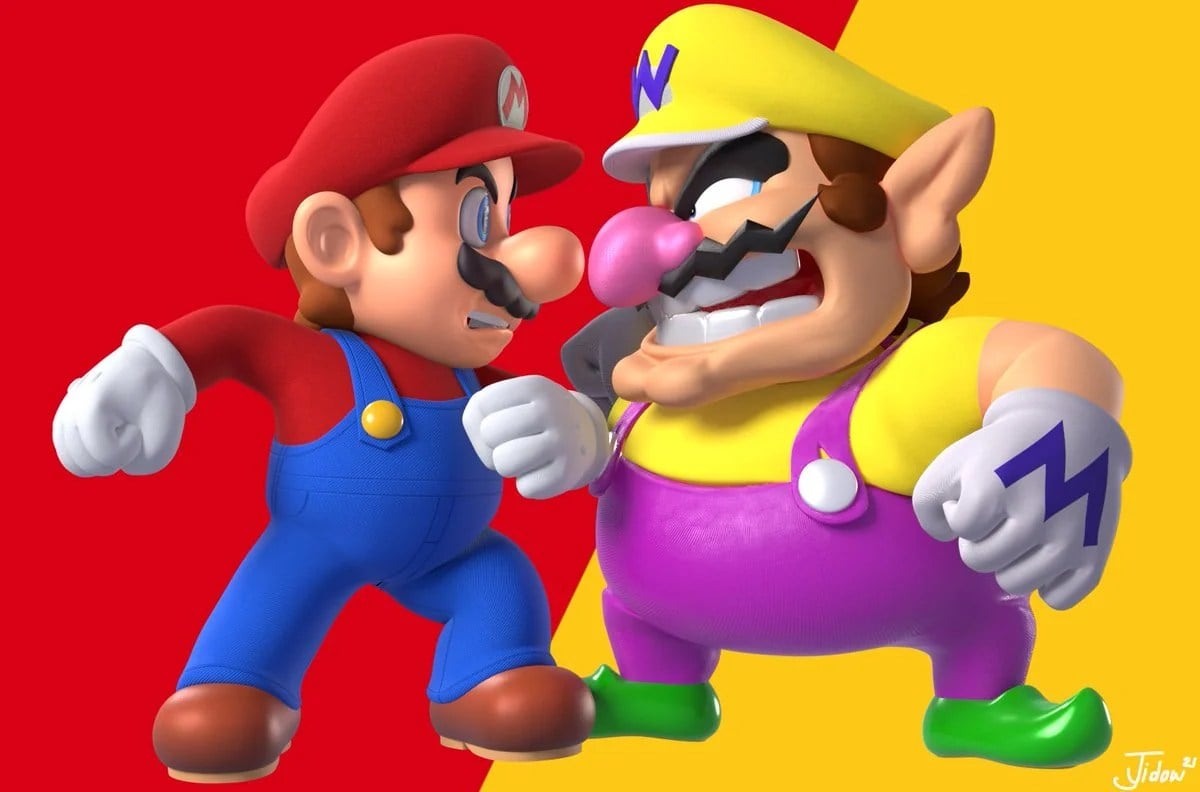
Mario & Wario is the kind of title that makes even big Nintendo fans pause for half a second, like spotting a rare trading card in a shoebox of common ones. It’s not a modern headliner, and it isn’t the first name you’d expect to see on a fresh trademark update. That’s exactly why people notice it. Nintendo has a habit of keeping even its quirky, side-road ideas within arm’s reach, and Mario & Wario sits firmly in that category. The name also has that perfect Nintendo flavor: instantly recognizable characters paired in a way that suggests mischief, puzzles, and chaos. Even if nothing is imminent, a renewal signals that Nintendo still values the identity of that title. For fans, the fascination is less about certainty and more about possibility. It’s the “what if” energy that keeps message boards alive.
Where Mario & Wario sits in Nintendo history
Part of the intrigue is that Mario & Wario represents a very specific era of Nintendo experimentation, when familiar mascots were used to sell unusual ideas. Think of it like Nintendo wearing a lab coat, scribbling on a clipboard, and saying, “What happens if we do it this way instead?” The title is often remembered as a strange offshoot rather than a core pillar, and that makes it feel like a hidden room in a house you thought you already explored. Nintendo’s history is packed with these side doors: projects that didn’t become annual franchises, but still shaped how the company approached design and character use. Seeing the name in trademark chatter reminds people that Nintendo’s catalog is bigger than the greatest hits. It also reminds us that Nintendo rarely forgets its own back catalog, even when it goes quiet for years at a time.
Why the name keeps showing up in filings
There’s a simple, practical reason a name like Mario & Wario can reappear in filings: Nintendo may want to keep full control over it, even if it has no near-term plan. That’s the boring answer, and boring answers are often the correct ones. Another reason is flexibility. If Nintendo ever wants to use the title in a retro lineup, a collection, a remake pitch, or even a small reference inside a bigger project, clean legal ownership makes life easier. Imagine trying to hang a picture frame, but the nails are missing and the hammer is borrowed. Trademarks are the nails and hammer of branding. Keeping them current prevents headaches later. So yes, it can be a sign of future intent, but it can also be a sign of Nintendo simply refusing to let a recognizable name drift into vulnerability.
Rhythm Heaven Groove and why rhythm games thrive on Switch
Rhythm Heaven Groove hits a different nerve, because it’s tied to a series with a very distinct identity and a loyal fanbase that has been waiting a long time for a fresh entry. Rhythm games are perfect for handheld-friendly play because they thrive in short bursts. You can pick up the system, play a few tight challenges, grin at the weird humor, and move on with your day. That makes the franchise feel at home on modern Nintendo hardware, where quick sessions and portable play are the norm. The “Groove” name also suggests a confident continuation of the series’ music-first personality, where sound, timing, and comedy all collide. In trademark terms, it makes sense for Nintendo to keep that name locked down and tidy. When a title is active in the public conversation, legal maintenance becomes even more important.
What we know officially about Rhythm Heaven Groove
With Rhythm Heaven Groove, we don’t have to rely purely on trademark tea leaves to talk about it like it’s real, because Nintendo has already acknowledged the game publicly. That changes the tone completely. A trademark renewal here is less “is this happening?” and more “they’re keeping the business side clean around a name they’re using.” Official messaging has positioned Rhythm Heaven Groove as a new entry planned for a 2026 release window, which is exactly the kind of period where trademarks and brand management stay active behind the scenes. When a series is returning after a long gap, Nintendo has every reason to protect the title, the logo, and any related branding elements that could show up in trailers, store listings, or promotional materials. In other words, this is the kind of trademark activity that matches normal release preparation rather than sudden surprise.
Why Rhythm Heaven’s style is built for quick sessions
Rhythm Heaven has always worked because it treats rhythm like a party trick you can practice. One moment you feel like a musical genius, the next moment you miss the beat and get humbled. That push and pull is addictive, especially when each micro-challenge has its own personality. On a system where people play on the couch, in bed, on the train, and during lunch breaks, bite-sized rhythm challenges fit like a glove. It’s like having a snack tray of mini-games instead of a single giant meal. That’s not a knock, it’s the point. The series thrives on variety, fast feedback, and that “just one more try” feeling. So when we talk about Rhythm Heaven Groove, it makes sense to frame it as something that can live in your routine. It’s the kind of game that can become a daily habit without asking you to rearrange your life.
What a trademark renewal can tell us, and what it cannot
Trademark renewals are clues, but they are not confessions. They tell us Nintendo is protecting a name, and that’s about as far as the guaranteed meaning goes. Anything beyond that becomes interpretation, and interpretation is where fans often sprint ahead of the facts. The smart way to read renewals is to treat them like a weather report that says “cloudy,” not like a promise of rain at 3 PM. Sometimes a renewal lines up with a real announcement later, and people feel like detectives. Other times it lines up with nothing, and the same people feel like they got played. The truth is that renewals can be linked to many things: back-catalog preservation, licensing strategy, merchandising protection, or simply keeping a brand safe for whenever Nintendo feels like using it again. The key is to enjoy the speculation without turning it into certainty.
Timing, calendars, and why February dates spark chatter
Dates like February 17 and February 24 stand out because they’re specific, and specific dates feel like intent. Our brains love tidy patterns. If a renewal date sits near other Nintendo events, people naturally connect the dots and imagine a plan. Sometimes those connections are real, and sometimes they’re just coincidence. Nintendo’s legal and administrative schedules don’t always line up with its marketing calendar, but they can overlap. That overlap is enough to fuel chatter, especially in months where fans expect presentations or updates. The best approach is to treat the date as a timestamp on paperwork, not as a countdown clock for a reveal. If something gets announced later, the date looks meaningful in hindsight. If nothing happens, the date still did its job by keeping ownership intact. Either way, it’s evidence of protection, not evidence of a trailer.
Brand protection vs. product announcements
A renewal is like renewing the lock on your front door. It doesn’t mean you’re throwing a party, it means you want your house to stay yours. Announcements are marketing moments, designed to tell you what to buy, what to wishlist, and what to get excited about. Trademark actions are legal and defensive, designed to keep competitors from using your identity. Nintendo can do both around the same time, but they serve different purposes. That distinction matters because it keeps expectations realistic. If we treat every renewal like a guaranteed reveal, we set ourselves up for disappointment. If we treat renewals as background maintenance, then any real announcement becomes a bonus instead of a demanded outcome. The healthiest fan energy is the kind that can laugh at itself a little. “Look at us, getting excited about paperwork again,” and then moving on until Nintendo speaks publicly.
Quick takeaway for trademark watchers
If you want a simple rule that keeps you sane, it’s this: a trademark renewal confirms Nintendo still wants the name, not that Nintendo is ready to sell you something tomorrow. That’s the whole deal. The name matters enough to protect, and that alone is interesting because it keeps doors open. Mario & Wario getting refreshed is a reminder that Nintendo’s vault is full of oddities, and oddities sometimes return in surprising ways. Rhythm Heaven Groove getting refreshed is a reminder that active projects still need active brand maintenance while they move toward release. Speculation can be fun, but facts should stay in the driver’s seat. When Nintendo wants to announce something, it won’t whisper through legal filings. It’ll say it out loud, with a trailer, a date, and a big shiny logo.
How to follow Direct speculation without getting burned
Direct speculation is like standing outside a bakery and trying to guess what’s in the oven based on the smell drifting through the door. Sometimes you nail it, sometimes you convince yourself you smell cinnamon when it’s actually garlic bread. The trick is to follow the signals that have a track record and ignore the ones that exist mainly to farm excitement. Trademark chatter belongs in the “interesting background” category. It can add context, but it shouldn’t become a promise. The safest approach is to separate what’s officially stated from what’s inferred. If Nintendo has publicly named something, like Rhythm Heaven Groove, then trademark movement feels like normal support work. If Nintendo has not publicly said anything, like with Mario & Wario in a modern context, then the range of outcomes is wide. Keeping that mental separation lets you enjoy rumors without letting them ruin your mood.
Real signals to watch, and the noise to ignore
Signals worth watching tend to be the ones that appear in places Nintendo actually uses to communicate: official pages, store listings that go live through known channels, ratings board entries that include concrete product details, and public-facing assets that show up consistently. Those often come with enough specifics to feel grounded. Noise, on the other hand, is usually vague and repeatable. If a claim can be made every month and still sound plausible, it’s probably noise. Trademark updates can land in the middle, because they’re real documents but they’re also easy to over-interpret. The best habit is to ask a simple question: does this change what Nintendo has officially told us? If the answer is no, treat it as context, not confirmation. That keeps the hobby fun and keeps you from feeling like every quiet week is a personal betrayal.
Keeping expectations fun, not stressful
It’s easy to let anticipation turn into tension, especially when you care about a series and you’ve been waiting for years. But games are supposed to be joy, not homework. If you find yourself refreshing feeds like it’s a second job, it might be time to step back and remember why you’re excited in the first place. A trademark renewal can be a fun nudge to revisit old memories, watch an old trailer, or listen to a soundtrack. It doesn’t have to be a trigger for anxiety. Think of it like seeing an old friend’s name pop up in your contacts list. You might smile and wonder what they’re up to, but you don’t assume they’re about to ring your doorbell. Keeping that mindset lets you stay curious without turning curiosity into pressure.
Where these franchises could show up next
Even if renewals don’t guarantee announcements, it’s still fair to talk about realistic places where Mario & Wario or Rhythm Heaven Groove could appear. Nintendo has multiple ways to bring older names back into view, and not all of them require a full new release. Some returns are quiet and practical, like adding a legacy title to a service lineup. Others are louder, like remakes that reintroduce a concept to a modern audience. Mario & Wario could fit into the “surprise addition” bucket, where niche titles resurface because they’re charming, distinct, and easy to celebrate as part of Nintendo history. Rhythm Heaven Groove fits more into the “planned return” bucket, where the franchise has a clear identity and a ready audience. The point is that Nintendo has options. A trademark renewal keeps those options legally clean, which is exactly what a cautious company prefers.
Service releases, remakes, and collections
One of the most straightforward ways a legacy title can reappear is through a service release, where Nintendo can spotlight older games without needing a full marketing cycle. It’s a low-friction way to remind people a franchise exists, and it can also test interest. Remakes and collections are the next step up. They take a known name and polish it for modern play, which can be appealing when the original was niche or tied to older hardware quirks. Mario & Wario, in particular, could work as a “vault pick” that gets rediscovered through a curated release strategy. Rhythm Heaven, on the other hand, already lives in the modern conversation because Groove is on the way. That means Nintendo can also use older entries, soundtrack nods, or themed promotions to build momentum. These are all realistic paths that don’t rely on wild assumptions.
New entry possibilities and crossover surprises
Nintendo also loves the occasional curveball. Sometimes a franchise returns in a way nobody predicted, like a cameo, a themed event, or a mini-game collection that borrows a name for nostalgia. Mario & Wario could easily show up as a reference or a quirky side project because the characters involved are evergreen. Rhythm Heaven could show up through music-themed crossovers, soundtracks, or rhythm challenges in other spaces, because its identity is instantly recognizable. None of this is guaranteed, but it’s the kind of “could happen” that fits Nintendo’s personality without stretching reality. The important part is to keep the ladder grounded. It’s fine to imagine possibilities, but it’s smarter to imagine the ones that match how Nintendo has behaved historically. That way, even your guesses feel reasonable instead of reaching for the moon just because a date on a document looked exciting.
Conclusion
Nintendo refreshing trademarks for Mario & Wario and Rhythm Heaven Groove is interesting for one big reason: it confirms these names remain valuable to Nintendo right now. The renewal dates, February 17 and February 24, are concrete details, but they are still details tied to paperwork, not promises tied to announcements. Mario & Wario stands out because it’s quirky and rarely discussed in modern terms, which makes any official-looking movement feel like a spark. Rhythm Heaven Groove stands out because it already has official life and a public release window, so trademark maintenance around it feels expected rather than mysterious. The best way to handle all of this is simple: enjoy the curiosity, keep speculation playful, and wait for Nintendo to speak in the language it always uses for real reveals, which is official communication and clear messaging. Until then, trademarks are signals of protection, not guarantees of a surprise.
FAQs
- Does a trademark renewal mean Nintendo is announcing a new game soon?
- No. A renewal mainly shows Nintendo is protecting a name. Sometimes it lines up with announcements, but it often happens as routine brand maintenance.
- Why do fans pay so much attention to dates like February 17 and February 24?
- Specific dates feel intentional, and they can overlap with other Nintendo-related timing. But they are still timestamps on legal upkeep, not guaranteed reveal dates.
- Is Rhythm Heaven Groove confirmed, or is it only tied to trademark activity?
- Rhythm Heaven Groove has been publicly acknowledged by Nintendo, which makes it different from purely speculative trademark chatter around older names.
- Could Mario & Wario return on modern platforms?
- It could, but the renewal alone does not confirm how or when. If it returns, realistic paths include service lineups, curated legacy releases, or a small-scale revival concept.
- What’s the healthiest way to follow Nintendo Direct rumors?
- Separate official statements from inference, treat trademark updates as background context, and keep expectations flexible so waiting stays fun instead of stressful.
Sources
- Nintendo trademarks Mario & Wario and the upcoming Rhythm Heaven Groove, My Nintendo News, February 6, 2026
- More mysterious Nintendo trademarks updated amid first-party Direct rumors, GamesRadar+, February 6, 2026
- Rhythm Heaven Groove launches on Nintendo Switch in 2026, Nintendo (Singapore), March 28, 2025
- New Rhythm Heaven game announced at Nintendo Direct, Polygon, March 27, 2025
- Mike Odyssey post about trademark publication date updates, X, February 6, 2026