














Summary:
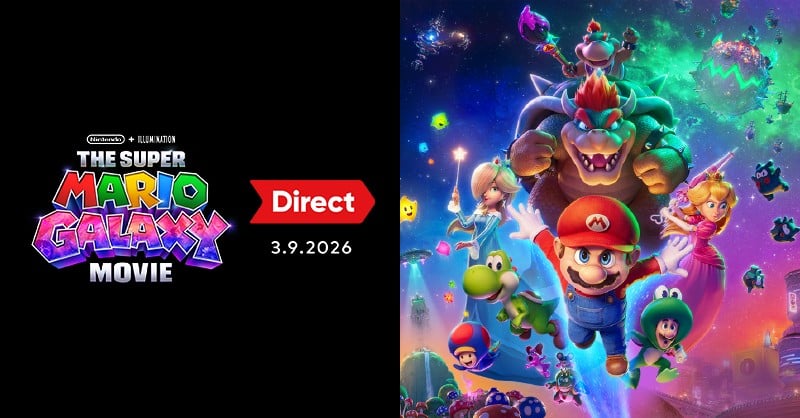
Nintendo has lined up another dedicated presentation for The Super Mario Galaxy Movie, with the broadcast scheduled for March 9, 2026 and focused on the debut of the film’s final trailer. That alone is enough to get Mario fans talking, but the bigger conversation may already be happening around the promotional image tied to the announcement. Tucked near the bottom of the artwork, under Birdo, appears to be Wart, the long-absent villain from Super Mario Bros. 2. It is the kind of small visual detail that sends longtime fans into detective mode in a heartbeat, and honestly, Nintendo probably knew exactly what it was doing there.
This reveal matters for more than one reason. First, it signals that Nintendo and Illumination are entering the last stretch of the movie’s marketing campaign with confidence. A final trailer presentation suggests the broader shape of the film is ready to be shown clearly, not just teased in flashes and quick jokes. Second, the apparent inclusion of Wart hints that the movie may pull from more corners of Mario history than many people expected. That gives the project a richer identity. Instead of feeling locked to one narrow slice of the franchise, it starts to feel like a celebration of Mario’s wider world.
Just as important, Nintendo has made it clear that this presentation will not include game news. That disclaimer sets expectations early and keeps the focus exactly where it belongs. For movie fans, that means a cleaner spotlight on the trailer itself. For longtime Nintendo watchers, it means there is no need to spend the whole stream wondering whether a hardware update or surprise remake is about to crash the party. This presentation has one job, and by the sound of it, Nintendo intends to let the movie own the stage.
The Super Mario Galaxy Movie Direct is set to put all eyes back on Nintendo’s big-screen plans
Nintendo’s announcement gives this presentation a very clear purpose. On March 9, fans will get the final trailer for The Super Mario Galaxy Movie, and that kind of wording matters because it suggests the campaign is entering its last major promotional beat before release. There is no mystery about what the stream is for, no vague promise of updates, and no attempt to spread attention across several projects at once. That makes the presentation feel direct in the best possible way. It tells viewers exactly why they should tune in, and it gives the movie a clean runway. In a media cycle packed with noise, that simplicity can be powerful. It keeps the focus on one headline moment and turns a regular trailer drop into a scheduled event that feels bigger than a standard upload. Nintendo has done this before with game reveals, but using the same presentation style for a movie adds a little extra weight. It makes the final trailer feel like something fans should sit down for, not just scroll past while making coffee.
Why this presentation matters even without any game announcements
The note that no game news will be included is not just a disclaimer. It is a smart bit of expectation setting. Anyone who follows Nintendo knows how quickly speculation can spiral into pure chaos. One poster, one broadcast slot, one familiar logo, and suddenly people are guessing about everything from remasters to hardware bundles. By shutting that door early, Nintendo is protecting the movie from being buried under wish lists. That benefits the presentation because viewers will be watching for story hints, character reveals, and visual details instead of treating the stream like a lottery ticket for unrelated announcements. It also shows a level of confidence. Nintendo is effectively saying the movie can carry this moment on its own. That is a strong message, especially when the Mario brand is large enough that almost any Direct-shaped event could have triggered wild gaming speculation. Sometimes the smartest move is not adding more to the plate. It is serving one thing properly and letting it land.
The final trailer could shape expectations for the movie’s tone and story
Final trailers often do more than repeat familiar footage with louder music. They tend to clarify the emotional pitch of a film. Is this one leaning harder into cosmic wonder, broad comedy, nostalgia, action, or a mix of all four? That is the sort of answer fans may get from this presentation. Earlier promotional beats can afford to be playful and selective, but a final trailer usually has to pull everything into focus. It needs to tell casual viewers what kind of ride they are buying a ticket for while also giving dedicated fans enough fresh material to chew on. For a Mario movie, that balancing act matters even more because the franchise lives in several moods at once. It can be colorful and sweet one second, then theatrical and chaotic the next. A strong final trailer should make the movie’s identity feel unified. If Nintendo and Illumination stick the landing here, the trailer will not just advertise the film. It will define the conversation around it for the rest of the campaign.
Wart’s apparent appearance is the real surprise hiding in plain sight
The real spark behind this announcement is not the stream itself. It is the image. Fans quickly noticed that Wart appears to be visible near the bottom of the promotional artwork, positioned under Birdo. That is a small detail with a big reaction attached to it because Wart is not one of Mario’s usual headline villains. He is the kind of character longtime fans remember instantly and newer fans may need a second to place. That gap is exactly what makes his inclusion so interesting. It feels unexpected without being random. Wart comes from a specific and slightly strange corner of Mario history, which gives his apparent return an almost treasure-chest quality. You spot him, do a double take, and suddenly the whole image feels more revealing than it first seemed. It is a classic Nintendo move. Put the surprise in the corner, let the audience find it, and watch the conversation build itself. That kind of detail makes the movie feel broader, stranger, and a little more playful, which suits Mario better than a safe selection of obvious faces ever could.
Birdo and Wart together point to a wider Mario history on screen
Seeing Birdo and Wart tied to the same piece of promotion naturally pulls attention toward Super Mario Bros. 2. That matters because it suggests the movie may not be limiting itself to only the most expected era of Mario iconography. The Mario universe has always been a patchwork quilt, stitched together from platformers, spin-offs, experiments, side characters, and odd little detours that somehow became part of the family. Bringing in characters connected to one of the franchise’s more unusual entries gives the film extra texture. It tells longtime fans that Nintendo remembers the weirder corners too. That is valuable because Mario is at his best when he feels bigger than a checklist of obvious names. A movie built around that spirit can feel less like a parade of safe cameos and more like a living world. Birdo already has enough recognition to click with broad audiences, but adding Wart to the mix makes the reference feel more intentional. It is not just fan bait. It starts to look like a choice.
Nintendo seems to be rewarding longtime fans without losing newer audiences
That balance is tricky, and it is one of the reasons this character tease has landed so well. If you know who Wart is, the reveal feels like a wink from across the room. If you do not, he still reads as a colorful villainous figure who fits naturally into Mario’s world. That is exactly how these inclusions should work. They should reward memory without requiring homework. No one wants a family movie to feel like a test on old cartridge history. At the same time, longtime fans love noticing details that show care and range. That is where Nintendo often shines. It understands that broad appeal and deep history do not need to fight each other. They can share the same frame. Wart’s apparent inclusion feels like a good example of that philosophy. He can function as a fun new face for one part of the audience and as a genuine surprise callback for another. That is not easy to pull off, but when it works, it makes the world feel richer instead of more crowded.
The promotional image may be teasing more than one nostalgic callback
Once fans notice one unexpected detail, they start scanning every inch of the artwork like archaeologists with a sugar rush. That is part of the fun, and it is probably part of the strategy too. A good promotional image does not just advertise a release date. It gives people something to discuss while they wait. If Wart is indeed present, then the image has already done its job brilliantly. It has turned a straightforward trailer announcement into a larger conversation about what else the movie could be hiding. Could the final trailer lean harder into classic villains? Could the film be drawing from multiple Mario eras in a more deliberate way? Could side characters who rarely get this level of spotlight finally get a bigger moment? Those questions do not guarantee specific answers, and they should not be stretched into certainty, but they do show how one carefully placed visual can widen the imagination of the audience. That is good marketing because it feels less like being told and more like being invited to notice.
Timing this Direct around early March feels deliberate and smart
The scheduling is not subtle, and that is a compliment. A Mario-focused presentation landing on March 9 places it right next to MAR10 season, when attention around Nintendo’s most recognizable mascot naturally ramps up. That kind of timing gives the final trailer a stronger runway and a built-in sense of occasion. It also lets Nintendo turn a single movie update into part of a wider Mario conversation without having to force the connection too hard. Fans are already primed to think about Mario around this time of year. Retail promotions, social chatter, franchise retrospectives, and celebration-themed messaging tend to create a kind of gravitational pull. Dropping the final trailer in that window is like launching fireworks during a festival instead of on a random Tuesday. More eyes are already turned in the right direction. It is not just smart because it increases attention. It is smart because it feels natural. The trailer arrives when interest in Mario is already warm, so it does not need to create momentum from scratch.
What fans should realistically expect from the presentation
The clearest expectation is also the simplest one. Fans should expect a presentation built around the final trailer and very little else. That likely means a focused runtime, a clean rollout, and a strong emphasis on the movie’s central selling points. Viewers will probably be watching for clearer story structure, more footage of the core cast, a stronger sense of the movie’s big set pieces, and perhaps one or two character moments designed to dominate online discussion afterward. The important thing is not to expect an entire vault of revelations. A final trailer is still marketing, not a full plot summary. It needs to excite without overexplaining. For Mario fans, the fun will be in the details: a quick shot of a familiar location, a blink-and-you-miss-it reference, a character reaction that hints at chemistry, or a villain reveal that shifts the tone. If the presentation does its job, it will leave viewers feeling like they understand the movie better while still wanting to see how the full adventure plays out.
Why keeping game news out of the spotlight makes sense here
Mario is one of those brands where game and movie conversations can easily crash into each other like bumper karts. That overlap can be exciting, but it can also be distracting. By separating the film presentation from gaming announcements, Nintendo keeps the message cleaner and avoids chopping the audience’s attention into pieces. Imagine the alternative. A movie trailer lands, but half the conversation is about whether a new platformer got announced two minutes later. Suddenly the film is sharing oxygen with something completely different. That might work for a giant showcase, but it weakens a focused movie beat. Here, the separation helps everyone. Movie fans get a dedicated event. Game fans know not to arrive expecting something else. And Nintendo avoids the all-too-familiar cycle where disappointment over one missing reveal drowns out excitement for what was actually shown. In other words, this is less about limiting hype and more about protecting it. The movie gets its own stage lights, and no one is fumbling around backstage looking for a surprise cartridge shadow drop.
The movie’s marketing now looks focused, confident, and close to the finish line
A final trailer presentation usually signals a campaign that knows exactly where it stands. The introductions are over. The mood boards have done their work. The logo has had its moment. Now the goal is to convert curiosity into commitment. That is where The Super Mario Galaxy Movie appears to be. The marketing no longer feels like it is testing the waters. It feels like it is tightening the screws. The messaging is specific, the timing is sharp, and the new image gives people an immediate talking point before the trailer even arrives. That is a good place to be. It suggests the teams behind the film understand that anticipation works best when it has shape. You cannot keep audiences floating forever on vague promise and cheerful music. At some point, you need a stronger push. This Direct looks designed to be that push. It says the movie is ready to show more, ready to define itself more clearly, and ready to move from curiosity into must-watch territory for the crowd that has been following every breadcrumb.
Final thoughts on what this reveal means for Mario fans
This announcement does not need to be overloaded to matter. A date, a final trailer promise, a no-game-news disclaimer, and one image with a carefully noticed surprise are enough to create real momentum. That is partly because Mario is such a durable franchise, but it is also because the reveal touches several layers of the audience at once. Casual viewers see a major family movie getting another big promotional moment. Dedicated fans see a possible Wart appearance and immediately start connecting dots across decades of Mario history. That overlap is where the excitement lives. It makes the presentation feel relevant whether you are watching for spectacle, nostalgia, curiosity, or all three. If the final trailer pays off the promise of this reveal image, Nintendo may have found a very effective way to send the movie into its last promotional stretch. Not with noise for the sake of noise, but with a focused event and one sharp character tease that got people talking almost instantly.
Conclusion
Nintendo’s March 9 presentation for The Super Mario Galaxy Movie looks built for one clear purpose: give the final trailer room to land and let the movie own the conversation. That is already a strong setup, but the likely appearance of Wart in the promotional image adds an extra layer of intrigue that longtime Mario fans will not ignore. Together with Birdo, that tease hints at a movie willing to pull from more than the safest corners of the franchise. It makes the project feel broader, more playful, and more connected to Mario’s oddball legacy. With no game news competing for attention, the trailer now has a real chance to define the final stretch of the film’s marketing in a focused and memorable way.
FAQs
- When is the Super Mario Galaxy Movie Direct?
- Nintendo has scheduled the presentation for March 9, 2026.
- What will be shown during the presentation?
- The main attraction is the debut of the film’s final trailer.
- Will Nintendo share any game announcements during this Direct?
- No. Nintendo has already said that no game information will be included.
- Why are fans talking about Wart?
- The reveal image appears to show Wart near the bottom of the artwork, positioned under Birdo, which has sparked discussion about his role in the movie.
- Why is Wart’s appearance such a big deal?
- Wart is a memorable villain from Super Mario Bros. 2, so his apparent return suggests the movie may be drawing from a wider stretch of Mario history than many expected.
Sources
- The Super Mario Galaxy Movie, Nintendo, accessed March 7, 2026
- The Super Mario Galaxy Movie Direct – 9 maart 2026, Nintendo Nederland, accessed March 7, 2026
- The Final Trailer For The Super Mario Galaxy Movie Airs On Monday, Game Informer, March 6, 2026
- New Super Mario Galaxy Movie poster unveils first look at Super Mario Bros. 2 villain Wart, GamesRadar+, March 6, 2026
- Nintendo has revealed a new poster for The Super Mario Galaxy Movie ahead of its final trailer, and it confirms two more villains will show up, TechRadar, March 6, 2026