














Summary:
Nintendo’s latest sales update makes one thing impossible to argue with: Mario Kart 8 Deluxe is still the runaway champion. Hitting 70.59 million units on Nintendo Switch is not just “popular,” it’s the kind of number that turns into a cultural constant. If you’ve owned a Switch for any length of time, you’ve probably seen it at parties, in family group chats, and on that friend’s console who “only buys one game a year.” That’s the power of a racer that’s easy to learn, hard to master, and always ready for one more round.
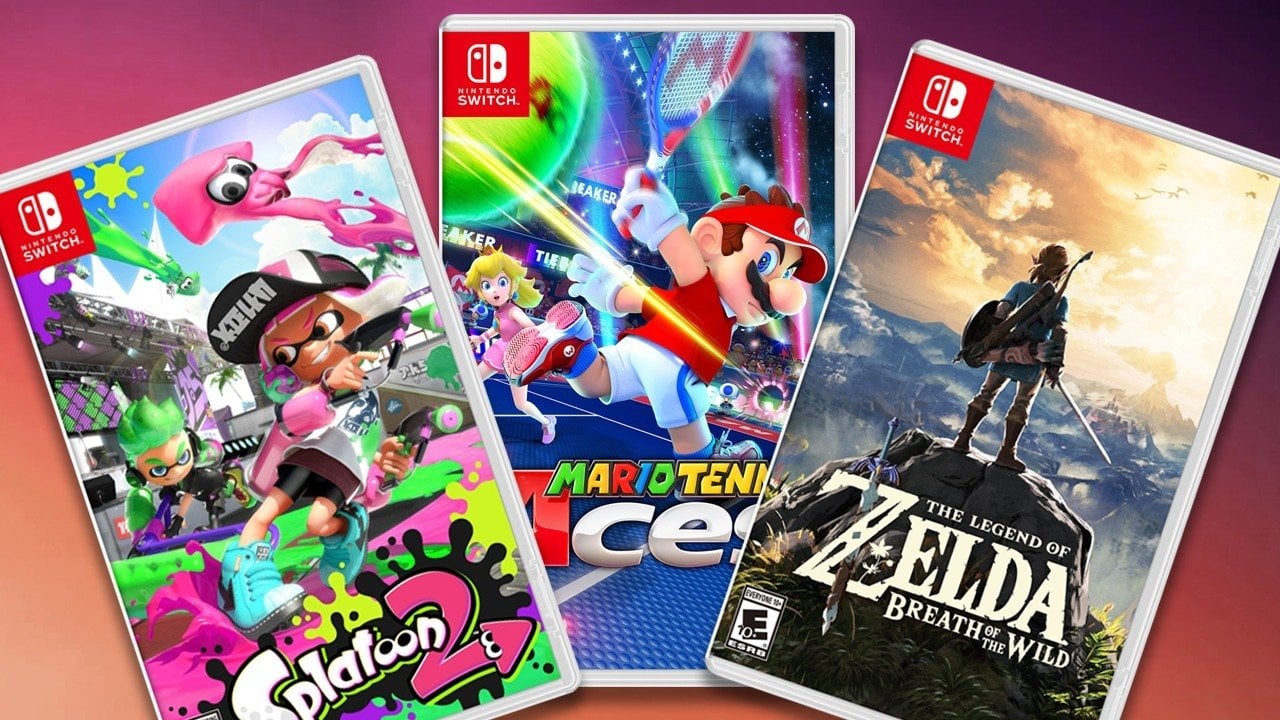
Right behind it, Animal Crossing: New Horizons sits at 49.32 million, proving that comfort games can have blockbuster legs. The list also shows how Nintendo’s big pillars keep stacking sales long after launch. Super Smash Bros. Ultimate (37.44 million), The Legend of Zelda: Breath of the Wild (33.64 million), and Super Mario Odyssey (30.27 million) keep moving because they’re “default picks” for different kinds of players. One is competitive chaos, one is open-air adventure, and one is pure platforming joy.
Then we get the newer story: Nintendo Switch 2 million sellers are already forming a clear shape. Mario Kart World leads Switch 2 with 14.03 million, Donkey Kong Bananza is at 4.25 million, and Kirby Air Riders is at 1.76 million. Pokemon Legends: Z-A shows up in two places, with 8.41 million for the base release and 3.89 million for the Nintendo Switch 2 Edition, which together paint a bigger picture of how players are splitting their purchases across versions. Add in the steady growth for games like Switch Sports (17.84 million) and Super Mario Bros. Wonder (17.15 million), and we end up with a sales snapshot that feels like a living ecosystem, not a static ranking.
Nintendo’s updated sales status
Nintendo’s updated figures give us a clean, grounded look at what people are actually buying and sticking with over time, across both Nintendo Switch and Nintendo Switch 2. The fun part is not just seeing who’s on top, but noticing how different types of games age. Some titles surge early and then cool off, while others behave like a slow cooker: they just keep doing their thing, month after month, year after year. That’s why a list like this feels less like a scoreboard and more like a map of player habits. We can see comfort games living alongside competitive staples, massive adventures sitting next to party staples, and brand-new Switch 2 releases already carving out their own space. It’s also a reminder that Nintendo’s biggest wins often come from games that are easy to share, easy to recommend, and hard to replace once they become part of a household routine.
Mario Kart 8 Deluxe and the 70 million milestone
Mario Kart 8 Deluxe reaching 70.59 million units is the kind of achievement that changes how we talk about a platform’s identity. This is not “a hit,” this is the game that shows up in the mental shopping cart the moment someone says, “I just bought a Switch.” The appeal is almost unfairly broad: kids can throw shells, parents can drift badly and still laugh, and competitive players can shave milliseconds like it’s a sport. That mix creates a loop where the game is constantly being reintroduced to new players through friends and family, which keeps it alive even when the release calendar gets crowded. And because matches are short, it’s the perfect “one more race” trap. We tell ourselves we’ll stop after the next cup, and then an hour disappears. That’s how a racer becomes a lifestyle.
Why Mario Kart keeps selling even when everyone already owns it
Here’s the strange magic: even when it feels like “everyone has Mario Kart,” the sales keep climbing. Part of that is simple household math. Not every Switch is shared, and not every family wants to pass a cartridge around like it’s a sacred relic. Digital purchases, second consoles, and new Switch owners all add up. Another piece is social gravity: the more people who own it, the more it becomes the safe recommendation, and the safe recommendation sells more copies. It’s like a group chat restaurant choice. Nobody wants to argue, so we pick the thing everyone agrees on, and suddenly it’s the most popular place in town. Mario Kart 8 Deluxe is that restaurant, except it throws bananas.
The long tail effect: a racer that never stops inviting us back
Some games age like milk, and some age like a well-loved hoodie that somehow gets more comfortable. Mario Kart 8 Deluxe sits firmly in the hoodie category. It’s always ready, always familiar, and it doesn’t demand a 30-minute warmup just to have fun. That matters because real life is messy. If we have 15 minutes before dinner, we can squeeze in a few races. If friends come over, we can hand someone a controller without explaining a complicated meta. The result is a game that remains “active” in people’s lives, not just installed on a system. And when something stays active, it stays visible. Visibility turns into sales, because new owners want in on what everyone else is still playing.
Animal Crossing: New Horizons and the long-life life sim effect
Animal Crossing: New Horizons at 49.32 million is the clearest proof that a calm, cozy game can become a generation-defining hit. It’s easy to forget how rare that is in a medium that often rewards spectacle and speed. New Horizons works because it feels personal. Our island is ours, our routines are ours, and the game quietly rewards us for showing up, even if we only check in for a few minutes. That creates a bond that looks different from the bond we have with a story-driven game we finish once and shelve. It’s more like a garden. We don’t “beat” a garden, we keep it alive. And because it became a shared experience for so many people, it also became one of those titles that gets recommended with genuine emotion, not just hype.
Why New Horizons still moves units years later
New Horizons keeps selling because it’s often purchased as a gift or a fresh start. Someone sees a friend’s island, remembers how relaxing the vibe is, and suddenly the urge hits. Or someone buys a Switch late in the generation and wants the defining “slice of life” game that everyone talks about. The game also has a unique advantage: it plays well across ages and skill levels without feeling like it’s “for beginners.” That makes it a safe buy for families, couples, and friend groups who want something low-pressure but still meaningful. It’s hard to overstate how valuable “low-pressure meaningful” is. After a long day, not everyone wants boss fights. Sometimes we want a warm drink, a silly outfit, and a new couch for the living room.
The evergreen trio: Smash, Breath of the Wild, and Odyssey
Super Smash Bros. Ultimate (37.44 million), The Legend of Zelda: Breath of the Wild (33.64 million), and Super Mario Odyssey (30.27 million) form a three-piece set that explains why the Switch era has been so sticky. Each one scratches a different itch, and together they cover a huge chunk of what people want from games. Smash is the social brawler that can be competitive or ridiculous depending on who’s holding the controller. Breath of the Wild is the open-world adventure that turned curiosity into a mechanic. Odyssey is a pure joy machine that rewards exploration in bite-sized bursts. What ties them together is how replayable they feel. Even when we’ve “finished” them, we still want to return. And return visits keep these games in the conversation, which keeps them selling.
Smash as a living room sport
Super Smash Bros. Ultimate keeps climbing because it behaves like a party staple and a competitive platform at the same time. On one side, it’s the game we boot up when friends come over and nobody can agree on what to play. On the other, it’s a game people practice, study, and argue about like it’s a hobby with homework. That combination is rare. Plenty of competitive games are intimidating, and plenty of party games don’t have depth. Smash does both, which means it has two audiences feeding the same sales engine. Also, it’s a character crossover that feels like a toy box. Even people who don’t play fighting games are tempted because they recognize the roster. Recognition turns into curiosity, and curiosity turns into a purchase.
Breath of the Wild and Odyssey as “first big Nintendo games”
Breath of the Wild and Odyssey have a special role: they’re often the games people buy to understand what Nintendo “feels like.” If someone skipped older consoles or is returning after a long break, these are the titles that get recommended as the entry point. Breath of the Wild sells the fantasy of freedom, where the world looks at us and says, “Go on then, surprise me.” Odyssey sells the fantasy of momentum, where every corner hides a reward and movement itself feels playful. Both games also create story-worthy moments. Players remember the first time they solved a shrine puzzle their own way, or the first time they chained together a ridiculous Odyssey sequence. Those moments get shared, and sharing is marketing that doesn’t feel like marketing.
Pokemon’s two-track momentum on Switch
Pokemon is doing what Pokemon always does: showing up in multiple lanes at once. Pokemon Scarlet and Violet sits at 28.08 million, while Pokemon Sword and Shield is at 27.08 million. That’s not just strong performance, it’s a sign that the audience for the series is wide enough to support multiple “eras” of the same franchise on one platform family. People also buy Pokemon differently than many other games. Some players buy day one, some wait for the moment their friends start trading, and some jump in much later because they want a comfortable RPG they can play in long stretches. There’s also a collecting mindset at play. Pokemon tends to become a personal project: finishing the story is only the start, not the end. When a game becomes a personal project, it stays relevant longer, and relevance keeps sales alive.
Why Scarlet and Violet keeps adding units
Scarlet and Violet continuing to grow is tied to how Pokemon communities work. The conversation never fully stops, because players keep comparing teams, talking about favorite creatures, and returning for fresh goals. Even if someone took a break, they often come back when friends do, and the game becomes social again. That social pull is powerful. It turns a solo RPG into something that feels shared, even if we’re playing on our own couch. Also, Pokemon is one of those franchises that reliably attracts new players as they age into it. Every year, there are kids hitting the “right age” for a first Pokemon game, and parents who recognize the brand don’t hesitate. That steady pipeline is a sales superpower.
Tears of the Kingdom and how sequels keep selling
The Legend of Zelda: Tears of the Kingdom is at 22.40 million, and what stands out is how it’s building a long runway rather than peaking and vanishing. Sequels can be tricky. They have to feel familiar without feeling recycled, and they have to justify their existence in a world where the original is already beloved. Tears of the Kingdom managed to do that by giving players new tools and new ways to approach the world, which created a fresh wave of “did you see this?” moments. Those moments matter because they make the game feel like a playground, not just a story. When players share creations, clever solutions, or ridiculous physics accidents, the game stays visible. Visibility brings in late adopters who say, “Okay, fine, I need to see what the fuss is about.”
Replay value as a sales engine
Replay value isn’t just about starting over, it’s about the game staying part of our identity as players. Tears of the Kingdom encourages experimentation, which means we keep finding reasons to return. Maybe we want to tackle an area in a different order. Maybe we want to try a new approach to building, fighting, or exploring. That kind of flexibility keeps the game in rotation, and games in rotation get talked about. And when games get talked about, they get bought. It’s a simple loop, but it’s real. Also, Tears of the Kingdom benefits from Breath of the Wild’s status as a must-play. People who finally finish Breath of the Wild often step directly into Tears, like turning the page on a book they already love.
Party games that never leave the living room
Super Mario Party (21.28 million) and Super Mario Party Jamboree (9.41 million) underline a truth we all recognize: party games are not niche, they are household tools. They come out on weekends, holidays, birthdays, and random “we have friends over” nights. And because the sessions are modular, they fit real life. We can play for 20 minutes or two hours, and the game doesn’t punish us for stopping. That flexibility turns into repeated use, and repeated use turns into word-of-mouth. Party games also have a unique “second purchase” behavior. One household buys it, loves it, and then another household buys it because they experienced it there. It’s contagious fun. Like a board game that lives inside the console.
Why Mario Party sells to people who barely play games
Mario Party has a sneaky advantage: it doesn’t require a player identity. You don’t have to be “good at games” to have a good time. The minigames are simple, the rules are visible, and the tone is playful enough that losing doesn’t sting the same way it might in a competitive shooter or a tough action game. That opens the door to casual players, families, and groups with mixed experience levels. It also creates stories. Someone steals a star at the last second, someone trips at the finish line, someone wins with one point left, and the room erupts. Those stories are the reason people buy it. They want a machine that generates memories on demand.
Late-generation boosts: Switch Sports and Super Mario Bros. Wonder
Nintendo Switch Sports sits at 17.84 million, and Super Mario Bros. Wonder is at 17.15 million, showing that the Switch era still had fuel in the tank late in its life. These games hit different notes, but they share a key trait: they’re approachable. Switch Sports has that “pick up and play” energy that turns exercise into a party trick, and it benefits from the living room factor. Wonder, meanwhile, is a platformer that feels playful and surprising, which makes it feel like a true event even for people who have played a lot of Mario. When a late-generation release still feels like a must-have, it tells us the audience hasn’t moved on mentally. They still want new reasons to boot up the system, and they still respond when the games meet them where they are.
Why these two titles show strong recent gains
The gains matter because they show momentum, not just totals. When Switch Sports keeps climbing, it suggests it continues to be bought as a social game, a family game, and a gift game. Those categories don’t disappear just because a newer system exists. Wonder’s growth is also easy to understand: 2D Mario has a broad audience, and Wonder’s identity is built around surprise, creativity, and spectacle that reads well in clips and conversations. People see a Wonder moment, laugh, and think, “That looks like fun,” which is the simplest reason anyone buys anything. Also, both games are easy to recommend without caveats. No big learning curve, no “it gets good after 10 hours.” We can have fun fast, and fast fun sells.
Switch 2 breakouts: Mario Kart World, Bananza, and Air Riders
Nintendo Switch 2’s early million sellers already tell a clear story about what moves hardware. Mario Kart World leads with 14.03 million, which tracks perfectly with the idea of a system-selling racer that people want immediately. Donkey Kong Bananza at 4.25 million shows strong appetite for a flagship character-driven release that feels like an event. Kirby Air Riders at 1.76 million is smaller, but still significant, especially early in a system’s life, because it signals that the audience is exploring beyond the biggest headline release. What’s interesting is how these three titles cover different moods: fast competitive racing, adventurous action with a classic character, and Kirby’s approachable charm. That spread makes the lineup feel balanced, and balance is how a new platform avoids becoming a one-game machine.
Mario Kart World as the “instant buy”
Mario Kart World’s sales total makes sense because racing games are social glue. People buy them to play with others, and because the fun is immediate, they don’t hesitate. Also, a big Mario Kart release tends to become the default pick for early adopters, because it guarantees use. If you’re buying a new system, you want at least one game that will definitely get played. Mario Kart is that. It’s like buying a new couch and also buying a blanket on day one, because you know you’ll use the blanket immediately. That confidence drives early sales, and early sales become a base that keeps growing as more people join the platform later.
Donkey Kong Bananza and the “new system showcase” role
Donkey Kong Bananza reaching 4.25 million suggests it’s doing exactly what a big character release should do on new hardware: make the platform feel fresh. These kinds of games often act as a showcase. Not in a technical bragging way, but in a “this feels like the new era of our favorites” way. Players want to see what the new hardware can do through familiar faces and familiar energy. Donkey Kong is perfect for that because the vibe is physical, kinetic, and expressive. It also appeals to a wide range of players, from long-time fans to newcomers who just want something fun that doesn’t require a spreadsheet of lore. When a game is both familiar and new, it catches fire more easily.
Kirby Air Riders and the power of “friendly competition”
Kirby Air Riders at 1.76 million might look modest next to Mario Kart numbers, but it’s still a meaningful early-platform signal. Kirby as a brand is approachable, and approachable brands often do best when people are buying games for mixed groups. Air Riders also sits in a sweet spot: competitive enough to be exciting, friendly enough to avoid turning the room into a grudge match. That matters in real homes. Not every group wants intense competition. Some groups want a playful rivalry that ends with laughter, not silence. Kirby tends to deliver that. And when a game becomes “the one we play when we want something light,” it earns a permanent seat at the table.
Pokemon Legends: Z-A across versions
Pokemon Legends: Z-A appears in two places in the updated figures: 8.41 million for the base release and 3.89 million for the Nintendo Switch 2 Edition. Put together, that totals 12.30 million units across those versions. What’s fascinating here is what it suggests about player behavior during a platform transition. Some players are still buying on Switch, some are buying the Switch 2 Edition, and both groups are large enough to matter. This is the kind of split that can happen when a franchise is strong and timing is right. People don’t necessarily wait just because new hardware exists, especially when the franchise is part of their routine. They buy when they’re ready, on the system they own, and the brand does the rest.
Why version splits can still be a win
A version split can sound messy, but it can also be healthy. It means players are not blocked from joining in. If someone has a Switch and wants to play now, they can. If someone has a Switch 2 and wants the version built for it, they can. That flexibility matters because Pokemon thrives on community. The more people who are playing, the more the conversation stays alive, and the more likely late adopters are to jump in. It also reflects a practical reality: not everyone upgrades hardware immediately. By supporting both lanes, the franchise avoids leaving money on the table, and it avoids leaving fans behind. From a player perspective, it simply means we get to choose what fits our setup, without feeling like we made a “wrong” purchase.
What the quarter-to-quarter gains really suggest
The most telling part of this snapshot isn’t just the totals, it’s the added units shown next to many titles. Those increases show where momentum still exists right now, not just where it existed at launch. Mario Kart 8 Deluxe adding over a million more units in the latest update reinforces the idea that its sales engine is still running hot. Super Mario Odyssey’s increase is also a reminder that “older” doesn’t mean “done” when the game is evergreen. And seeing Switch Sports and Wonder gains called out since March 2025 highlights how certain games can spike again based on timing, visibility, and how well they fit family play patterns. Meanwhile, Switch 2 titles like Mario Kart World showing a large increase points to the obvious truth: when a game is tied closely to new hardware adoption, it can rack up numbers fast. The bigger takeaway is that Nintendo’s ecosystem relies on both kinds of wins at the same time: slow, steady classics and fast-moving new releases.
Conclusion
Nintendo’s updated million-seller list shows a platform family powered by two forces at once: evergreen staples that keep selling because they’re part of everyday play, and Switch 2 releases that are already building their own identities. Mario Kart 8 Deluxe crossing 70.59 million is the headline, but the broader picture matters just as much. Animal Crossing remains a comfort giant at 49.32 million, flagship titles like Smash, Zelda, and Odyssey keep adding to their totals, and late-generation hits like Switch Sports and Wonder show that the Switch audience still responds when the games match real-life play habits. On the Switch 2 side, Mario Kart World leads early with 14.03 million, with Donkey Kong Bananza and Kirby Air Riders following behind as meaningful early adopters’ picks. And with Pokemon Legends: Z-A totaling 12.30 million across its listed versions, we can see how major franchises can bridge a transition without losing momentum. Taken together, these numbers feel less like a simple ranking and more like a snapshot of how we actually play: with friends, with family, in short sessions, and with favorites we return to again and again.
FAQs
- What is Nintendo’s best-selling Switch game in the latest update?
- Mario Kart 8 Deluxe leads the list with 70.59 million units sold on Nintendo Switch as of December 31, 2025.
- How many units has Animal Crossing: New Horizons sold in this update?
- Animal Crossing: New Horizons is listed at 49.32 million units sold as of December 31, 2025.
- What is the top-selling Nintendo Switch 2 game in the updated figures?
- Mario Kart World is the leading Nintendo Switch 2 title on the million-seller list at 14.03 million units sold as of December 31, 2025.
- Why does Pokemon Legends: Z-A appear twice in the sales list?
- The figures list the base version (8.41 million) and the Nintendo Switch 2 Edition (3.89 million) separately, reflecting different versions on the platform family.
- Which other Switch 2 games have passed one million units in this update?
- Donkey Kong Bananza is listed at 4.25 million and Kirby Air Riders at 1.76 million units sold as of December 31, 2025.
Sources
- Top Selling Title Sales Units – Nintendo Switch Software, Nintendo, December 31, 2025
- IR Information: Sales Data – Top Selling Title Sales Units, Nintendo, December 31, 2025
- CONSOLIDATED FINANCIAL HIGHLIGHTS, Nintendo, February 3, 2026
- Financial Results Explanatory Material, Nintendo, February 3, 2026
- Japanese game maker Nintendo reports robust profits on hit Switch 2 console, AP News, February 3, 2026