














Summary:
Nintendo’s My Mario rollout is meant to feel warm, playful, and family-first, but the internet did what the internet does best: it grabbed a couple of promotional photos and treated them like a forensic puzzle. People fixated on a thumb that looked bent at an odd angle and a separate image where a hand holding a toddler drew mockery for finger length and placement. From there, the conversation sprinted straight to the modern default accusation: “This has to be AI.” Nintendo responded with a clear denial, stating that AI was not used in any of the My Mario promotional images. A featured model also weighed in publicly, saying the shoot was not AI, which gave the discussion a rare thing it usually lacks: a firsthand voice attached to the pictures.
What makes this moment interesting is that it’s not really about proving whether one thumb is double-jointed or whether a fingertip was smoothed in post. It’s about how our collective pattern recognition has changed. We’ve all seen enough broken AI hands that we’re now primed to see “AI fingerprints” in regular photography, editing, compression, and unlucky timing. A single frame can freeze a natural movement into something that looks impossible, and retouching can “clean up” details in ways that accidentally look synthetic. The result is a trust problem that hits fast, spreads wide, and lingers even after a brand answers directly. My Mario is still launching, the products are still the point, and yet the marketing lesson is staring right back at us: in 2026, perception gets the first turn at the microphone.
What My Mario is, and what Nintendo is trying to do with it
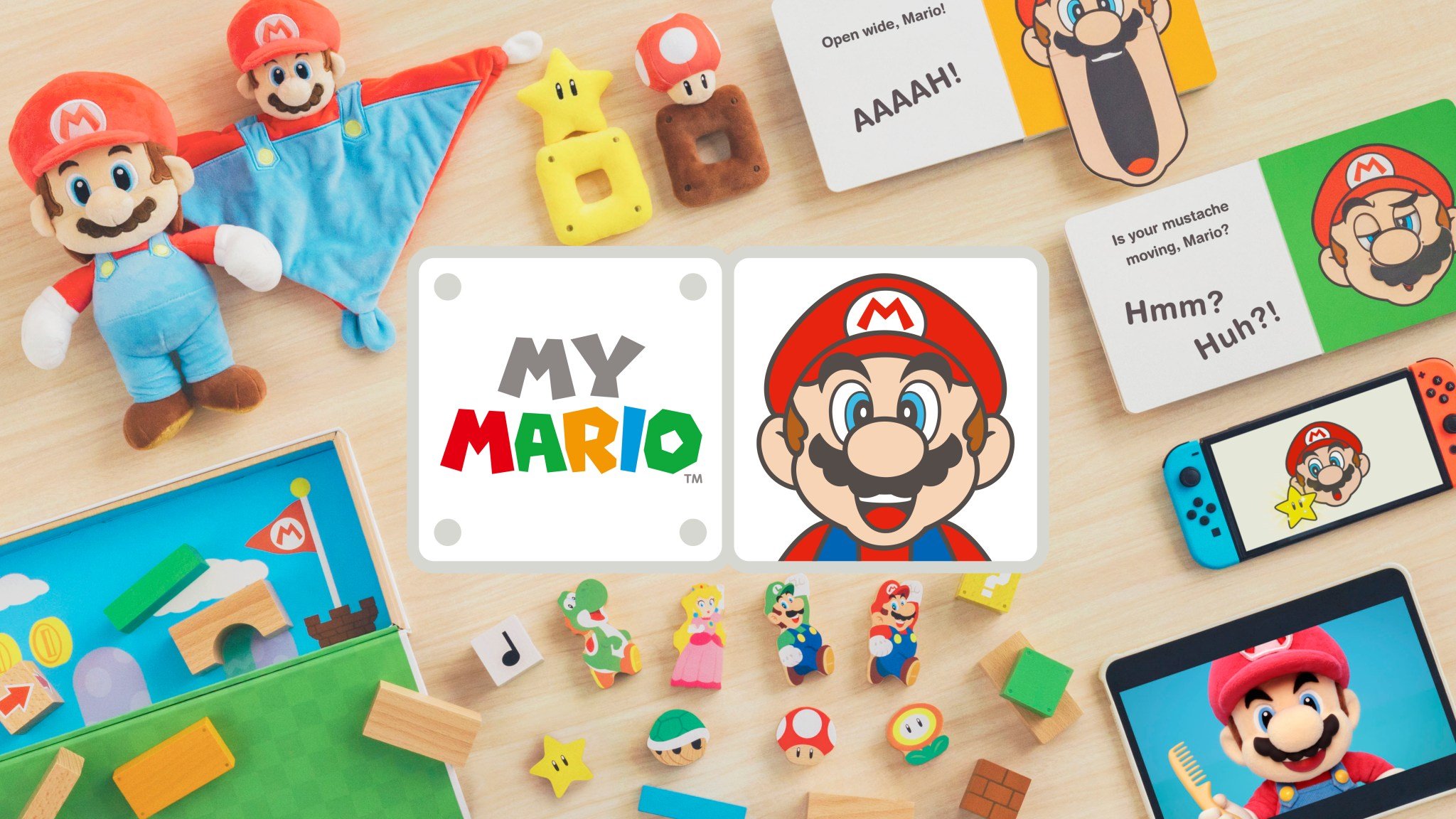
My Mario is Nintendo taking a very specific swing: building a Mario-themed lineup that’s designed for young children and the adults buying for them, instead of aiming only at collectors who already own three versions of the same plush. The vibe is “first Mario memories,” not “display shelf bragging rights,” and that matters because it changes the tone of everything around it, from product choices to photography. When Nintendo leans into early childhood and family play, the visuals have to feel safe, bright, and real. That’s why it’s almost funny that the loudest conversation became a thumb angle and some finger placement. My Mario is meant to be simple and inviting, yet it collided with a very online kind of skepticism where every image gets treated like evidence in a courtroom drama. We can laugh at the zoom-ins, but we also have to admit something: this reaction is the new normal, and any brand working with glossy promo photography is going to run into it sooner or later.
Where and when My Mario launches, and what’s in the lineup
Nintendo has been clear about the timing and the plan. In the United States, the My Mario collection is set to launch at Nintendo NEW YORK and Nintendo SAN FRANCISCO on February 19, 2026, with additional availability expanding beyond those locations over time. The lineup itself covers a lot of “kid life” moments: apparel for infants and toddlers, plush and soft toys, and interactive elements like a Hello, Mario! board book. There are also wooden block sets that lean into classic Mario iconography, with the kind of toy appeal that can hit two audiences at once: kids who want to play, and adults who suddenly remember they have a wallet. Nintendo also positioned My Mario as more than physical items by tying it to experiences, including video and app elements that aim to make Mario feel present in a child’s day-to-day routine. In other words, My Mario isn’t just “buy a thing,” it’s “build a little Mario world at home,” and that’s exactly why the marketing images mattered so much. When you’re selling trust to parents, everything has to look right.
The images that sparked the backlash, and why people zoomed in
The controversy didn’t start because the products were overpriced or because a plush looked off-model. It started because the photos triggered a familiar pattern: hands that look “wrong” in a way we’ve all learned to associate with generative AI mistakes. One image drew attention for a thumb that appeared to bend at an angle that made people do a double take. Another image caught heat for a hand holding up a toddler, where the finger length and placement looked odd enough that social media ran with it. The reactions were predictable in a darkly comedic way: screenshots, circles, arrows, jokes, and the instant leap from “that looks weird” to “caught using AI.” That leap is the key. A few years ago, people might have blamed Photoshop, lighting, or a rushed edit. Now the default suspect is AI, and once that accusation lands, it spreads like glitter in a living room. You can vacuum all day and you still find it later. The punchline is that bodies are strange, cameras freeze motion badly, and edits can exaggerate quirks, but none of that travels as fast as a spicy accusation.
The “weird thumb” moment and the toddler-hold photo reactions
Let’s talk about why these two specific moments hit so hard. A thumb at an odd angle looks like a classic “AI tell” because AI often fumbles hands in ways that break our internal sense of anatomy. So when a real photo produces a similar feeling, people assume the same cause. The toddler-hold image added fuel because it taps into an emotional shortcut: adults are protective about child-focused marketing, and anything that feels “fake” gets judged more harshly. Nobody wants the wholesome family image to be manufactured in a way that feels deceptive, especially when the brand is Nintendo and the subject is little kids and caregivers. Social media also rewards the “gotcha” framing. It’s more fun to say “look, they got caught” than “maybe that’s a weird still frame.” And once a few big accounts share the zoomed-in crops, the images stop being photos and become memes. At that point, even a straightforward explanation feels like it’s arriving late to a party where everyone already decided the theme.
Why hands are the internet’s AI smoke alarm
Hands are the first place people look because hands are hard in every medium, not just AI. They’re complex, they move constantly, and small distortions are immediately noticeable because we’ve spent our whole lives watching them. The problem is that our brains don’t just see a hand, we “feel” whether it makes sense, and that feeling is easy to disrupt. Generative AI trained the public to treat strange fingers as proof of fakery, which means normal photography and normal retouching are now being judged against a new, paranoid baseline. Add compression, resizing, and the way social platforms chew images into crunchy artifacts, and you get plenty of opportunities for perfectly human hands to look slightly off. The internet also has a habit of treating still images as if they’re the whole story. A single frozen moment can capture a gesture mid-movement and make it look like a joint is doing gymnastics. That doesn’t mean anything shady happened. It just means cameras are brutally honest about awkward timing, and the internet is brutally eager to interpret it as a scandal.
Human bodies are odd sometimes, especially in still frames
If you’ve ever seen a photo of yourself mid-laugh and thought “why does my face look like that,” you already understand the core issue. A still frame can flatten depth, exaggerate angles, and turn normal flexibility into something that looks impossible. Thumbs are especially guilty here because they rotate and extend in ways that are hard to read from one angle. Some people are also genuinely more flexible than others, and a “double-jointed” look isn’t rare. Add perspective distortion from lenses, especially if a hand is closer to the camera than the rest of the body, and finger length can look warped. None of this is exciting, which is exactly why it loses to the AI accusation in the attention economy. The boring truth is often the correct one: bodies move, cameras freeze, and the result can look strange. The internet sees “strange” and immediately files it under “generated,” because we’ve been trained by years of AI weirdness to jump there first.
Retouching can create “uncanny” fingers without any AI
Even when a photo is real, post-production can introduce that “uncanny” feeling people associate with AI. Skin smoothing, sharpening, background cleanup, and even basic compression can blur edges or create weird transitions around fingers. If an editor removes a distracting crease, fixes a shadow, or adjusts a highlight, the hand can lose the tiny imperfections that make it feel natural. That can accidentally mimic the overly-clean, slightly off texture people complain about in AI images. There’s also the reality that marketing images often get edited quickly and repurposed across different crops and formats. A hand that looks fine in one layout can look bizarre when clipped, resized, or pushed into a different aspect ratio. So when we see something that looks “off,” it doesn’t automatically mean a machine made it. Sometimes it just means a human tried to make it look nicer and, ironically, made it look less believable.
What Nintendo said about AI, and what that statement actually covers
Nintendo addressed the claim directly, stating that AI was not used in any of the My Mario promotional images. That matters because it’s not a vague “we value creativity” line, it’s a clear yes-or-no answer to the exact accusation people were making. At the same time, it’s worth understanding what a statement like this does and does not settle in the public mind. It settles the official record: Nintendo is telling the press, on the record, that the images are not AI-generated. What it does not settle is the internet’s appetite for speculation, because suspicion is sticky and corrections are slippery. Some people will accept the statement instantly, some will distrust it on principle, and others will move the goalposts to “maybe it’s edited with AI tools” or “maybe it’s partially generated.” We don’t have evidence for those escalations, and Nintendo’s statement is specifically about AI being used for the promotional images. The more useful takeaway is that brands now need to be prepared to answer these questions quickly, clearly, and repeatedly, because silence reads like guilt to an audience trained to expect deception.
Why a direct denial matters even if people stay skeptical
A direct denial matters because it gives everyone a stable reference point. Without it, the conversation becomes an open loop where rumors and “AI detector” screenshots fill the void. With it, we at least know where Nintendo stands, and that helps journalists, fans, and even critics frame the story in reality instead of vibes. It also signals that Nintendo understands the sensitivity here. In a climate where creatives are worried about AI replacing jobs and audiences are worried about authenticity, brands can’t pretend the concern is trivial. A clear statement is a form of respect, even for people who disagree. And while it won’t convince everyone, it will convince enough people to keep the discussion from becoming the only thing anyone remembers about My Mario. The goal isn’t to win every skeptic. The goal is to keep the truth available, loud, and easy to repeat, so the conversation has something solid to lean on besides memes.
The model’s response, and why firsthand context carries weight
On top of Nintendo’s statement, a featured model responded publicly to the AI claims by saying the images were not AI. That kind of firsthand pushback matters because it adds a human voice to a conversation that often feels like strangers yelling at pixels. When someone who was actually involved says “this wasn’t AI,” it changes the tone, even if it doesn’t end the debate. It’s also a reminder that these conversations have collateral damage. When the internet accuses a campaign of being AI-generated, it’s not only accusing the brand, it’s indirectly dismissing the work of photographers, stylists, editors, and the people in the photos. The model’s comment is basically someone stepping into a storm and saying, “Hey, we were there, this was real.” That’s brave, and it’s also a little sad that it’s necessary. People want authenticity, but they sometimes forget that real humans are on the other side of the screen, watching their work get reduced to a punchline.
How social platforms turn one comment into a receipt
Once the model comment surfaced, it didn’t stay as a simple clarification. It became a “receipt,” something people could quote, screenshot, and use as ammunition in arguments. That’s how these platforms work: everything becomes a token you can trade in for points. The upside is that truth can spread faster once it’s packaged into a shareable snippet. The downside is that the person who spoke up gets pulled into the spotlight, whether they wanted it or not. It also shows how fragile reality feels online. We often need an eyewitness statement just to accept that a photo is a photo. That’s a weird place to be, culturally, but it’s where we are. The healthiest way to read this is simple: a brand denied AI use, and a participating model backed that up. That doesn’t mean every finger will look perfect in every crop, but it does mean the core accusation has been answered with real-world context.
Why AI accusations spread so fast right now
AI accusations spread fast because they fit neatly into existing fear and frustration. People are worried about creative labor being undercut, worried about deception in advertising, and tired of being marketed to by anything that feels synthetic. So when an image looks even slightly strange, the accusation feels emotionally satisfying. It’s a way of saying, “I’m not falling for it,” even if there’s nothing to fall for. There’s also a social reward built into the accusation. Calling out “AI slop” can feel like defending artists and defending truth at the same time. The problem is that the accusation can be wrong, and when it’s wrong, it still harms people. It harms trust, it harms reputations, and it turns normal imperfections into “evidence” of misconduct. In the My Mario case, the products are meant for families, and the messaging is playful, but the backlash shows that even playful marketing gets pulled into the larger AI anxiety. This isn’t just a Nintendo problem. It’s a modern internet problem, and Nintendo happened to step on the landmine this week.
Detectors, percentages, and the trap of treating tools as judges
A big accelerant in these situations is the way people use AI detection tools as if they’re magic truth machines. Someone runs an image through a detector, shares a percentage, and suddenly that number becomes “proof.” The issue is that these tools aren’t courtroom evidence. They can be inconsistent, they can be fooled by compression and edits, and they often disagree with each other. A weird-looking hand can prompt people to go hunting for confirmation, and the first tool that spits out a suspicious number becomes the headline. That’s confirmation bias with a progress bar. The smarter approach is to treat these tools as signals, not verdicts, and to weigh them against real-world information, like direct statements from the company and people involved. In this case, the on-record denial and the model’s public comment are the strongest factual anchors we have. If we care about truth, we have to rank anchors above vibes, even when the vibes are funny.
The real stakes: trust, creatives, and brand perception
It’s easy to treat this as harmless internet drama, but the stakes are real. For Nintendo, trust is part of the brand’s foundation, especially when selling products aimed at young kids and caregivers. Parents don’t just buy a Mario toy, they buy an idea of safety, quality, and sincerity. When people accuse a campaign of being AI-generated, the subtext is “this is cheap” or “this is fake,” and that’s a reputational hit even if it’s untrue. For creatives, the stakes are personal. Photographers, editors, and models don’t want their work dismissed as machine-made, and they definitely don’t want to be dragged into an argument they didn’t start. The wider cultural stake is even bigger: if we keep misidentifying real work as AI, we end up in a world where nothing can be trusted, and every image is guilty until proven innocent. That’s exhausting, and it’s not a healthy way to live online. The My Mario moment is a reminder that trust is a fragile currency, and once the internet spends it, getting it back is never quick.
How families and casual shoppers read “authenticity” differently
Hardcore fans might argue about image editing techniques, but casual shoppers often operate on gut feeling. If something looks off, they don’t write a thread about it, they just feel a little uneasy and move on. That’s why these controversies matter even outside the gaming bubble. A parent scrolling past an ad doesn’t want to wonder whether the image is synthetic. They want to understand the product, see the joy, and feel like it’s real life. Nintendo’s audience here includes people who may not follow gaming news at all, but they do follow their instincts. The problem is that online discourse can shape those instincts. If “My Mario” becomes associated with “AI controversy,” it creates noise around a lineup that’s supposed to be simple and friendly. Nintendo can outlast the noise, but it still has to manage it, because perception is part of the shopping experience now.
How we can sanity-check promo images without spiraling
We don’t need to accept every brand image at face value, but we also don’t need to turn every crooked finger into a conspiracy. A good middle ground starts with slowing down. Ask a basic question first: is there any direct statement from the brand or a credible outlet? In this case, yes. Next, consider the boring explanations that usually win: camera angle, motion, lens distortion, compression, and retouching. If those can explain what we’re seeing, we don’t need to jump straight to “AI did it.” Another practical step is to look for multiple versions of the image. Sometimes a crop makes a hand look strange, while a wider shot looks normal. Finally, remember that online sharing degrades images. The more an image gets reposted, resized, and compressed, the more likely it is to grow artifacts that look like “AI weirdness.” This isn’t about giving brands a free pass. It’s about keeping our brains from becoming permanently stuck in detective mode over every ad we see.
A practical checklist for viewers and fans
Here’s a simple way to keep the reaction grounded. First, check whether a reputable outlet has contacted the company and reported a direct response. Second, look for firsthand context from people involved, like a model, photographer, or agency, but treat it respectfully because real humans are putting themselves out there. Third, compare the image across formats if possible, because artifacts and cropping can change everything. Fourth, be cautious with AI detectors, especially when the only evidence is a percentage and a screenshot. Fifth, ask yourself whether the claim is being shared to inform or to dunk. If it’s mostly dunking, it’s probably missing nuance. The goal isn’t to kill the fun. The goal is to keep the fun from turning into a pile-on that hurts people and replaces facts with vibes. We can still laugh at weird thumbs. We just don’t need to turn them into a verdict.
What Nintendo could do next time to reduce “AI panic” moments
Nintendo can’t control how people react, but it can control how future campaigns are built and deployed. One obvious step is tighter review on the specific details people fixate on, like hands, faces, and small anatomical quirks, especially in family-focused ads where viewers are extra sensitive to “uncanny” signals. Another step is maintaining accessible, high-quality versions of promotional images so the internet isn’t forming opinions based on compressed reposts. Nintendo can also be proactive with behind-the-scenes snippets that show the shoot environment, not as a defensive move, but as a natural extension of the “family and play” theme. Even small additions, like a short clip showing the set or the products being used in motion, can reduce the power of a single awkward still frame. Most importantly, when accusations flare up, fast and clear responses matter. Nintendo did that here by issuing a direct statement. That’s the right instinct. In 2026, the silence window is tiny, and the meme window is huge, so brands have to move quickly if they want reality to keep up.
Conclusion
My Mario is supposed to be about first memories, playful routines, and parents sharing something cheerful with their kids, yet it became a case study in how quickly the internet can turn marketing into an AI trial. The hand and thumb chatter shows how trained we’ve become to suspect AI when anything looks slightly off, even when the simplest explanations are still the most likely. Nintendo’s on-record denial that AI was used in the My Mario promotional images, plus the model’s public pushback, gives the story a clear factual spine. The rest is culture and psychology: suspicion spreads faster than corrections, and “gotcha” energy travels better than nuance. If we want a healthier internet, we don’t have to stop questioning brands. We just have to stop treating every awkward pixel as a smoking gun, especially when real people’s work is on the line.
FAQs
- What is My Mario?
- My Mario is a Mario-themed series of products and experiences designed for young children and their parents or caregivers, including items like toys, apparel, and interactive elements tied to Mario and friends.
- Why did people accuse Nintendo of using AI for the promotional images?
- Some viewers pointed to hands that looked odd in a couple of photos, including a thumb angle and finger placement that reminded people of common generative AI mistakes, which sparked the usual “AI or not?” debate online.
- Did Nintendo say AI was used in the My Mario promotional images?
- No. Nintendo provided a direct statement saying that AI has not been used in any of the My Mario promotional images.
- Did anyone involved in the shoot respond publicly?
- Yes. A featured model responded to the claims by saying the images were not AI, which added firsthand context alongside Nintendo’s statement.
- Why can real photos still look “AI-generated” to people?
- Still frames can freeze awkward motion, camera angles can distort proportions, and retouching or compression can make details like fingers look unnatural. Those factors can mimic the “uncanny” cues people now associate with AI.
Sources
- Nintendo Denies Using AI Images In New ‘My Mario’ Marketing, Nintendo Life, January 9, 2026
- Nintendo launches My Mario product line in the U.S., Nintendo Official Site, January 8, 2026
- Nintendo’s new ‘My Mario’ kids range will go on sale in the US and Europe next month, Video Games Chronicle, January 8, 2026
- Nintendo is bringing its cute My Mario collection to the US next month, The Verge, January 8, 2026
- Nintendo Denies Using GenAI in My Mario Promotional Images, GamingBolt, January 12, 2026
- 米任天堂、グッズ紹介画像に「生成AI疑惑」をかけられるも否定。“不自然な指”に疑念渦巻くなかで, AUTOMATON, January 10, 2026