














Summary:
Nintendo has renewed trademark protection for two names that instantly light up a very specific part of the fan brain: The Legend of Zelda: Tri Force Heroes and Mario Tennis: Ultra Smash. The most important thing to know up front is also the least exciting: this kind of trademark activity is often routine. Companies protect names they might want to use again, names they still sell in some form, or names they simply don’t want drifting into someone else’s hands. That said, routine does not mean pointless. It’s still a signal that Nintendo considers these titles worth keeping legally “alive,” and the timing naturally gets people talking.
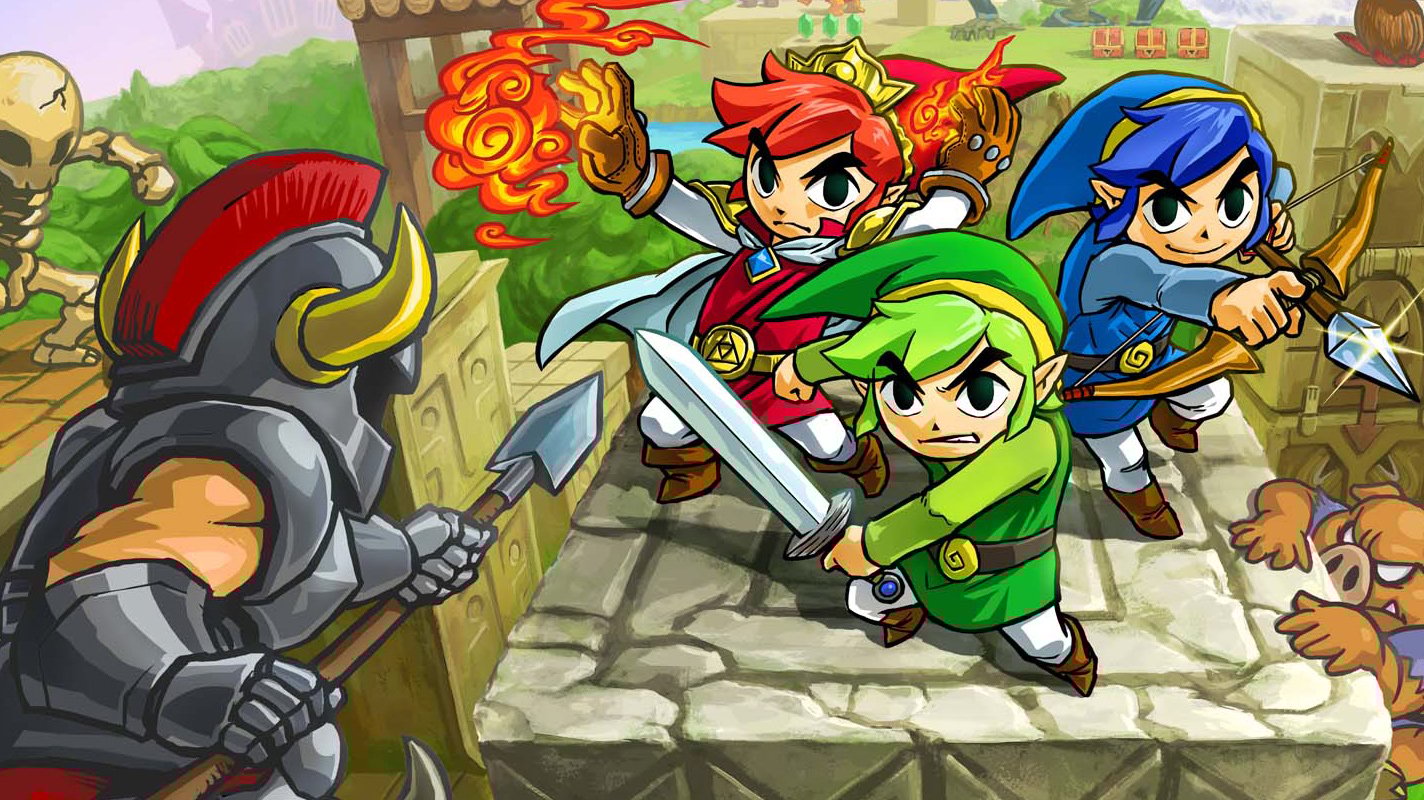
Tri Force Heroes is the more interesting name here, mostly because it’s a multiplayer Zelda that never quite got its victory lap. It had a clever co-op core, a goofy fashion-focused setting, and moments where teamwork felt like a perfectly timed group high-five. It also had friction, especially when you tried to play solo or relied on inconsistent online matchmaking. A modern re-release could smooth those issues out with better networking, cleaner matchmaking, and quality-of-life tweaks that don’t change what made it special. Ultra Smash, on the other hand, carries the Wii U baggage, but it’s still part of a franchise Nintendo returns to whenever the timing feels right.
Now add the calendar fuel. Zelda turns 40 in 2026, and Nintendo has a long history of using anniversaries as convenient moments to shine a light on older games. None of this confirms anything, and trademark renewals alone do not equal a new release. Still, they give us a practical reason to watch for more concrete signals, like ratings board entries, storefront updates, or platform-specific listings that go beyond legal housekeeping.
What Nintendo’s new trademark activity actually tells us
When we see Nintendo refresh trademarks for older game titles, the first instinct is to treat it like a fortune cookie. “A return is coming,” we tell ourselves, and suddenly we’re mentally clearing shelf space. The safer read is simpler: trademarks are about protecting names, not promising products. Nintendo can renew a mark because it still matters to the company, because it might matter later, or because it’s easier to maintain than to rebuild after it lapses. That last part is less romantic, but it’s real. Legal protection is like locking your front door even when you don’t expect burglars tonight. It’s just what you do. Still, it’s not meaningless that Nintendo chose to keep Tri Force Heroes and Ultra Smash on the protected list, especially when plenty of forgotten Wii U and 3DS-era names never get that kind of attention. The key is to treat this as a “keep watching” nudge, not a “start the countdown” alarm.
Renewal vs new filing: the boring truth we still need
Not all trademark movement is created equal, and the difference matters if we want to stay grounded. A renewal is often a maintenance step, basically Nintendo saying, “Yep, still ours.” A new filing can be routine too, but it sometimes shows Nintendo expanding protection into new regions, new product categories, or updated branding language. The problem is that the public conversation usually flattens all of this into one headline: “Nintendo trademarked X.” That’s how a quiet administrative update turns into a rumor wildfire. If we want to read the situation like adults who have been burned before, we treat renewals as the lowest heat on the stove. Something is on the burner, but it might just be a pot of water that never boils. The good news is that this mindset doesn’t kill the fun. It just keeps us from building a whole fantasy schedule on top of paperwork.
Nice classes and why the categories matter
Trademark filings often include categories that describe what the name is being used for, and that’s where the details can get interesting. These categories, often tied to the Nice Classification system, can cover things like software, downloadable games, physical goods, services, and sometimes even entertainment-related uses. If a company suddenly expands a game trademark into new categories, that can hint at broader plans. If it stays within the usual video game lanes, it can still be important, but it’s less suggestive. Think of it like labeling boxes during a move. A box that says “kitchen” tells you something, but a box that suddenly says “kitchen + party supplies + outdoor grill” tells you something else. We still need to be careful here, because companies can file broadly just to be safe. But categories are one of the few places where the paperwork can accidentally show a little personality, even if it’s the personality of a risk-averse legal team.
A quick reality check: trademarks don’t equal releases
Here’s the reality check we always need, even when it’s annoying: trademark upkeep is not a release plan. It’s a tool that makes future options easier, and that includes options that never happen. Nintendo has renewed plenty of marks that went nowhere for years, and sometimes forever. On the flip side, Nintendo can release something without the trademark story being obvious to the public first. That’s why the best approach is to treat trademark activity like a weather forecast that only tells you one thing: conditions are possible. It might rain. It might not. You don’t cancel your life, but you might bring a jacket. In this case, the “jacket” is keeping an eye out for stronger signals that are harder to fake, like ratings board listings or official storefront pages that mention specific platforms.
Tri Force Heroes is a strange Zelda gem that deserves another chance
If one of these names makes fans lean forward, it’s Tri Force Heroes. It’s not because it’s universally adored. It’s because it’s unusual. Zelda doesn’t often go all-in on a co-op puzzle structure where teamwork is the main event, and Tri Force Heroes did exactly that with a goofy grin on its face. The fashion-themed kingdom of Hytopia gave it a playful tone, the totem mechanic created instant “we did it!” moments, and the bite-sized stages made it easy to jump in for a session without committing your whole evening. The catch was friction. Solo play was workable but clunky, and online play could be brilliant or painful depending on matchmaking and connection stability. That combination is why it feels like unfinished business. A second chance does not need a radical redesign. It just needs the version that feels like it always wanted to be played: reliable co-op, smooth online, and a few modern conveniences that stop the game from tripping over its own shoelaces.
Why the three-player hook still works in 2026
Three-player design sounds awkward until you play a game built around it properly. Tri Force Heroes didn’t just allow three players, it required three minds, three sets of hands, and a shared willingness to be a little patient. That’s a rare flavor in Nintendo’s catalog. Four-player chaos is common. Two-player co-op is everywhere. Three is the oddly specific sweet spot where every person matters and nobody can disappear into the background. The totem mechanic is a perfect example. It turns a simple idea into a constant conversation: “You on top, me in the middle, now throw me.” It’s teamwork as slapstick choreography. In 2026, when online co-op is a normal part of how people play, that hook is arguably easier to appreciate than it was on the 3DS. The concept hasn’t aged out. If anything, it’s sitting there like a party game that never got invited to the bigger living room.
How a modern online setup could fix the rough edges
The biggest thing holding Tri Force Heroes back was never the core idea. It was the plumbing. Online play lives or dies by matchmaking, stability, and the little quality-of-life details that stop a session from feeling like a negotiation. A modern re-release could improve the experience without changing the personality. Better matchmaking filters, clearer communication tools, faster reconnect options, and less downtime between attempts would go a long way. Even small changes, like a more forgiving way to handle dropouts, can turn frustration into a shrug and a laugh. The game already understands that co-op needs rhythm. When it works, it feels like a well-timed comedy routine where everyone knows their cue. The goal would be to make “when it works” the default, not the lucky outcome. And yes, we can say it plainly: if a game is built around friends, it should be easy to play with friends, not an endurance test.
Mario Tennis: Ultra Smash and the Wii U shadow
Ultra Smash is a different kind of name to keep alive, because it’s tied to a platform era Nintendo rarely revisits directly. The Wii U library has gems, but it also has a reputation that makes every comeback feel like it needs a justification. Ultra Smash, in particular, wasn’t the most celebrated entry in the Mario Tennis line, and it arrived during a time when sports spin-offs sometimes felt slimmer than fans wanted. Even so, the Mario sports brand is durable. Nintendo has shown again and again that it likes having a wide bench of recognizable names, especially ones that can be used for re-releases, collections, or historical references. Keeping the Ultra Smash name protected can be as simple as keeping Nintendo’s options open. It might never be used again for a game, but it could still matter for branding, archival releases, or even just avoiding confusion if the name resurfaces in unexpected places.
Why Nintendo keeps the name alive
Sometimes the simplest explanation is the correct one: protecting a name is cheaper than letting it go and fighting for it later. Ultra Smash is part of a franchise family, and franchise families get treated differently. Even if Nintendo never plans to re-release that specific game, it might still want the name secured because it’s tied to a catalog of products and history. Also, “Mario Tennis” is a living brand that can spin off in different directions. Nintendo might prefer to keep old subtitles locked down so they can reference them freely, reuse terms without legal headaches, or prevent lookalike branding from popping up. Think of it like reserving usernames online. You might not post from every account, but you still don’t want someone else pretending to be you. For fans, the real takeaway is not “Ultra Smash is back,” but “Nintendo still considers the name worth owning.” That’s not fireworks, but it’s still a data point.
Anniversary timing: why 2026 makes people look twice
Timing is the gasoline here, and Nintendo knows exactly how anniversaries work on the human brain. We see a milestone year and we start expecting treats, even if nobody promised cake. In 2026, Zelda hits a major anniversary, and that alone makes any Zelda-related movement feel louder than it otherwise would. Mario is also in an anniversary window thanks to Super Mario Bros. celebrations kicking off for its 40th anniversary and extending into future releases and promotions. Nintendo often uses these calendar moments as a neat organizational excuse to spotlight older games, repackage classics, or push themed events. That does not mean every trademark renewal is part of a celebration plan, but it does explain why fans connect the dots. It’s like seeing party decorations in a store window and assuming there must be a birthday nearby. Sometimes there is. Sometimes the store just sells decorations all year.
Zelda at 40 and why Nintendo loves calendar moments
Zelda’s original starting point in 1986 makes 2026 an easy headline year for the franchise. Nintendo doesn’t always celebrate anniversaries the same way, but it consistently understands the value of a clean number. It’s a reason to run a sale, publish a timeline, highlight a soundtrack, add something to a subscription library, or put out a themed bundle that feels special without requiring a brand-new mainline game that takes years to build. That’s why Tri Force Heroes popping up in trademark talk lands differently right now. It’s a Zelda name, and 2026 is a Zelda-number year. The sensible stance is still restraint: no announcements means no announcements. But it’s also fair to say that this is exactly the kind of year where Nintendo has a natural excuse to remind people that Zelda has more flavors than just the big, obvious entries.
What a comeback could look like without rewriting history
If either of these names returns in a real, playable way, it doesn’t need to be dramatic. Not everything has to be a massive remake with new graphics, new story beats, and a marketing campaign the size of a parade. Nintendo has plenty of quieter pathways that still feel meaningful to players. Tri Force Heroes could return as a straight port with online improvements and sharper visuals. It could also show up as part of a library offering, where the main goal is access rather than reinvention. Ultra Smash, meanwhile, could be reintroduced as a historical entry, a quick re-release, or part of a broader Mario sports push that frames it as “here’s where we’ve been.” The point is that Nintendo can make older titles available again without pretending they were misunderstood masterpieces. Sometimes a comeback is simply giving people a convenient way to play something that was previously locked behind old hardware.
Ports, touch-ups, or a quiet drop – the realistic menu
When we talk about realistic paths, we’re really talking about effort-to-reward ratios. A port with quality-of-life updates is the sweet spot for a game like Tri Force Heroes, because the core is already strong and the pain points are mostly technical and interface-driven. A remaster could happen too, but it would likely still focus on clarity and performance rather than a total makeover. A quiet release, whether through a digital storefront or a subscription catalog, is also the kind of move Nintendo has used before when it wants to add value without turning it into a whole season of marketing. For Ultra Smash, the realistic options are narrower because of how it’s remembered, but even then, re-releases and catalog drops exist for a reason. Nintendo doesn’t need everyone to love a game to make it available. It just needs enough people to be curious, nostalgic, or willing to give it a second look.
How we can watch for real signals without falling for hype
The trick is to keep the fun without letting it run the show. Trademark chatter is like hearing footsteps upstairs when you live alone. It might be something. It might be your house settling. So what do we do? We look for signals that are harder to explain away as routine. A real product tends to leave a trail: platform listings, regional storefront pages, ratings board classifications, and sometimes even support pages that show up before an announcement. None of these are perfect on their own, but together they form a stronger picture than a single trademark renewal ever will. The goal is not to become paranoid detectives. The goal is to keep our expectations in the right lane so we can enjoy the moment if something happens, and shrug it off if nothing does.
The checklist: ratings, storefronts, and regional pages
If we want a practical checklist, ratings boards are a big one because they usually show up close to release plans. Storefront pages are another, especially if they list specific platforms, editions, or release windows. Regional pages can matter too, because Nintendo’s ecosystem is spread across different territories, and sometimes one region updates before another. We can also watch for support documentation, like game-specific help pages or online service notes that appear quietly. The strongest sign is when multiple independent hints point in the same direction within a short window. That’s different from one legal update that could mean ten different things. In other words, we don’t need to stop hoping. We just need to aim our hope at signals that come with real-world consequences, like a page that lets you add something to a wishlist, not a database entry that only a lawyer could love.
Conclusion
Nintendo renewing trademarks for Tri Force Heroes and Mario Tennis: Ultra Smash is, most likely, business as usual. That’s not a buzzkill, it’s the baseline reality of how big companies protect their names. Still, “business as usual” can coexist with genuine curiosity, especially in a year where Zelda’s anniversary puts extra attention on anything with a Triforce in the title. Tri Force Heroes remains the more tempting possibility, not because a return is guaranteed, but because the game’s concept feels like it would benefit massively from modern online infrastructure. Ultra Smash is more of a catalog-keeping move, but it still matters that Nintendo continues to lock down the name. The healthiest way to handle trademark news is to enjoy the spark, then watch for the stronger clues. If those clues never appear, we lose nothing but a little daydream time. If they do, we get to enjoy the surprise without feeling like we were tricked by paperwork.
FAQs
- Does a trademark renewal mean Tri Force Heroes is coming to Switch or Switch 2?
- No. A renewal mainly means Nintendo is protecting the name. A real release usually comes with additional signals like ratings listings, storefront pages, or official announcements.
- Why would Nintendo renew Ultra Smash if it was a Wii U game?
- Because protecting older names keeps Nintendo’s options open. Even if the game never returns, Nintendo may want the title secured for brand control and future use.
- What’s the most reliable sign that an older Nintendo game is actually returning?
- A combination of factors, especially ratings board entries and official storefront listings tied to specific platforms. Those are harder to wave away as routine paperwork.
- Could Tri Force Heroes work better today than it did on 3DS?
- Yes, in the sense that modern online systems and quality-of-life features could reduce matchmaking friction and connection issues, which were common pain points for many players.
- Is Nintendo likely to do something special for Zelda’s anniversary in 2026?
- Zelda’s 1986 origin makes 2026 a major milestone year. Nintendo has used anniversaries for spotlights and releases before, but only official announcements confirm what’s planned.
Sources
- Nintendo renews for trademarks Zelda: Tri Force Heroes and Mario Tennis: Ultra Smash, GoNintendo, January 2, 2026
- Nintendo has trademarked Zelda Tri Force Heroes and Mario Tennis Ultra Smash, My Nintendo News, January 3, 2026
- New Nintendo Direct kicks off the Super Mario Bros. 40th Anniversary and brings slate of new announcements, Nintendo, September 12, 2025
- The Legend of Zelda, Wikipedia, January 3, 2026
- The Legend of Zelda: Tri Force Heroes, Wikipedia, November 15, 2025
- Mario Tennis: Ultra Smash, Wikipedia, November 19, 2025