














Summary:
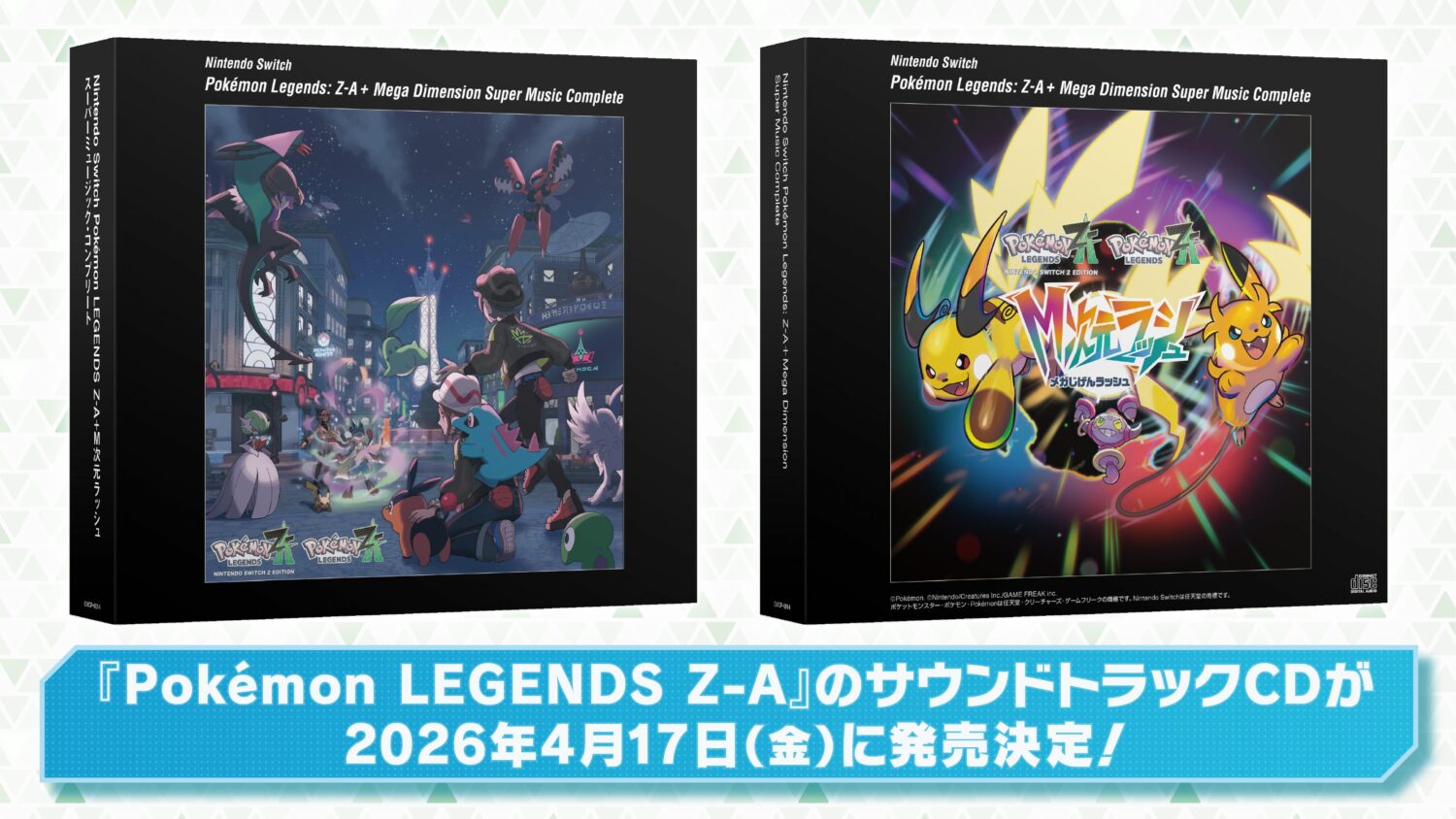
Pokémon music has a funny way of sneaking up on us. We might remember a battle theme for years, but the real magic often sits in the quieter stuff: the city loops that feel like comfort food, the tense little stingers before a cutscene, or that one route melody that somehow turns a commute into a daydream. That is why the Pokémon Legends Z-A original soundtrack announcement lands so nicely. The set is scheduled to release in Japan on April 17, 2026, and it is positioned as a full package rather than a small “best of” sampler. We are talking about 148 tracks spread across 5 CDs, pulling music from the base game and the Mega Dimension DLC, so the goal is clearly to capture the whole mood board in one physical release.
The physical extras help explain who this is made for. Alongside the discs, we get a deluxe full-color 36-page booklet, which is the kind of detail that turns a soundtrack into a shelf-worthy keepsake. For collectors, that booklet is not just a bonus, it is part of the experience, like opening a treasure chest and finding a little lore inside. For everyday listeners, the sheer volume of tracks matters because it means the soundtrack can follow the game’s pacing: big moments, small moments, and the strange in-between moments that make the world feel alive. If we have ever wanted to put the game’s atmosphere on in the background while working, relaxing, or just pretending our living room is a stylish Pokémon city, this release is built to make that easy.
Pokemon Legends Z-A Soundtrack Release date and what was announced
The headline is simple and satisfying: the Pokémon Legends Z-A original soundtrack is set to release in Japan on April 17, 2026. That gives us a concrete date, a physical format, and a clear promise about scope. The package includes music from the base game plus the Mega Dimension DLC, which matters because it signals we are not getting an “early version” that gets outdated the moment new music drops. Instead, it is framed as a complete listening experience, built to match the full shape of the game as players actually experience it. If you are the type who likes to connect memories to music, this is the kind of release that lets you relive everything: the first hours, the big turning points, and the late-game intensity where the stakes feel higher and the soundtrack knows it.
What “Super Music Complete” means in practice
Calling a soundtrack “complete” is a bold move, because fans will absolutely notice if something is missing. Here, the branding is doing real work. The set is positioned as a total collection, and that typically means we should expect more than just headline themes. We are likely getting the full ecosystem of music that makes the game breathe: town and hub loops, battle variations, menu tracks, short cutscene cues, and those little transition pieces that last 20 seconds but still hit like a perfectly timed wink. The important takeaway is that this is designed for people who want the full palette, not only the loudest brushstrokes. It is the difference between owning a movie’s greatest moments and owning the full film score that explains why those moments felt the way they did.
Why the “complete” label matters for fans
When a soundtrack release is selective, we end up chasing missing tracks through uploads, fan rips, or half-remembered clips. A complete set flips that experience. It says, “Relax, it is all here,” which is exactly what collectors and music nerds want to hear. It also makes the soundtrack easier to live with long-term, because we can build playlists that match our mood without constantly bumping into holes. Want calm background ambience while working? Want high-energy battle themes for a gym session? Want that oddly emotional cue that plays when a story beat lands? A complete release supports all of that without us having to hunt for scraps like we are doing a side quest with a terrible drop rate.
Why 148 tracks matters for how we listen
148 tracks is not a casual number. That is not “an album,” that is a whole musical archive. The upside is variety: we get breadth across locations, story moments, and gameplay states. The other upside is pacing. Game music is built to loop, to evolve, and to support action without stealing focus, so having a large tracklist often means we get the subtle variations that make a world feel responsive. The practical result is that listening outside the game can feel more like walking through the game’s spaces again, rather than hearing a small highlight reel. And yes, it also means we can lose an entire evening to “one more track” in the same way we lose an evening to “one more quest.” Different hobby, same trap.
Short cues versus full themes
Big sets usually include two kinds of tracks that serve totally different purposes. Full themes are the ones we hum. Short cues are the ones we feel. Those cues can be surprisingly powerful because they are tied to specific emotions: tension, discovery, comedy, relief. When they show up in a soundtrack release, it signals that the collection is treating the game’s storytelling seriously, not just its most popular melodies. If you have ever had a tiny piece of music instantly pull you back into a memory, you already understand why these “small” tracks matter. They are the seasoning that makes the whole dish taste right.
Base game music, and what it sets out to do
The base game soundtrack is the foundation, and it usually carries the job of introducing the world’s identity. In a Legends-style experience, music tends to juggle exploration, discovery, and sudden shifts into action. We can expect themes that support movement through environments without becoming exhausting, plus battle music designed to push momentum and keep our attention locked in. What is also interesting is how Pokémon soundtracks often balance the new with the familiar. Even when a game is doing something fresh, the music can sneak in references or stylistic nods that make longtime fans feel at home. That mix is like hearing an old friend’s laugh in a crowded room: even if you cannot place it instantly, you know it belongs.
How familiar melodies can show up in surprising ways
One of the most charming Pokémon soundtrack tricks is how it uses history. Sometimes that means an obvious callback. Sometimes it is subtler, like a chord progression that feels familiar or an instrument choice that hints at earlier games. When official messaging notes that the game includes series tracks heard in-game, it is a reminder that Legends Z-A is not musically isolated. It is part of a bigger musical lineage. For listeners, that is fun because it turns the soundtrack into a spot-the-reference game. You might start a track for background vibes and suddenly think, “Wait, why does this feel like a memory I did not know I still had?”
Mega Dimension DLC music and how it changes the vibe
DLC music is where things often get spicy. The base game establishes the musical rules, and then DLC gets to bend them. New areas, new encounters, and new narrative stakes usually demand new textures. Sometimes that means darker tones, sometimes faster rhythms, sometimes a totally different instrumentation palette that signals we are stepping into something unfamiliar. Including the Mega Dimension DLC music in the same set matters because it preserves the full emotional arc. If DLC raises intensity or introduces new motifs, having those tracks alongside the base game themes helps the whole soundtrack feel like one connected story rather than a split timeline.
Why DLC tracks are often fan favorites
There is a reason people latch onto DLC soundtracks. DLC tends to be concentrated: fewer hours, denser moments, and less “slow burn” setup. That can lead to music that goes harder, faster, or weirder, because it has to make a strong impression quickly. It is like a dessert menu where every option is rich, because nobody is pretending it is a light snack. If Mega Dimension introduces unique battles or standout set pieces, the soundtrack can become the souvenir we keep long after we finish the DLC itself.
The 5-CD format and how the discs are likely organized
Five discs is a lot of physical media, and it usually signals a thoughtful breakdown. Soundtracks of this size often separate music by function: exploration and locations, battles, story and cutscenes, special events, and then DLC or bonus material. Even without seeing the official disc-by-disc tracklist in front of us, the logic is pretty straightforward: you want each disc to have a listening identity so it does not feel like a random shuffle. For collectors, the multi-disc format also adds a tactile charm. There is something satisfying about moving from disc to disc like you are turning chapters in a book, especially when each chapter has its own mood.
Why physical discs still feel special
In a world where music is usually a tap away, discs feel like a deliberate choice. They make us slow down. They make the soundtrack feel like an object, not just background noise. That matters for game music because so much of it is tied to memory, and physical objects are great at anchoring memories. Also, let us be real: opening a multi-disc set scratches the same itch as opening a new game. It is the ritual. It is the “okay, what do we have here?” moment. And rituals are half the reason fandoms stay fun.
The deluxe 36-page booklet and what fans usually look for
A full-color 36-page booklet is not just packaging filler. For many fans, it is the part we flip through first. Booklets can include notes about the music, creative messages, artwork, and sometimes behind-the-scenes context that changes how we hear certain tracks. Even when it is mostly visual, it adds texture to the soundtrack as a collectible. Think of it like liner notes for a band, but tailored to a world we already care about. If the booklet includes new illustrations, development notes, or creator commentary, it becomes a bridge between the game and the music, helping us connect specific sounds to specific ideas.
What makes a booklet feel worth keeping
The best booklets do two things: they reward curiosity and they respect the listener. That might mean showcasing artwork that feels intentional rather than recycled. It might mean giving a peek at concepts or themes that were part of the soundtrack’s design. It might even be as simple as clean presentation that makes the whole set feel premium. Either way, the booklet turns a soundtrack into something we can revisit without pressing play. On days when we just want to soak in the world’s aesthetic, flipping through pages can hit the same comfort button as listening to the music itself.
Physical soundtrack life in 2026: collecting, ripping, and real listening
Buying a soundtrack in 2026 is both nostalgic and practical, depending on how we listen to music. Some people want the shelf piece, the neat spine, the satisfying “I own this” feeling. Others want high-quality audio they can archive and play however they like. A big multi-disc set supports both mindsets. We can enjoy the physical object, and we can also treat it as a stable way to keep the music in our rotation without relying on streaming availability. Game music rights and availability can be complicated across regions and platforms, so owning the physical release is a straightforward way to keep the soundtrack accessible for the long haul.
Soundtrack listening as a mood tool
Game music is secretly one of the best tools for managing mood. It is built to support focus, to energize, to calm, and to create a sense of forward motion. That is why people use it for studying, working, or unwinding. A set this large gives us options for every kind of day. Need calm? Put on location themes. Need motivation? Put on battle tracks. Need something cozy but not sleepy? Menu and hub music often hits that sweet spot. It is like having a wardrobe where every outfit is themed around a different version of “we are going to have a decent day.”
Importing from Japan: what to check before we buy
Because the release is announced for Japan, many fans outside the country will treat this as an import purchase. That is totally normal for game soundtracks, but it helps to be a little careful. The basics are simple: confirm the release date, confirm the product name, confirm whether you are buying the correct edition, and confirm shipping expectations from the retailer you choose. If you are shopping through import-friendly stores, double-check that the listing matches the 5-CD set and includes the deluxe booklet. Also keep an eye on language used in product titles, because soundtrack editions can sometimes have similar names that look almost identical at a glance, especially when DLC is involved.
Little details that save headaches later
When we import, small details matter more than usual. Make sure the listing clearly states the number of discs. Make sure it references both the base game and the Mega Dimension DLC music. If you see images, check that they match what is described. It is also smart to confirm whether the retailer is selling the soundtrack new and sealed, especially if you care about condition. None of this is glamorous, but it is the difference between a smooth purchase and the kind of shipping saga that turns into a group chat comedy special.
Who this release is for and how to decide if it’s worth it
This soundtrack is for two kinds of people, and plenty of us are both. First, it is for listeners who genuinely love Pokémon music and want the full range of Legends Z-A in one place. 148 tracks means it is not only about the big themes, it is about the world’s daily texture. Second, it is for collectors who enjoy physical releases that feel premium, especially when they come with a booklet that adds extra personality. If you are on the fence, ask yourself a simple question: do you want the music as a living part of your routine, or do you only want a handful of standout tracks? If it is the first, a complete set makes a lot of sense. If it is the second, you might prefer to wait and see how you connect with the soundtrack after more listening time.
Conclusion
Pokémon Legends Z-A’s soundtrack release is the kind of announcement that sounds straightforward, but the details reveal a bigger story. A Japan launch on April 17, 2026, a 5-CD physical set, 148 tracks spanning the base game and the Mega Dimension DLC, and a deluxe full-color 36-page booklet all point to a release aimed at fans who want the full musical identity of the game, not just a highlight reel. For collectors, it is a tangible piece of the game’s world. For everyday listeners, it is a massive library of mood-setting music that can live alongside work, study, travel, and downtime. If Pokémon music has ever made a moment feel bigger than it should, this set is built to bottle that feeling and put it on your shelf.
FAQs
- When does the Pokémon Legends Z-A soundtrack release in Japan?
- It is scheduled to release in Japan on April 17, 2026.
- How many tracks are included in the soundtrack set?
- The set includes 148 tracks spanning music from the base game and the Mega Dimension DLC.
- How many discs are in the physical soundtrack release?
- It is a 5-CD set.
- Does the soundtrack include music from the Mega Dimension DLC?
- Yes, it includes music from the base game as well as the Mega Dimension DLC.
- What is included besides the CDs?
- The package includes a deluxe full-color 36-page booklet.
Sources
- 『Pokémon LEGENDS Z-A』のサウンドトラックCDが2026年4月17日(金)に発売決定!, ポケモン公式(X), January 30, 2026
- Pokémon Legends: Z-A “Complete” Five CD Soundtrack Announced For Japan, Nintendo Life, January 30, 2026
- 「ポケモンZA」5枚組のサントラCDが4月17日発売! ゲーム内で使われた過去楽曲も収録, GAME Watch, January 30, 2026
- 『ポケモンZA』全150曲収録のサントラが4月17日に発売, ファミ通.com, January 30, 2026