














Summary:
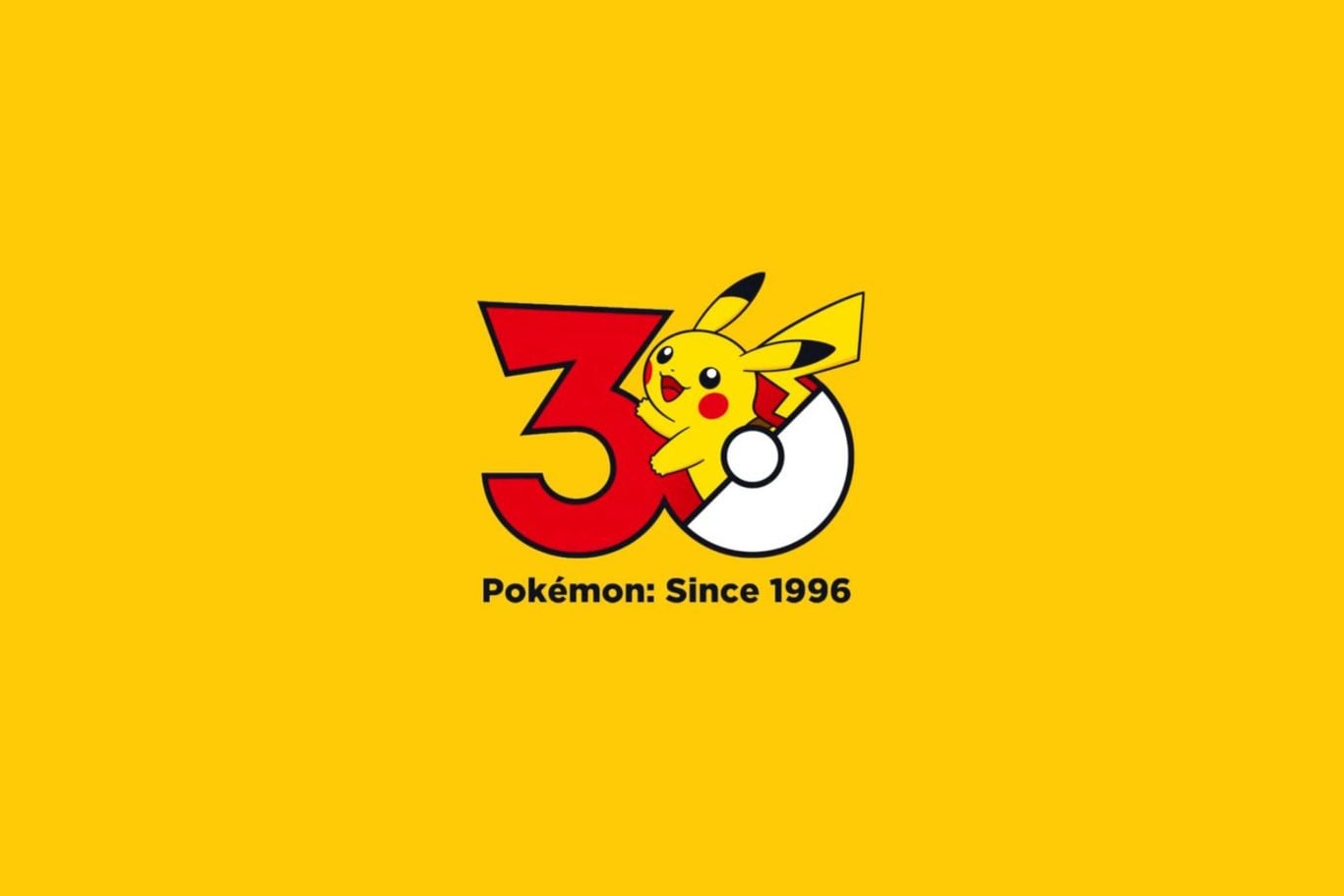
Pokémon turning 30 isn’t the kind of milestone you celebrate with a single logo and a polite clap. This time, we’re looking at a full-blown identity parade: a special 30th anniversary logo treatment that can feature any one of the 1,025 Pokémon currently in the lineup, delivered through an interaction on X via the official Poké Times account. The hook is simple in the best way – you interact with the campaign message, and you get a reply with a random logo icon. It feels like pulling a capsule toy where the prize is pure nostalgia, except the capsule is your notifications tab.
At the same time, the celebration isn’t trapped on your phone screen. In Japan, big outdoor placements are showing these anniversary visuals in high-traffic locations, with Shinjuku Station getting a lot of attention thanks to its massive signage. Fans on-site have shared photos and clips that capture the vibe: a moving wall of Pokémon history, the kind of public display that makes commuters slow down, point, and grin like they just heard the first notes of a familiar battle theme. There’s also a clear timing connection to Pokémon Day 2026 and the upcoming Pokémon Presents broadcast – the campaign and the city-scale advertising land like a drumroll. If you’ve ever thought, “How do we celebrate something this huge without it feeling generic?” this is one answer: make it personal, make it shareable, and make it impossible to ignore.
Pokémon’s 30th anniversary logos
When a series has been around long enough to span multiple generations of players, a single anniversary logo can feel a bit like trying to represent an entire Pokédex with one Poké Ball sticker. The 30th anniversary approach flips that idea on its head. Instead of one fixed mark, we get a system – a flexible logo style that can spotlight individual Pokémon while still looking like part of the same celebration. That matters because Pokémon fandom is personal. You don’t just “like Pokémon,” you like your Pokémon. Your starter. Your first shiny. The one you stubbornly leveled up even when everyone told you it wasn’t optimal. This anniversary setup taps into that emotional attachment by making the branding feel like it’s reaching into the crowd and calling you out by name. And because the visuals are consistent across the set, it still reads as one unified celebration rather than a random collage.

The Poké Times X interaction – what you do and what you receive
The mechanic is built for speed and simplicity, which is exactly why it’s spreading fast. The official Poké Times account shared a campaign message tied to the 30th anniversary logos, and the interaction is designed to trigger a reply that includes a random logo icon. No complicated forms. No “enter your email, confirm your email, now confirm your confirmation.” It’s closer to a quick handshake: you participate through the platform’s normal flow, and the payoff shows up as a response. The important part is the result – you end up with a logo icon featuring a single Pokémon, pulled from the full pool. That’s where the fun lives. You’re not choosing, you’re discovering. It’s the same little thrill as stepping into tall grass and waiting to see what pops out, except the encounter music is the buzz of a notification.
Why “1,025 Pokémon” is the headline number
That 1,025 figure isn’t just trivia, it’s the entire point of the flex. It tells you the campaign isn’t playing favorites. We’re not only celebrating the mascots and the usual crowd-pleasers – the idea is that the full range is represented. From icons you could recognize in silhouette to Pokémon you might need a second to remember, everything has a seat at the table. It’s also a neat way to make the anniversary feel bigger than any one generation. The number quietly communicates scale: decades of games, regions, stories, and designs now rolled into one shared visual language. And if you’ve ever tried to explain to a non-fan how Pokémon has grown over time, “1,025” does the heavy lifting in one breath. It’s basically the franchise saying, “Yes, we really did catch them all – and we’re still not done.”
The reply you get – formats, sharing, and practical use
Once the system replies with your logo icon, the immediate urge is to share it – and honestly, that’s the whole engine of the campaign. The icon works like a tiny badge that says, “This is the one I pulled,” which instantly invites reactions: friends teasing you, others comparing results, and someone inevitably declaring that the random pick is “fate.” Practically, you can save it, repost it, and use it as a visual in your profile or timeline depending on what the platform allows and what you feel like doing. The bigger value is how easily it becomes a conversation starter. Even people who don’t normally talk Pokémon will jump in if they recognize the character you got. It’s social proof wrapped in nostalgia, and it’s low pressure – you’re not asking anyone to buy anything, you’re just showing a fun result.
Japan’s outdoor ads across major cities
The online piece is only half the story because the 30th anniversary push is also showing up in real-world placements. That blend is deliberate. Digital campaigns can explode overnight, but physical advertising makes it feel official in a different way – it’s like seeing a tour poster on a wall instead of just hearing a rumor that a band might be coming to town. According to Japanese reporting on the campaign, the anniversary visuals are being shown as outdoor advertising across multiple major cities, creating a shared public backdrop for the celebration. That means the anniversary isn’t just living in your feed, it’s literally part of the environment for people moving through those spaces. And because Pokémon is so tied to everyday life in Japan – from stores to trains to seasonal events – stations are the perfect “everyone passes through here” stage.
Shinjuku Station and Shinjuku Wall 456 – the wow factor
Shinjuku Station is one of those places where “busy” feels like an understatement. It’s a human river, and anything that can make people pause there has to be genuinely eye-catching. Fans have shared photos and clips of the 30th anniversary visuals running on Shinjuku’s large signage, including references to Shinjuku Wall 456. The impact comes from scale and motion – it’s not a single poster you glance at and forget, it’s an experience you notice while you’re moving. And when the theme is “all Pokémon,” the scale is part of the message. You’re not just seeing a celebration, you’re seeing volume, variety, and history moving past you like a living timeline. If Pokémon is a stadium-sized franchise, Shinjuku is a stadium-sized display case.
Why stations are the perfect stage for Pokémon
Stations are where everyday life meets pop culture in the most natural way. People aren’t there for an event – they’re there to commute, meet friends, run errands, and get on with the day. That’s exactly why the placement hits. Pokémon has always thrived as something that fits into normal life, whether it’s a quick match, a short episode, or a few minutes of checking an in-game event. So when a station wall lights up with anniversary visuals, it doesn’t feel forced. It feels like Pokémon is doing what it has always done: showing up where people already are. There’s also something charming about the contrast. You’ve got the real world rushing by, and right there in the middle of it, a reminder of imaginary worlds that have been living in people’s heads for 30 years.
Tokyo Station tie-in energy around Pokémon Presents
Tokyo Station imagery has also surfaced through fan-shared photos, including references connected to Pokémon Presents and Pokémon Day. That matters because it suggests a coordinated rhythm: build visibility in public spaces, amplify it online through the logo interaction, and funnel attention toward the broadcast moment that tends to deliver the next wave of official announcements. Even if you’re not the type to set alarms for streams, this kind of rollout nudges you into awareness. You see the visuals, you notice the anniversary branding, you remember the date, and suddenly Pokémon Day feels closer. It’s marketing, sure, but it’s the friendly kind – like a countdown that taps you on the shoulder and says, “Don’t miss the party.”
The social hook – randomness, collecting, and friendly bragging rights
Random selection is an old trick, but Pokémon makes it feel like a feature instead of a gimmick. The franchise was built on surprise encounters, unknown evolutions, and the thrill of not knowing what’s around the corner. A random anniversary logo icon plugs directly into that same emotional loop. You’re not just receiving a graphic, you’re having a tiny “encounter” that produces a story. And stories are what people share. The randomness also keeps the conversation moving because it instantly creates variety. If everyone got the same three starters, we’d be done in five minutes. Instead, the pool is huge, so the timeline turns into a rolling showcase of favorites, oddballs, and deep cuts. It’s the digital version of trading cards on a playground – except now the playground is global and someone is always awake.
A simple etiquette checklist for joining in without annoying people
We can keep the fun high and the eye-rolls low with a little basic etiquette. First, treat it like one good share, not a spam mission. A single logo reveal with a short reaction goes a long way. Second, if you’re going to reply to friends, make it playful – ask what they got, compare, and move on. Third, remember that not everyone in your circle speaks fluent Pokédex, so a quick line about why your pick matters to you helps non-fans connect. Fourth, if you’re saving images, respect the original credits and context. And finally, don’t turn it into a competition unless your friends are clearly in on the joke. The goal is to feel like a celebration, not a scoreboard. Think of it like tossing confetti, not dumping the whole party store on the floor.
What this signals for Pokémon Day 2026
Big anniversary moments tend to come in waves, and this logo campaign feels like an early crest rather than the peak. The timing lines up neatly with Pokémon Day on February 27 and the usual cycle of announcements around Pokémon Presents. The combination of a participatory social interaction and massive public advertising suggests a clear intention: keep the anniversary visible, keep it personal, and keep people checking in. If you’re the type who loves community energy, this is the fun part where everyone is sharing their pulls and spotting the displays in the wild. If you’re the type who only cares about official reveals, this still matters because it signals how seriously the brand is treating the 30th. Either way, the vibe is unmistakable – Pokémon isn’t whispering “happy birthday.” It’s throwing the kind of birthday that fills a train station.
Conclusion
Pokémon’s 30th anniversary logo rollout works because it respects what makes the franchise stick: personal attachment, community sharing, and the joy of surprise. The Poké Times interaction turns a massive milestone into something that feels like it belongs to you, one random logo icon at a time. Meanwhile, the station displays in places like Shinjuku turn that same celebration into a public spectacle that commuters can’t ignore, even on the busiest day. Together, the digital and physical sides land like two halves of the same message – Pokémon is everywhere because Pokémon has been part of life for a long time. If you join in, you’re not just grabbing a graphic. You’re taking part in a shared memory, dressed up in anniversary colors, and delivered with the simplest possible magic trick: “Here’s your Pokémon.”
FAQs
- How do we get a Pokémon 30th anniversary logo icon?
- We participate through the official Poké Times campaign on X, and the system replies with a random 30th anniversary logo icon featuring one Pokémon from the full set.
- Why does everyone keep mentioning 1,025 Pokémon?
- Because the campaign’s pool covers all 1,025 Pokémon currently represented, which makes the anniversary feel complete and turns every result into a unique share.
- Where are the anniversary visuals being shown in Japan?
- They’re part of outdoor advertising across major cities, and Shinjuku Station has drawn attention due to large signage that fans have photographed and shared.
- What is Shinjuku Wall 456 in this context?
- It’s a large signage installation in Shinjuku Station that has been used for the 30th anniversary visual display, creating a high-impact showcase for the campaign.
- How should we share our logo icon without spamming friends?
- We keep it simple – share once with a short reaction, chat with friends in replies if they’re into it, and treat it like a celebration rather than a posting marathon.
Sources
- Pokémon 30th anniversary logo icon campaign message (Poké Times), X, February 23, 2026
- 『ポケモン』30周年のロゴアイコンがもらえるキャンペーンがXで開催中。1025匹の中からどのポケモンに会えるかな?, Dengeki Online, February 23, 2026
- How to Get Your Pokemon 30th Anniversary Logo, Beebom, February 23, 2026
- Shinjuku Station Pokémon 30th anniversary signage photo, X, February 23, 2026
- Shinjuku Wall 456 Pokémon 30th anniversary signage photo, X, February 22, 2026