














Summary:
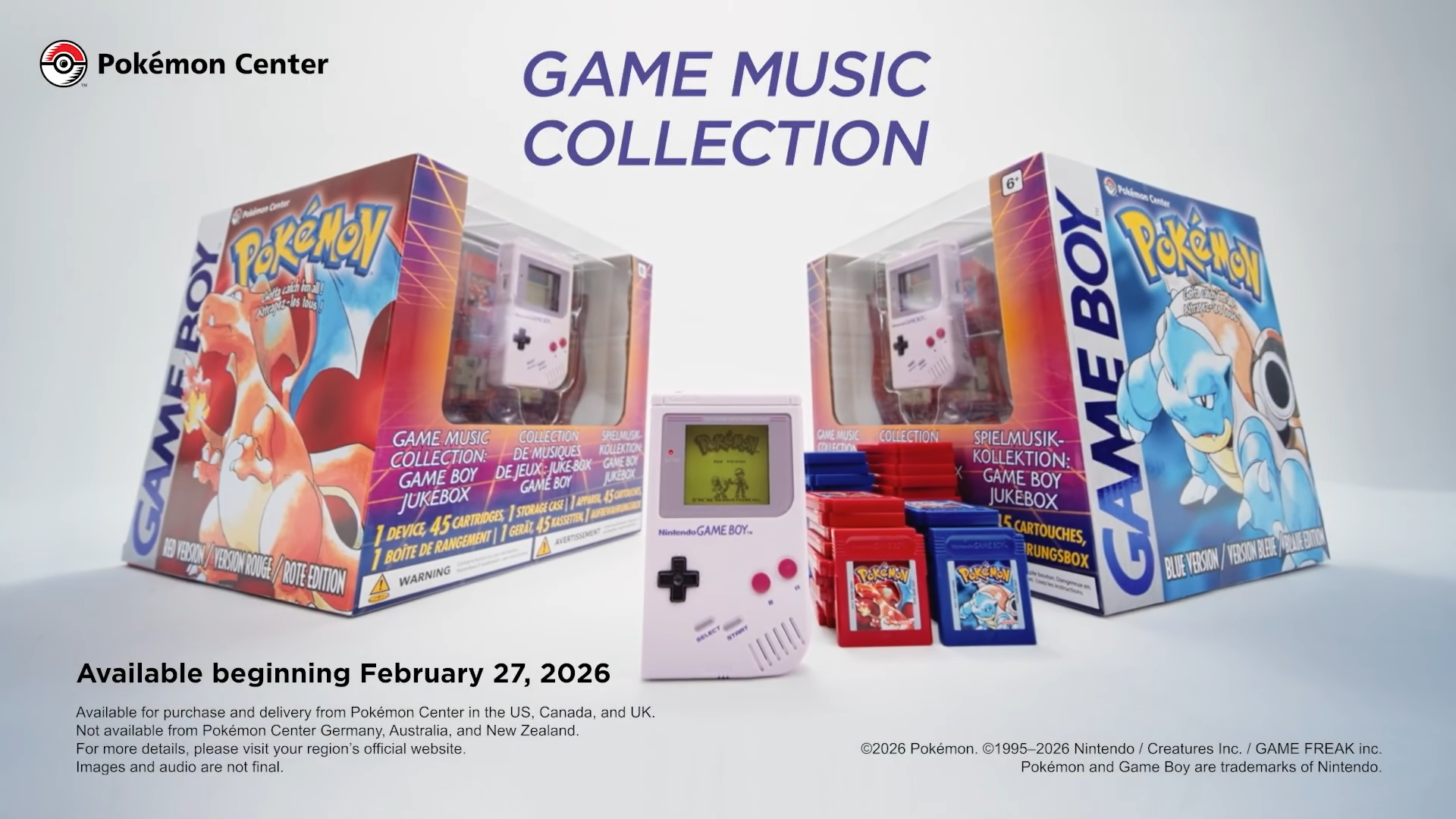
The Pokémon Company used Pokémon Presents on February 27, 2026 to reveal something that feels like it escaped from a bedroom desk drawer in the late 90s: a small “Game Music Collection” device shaped like a Nintendo Game Boy. The hook is wonderfully physical. Instead of scrolling through tracks like we do on every phone and every streaming app, we swap cartridges. The set includes 45 mini cartridges, and each one is tied to a song from Pokémon Red and Blue, turning the Kanto soundtrack into something you can literally hold, stack, and display. It’s nostalgia, but with a deliberate twist: the ritual is part of the listening.
That ritual matters because Pokémon music has always been about mood as much as melody. The calm of Pallet Town, the tension of a battle theme, the little jolt you get when a route track kicks in and you suddenly remember the exact patch of tall grass where everything went wrong. This device turns those memories into an interactive toy for your hands, not just your ears. It’s also a collector-focused product with a clear purchasing lane: it’s available to order directly from the Pokémon Center storefronts in the UK, the US, and Canada, starting February 27, 2026. If you love Pokémon, love retro hardware, or just want a desk object that makes you smile every time you walk past it, this is the kind of oddball idea that can feel weirdly personal.
Pokémon Presents, Pokémon Day, and why this reveal fits perfectly
Pokémon Day announcements usually land best when they tap into shared memory, and this reveal leans into that like it’s pressing A to start. February 27 is tied to the original launch window for Pokémon in Japan, so the whole celebration naturally pulls the spotlight back to the early days. That’s why a Game Boy-shaped music device is such a clean match for the moment. Even if you never owned the original handheld, you’ve probably seen it, heard it, or felt its influence in the way portable gaming became a normal part of life. The Red and Blue soundtrack is also one of the most instantly recognizable pieces of Pokémon history, so turning it into a collectible object is a smart way to celebrate without needing a new game release to carry the hype. It’s a reminder that Pokémon isn’t only battles and badges, it’s also the sounds that made those worlds feel real.

What the Game Music Collection actually is
The Game Music Collection is a small music device styled after a Nintendo Game Boy, built to play songs from Pokémon Red and Blue in a very specific way. Instead of loading tracks through an app, we insert a cartridge to select a song. The set comes with 45 cartridges, which means the experience is designed around swapping and choosing, not endless browsing. That physical approach is the headline feature, because it changes how listening feels. You’re not just pressing play, you’re making a tiny decision, grabbing a tiny object, and creating a tiny moment. It’s the kind of product that lives on a shelf or a desk and keeps earning its space because it’s fun to interact with even when you’re not actively listening.
The “Game Boy Jukebox” idea in plain English
Think of it like a jukebox that shrank in the wash and came out shaped like childhood. We pick a cartridge, slide it in, and the device plays the track tied to that cart. If you want a different song, we swap carts, just like changing games on a real handheld. That’s a big contrast to modern listening, where we can skip tracks so fast we barely notice what we’re hearing. Here, the friction is intentional. It slows us down in a good way, the same way flipping a vinyl record makes you commit to a side. It also turns the track list into a collection you can see, sort, and show off, which is exactly the kind of detail Pokémon collectors love.
Why the 45-cartridge gimmick is the whole point
On paper, 45 cartridges sounds like a gimmick, but it’s also the heart of the experience. Each cartridge acts like a physical “button” for a specific song, which means the track list becomes a set of objects with identity. We can line them up, group them by mood, or keep favorites within arm’s reach like they’re tiny trophies. It also creates that familiar little pause between wanting something and getting it, which is where nostalgia lives. You remember swapping carts in the back seat, blowing dust out of a connector you definitely were not supposed to blow into, and hoping the screen would boot. This device doesn’t need the frustration part, thankfully, but it borrows the ritual, and that’s what makes it feel different from a normal speaker playing a playlist.
Why Pokémon Red and Blue music still hits people in the chest
Pokémon Red and Blue music sticks because it wasn’t just background noise, it was a compass. The soundtrack told us when we were safe, when we were lost, when we were about to get into trouble, and when we’d finally made it somewhere that felt important. Those simple melodies had to do a lot with very limited hardware, and that limitation forced strong, clear musical ideas. That’s why people can hum a route theme decades later without thinking. It’s also why a device like this makes sense as a stand-alone collectible. We’re not buying “songs” in the modern sense, we’re buying a shortcut back to specific feelings: first steps out of town, a surprise battle, the relief of a Pokémon Center, the eerie calm of a cave where your last escape rope is doing all the emotional heavy lifting.
Kanto’s soundtrack as muscle memory
Kanto themes have a weird power because they attach themselves to repetition. We heard them over and over while grinding, exploring, and getting mildly bullied by random encounters in tall grass. Over time, those melodies became muscle memory, like the sound equivalent of knowing where the light switch is in a dark room. That’s why people don’t just remember the tunes, they remember who they were when they heard them. Maybe it was a link cable battle with a friend, maybe it was a long car ride, maybe it was staying up later than you were allowed because you were sure you could reach the next town before bedtime. When a collectible device promises that sound in a tactile way, it’s selling more than audio. It’s selling a memory you can tap on demand, like opening a photo album that also sings.
How swapping cartridges changes the way we listen
Swapping cartridges sounds simple, but it changes the whole vibe. With streaming, it’s easy to treat music like wallpaper, something that fills silence while we do something else. Here, the act of choosing a cartridge makes the song feel like an event, even if it’s only two minutes long. It also turns listening into something we can share in a room. Someone sees the little stack of cartridges, asks what it is, and suddenly we’re talking about Pokémon music instead of silently scrolling on separate screens like two sleepy zombies on a couch. There’s also a playful sense of limitation. You have 45 tracks, and you can’t search, you can only pick. That’s not a problem, it’s a personality trait, and it’s exactly why this device stands out.
A playlist you can’t scroll, only pick up
A scrollable playlist encourages indecision, because there’s always another option one thumb flick away. A cartridge-based list encourages commitment, because you already chose the cart and your hand is literally holding the decision. That small difference can make the music land harder. You’re more likely to let the track play out, more likely to notice a melody line you forgot, and more likely to connect it to the memory that originally made it special. It’s also an easy way to create tiny “sets” without needing software. We can decide that tonight is “town themes only” or “battle themes only” by physically grabbing a few cartridges, which feels satisfying in the same way organizing a game shelf feels satisfying. It’s silly, but it’s the good kind of silly.
Design details that matter more than specs
With collectibles like this, the point isn’t raw power, it’s believability. The device is shaped like a Game Boy for a reason, and the closer it gets to that original look and feel, the more it triggers that instant recognition. The buttons, the proportions, the speaker vibe, and the general “this belongs next to cartridges” aesthetic are what sell it. People don’t want a generic music player with a Pokémon logo slapped on it. They want the object to feel like it has a story, like it could sit next to an old Game Boy and not look out of place. When that happens, we stop thinking of it as merchandise and start treating it like a tiny museum piece that just happens to play tunes.
The “tiny click” factor and the illusion of time travel
The best nostalgia products understand one thing: our brains love tiny sensory cues. A button click that feels right, a cartridge slot that guides the piece in smoothly, a speaker sound that’s intentionally a little crunchy, those details do more emotional work than any bullet list of features. During the reveal, composer Junichi Masuda even highlighted care taken to make the audio feel like the Game Boy style of sound, and that kind of intention is exactly what fans want to hear. It’s the difference between “this plays music” and “this feels like Pokémon.” If the device nails those little cues, it becomes a desk companion, the kind of thing you pick up when you’re stressed, swap a cartridge, and let a familiar melody do the comforting part for a minute.
Where it’s sold and who can order it right now
This isn’t framed as a limited convention exclusive that only five people on earth can buy while everyone else watches resale prices spiral into nonsense. The announcement tied availability to the Pokémon Center storefronts in the UK, the US, and Canada, with ordering opening on February 27, 2026. That’s a big deal because it gives fans a straightforward route: official store, official listing, normal checkout flow. Of course, popular Pokémon Center items can still sell fast, especially when the product is both nostalgic and unusual. If you want one, the practical move is to keep an eye on the official product pages and be ready to act when stock is live, because collector items like this tend to attract both genuine fans and people who treat shopping carts like a sport.
Pokémon Center UK, US, and Canada availability
The purchasing regions called out for day-one ordering are the UK, the US, and Canada, and the product name is tied directly to Pokémon Red and Pokémon Blue. That makes it easy to identify and harder to confuse with third-party listings that may try to ride the hype. If you’re shopping from one of those regions, the safest approach is staying inside the Pokémon Center ecosystem, because it’s the cleanest way to avoid knockoffs and weird listing language. If you’re outside those regions, it becomes a waiting game for expanded availability or a careful decision about importing, and that’s where fans should slow down and think about taxes and shipping before clicking buy like a Magikarp flopping toward danger.
Who this is really for
This device is for anyone who hears a Kanto melody and instantly smiles, but it’s especially aimed at a few groups. Collectors will love it because it’s physical, displayable, and weird in a way that makes it a conversation starter. Music fans will love it because it celebrates the charm of old handheld sound, where catchy composition mattered more than orchestral polish. And honestly, it’s also for people who just want a small, comforting object that makes their space feel more personal. Not every Pokémon purchase needs to be a big plush or a shelf-sized statue. Sometimes the best picks are the ones that feel like tiny secrets, the kind of thing you keep near your keyboard and tap when you need a mood reset.
Collectors, music nerds, and people who miss the link cable era
If you’ve ever organized cartridges by label color, you already understand the appeal. The 45-cartridge setup turns the track list into a miniature collection inside the collection, which is collector catnip. For music nerds, it’s a fun way to revisit how strong melodies were built under tight constraints. And for anyone who grew up in the link cable era, it’s a reminder of how social those games could be, even with a tiny screen and a handful of pixels. The best part is that it doesn’t require you to be a hardcore anything. You can be the kind of person who only remembers the opening theme and still get joy out of swapping a cartridge and letting that sound fill a room for a bit.
How to make it feel like a mini exhibit at home
If you’re going to buy a collectible shaped like a piece of gaming history, give it a little stage. Put it on a shelf near a few classic items, like an old cartridge, a retro handheld, or even a small Kanto-themed figure, and suddenly it looks intentional instead of random. You can also treat the cartridges like display pieces. A small tray or acrylic stand can turn them into a visual “track wall” where your favorites are always visible. The fun part is rotating them like seasons. Town themes during quiet mornings, battle themes when you need energy, route themes when you’re working and want that steady sense of movement. It’s basically interior decorating, but for people whose idea of romance is remembering where they first caught a Pikachu.
What this says about Pokémon’s anniversary playbook
Pokémon anniversaries work best when they celebrate the franchise as a lifestyle, not only as new releases. A music device like this is proof that The Pokémon Company understands how fans connect to the brand through little sensory cues. The games are the core, sure, but the soundtracks are part of the identity, and turning them into a playful object keeps that identity alive in daily life. It also shows a willingness to take risks with format. Instead of another standard speaker or another generic collectible, this leans into a very specific retro shape and a very specific interaction. That’s a confident move, because it assumes fans will appreciate the weirdness, and Pokémon fans usually do. If the idea lands, it opens the door for more music-focused collectibles that celebrate other generations too, because Kanto is only the beginning of the soundtrack story.
What to watch next if you want one
If you want to grab the Game Music Collection, the smart mindset is “stay official, stay patient, stay ready.” Official Pokémon Center items can restock, but timing can be unpredictable, and demand spikes fast when social media catches the scent of something collectible. Keep an eye on official channels and store pages rather than chasing random listings that pop up the moment a product trends. Also decide what “worth it” means to you before checkout day, because nostalgia can make any price feel justified for about ten minutes, and then your bank app shows up like a gym teacher with a whistle. If you buy it, buy it because you’ll use it, display it, or genuinely enjoy the ritual. The best collectibles aren’t the ones that sit in a box forever, they’re the ones that keep making you smile.
Conclusion
The Pokémon Red and Blue Game Music Collection is a clever, tactile way to celebrate the Kanto soundtrack: a small Game Boy-shaped jukebox that uses 45 swappable cartridges to play classic tracks. It’s a product built around ritual, not convenience, and that’s why it stands out in a world where music usually lives behind glass on a screen. Announced during Pokémon Presents on February 27, 2026 and sold through Pokémon Center storefronts in the UK, the US, and Canada, it’s positioned as an official collectible that doubles as a daily mood machine. If you’ve ever felt your brain light up the moment a Pokémon town theme starts, this is basically that feeling, shrink-wrapped into a little desk companion you can pick up with one hand.
FAQs
- What is the Pokémon Game Music Collection device?
- It’s a small Game Boy-shaped music player that plays songs from Pokémon Red and Blue by inserting one of the included cartridges, turning track selection into a physical swap instead of a digital playlist.
- How many songs and cartridges are included?
- The set includes 45 mini cartridges, with each cartridge tied to a track from the classic Pokémon Red and Blue music lineup.
- Where can we order it?
- It’s available through the official Pokémon Center storefronts for the UK, the US, and Canada, with ordering opening on February 27, 2026.
- Is this meant to replace normal speakers or streaming?
- No, it’s more of a collectible listening experience. The appeal is the ritual of swapping cartridges and enjoying the Kanto soundtrack in a playful, nostalgic format.
- Who is this device best for?
- It’s perfect for Pokémon collectors, retro fans, and anyone who wants a physical way to enjoy the Red and Blue soundtrack, especially as a desk display piece that also works as a fun conversation starter.
Sources
- News and Updates from the Pokémon Day 2026 Pokémon Presents, Pokémon.com, February 27, 2026
- The Pokémon Center’s Game Boy Jukebox Hits All the Right Notes, Pokémon.com, February 27, 2026
- Pokémon-Themed Mini Game Boy Announced, Though It’s Not What You Think, Nintendo Life, February 27, 2026
- The Pokémon Company is releasing a mini Game Boy that plays Pokémon music by swapping 45 cartridges, Video Games Chronicle, February 27, 2026
- Celebrate Pokémon’s 30th anniversary with this Game Boy-shaped music player, Engadget, February 27, 2026