














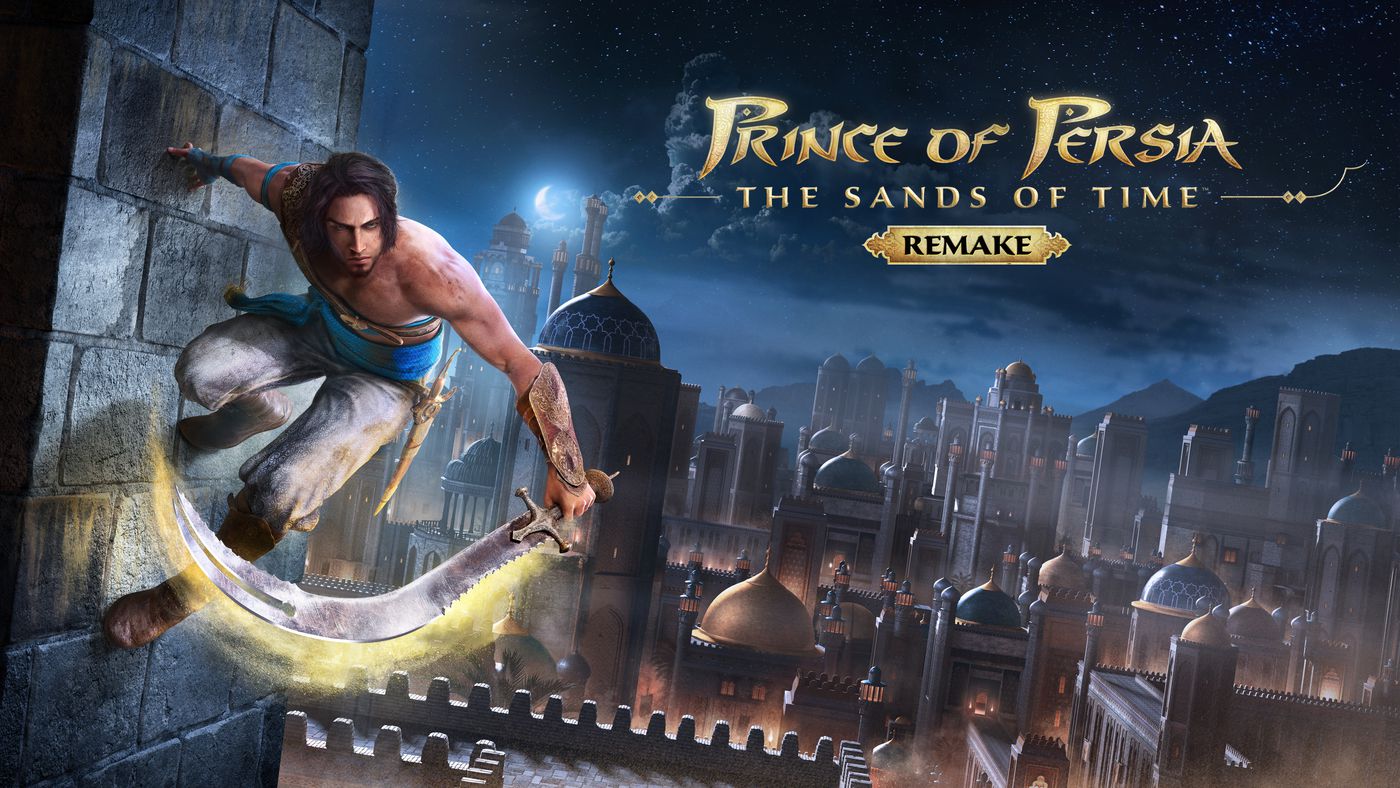
Summary:
We’ve been here before with Prince of Persia: The Sands of Time Remake. Ubisoft announces it, time passes, hopes rise, and then the trail goes quiet again. The difference now is that the silence has started to show fingerprints. A newly spotted website domain and a recent update timestamp have put the remake back in the conversation, not because a trailer suddenly dropped, but because little behind-the-scenes moves often happen right before marketing ramps up. That doesn’t guarantee anything, and we should treat it like a signal flare rather than a release date carved into stone, but it’s still the kind of practical clue that’s harder to ignore than vague “trust me, bro” chatter.
At the same time, the bigger story is why this remake had to be rebuilt in the first place. Ubisoft publicly acknowledged that the project shifted to Ubisoft Montreal and that the team was reshaping how the remake should feel in a modern context. That matters because Sands of Time is one of those games people remember with their whole nervous system. You don’t just recall the palace – you recall the rhythm of wall-runs, the little breath you hold before a jump, and the relief when the Dagger of Time saves a mistake. So when a remake doesn’t match the vibe people carry in their heads, backlash comes fast. Put those two threads together – a rebooted project and a fresh web footprint – and it’s easy to see why speculation is heating up again. We’re going to keep our feet on the ground, separate what’s confirmed from what’s rumored, and focus on what the latest signals can realistically mean for a showcase and a launch window.
Why Ubisoft rebooted the Prince of Persia: Sands of Time remake
Reboots happen when a project stops feeling like it’s heading toward the version people actually want to play. With Sands of Time, the emotional attachment is intense, because the original isn’t just remembered as “good for its time” – it’s remembered as the moment Prince of Persia found its modern identity. Ubisoft later confirmed the remake was moved to Ubisoft Montreal, and the language around the project made it clear they were rethinking how to deliver something that respects the original while meeting modern expectations. That’s a tricky balancing act. If we copy every beat too literally, it can feel stiff and dated. If we change too much, it stops feeling like Sands of Time and turns into “inspired by” instead. So the reboot reads like a decision to protect the heart of the game, even if it means taking the long road through the desert to get there.
What went wrong with the early version
The early reveal didn’t land the way Ubisoft hoped, and that’s putting it politely. When people saw the first public look, the reaction focused on visuals, animation quality, and the overall finish, with a loud sense that it didn’t match the legacy of the original. That kind of response creates a nasty feedback loop – fans get skeptical, the developer gets cautious, and updates become rarer, which makes fans even more suspicious. Ubisoft’s later messaging about listening to community feedback and rebuilding priorities fits the pattern we see when a publisher decides “we can’t ship this as-is.” In plain terms, the remake wasn’t matching the mental movie people expected to see when they heard the title. That gap between expectation and execution is where projects go to get rebuilt, delayed, or quietly reshaped until they’re ready to face the spotlight again.
How expectations changed since 2003
Back in 2003, Sands of Time felt like magic because it moved like nothing else. Today, movement systems are everywhere, and players are used to tight cameras, responsive inputs, and animation blending that hides seams. That’s the awkward truth: the industry learned from Sands of Time, then sprinted past it. So a remake can’t rely on nostalgia alone. We expect sharper readability in combat, better feedback when we miss a jump, and controls that don’t feel like they’re wearing gloves. We also expect accessibility options that weren’t standard back then, from remappable controls to camera tuning. That doesn’t mean Sands of Time needs to become a modern open-ended action game. It means the remake has to preserve the personality while upgrading the “feel” so it plays like a classic that got the respect of proper modern craftsmanship, not like a museum exhibit behind glass.
The new website registration and what it could mean
Website and domain activity is one of those boring grown-up details that can suddenly become exciting when it touches a game people have been waiting on for years. Reports point to a domain tied to Sands of Time Remake that was registered earlier and then updated recently, which is exactly the kind of housekeeping that often happens when a marketing push is being prepared. It’s not proof of a reveal on its own. Companies renew domains all the time just to protect branding. But the timing can still be meaningful, especially when the project has been quiet and the public is hungry for a sign that the gears are turning again. The responsible way to read it is simple: a refreshed web footprint suggests someone is touching the public-facing side of the project, and that usually happens for a reason, even if we don’t know the exact reason yet.
How fans track domain activity
Fans track domain activity because it’s one of the few places where big companies sometimes leave accidental footprints. People look at registration dates, update timestamps, registrar information, and whether a domain starts pointing to new servers or placeholder pages. It’s a bit like noticing fresh paint on a locked door – you still can’t open it, but you know someone has been there recently. In this case, reporting around the domain includes a claim that it was registered in March 2022 and later updated on December 10, 2025, which is the sort of detail that gets attention because it lines up with the idea of a near-term announcement window. We should still keep our skepticism switched on, because domain tracking is a signal, not a guarantee. But it’s also not pure fantasy, which is why it spreads so quickly when it appears.
What “updated recently” usually signals
“Updated recently” can mean anything from a simple renewal to a real pre-launch setup. The practical difference is whether the domain starts behaving like a future homepage – new redirects, new certificates, new metadata, or changes that suggest a page is being built. If all we see is a quiet update and nothing else, it could be legal housekeeping. If we see a more deliberate setup, it often suggests marketing materials are being staged for a reveal. The tricky part is that we, on the outside, don’t get to see the internal checklist. So we have to treat this like a weather forecast. Dark clouds don’t guarantee rain, but they do suggest you might not want to leave the house without a jacket. The smart move is to watch for the second signal, like official social channels waking up or press outlets getting real details at the same time.
Takeaways from past Ubisoft microsites
Ubisoft has a history of spinning up campaign pages for big announcements, and they tend to follow a familiar rhythm. A domain appears or gets refreshed, then social channels get small updates, then we see coordinated press coverage, and finally the trailer hits with a polished landing page ready to catch clicks. When a company expects traffic, it prepares the funnel first. That’s why domain activity matters at all – it can be part of the scaffolding that gets built before a public reveal. The key takeaway is that one clue is rarely enough, but a cluster of clues is harder to dismiss. If the domain update is real and the remake is nearing a showcase, we’d expect additional movement: updated key art, new store metadata, or a Ubisoft-owned channel pointing people somewhere specific. Until that happens, we should keep our excitement in the “hopeful but careful” lane.
Where the remake fits in Ubisoft’s release calendar
Timing matters because Ubisoft’s calendar is already crowded, and the company has publicly referenced a release window that places the remake within its fiscal planning. Multiple outlets have reported that Ubisoft expects Sands of Time Remake to launch by the end of March 2026, which gives us a real boundary even if we don’t have a day and month stamped on a trailer yet. That window also explains why even small hints cause a spike in speculation. If a game has to land before a fiscal deadline, marketing can’t stay asleep forever. At some point, the machine has to start moving – ratings, store pages, trailers, previews, all the unglamorous steps that turn a long-delayed project into something you can actually buy and play. So the calendar pressure is real, and it makes recent website movement feel more believable as a pre-release step.
How it compares to Assassin’s Creed projects
Assassin’s Creed is Ubisoft’s heavyweight, and anything near it tends to get compared, even if the games are wildly different. Reporting has linked Sands of Time Remake and the rumored Black Flag remake in the same early 2026 neighborhood, and some insider talk suggests Sands of Time could arrive first. Whether that ordering is accurate or not, the comparison helps frame Ubisoft’s strategy. A Prince of Persia remake is a chance to reactivate a beloved name without the same scale and risk as a brand-new flagship entry. It can be a strong “quality moment” release that reminds people Ubisoft can still deliver a polished single-player adventure with personality. Meanwhile, Assassin’s Creed releases are often treated like major tentpoles with broader marketing cycles. If Ubisoft wants both to shine, spacing them out matters. That’s why the “which launches first” debate keeps popping up – it’s not just fan curiosity, it’s also basic scheduling logic.
Insider chatter and what to treat as speculation
Insider reporting is useful when it gives specifics that later line up with official moves, but we still have to treat it as unconfirmed until Ubisoft says it out loud. For Sands of Time Remake, one report claims a mid-January 2026 launch target and suggests it would still arrive before the rumored Black Flag remake. That’s a clean, tempting narrative, but the responsible approach is to separate the claim from the confirmation. What’s confirmed through broader reporting is the larger release window that runs through March 2026. Everything more precise than that – a specific week, a specific event reveal, a surprise drop – lives in rumor territory for now. We can still talk about it, because it explains why people are watching closely, but we shouldn’t plan our lives around it. If you’ve ever waited for a kettle to boil, you know the rule: staring at it doesn’t make it faster, it just makes you thirstier.
What we should realistically expect from a reveal
If Ubisoft does showcase the remake soon, the safest expectation is a focused update that answers the biggest questions: what it looks like now, how it plays, and how it honors the original. We should expect a trailer that proves the “feel” is right, because that’s the scar tissue from the first reveal. A date would be the cherry on top, but even without it, a strong gameplay segment can reset the conversation overnight. Realistically, Ubisoft will want to demonstrate movement, combat readability, and how the time rewind mechanic looks and sounds with modern presentation. Sands of Time is a game of rhythm – flow through the environment, recover from mistakes, and keep moving forward. If the reveal nails that flow, most people will forgive the long wait. If it doesn’t, the skepticism will come roaring back, and nobody wants that round two.
Potential platforms, upgrades, and accessibility
Platform expectations have shifted since the remake was first announced, and any new reveal will need to make the platform story clear. Players want to know where they can play it today, not where it was originally planned years ago. Beyond platforms, modern releases are expected to ship with quality-of-life and accessibility features baked in, not treated like optional extras. That means options like subtitle scaling, contrast settings, color assistance, difficulty tuning, control remapping, and camera adjustments that respect different comfort levels. Sands of Time especially benefits from this, because precision movement can be a joy or a frustration depending on how forgiving the inputs and camera are. The best-case scenario is simple: we get a remake that lets you tune the experience so the challenge feels fair, not fussy. Nobody wants to lose a run because the camera decided to sightsee at the worst possible moment.
Performance targets and current-gen standards
Performance is part of trust now. A remake doesn’t get a free pass just because it’s revisiting an older game. Players expect stable frame rates, quick loading, and visuals that look intentional rather than inconsistent. The good news is that Sands of Time is not trying to be a massive open-world simulation. It’s a tightly designed adventure, which means Ubisoft has a real opportunity to deliver something that feels smooth and responsive. The reveal, if it happens, will likely be judged as much on animation quality and responsiveness as on raw pixel detail. The Prince’s movement has to look and feel confident. Combat has to read clearly. And the Dagger of Time mechanic should feel like a safety rope you can trust, not a gimmick that sometimes fails when you need it most. If Ubisoft nails performance and responsiveness, the remake has a chance to feel timeless again for the right reasons.
How to follow updates without getting burned
Following a long-delayed game can feel like chasing mirages. You spot something shiny in the distance, sprint toward it, and then realize it was just sunlight on sand. The trick is to build a simple filter for what deserves your attention. Official channels matter most, but credible reporting can help you understand timing and context, especially when it aligns with broader business windows like a fiscal-year deadline. Domain updates fall somewhere in the middle – not official, not meaningless. So we should treat them like a nudge to pay attention, not a reason to pre-order your hype. The healthiest approach is to stay curious but calm. Keep a short list of signals you trust, ignore the noise that shows up with zero detail, and remember that Ubisoft will eventually need to market the remake properly if it’s actually close. Real releases leave more than one footprint.
Red flags in rumor culture
The biggest red flag is certainty without evidence. If someone claims they know the exact date, exact time, and exact surprise drop plan, but can’t point to anything verifiable, that’s usually just performance. Another red flag is when rumors endlessly shift – “next month” becomes “next quarter,” then “next event,” and the story keeps moving like a goalpost on roller skates. Also watch for emotional manipulation: “Ubisoft is definitely hiding it because of a secret reason,” or “they’re going to shadow drop it any day now.” Those lines are designed to keep you hooked, not informed. The truth is less dramatic and more boring – marketing schedules change, projects need time, and companies don’t treat fan speculation as a reliable calendar. If we want to stay sane, we have to treat rumors like snacks. A little can be fun. Living on them is a terrible idea.
Best signals to watch
The best signals are the ones that require real coordination. Official social channels posting tangible updates is one. Store pages getting refreshed with new assets is another. Ratings board listings, press previews, and publisher-owned landing pages becoming active are also stronger signals than vague chatter. Domain activity can be part of that, but it’s strongest when it’s paired with something else. For Sands of Time Remake, the practical watchlist is straightforward: Ubisoft’s official messaging, credible outlets reporting on release windows, and observable changes to public-facing assets like websites and listings. If we see two or three of those moving in the same direction at the same time, that’s when it’s reasonable to think a reveal is approaching. Until then, it’s fine to enjoy the speculation, but we should keep our expectations grounded. Hope is great. Hope with guardrails is even better.
What success looks like for this remake
Success for Sands of Time Remake isn’t about reinventing the wheel. It’s about bringing back a specific feeling and making it land for modern hands and modern eyes. The original worked because it was elegant – puzzles, platforming, combat, and story were tied together by movement and the time mechanic. If the remake preserves that elegance while smoothing the rough edges that aged poorly, it can satisfy both longtime fans and people who missed it the first time. Ubisoft also has a chance to remind everyone that Prince of Persia isn’t just “Assassin’s Creed’s ancestor.” It’s its own thing, with a lighter touch, a storybook quality, and a rhythm that feels like dancing through danger. If we finish the remake and feel that same “one more room” pull, that’s the real win. Not nostalgia for nostalgia’s sake – nostalgia that still plays beautifully.
Faithful feel, modern polish
“Faithful” doesn’t mean stiff. It means recognizable. The Prince should still move with that confident athletic flow, the palace should still feel like a place built for perilous beauty, and the time mechanic should still feel like a clever second chance rather than a cheat. Modern polish is the difference between remembering a great meal and tasting it again with better ingredients. Controls should be responsive, animations should connect naturally, and camera behavior should help you rather than fight you. The remake also needs to respect pacing. Sands of Time is at its best when it alternates tension and relief, like a rollercoaster that knows when to breathe. If Ubisoft gets that pacing right, the remake won’t just be a revisit. It’ll be a reintroduction, the kind that makes new players wonder why they ever missed it and makes old fans grin like they just found a hidden water fountain in the palace.
Combat, traversal, and the time-sand magic
Traversal is the headline feature. If wall-runs, ledge grabs, and leaps feel smooth, everything else benefits. Combat matters too, but in Sands of Time it’s at its best when it supports movement instead of replacing it. That means encounters should read clearly, animations should communicate timing, and the game should reward you for staying mobile rather than planting your feet like you’re waiting for a bus. Then there’s the magic trick: the Dagger of Time. Rewinding should feel instant and satisfying, with audio and visual feedback that makes you feel clever for recovering, not ashamed for failing. That mechanic is the soul of the game’s identity. If it feels good, the whole adventure feels more approachable, because you’re encouraged to take risks. And Sands of Time is basically a love letter to taking risks – jumping first, rewinding if you regret it, and pretending you meant to do that all along.
Small details that matter most
Small details are where trust is won. Camera tuning that doesn’t lurch during platforming. Input buffering that respects quick reactions. Clear contrast on climbable ledges so you’re not guessing mid-jump. Audio cues that help you read danger, like spikes, traps, and enemy attacks. These aren’t flashy bullet points, but they’re the difference between “this feels great” and “this is making me tired.” Even the tone matters. Sands of Time has a storybook energy – dramatic, yes, but also playful and self-aware. If the remake keeps that tone while modernizing presentation, it will feel like the same story being retold around a better campfire. And if Ubisoft pairs that with a steady performance profile, we’ll get something rare: a remake that doesn’t just remind people of why they loved the original, but also convinces them it belongs on modern consoles without excuses.
Conclusion
The new website activity is a meaningful nudge, not a victory lap. It tells us someone is touching the public-facing side of Sands of Time Remake again, and that fits neatly with a release window that has already been discussed in broader reporting. The reboot to Ubisoft Montreal also explains why this project has taken so long – Ubisoft isn’t just polishing an old classic, it’s trying to rebuild it in a way that feels right in 2026 hands, not 2003 memories. If a reveal is coming, the smart expectation is a clear look at how the remake plays today, with movement and responsiveness doing the heavy lifting. Until Ubisoft confirms the next step, we can stay cautiously optimistic, watch for stronger signals like coordinated updates across official channels, and keep our hype in check so it doesn’t turn into disappointment. The irony of a game about rewinding time is that it has taught everyone the same lesson: patience saves runs.
FAQs
- Why did Ubisoft reboot Prince of Persia: The Sands of Time Remake?
- Ubisoft later confirmed the project moved to Ubisoft Montreal, and the reboot aligns with a need to reshape the remake after the initial vision didn’t meet expectations around quality and feel.
- Does a newly updated website domain mean the remake is about to be revealed?
- It can be a sign of marketing preparation, but it’s not proof on its own. Domain updates become more meaningful when paired with official posts, refreshed store listings, or coordinated press coverage.
- Is there a confirmed release date for Sands of Time Remake?
- No confirmed date has been announced publicly. Reporting has discussed a broader window through the end of March 2026, while more specific timing claims remain unconfirmed until Ubisoft states otherwise.
- Will Sands of Time Remake launch before the rumored Black Flag remake?
- Some reporting suggests that ordering, but neither has been officially dated in a way that makes the comparison definitive. Treat it as a possibility, not a promise.
- What should we look for next if a reveal is close?
- Watch for official Ubisoft messaging, updated landing pages with real assets, store page refreshes, and credible outlets reporting consistent details at the same time. A cluster of signals is stronger than a single hint.
Sources
- An Update on Prince of Persia: The Sands of Time Remake, Ubisoft News, May 24, 2023
- Prince of Persia Sands of Time Remake website updated ahead of rumored release, VideoGamer, January 2, 2026
- EXCLUSIVE: Prince of Persia: Sands of Time Remake Release Update, Insider Gaming, November 21, 2025
- EXCLUSIVE: Assassin’s Creed Black Flag Remake Set to Launch Before March 31, Insider Gaming, November 21, 2025
- The Prince Of Persia: Sands Of Time Remake Will Launch By March 2026, Ubisoft Says, GameSpot, May 14, 2025
- Prince of Persia: The Sands of Time Remake will launch ‘very soon,’ Ubisoft exec says, PC Gamer, July 18, 2025