














Summary:
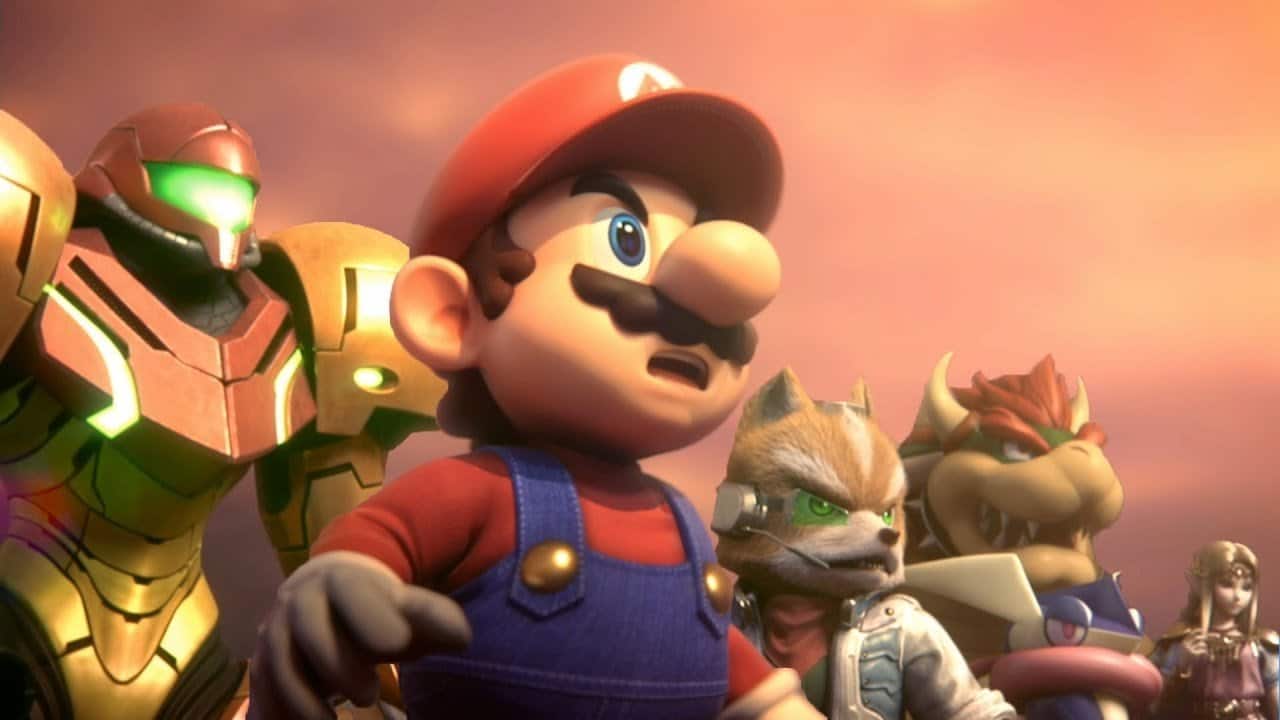
Fox McCloud showing up in The Super Mario Galaxy Movie was always going to light a fire under Nintendo fans. It is the kind of reveal that instantly sends people racing toward bigger theories, and the biggest one was easy to predict. If Star Fox can appear in a Mario film, then surely Nintendo must be building toward a Super Smash Bros movie, right? That idea has a certain blockbuster sparkle to it. It sounds huge, loud, and inevitable. But according to Shigeru Miyamoto, that is not the direction Nintendo has in mind.
Miyamoto explained that he does not expect a situation where all Nintendo characters join together in one film. Instead, he pointed to something much more grounded. The Mario world already has a rich cast of characters, enough to carry these movies on its own without borrowing half of Nintendo’s history for support. In that view, special appearances are not giant signposts pointing toward a crossover event. They are seasoning. They are small surprises that add charm, curiosity, and a little extra flavor without changing the meal itself.
Chris Meledandri backed up that idea by describing a creative process built around individual scenes rather than a giant long-term master plan. The thinking is not, how do we launch a cinematic empire? It is, would this be fun here, and does it feel right? That difference matters. It turns Fox McCloud’s role from a corporate breadcrumb into a creative choice. That may disappoint fans dreaming of a Nintendo equivalent to a superhero team-up, but it also says something healthy about the films. They are being shaped around what works in the moment, not what looks flashy five movies from now. In the end, Fox McCloud seems less like the first domino in a crossover chain and more like a carefully chosen cameo that fits the tone, the scene, and Nintendo’s own sense of balance.
Why Fox McCloud sparked immediate Super Smash Bros movie talk
The moment fans heard that Fox McCloud would appear in The Super Mario Galaxy Movie, the reaction was almost automatic. You could practically hear the collective gears turning. Mario and Star Fox in the same movie space? That is the kind of thing that makes people start sketching crossover charts in their heads before the popcorn is even warm. It makes sense too. Super Smash Bros has spent years teaching players to associate Nintendo’s biggest names with one shared stage, so when a character from outside the Mario orbit suddenly flies into a Mario movie, people naturally start seeing a bigger pattern. It feels less like a wink and more like the beginning of a parade. The trouble is that fans often read these moments like detectives staring at a corkboard full of red string, while the people making the film may simply be asking whether a certain character would be fun in a certain moment. Fox McCloud carries enough history, cool factor, and recognition to make his appearance feel bigger than a standard cameo, but excitement can stretch an idea far beyond what its creators ever intended. That is exactly what happened here. The theory machine started roaring, and suddenly one appearance became, in many minds, the possible first step toward a Nintendo crossover film with everyone under one roof.
What Miyamoto actually said about all Nintendo characters joining
Miyamoto’s comments cut straight through that speculation with surprising clarity. Rather than leaving the door wide open for fans to dream about a future film where every major Nintendo character lines up like a digital roll call, he said he does not think there will be a situation where all Nintendo characters join together. That matters because it is not vague corporate fog. It is a direct attempt to cool the temperature around a very specific theory. In other words, the Fox McCloud reveal should not be treated like a teaser trailer for Super Smash Bros on the big screen. Miyamoto’s framing suggests something much smaller and more controlled. He sees room for occasional characters outside the core Mario cast, but not a giant crossover structure where everything starts folding into everything else. That distinction is huge. It tells fans that Nintendo is not treating these films like puzzle pieces in a giant cinematic map. Instead, each decision seems to be judged on whether it suits the movie in front of them. It is a bit like decorating a room. A single unusual lamp can make the space more interesting, but that does not mean you are rebuilding the whole house.
Why the Mario cast is already strong enough to carry these films
One of the smartest parts of Miyamoto’s reasoning is also the simplest. Mario does not need rescue from outside franchises. The Mario universe already has a cast that is flexible, recognizable, funny, weird, and surprisingly broad. You have heroes, rivals, villains, oddballs, royalty, creatures, sidekicks, and enough personality clashes to keep multiple films moving without ever running dry. That gives Nintendo and Illumination a sturdy foundation. They do not have to chase the thrill of bigger crossover headlines just to keep audiences interested. They can pull from within Mario’s own world and still create something lively. That is important because crossover temptation can be a trap. It looks exciting in the distance, but it can also crowd a film so quickly that it starts wobbling under its own weight. When Miyamoto says the Mario cast is more than enough, it comes across less like a defensive answer and more like confidence. Why raid the whole pantry when the kitchen is already full? The point is not that outside characters can never appear. The point is that they are not needed for the movies to stand tall. Mario already brings enough stars to the party.
How Nintendo treats cameos as flavor rather than future promises
Miyamoto’s description of special characters as a little spice says almost everything you need to know about Nintendo’s current movie mindset. Spice changes the taste of a meal, but it does not replace the meal itself. That is a useful way to think about cameos like Fox McCloud. They are there to add surprise, texture, and a small burst of delight. They are not there to announce a multi-film strategy. In today’s blockbuster culture, audiences have been trained to treat every cameo like a contractual obligation with a sequel attached. A mysterious face appears for five seconds and suddenly the internet starts building phase plans. Nintendo seems to be resisting that habit. By framing these appearances as flavor, the company is signaling that not every fun inclusion needs to become a promise about the future. Sometimes a cameo is just a cameo. Sometimes it is there because it makes a scene sing, not because it plants a flag for the next five years. That approach can actually be more refreshing than the larger universe model. It lets a movie breathe. It lets surprises stay playful instead of turning them into paperwork for future installments.
Why Pikmin are a special case in Miyamoto’s thinking
Miyamoto’s comment that Pikmin can appear in any Nintendo series is one of those little remarks that says a lot without taking up much space. It suggests that he sees certain characters as more flexible than others, almost like mascots that can drift across projects without carrying major narrative baggage with them. Pikmin are tiny, expressive, visually distinctive, and easy to drop into a scene as a bit of charm. They do not demand an explanation the way a major lead from another franchise might. Fox McCloud is different. He arrives with more history, more identity, and more expectations attached to him. That is part of why fans reacted so strongly. Pikmin can flutter through the background like confetti. Fox feels like he parked an Arwing in the middle of the conversation. By bringing up Pikmin, Miyamoto seems to be drawing a line between kinds of crossovers. Some are light and ornamental. Others instantly make people think of bigger franchise implications. That line helps explain why Nintendo may be comfortable with some character appearances while staying cautious about anything that feels like a full collision of worlds. Not every crossover note carries the same weight.
How Chris Meledandri described the creative process behind cameos
Chris Meledandri’s explanation strengthens Miyamoto’s point because it shifts the whole conversation away from strategy and toward scene-making. He described a process built around simple creative questions like whether something would be fun in a given moment. That sounds almost disarmingly ordinary in an era when every entertainment company is expected to think like a chess master moving pieces across a giant franchise board. Here, the process sounds more like a writers’ room tossing around ideas and seeing what sparks. Would Pikmin fit here? Would that be fun? If yes, then the next question is whether Miyamoto feels it belongs. That is a very different energy from building a large crossover machine. It is more playful, more instinctive, and frankly more human. It also means a cameo is not automatically carrying the burden of future plans. It just has to work in the scene. That kind of thinking can lead to smarter choices because it forces every idea to earn its place in the moment rather than survive on hype alone. A cameo should feel like a natural laugh, smile, or surprise, not like a corporate memo dressed up in animation.
Why Nintendo and Illumination are focusing on one film at a time
There is something almost rebellious about hearing major movie makers say they are focused on one film at a time. In modern franchise language, that can sound strangely modest, like admitting you brought one sandwich to a picnic where everyone else arrived with a banquet plan. But it may be the very reason the Nintendo and Illumination partnership feels more stable than some sprawling cinematic experiments. By concentrating on what serves the current movie, they reduce the risk of turning every scene into setup material for some distant payoff. That matters because audiences can feel when a film is constantly elbowing them in the ribs and whispering, wait until the next one. It becomes exhausting. Meledandri’s comments suggest a model where the movie in front of you has to matter first. The jokes have to land. The characters have to work. The set pieces have to feel right. If an extra Nintendo face helps that happen, great. If not, it stays out. That keeps the film from becoming a shopping list of intellectual property cameos. It also protects the Mario brand from being swallowed by crossover noise before its own cinematic lane is fully established.
What Fox McCloud’s appearance really means for Nintendo movies
So what does Fox McCloud actually mean in this bigger picture? Probably less in terms of roadmap and more in terms of confidence. His presence suggests Nintendo is willing to experiment around the edges of its film adaptations, but only in ways that feel carefully judged. That is not nothing. It shows openness. It shows that the company is not sealing each franchise inside a locked glass case. At the same time, it does not point to a guaranteed chain reaction where every recognizable Nintendo face starts turning up like guests at a reunion nobody officially announced. Fox McCloud’s appearance seems to say that Nintendo is happy to let fans feel a little thrill of surprise without handing over the keys to a full crossover future. In that sense, the cameo becomes a balancing act. It gives audiences a taste of something wider while still keeping Mario’s world at the center. That may frustrate people hoping for a huge interconnected rollout, but it is also a sign of restraint. And restraint, while less flashy than hype, often ages better. A surprise that fits well is more memorable than a promise that grows too big to keep.
Why fans keep chasing crossover theories anyway
Fans chase crossover theories because crossover stories are catnip for the imagination. They are the entertainment equivalent of seeing two rivers almost meet and instantly wanting to build a bridge. Nintendo is especially vulnerable to this because its characters already coexist in players’ minds through racing games, party games, sports titles, and of course Smash Bros. The company has spent decades teaching people that Mario, Link, Samus, Kirby, and Fox can occupy the same cultural playground even when their own series stay separate. So when a movie cameo blurs those borders, fans do what fans always do. They start dreaming bigger. There is also a simple emotional pull at work. A Super Smash Bros movie sounds like an event, the kind of thing that promises cheers, gasps, and endless character reveals. It is fan service with fireworks attached. The challenge is that what sounds electrifying as a concept is often much harder to shape into a satisfying film. A game can thrive on a giant roster and pure collision energy. A movie has to carry tone, pacing, focus, and character weight. That is harder than tossing everyone into one arena and yelling go.
What this says about the future of Nintendo on the big screen
If Miyamoto and Meledandri’s comments are taken at face value, the future of Nintendo films looks more curated than explosive. That does not mean it will be small. It means it will likely be selective. Nintendo appears interested in protecting the identity of each film rather than rushing toward a mega-crossover just because audiences know the reference points. That could lead to stronger movies in the long run. Each franchise has room to breathe, develop its own rhythm, and win audiences on its own terms. Mario can stay Mario. Zelda can be Zelda. Star Fox can remain distinct rather than getting folded into a giant shared formula too early. And yes, little surprises may still pop up along the way, because Nintendo clearly enjoys that sense of play. But the bigger signal here is discipline. The company seems more interested in earning excitement movie by movie than in trying to slam the accelerator through a cinematic universe blueprint. In a landscape where many franchises chase scale before stability, that approach may be the smarter one. It is less thunderclap, more steady orbit, and for Nintendo, that may be exactly the right trajectory.
Conclusion
Fox McCloud’s role in The Super Mario Galaxy Movie is exciting precisely because it feels unusual, but Miyamoto has made it clear that unusual does not automatically mean transformational. Nintendo is not pointing toward a future where every major character gathers in one giant crossover film, and it is not treating cameos like puzzle pieces in a master plan. Instead, the company appears to be choosing surprises based on whether they fit, whether they are fun, and whether they serve the film already being made. That keeps Mario at the center, protects the identity of the movies, and gives special appearances room to stay special. Fans will keep dreaming about Smash Bros on the big screen because that dream is loud, colorful, and easy to love. For now, though, Nintendo seems far more interested in making each movie work on its own before chasing something bigger.
FAQs
- Did Miyamoto confirm that a Super Smash Bros movie will not happen?
- He did not frame it as a formal forever-never statement, but he clearly said he does not expect a situation where all Nintendo characters join together. That strongly pushes back against the idea that Fox McCloud is setting up a Smash-style movie.
- Why did Fox McCloud’s appearance create so much speculation?
- Fox is a major Nintendo character from outside the Mario universe, so his presence immediately felt bigger than a normal cameo. Fans connected that appearance to the crossover spirit of Super Smash Bros and started imagining a larger plan.
- What did Miyamoto mean by adding a little spice?
- He meant that surprise characters can add fun and variety without taking over the whole movie. They are there to enhance certain moments, not to promise a massive crossover future.
- How does Illumination approach Nintendo cameos?
- Chris Meledandri said the team focuses on what would be fun within a specific scene. If an idea works creatively, it is then checked with Miyamoto to see whether it feels right for the film.
- Does this mean Nintendo movies will never cross over more directly?
- It means that Nintendo is not presenting that as its current direction. Right now, the emphasis appears to be on individual films, carefully chosen surprises, and keeping each movie anchored in its own world.
Sources
- Mario creator Shigeru Miyamoto on the future of Nintendo movies and why they won’t be like Marvel, Polygon, March 31, 2026
- Miyamoto says not to expect a Smash Bros-style crossover in future Mario movies, GamesRadar+, April 2, 2026
- Super Mario Galaxy Movie creators ran every cameo past Miyamoto, saying if it’s “not going to work for him, we’re not going to do it”, GamesRadar+, April 2, 2026
- All the big “Super Mario Galaxy Movie” character cameos, from Fox McCloud to that post-credits scene reveal, Entertainment Weekly, April 4, 2026