














Summary:
Yuji Horii has spent decades shaping Dragon Quest, so when he talks about what separates his series from Final Fantasy, it hits with the weight of lived history. He remembers the moment Final Fantasy appeared on the scene, admits he watched it carefully, yet insists he never framed it as a bitter rivalry. Instead, he noticed a single, important fork in the road. Final Fantasy built its identity around protagonists who speak freely, express their feelings and carry the story like actors on a stage. Dragon Quest chose the opposite path, letting the hero stay quiet so the player could slip into their boots without friction. That one decision changed how players connect to each world. We explores how silent heroes invite you to project your own thoughts, how talkative leads pull you into carefully scripted drama, and why Horii can love Final Fantasy X while still defending Dragon Quest’s philosophy. By the end, you see two series that grew side by side, not as enemies, but as different answers to the same question: who should truly own the adventure, the character on screen or the person holding the controller.
Dragon Quest and Final Fantasy as JRPG pillars
Dragon Quest and Final Fantasy sit like twin pillars at the entrance to the JRPG genre, towering over decades of turn based battles, summons, slimes and crystals. Dragon Quest arrived first in the mid eighties, sketching out a simple story of a lone hero, a cursed land and a king begging for help. Final Fantasy followed shortly after with a more theatrical style, but both series quickly became household names among players who loved long adventures. Today they live under the same Square Enix roof, share crossover events and even appear together in fighting games, yet the old sense of comparison has never really gone away. Fans still argue about which one defined their childhood or which soundtrack they would take to a desert island. That is why hearing Horii himself talk about how he sees the relationship is so fascinating. It reminds you that behind every fan debate there were creators making hard choices about tone, structure and how they wanted players to feel when they picked up the controller.
Yuji Horii’s perspective on early “competition”
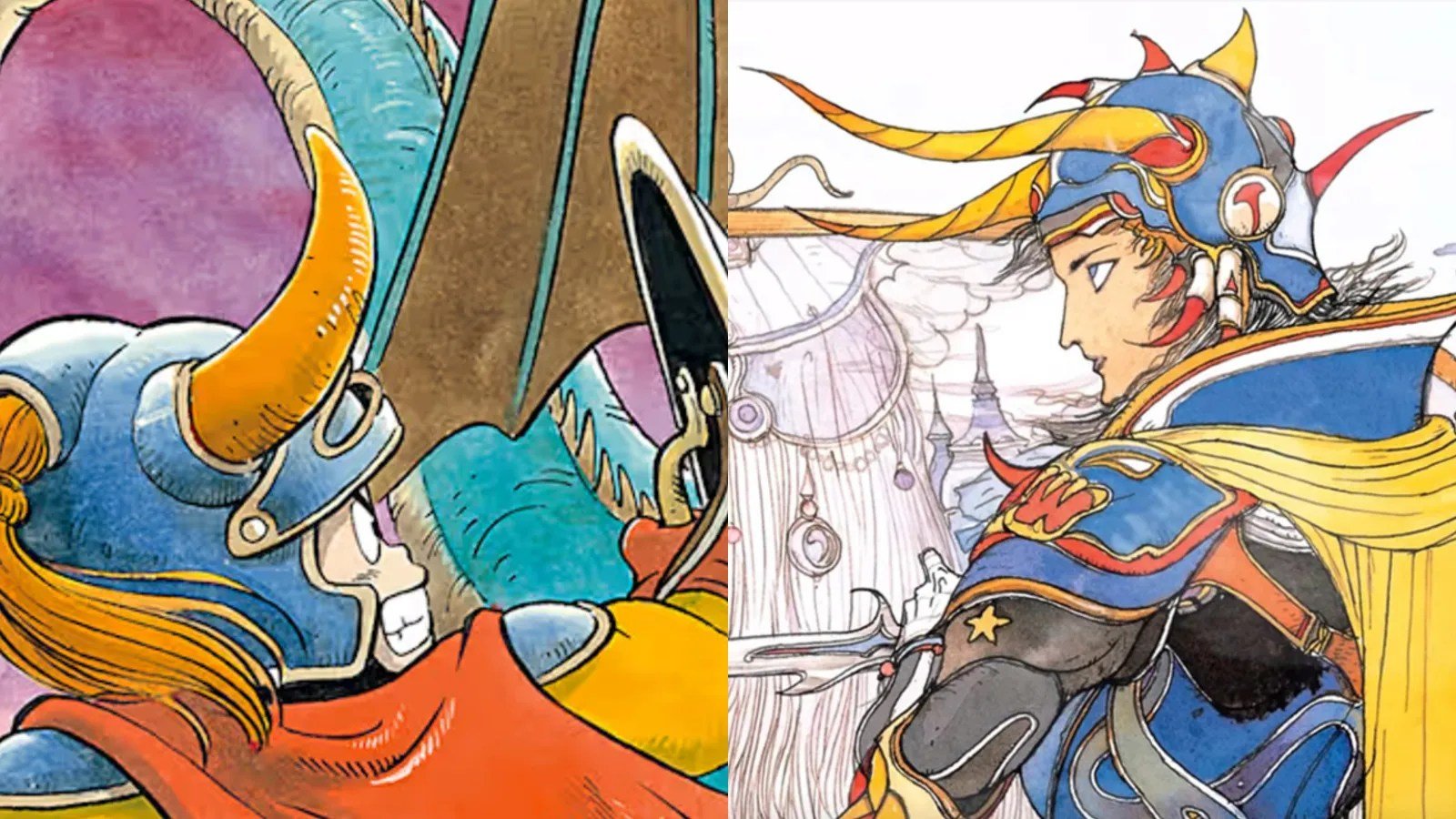
When people look back at the eight bit and sixteen bit eras, it is easy to picture Dragon Quest and Final Fantasy as locked in a head to head race, sprinting for chart positions and magazine covers. Horii remembers that time differently. In his view, Final Fantasy was something to watch, not an enemy to crush. He has spoken about paying close attention when the first Final Fantasy launched, treating it as a project that might sway players and shift expectations, but he stops short of using words like rivalry. That alone says a lot about his mindset. Rather than reacting out of fear, he focused on understanding what made each series distinct. He noticed that Final Fantasy protagonists were chatty and expressive, while Dragon Quest continued to lean on quieter heroes. That awareness did not lead him to imitate what Square was doing. Instead, it seems to have reinforced his belief that Dragon Quest should keep pushing in the direction it already favored: letting players feel like they were the real hero, not just a spectator.
Silent heroes and player identity in Dragon Quest
Silent heroes sit right at the heart of Dragon Quest’s personality. From the earliest entries onward, the main character speaks rarely, if at all, and when they do it is usually through menu choices or implied reactions. Horii has said this design is deliberate, not an oversight or a relic of old hardware limits. The goal is that the player becomes the protagonist, so there is no need for long speeches or internal monologues that might contradict what you are thinking. When you choose a name at the start, pick a hairstyle or assemble a party, the game quietly invites you to treat the hero as a stand in for yourself rather than an actor with a scripted life. Even supporting casts in Dragon Quest often talk about you in a way that feels like they are looking at the person on the couch, not just pixels on screen. It creates a gentle illusion where the border between your imagination and the world on screen gets thinner. You decide how the hero feels about saving a kingdom, about leaving home, about forgiving a former enemy, even if those feelings are never spoken aloud.
Voiced protagonists and cinematic drama in Final Fantasy
Final Fantasy walks a completely different road by treating the protagonist as a fully written character with a voice, a personality and plenty of moments to steal the camera. Even before voice acting entered the picture, heroes like Terra, Cecil and Cloud had clear opinions, doubts and emotional arcs that played out in dialogue boxes. Once the series reached the PlayStation era and then games like Final Fantasy X, those written personalities gained actual spoken lines, cutscenes and performances that would not feel out of place in animated films. Players do not project themselves into Tidus or Lightning in quite the same way they do in Dragon Quest. Instead, they watch those characters wrestle with fate, grief, guilt or responsibility and then decide whether they sympathize or argue with the choices on screen. This makes Final Fantasy feel closer to a long running TV drama where you tune in to see what your favorite cast will do next. You are still guiding them through battles and exploration, but there is never any doubt that you are following their story, not writing your own from scratch inside their silhouette.
How storytelling shapes the feeling of adventure
The contrast between a silent hero and a talkative lead does more than change how many dialogue boxes you read. It changes the texture of the entire adventure. In Dragon Quest, the story often feels like a folk tale told around a fire, where the details are flexible and you can imagine yourself standing at the center of every scene. The pacing tends to be clean and straightforward, with clear objectives and emotional beats that are easy to follow even if you only play in short bursts after work. In Final Fantasy, the journey feels closer to a scripted play with acts, twists and ensemble drama, where you are pulled along by plot turns and cinematic reveals. Both approaches can be powerful, but they draw different kinds of players and moods. Some nights you might want the quiet comfort of slipping into a role without anyone telling you what your hero thinks. Other nights you might crave the rush of watching an outspoken lead confront a villain and shout something you would never dare to say yourself.
Accessibility, warmth and everyday heroism in Dragon Quest
Horii often uses words like warmth and accessibility when he talks about why Dragon Quest has endured for nearly four decades, and the silent hero plays into that philosophy. These adventures rarely feel like stories only experts can enjoy. Instead, they present villages, monsters and quests with a kind of storybook clarity that welcomes newcomers and veterans alike. Because the hero rarely speaks, there is extra space for the world itself to charm you. Shopkeepers crack small jokes, party members offer cozy asides, and townsfolk share worries that feel surprisingly familiar despite the fantasy setting. You are not just clearing dungeons; you are helping people fix broken bridges, reunite families or save a small business from monsters lurking on the road. That focus on everyday stakes, combined with a hero who can be anyone, helps Dragon Quest feel like a shared cultural comfort food in Japan. It is something you can hand to a younger sibling, a parent or a friend who has never touched a role playing game and trust that they will find a foothold.
Drama, spectacle and character arcs in Final Fantasy
Final Fantasy, by contrast, often chases emotional peaks that would not be out of place in big budget anime or live action shows. When protagonists speak freely, they can crack jokes, argue, cry or confess love in ways that hit very directly. Whole scenes hinge on a single decision, a shouted line or a quiet conversation between two characters looking at the stars. Large scale stakes like saving the world from a godlike entity or untangling time travel paradoxes sit comfortably beside small moments where a character finally admits their fear. Battles lean into spectacle, with screen filling summons and set pieces that make every boss feel like an event. In this world, you are guided through a carefully choreographed emotional arc alongside the cast. That can make the experience feel more like watching a favorite show with interactive episodes. You grow attached to specific personalities, maybe see yourself in one or two of them, and then feel a pang when the credits roll because you have finished not just a game, but a chapter in those characters’ lives.
Shared roots but different design philosophies
Even with all these differences, Dragon Quest and Final Fantasy grew out of the same soil. Both drew inspiration from tabletop role playing games, early computer titles and fantasy novels. Both introduced players to turn based combat, party building and long running worlds with recurring creatures and spells. Yet the choices their creators made about protagonists nudged them down divergent paths. Horii’s insistence that protagonists in Dragon Quest should not just start talking on their own locked in a philosophy where the player’s inner voice matters most. Final Fantasy teams embraced the opposite, investing in heroes who talk a lot and carry strong personal arcs. Neither approach is inherently better; they simply prioritize different relationships between player, hero and story. When you see them as siblings instead of rivals, it becomes easier to appreciate how they cover different emotional needs. One gives you a mask you can wear; the other introduces you to a friend you can cheer for.
Final Fantasy X as Horii’s “ultimate perfection”
Horii’s praise for Final Fantasy X says a lot about how he views the broader series. He has described that entry as the ultimate perfection of Final Fantasy, which is a striking compliment coming from someone who could have played up the rivalry angle instead. Final Fantasy X leans fully into voiced performances, lavish cutscenes and a protagonist, Tidus, who talks constantly about his confusion, anger and growth. It is about as far as you can get from the quiet, self insert style hero of many Dragon Quest adventures. Yet Horii clearly respects how well it executes that vision. His comment suggests that he does not see the spoken protagonist model as wrong, only different. In a way, it is like two chefs exploring the same core ingredients with different recipes. He specializes in dishes where you season the experience yourself, while admiring a neighbor who serves carefully plated courses where every flavor has been tuned. That mutual respect undercuts the idea of hostile competition and paints a picture of shared craft.
What modern RPGs can learn from both series
Modern role playing games borrow freely from both Dragon Quest and Final Fantasy, sometimes in the same release. You see silent or lightly voiced heroes in games that want you to feel like you are steering the story through dialogue choices and custom builds. You also see heavily scripted leads with personal arcs in projects chasing cinematic impact. Horii’s comments quietly encourage designers to think about why they are choosing one route over the other instead of just following trends. Do you want players to feel like observers who slowly grow attached to a cast of strong personalities, or do you want them to imagine that they themselves are standing on that cliff facing the final boss. Some games even experiment with hybrids, offering a mostly quiet protagonist who speaks at key moments, or a talkative lead whose appearance and backstory you can still shape. Looking at Dragon Quest and Final Fantasy side by side is like holding a mirror up to the entire genre’s toolbox and asking which tools you really need for the story you want to tell.
Why the Dragon Quest approach still matters today
It might be tempting to assume that silent heroes are relics of older hardware, destined to fade away in an era of motion capture and sprawling voice acting budgets. Horii’s work argues the opposite. Dragon Quest shows that there is still huge value in letting players carry more of the emotional weight in their own heads. A quiet protagonist can feel surprisingly modern when paired with smart writing, expressive animation and small visual details that hint at reactions without spelling them out. This approach can also keep games flexible for global audiences, since players from different cultures can project their own values and experiences onto the hero without tripping over strongly defined dialogue. In a landscape full of loud, flashy releases, there is something refreshing about an adventure that greets you with a warm smile, hands you a sword and then steps politely aside so you can decide who that hero really is. That is why Dragon Quest’s philosophy still resonates, even as new generations discover Final Fantasy’s talkative legends on their own terms.
Conclusion
Horii’s reflections on Dragon Quest and Final Fantasy peel back the curtain on two familiar series and reveal how much one design choice can shape everything that follows. Dragon Quest invites you to slip quietly into the role of a nameless hero, building a bond through your own imagination and decisions, while the world wraps you in warmth and everyday kindness. Final Fantasy, by contrast, throws you into the orbit of outspoken leads whose journeys unfold like playable dramas, full of arguments, confessions and grand set pieces. Far from declaring a winner, Horii celebrates both paths, even going so far as to call Final Fantasy X the ultimate perfection of that talkative, cinematic style. For players, that is the best possible outcome. You can reach for Dragon Quest when you want a comforting story where you feel like the one wearing the mantle of hero, and you can reach for Final Fantasy when you crave the thrill of watching bold characters wrestle with fate. In the end, both series stand stronger not as rivals, but as complementary ways of answering the same timeless desire to step into another world and see who you might become there.
FAQs
- What key difference does Yuji Horii see between Dragon Quest and Final Fantasy?
- Horii points to the way each series handles its heroes. In his view, Final Fantasy protagonists speak a lot, with clear personalities and plenty of dialogue, while Dragon Quest keeps its main characters mostly silent so that players can imagine themselves as the true hero. That contrast shapes how each adventure feels from the opening minutes to the final battle.
- Why are Dragon Quest protagonists usually silent or lightly voiced?
- Horii has explained that Dragon Quest aims for the experience where the player becomes the protagonist. If the hero starts talking on their own, making detailed comments about every situation, it can break that illusion. By holding back on dialogue, Dragon Quest leaves room for your own thoughts, letting you decide how the hero feels about saving kingdoms, helping villagers or confronting villains.
- How does Final Fantasy benefit from talkative, heavily characterized leads?
- Final Fantasy uses voiced and talkative protagonists to deliver stories that feel closer to dramas or films. Characters can argue, joke and confess their fears directly, which helps build strong emotional arcs and memorable set pieces. Players may not project themselves onto these heroes as much, but they often grow attached to them as distinct personalities and follow their journeys like a favorite show.
- Did Yuji Horii ever see Final Fantasy as a direct rival to Dragon Quest?
- Horii has said that while he paid close attention to Final Fantasy, especially when the first game launched, he did not personally frame the series as a rival. Instead, he treated it as another important RPG to watch and learn from, while focusing on what made Dragon Quest unique. He respected the different approach rather than trying to compete on the same exact terms.
- Why does Horii call Final Fantasy X the “ultimate perfection” of the series?
- When Horii first saw Final Fantasy X, he felt it represented the series firing on all cylinders in terms of cinematic storytelling, performance and character focused drama. Even though it embodies a philosophy opposite to Dragon Quest’s silent hero approach, he appreciates how fully it commits to expressive, talkative protagonists. That admiration underlines how he can value both styles without seeing them as mutually exclusive.
Sources
- Yuji Horii’s Thoughts On The Differences Between Dragon Quest And Final Fantasy, Game Informer, November 25, 2025
- Dragon Quest Creator Yuji Horii Says He Saw One Major Difference Between His Game And Final Fantasy, Video Games Chronicle, November 26, 2025
- “Ultimate Perfection” – Dragon Quest Creator Reveals His Favourite Final Fantasy Game, Time Extension, November 26, 2025
- Dragon Quest Creator Yuji Horii Says Final Fantasy Protagonists “Speak A Lot,” Forming A “Key Difference” Between The Two Iconic JRPG Series, GamesRadar+, November 26, 2025
- Yuji Horii, Creador De Dragon Quest, Detalla La Principal Diferencia Entre Su Saga Y Final Fantasy, MeriStation, November 27, 2025