














Summary:
We’ve all seen leaks that feel like they were scribbled on a napkin and tossed into the wind. This one is different because it’s rooted in something people use to get hired: a resume-style line on LinkedIn. Multiple reports point to a former Toys for Bob developer, Donald Yatomi, listing “Spyro” among the IP he worked on during his time at the studio, alongside “Call of Duty.” That’s the spark, and it’s why the story has spread so quickly across gaming sites and social media.
Still, we need to keep our feet on the ground. A LinkedIn line is not an official announcement, and Toys for Bob has not publicly revealed its next project. What we can do, though, is look at the context that makes this detail feel meaningful: Toys for Bob’s recent shift to operating independently, its history working on Spyro through Spyro Reignited Trilogy, and the timeline implied by Yatomi’s tenure ending in 2024. Put those pieces together and we get a picture that’s intriguing without pretending anything is locked in.
So we’re going to treat this like a detective story where the “clue” is real, but the “culprit” is still unknown. We’ll walk through what the LinkedIn wording suggests, why it might be tied to a new Spyro project, and what else it could reasonably refer to. Then we’ll lay out what to watch for next if you want signals you can actually trust, not just hype that vanishes by next week.
Toys for Bob developer reveals what?
The entire wave of chatter traces back to a small detail that carries a lot of weight: a LinkedIn profile entry that lists “Spyro” among the IP worked on during a stint at Toys for Bob, alongside “Call of Duty.” That’s it. No trailer, no logo, no platform list, no dramatic teaser with purple smoke curling around a number “4.” Just a straightforward, resume-like mention that a professional included as part of their work history. And honestly, that’s why people are taking it seriously. LinkedIn is usually where you keep things clean and career-friendly, not where you roleplay as an insider with a megaphone. At the same time, this single line does not confirm what form the Spyro work took, whether it reached a shippable stage, or whether the project is still active today. It tells us there was Spyro-related work referenced during that period, and it stops there.
Where the story came from and why it spread fast
This didn’t grow because one person yelled “Spyro 4 confirmed” and everyone blindly agreed. It spread because multiple outlets pointed at the same breadcrumb, often crediting the same trail of discovery that moved from social posts to video coverage to gaming news write-ups. That chain matters, because it means people are reacting to a specific, checkable claim rather than a vague “trust me.” Once the detail hit wider circulation, it tapped into a fanbase that has been starving for anything concrete for years. It also landed at a time when Toys for Bob’s next move is already a topic of interest, because the studio’s business situation has changed in recent years. When you mix a known studio, a beloved character, and a screenshot-friendly resume line, the internet does what it always does: it turns a spark into a bonfire in a few hours.
Who Donald Yatomi is in this situation
Donald Yatomi matters here for a simple reason: the discussion is anchored to what he listed publicly about his own work. Reports describe him as a former Toys for Bob developer, with coverage often pointing to his role and the time window he spent at the studio. That time window is crucial, because it frames the Spyro mention as something that happened well after Spyro Reignited Trilogy shipped. In other words, if Spyro shows up in a modern Toys for Bob work history entry, it’s not automatically explainable as “oh, he worked on the 2018 remakes” because the dates do not line up neatly that way. That mismatch is what makes people lean forward and squint. But we should also be fair: resumes are summaries, not design documents. They can group work broadly, simplify titles, and list the most recognizable brands tied to a person’s responsibilities, even when the exact deliverable was smaller than fans might imagine.
Why Toys for Bob’s studio status matters
Context is everything, and Toys for Bob has had a very public period of change. The studio announced plans to go independent in early 2024 and discussed exploring a partnership with Microsoft, which is important because it shapes what kinds of projects the studio could plausibly be attached to. When a team is navigating a shift like that, it’s normal for multiple things to happen at once: support work winds down, new pitches get built, prototypes get explored, and internal projects get evaluated. That’s why a Spyro mention from the 2022 to 2024 window grabs attention. It fits a period when Toys for Bob was still connected to big franchise ecosystems, while also approaching a new chapter in how it operates. None of this proves the next game is Spyro, but it explains why fans see a possible path where Spyro could return through a studio that has already handled the character successfully in modern times.
Spyro’s modern track record with Toys for Bob
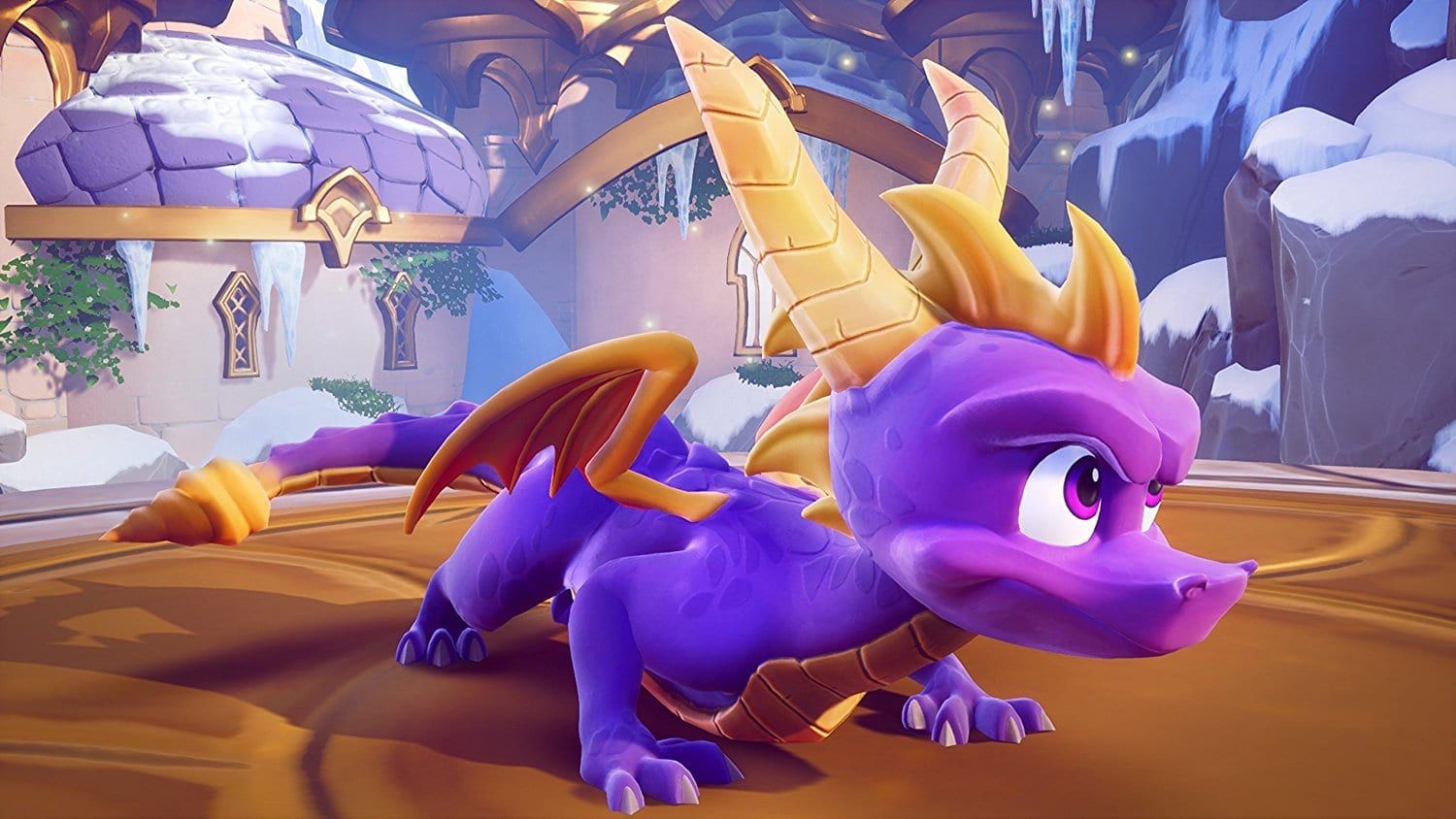
If we’re asking “why Toys for Bob,” the answer is simple: the studio already has modern Spyro credibility. Spyro Reignited Trilogy brought the original trio of games back with a new coat of paint, and it’s still the most visible modern Spyro release in many people’s libraries. That history changes the vibe of any Spyro-related rumor tied to the studio. If a random team with no Spyro track record had a vague leak, it might feel like wishful thinking. With Toys for Bob, it feels like a studio returning to familiar territory. There’s also the broader reality that Spyro has been more cameo than headline in recent years, which makes fans extra sensitive to any hint of a true return. So when a resume line suggests Spyro work during a period long after the trilogy’s release, it naturally triggers the big question: was something new being built, even quietly?
What “worked on Spyro” can realistically mean
This is the part where we keep ourselves honest. “Worked on Spyro” sounds like one thing in a fan’s head: a brand-new game with Spyro on the box, a release date circled on the calendar, and a soundtrack ready to live rent-free in your brain. In the real world, that phrase can cover a lot of ground, especially on a resume. It can mean core development on a new title, but it can also mean research, concept exploration, visual development, pitch materials, or even franchise-related work that never becomes a standalone release. The key is that we do not have an official description from Toys for Bob explaining what the Spyro mention refers to. So rather than pretending we know, we can map the reasonable buckets it could fall into, based on how studios operate and how professionals typically summarize work on LinkedIn.
It could point to a new standalone Spyro game
This is the possibility people are most excited about, and it’s easy to understand why. A standalone Spyro entry would neatly explain why Spyro shows up as an IP in a modern Toys for Bob work history listing. It also aligns with the general idea that studios often revisit characters they know well, especially when the audience has shown demand. Still, even if a standalone Spyro game existed internally during that window, that does not automatically mean it is still in production today or close to being revealed. Game development is messy, and many projects evolve, pause, or get reshaped long before the public ever hears a whisper. What we can say, safely, is that the resume-style reference has been interpreted by multiple outlets as a sign of Spyro-related development work beyond the old remakes. Whether that equates to a full new game is the part we cannot confirm from public statements alone.
It could reflect franchise-related support work
There’s another angle that’s less exciting but very plausible: Spyro-related support work. Sometimes a studio touches an IP through collaborations, crossovers, or content that doesn’t become a “new mainline entry.” A character can appear in another project, a team can build assets, or an artist can contribute to Spyro-themed elements that live inside a different game’s framework. In those scenarios, listing “Spyro” as a recognizable brand on a resume can still make sense, even if the deliverable was not “Spyro 4.” That’s not a buzzkill, it’s just the reality of how credits and responsibilities can be grouped. Fans tend to think in boxed products. Developers often think in tasks, milestones, and IP umbrellas. The same line can look like a promise to the audience and a shorthand summary to a hiring manager, and both interpretations can exist at the same time.
It could be a pitch or prototype phase
Pitches and prototypes are the hidden engine room of game studios. They’re where teams test ideas, build small playable slices, and create visuals that communicate what a game could become. This matters because a Spyro mention on a profile could be tied to exploratory work that never reached a public reveal. That’s especially relevant when we’re talking about a time window where Toys for Bob was dealing with major business changes and was publicly discussing future plans. Studios often prepare materials to secure greenlights, partnerships, or publishing arrangements. Spyro, as a recognizable brand, is the kind of IP that could be used in pitches precisely because it instantly communicates tone and audience. If the Spyro work was primarily in that early phase, it would still be truthful to list it, but it would also explain why we don’t have an official announcement yet.
Why wording on resumes is slippery
Resume language is a balancing act. It needs to be accurate, but it also needs to be readable and punchy. People list IP names because they’re recognizable, not because they’re trying to write a legally airtight history of every deliverable. That’s why we should treat the LinkedIn detail as a strong hint that Spyro-related work happened, while resisting the urge to treat it like a product announcement. The wording can be broad, and broad wording can cover anything from “I helped with a Spyro character integration” to “I contributed to early visual development on a new Spyro project.” Without an official clarification from Toys for Bob, we’re left interpreting a short line that was never written for fans. It was written for employers, recruiters, and peers. That doesn’t make it meaningless. It just means we should read it like a resume, not like the back of a game box.
Timelines and why March 2024 is a key detail
The timeline matters because it helps rule out the simplest explanation: that this is just leftover credit for Spyro Reignited Trilogy. Coverage around the LinkedIn discovery points to a window that extends into 2024, which is years after the trilogy’s original release. That gap is what makes the Spyro mention feel fresh rather than archival. It suggests the Spyro-related work occurred during a period when Toys for Bob was also involved with other major efforts and, later, navigating its transition toward independence. From a practical standpoint, if Spyro-related work was active in that window, it could have been in early production, late concept stages, or something in between. The important part is that a modern date range makes the mention harder to dismiss as “old news.” It becomes a present-tense question: what exactly was happening with Spyro behind the scenes during that period?
What we can safely say about announcements
Right now, there is no official announcement from Toys for Bob that names a new Spyro game as the studio’s next project. That single sentence saves a lot of confusion. It also keeps expectations realistic, which is important because rumors can turn into disappointment fast when people start arguing about platforms, release windows, and even box art that nobody has seen. What we can say is that multiple gaming outlets have reported on the LinkedIn detail and treated it as a meaningful clue. That creates pressure and attention, but it does not force a studio to reveal anything on a fan-made schedule. Announcements happen when business, marketing, and production are aligned. If a project exists, it will be revealed on the studio and publisher’s timeline, not the internet’s. Until then, the best approach is to treat this as a credible hint of Spyro-related work, not a confirmation of a launch plan.
Platforms and release timing: confirmed vs assumed
No platform list has been confirmed through an official statement tied to this situation. That’s the cleanest way to put it. The internet loves to jump from “Spyro mentioned” to “so it’s definitely coming to everything,” but we do not have that information. We also do not have a confirmed release window. What we do have is a general understanding of how long development can take, especially for polished platformers that need strong art direction, responsive controls, and levels that feel handcrafted rather than churned out. If Spyro-related work was happening during the 2022 to 2024 period, that could still place a hypothetical reveal anywhere depending on scope, staffing, and priorities. But since we’re sticking to what’s verified, we should stop at this: Toys for Bob has not publicly confirmed the next game’s title, platforms, or date, and the LinkedIn detail does not provide those specifics either.
What to watch for next if you want real signals
If you’re trying to separate meaningful movement from pure noise, there are a few signals that tend to matter more than speculation threads. First, official communication from Toys for Bob or a publisher is the gold standard, even if it’s vague. Second, credible job listings can sometimes hint at genre focus or production scale, though they rarely name unannounced IP directly. Third, trademark filings can be telling, especially if they include new naming conventions rather than legacy marks. Fourth, ratings board listings are one of the most concrete pre-release signs, because something has to be far along to get rated. Finally, watch for coordinated updates across multiple official channels at once, because that often indicates a planned reveal cycle. Until one of those signals appears, the LinkedIn clue remains exactly what it is: a clue. Interesting, specific, and worth noting, but not a substitute for a real announcement.
What we hope to see from Spyro next
Let’s be honest: fans don’t just want Spyro back, they want Spyro back in a way that feels like the character never lost his spark. If a new Spyro game ever does get announced, we’d love to see tight controls that feel silky instead of slippery, levels that reward curiosity, and collectibles that feel like playful invitations rather than chores. We’d also hope for a tone that respects what made Spyro special in the first place: charm, color, and that “one more level” momentum that keeps you awake longer than planned. Humor helps too, because Spyro works best when the world doesn’t take itself too seriously. And if the studio behind it has history with the character, that’s a good sign for getting the personality right. Until anything is confirmed, these are simply hopes, not predictions. But they’re the kind of hopes that explain why a single LinkedIn line can set the fanbase buzzing.
Conclusion
The LinkedIn detail tied to Donald Yatomi has legs because it’s specific, time-bound, and connected to a studio that already has modern Spyro history. Multiple outlets have highlighted the same core point: Spyro was listed as an IP worked on during a Toys for Bob stint that extended well beyond the era of Spyro Reignited Trilogy. That’s enough to justify attention, but not enough to justify certainty. Toys for Bob has not officially announced a new Spyro game, and the resume-style wording does not tell us what the Spyro work actually produced. For now, the smart move is to hold onto the excitement while keeping expectations grounded. If Spyro is truly gearing up for a return, we’ll see stronger signals in time. Until then, this is a rare kind of rumor where the clue is real, even if the conclusion is still out of reach.
FAQs
- Is a new Spyro game officially confirmed?
- No. Toys for Bob has not officially announced a new Spyro game, and the discussion is based on a resume-style LinkedIn detail reported by multiple outlets.
- What exactly was shown on LinkedIn?
- Reports point to a profile line listing “Spyro” among the IP worked on during time at Toys for Bob, alongside “Call of Duty.”
- Could the Spyro mention refer to something other than a new game?
- Yes. It could reflect franchise-related work like concepts, support contributions, or early pitch and prototype materials rather than a standalone release.
- Does the LinkedIn detail reveal platforms or a release date?
- No. The LinkedIn detail does not provide platforms or timing, and there is no official announcement that confirms either.
- What should we watch for next to know something is real?
- Look for official statements, coordinated publisher messaging, trademark activity, ratings board listings, or other concrete pre-release signals that typically appear closer to a reveal.
Sources
- Toys for Bob developer reveals he started working on a new Spyro game last year, My Nintendo News, December 23, 2025
- Spyro 4 Game Leaked via Ex Toys for Bob Developer’s Resume, Wccftech, December 24, 2025
- New Spyro Project Allegedly Leaked Through Former Dev’s LinkedIn Profile, TwistedVoxel, December 24, 2025
- New Spyro Game Possibly Leaked At Toys For Bob, Tech4Gamers, December 24, 2025
- A New Spyro Game May Have Leaked, Being Developed By Toys For Bob, Wolf’s Gaming Blog, December 23, 2025
- Skylanders and Crash Bandicoot studio Toys For Bob is leaving Activision and going independent, Video Games Chronicle (VGC), February 29, 2024
- Toys for Bob to split from Activision, Gematsu, February 29, 2024