














Summary:
Street Fighter is back on the big screen, and the first teaser makes one thing clear: we’re not aiming for a quiet, grounded sports drama. We’re aiming for a loud arena, big personalities, and the kind of punchy style that actually matches what the games have always been about. The movie is set to release in the US on October 16, 2026, with Capcom and Legendary behind it and Paramount handling distribution. That release window matters because it gives the team time to polish the one thing that can make or break this reboot: how the fights look and feel when real bodies try to sell legendary moves.
We also finally have a cast that feels built for energy, contrast, and crowd-pleasing chaos. Andrew Koji steps in as Ryu, Callina Liang takes on Chun-Li, Curtis “50 Cent” Jackson plays Balrog, and Jason Momoa goes full wildcard as Blanka. Around them sits a larger ensemble that signals a tournament-focused setup, with the story angle pointing toward the World Warrior Tournament and a conspiracy layered on top. If we’ve been burned before by game movies that felt embarrassed to be game movies, this teaser leans the other way. It looks like we’re embracing the roster, the silhouettes, and the attitude, then betting everything on execution.
Street Fighter (2026) first look: what the teaser is showing
The teaser doesn’t waste time pretending Street Fighter is subtle, and honestly, that’s a relief. We’re getting flashes of the fighters as fighters, not “normal people who happen to know karate.” The vibe leans into bold character shapes, fast cuts, and a sense that every matchup is a little story by itself. That matters because Street Fighter has always been part skill, part swagger, and part pure spectacle, like a martial arts tournament hosted by a fireworks factory. We can also feel the movie pointing toward a classic tournament structure, where the fun comes from who runs into who, what grudges spark, and what surprises land when two styles collide. If the final movie keeps that momentum while letting scenes breathe, we might finally get a reboot that understands why people still quote these characters decades later.

Release date and where it’s landing in theaters
October 16, 2026 is a clear, confident release date, and it gives the reboot room to build a steady drumbeat of reveals instead of dumping everything at once. For fans, it sets expectations: we’re not guessing anymore, we’re counting down. For the studio, it means the marketing push can pace itself and keep the hype alive without exhausting everyone by summer. We also shouldn’t ignore the practical side. A movie like this lives or dies on timing, because it’s competing with other big releases, but it also needs space to show off what makes it different. Street Fighter’s advantage is that it already has a built-in language of rivalries, brackets, and iconic moves, so every new trailer can highlight a different corner of the roster. When the date is locked, the conversation becomes less “is this happening” and more “what are we seeing next.”
Why Paramount is distributing it
Paramount distributing the movie matters because distribution shapes how big the theatrical push can be, where it rolls out, and how hard it can lean into premium formats and event-style screenings. This isn’t just a logo at the start of the film. Distribution decisions influence everything from release strategy to marketing partnerships, and that’s a big deal for a reboot that needs to convince both longtime fans and casual moviegoers. For fans, the best-case scenario is simple: we get a wide release, consistent promotion, and a clear sense that the studio is treating it like a real tentpole, not a weird side bet. Street Fighter works best when it feels like a shared experience, the kind of movie you watch with friends and immediately argue about who looked most accurate, who stole the scene, and which fight you want to replay in your head on the way home.
Who’s making it: Kitao Sakurai and Dalan Musson
Reboots often live and die on whether the creative team actually understands the tone of what they’re adapting, and Street Fighter is a tricky beast. It’s serious about fighting, not serious about being serious, if that makes sense. With Kitao Sakurai directing and Dalan Musson writing, we have a pairing that can potentially balance character-driven momentum with big, clean set pieces. The key word is balance. Street Fighter’s world has room for humor, but the punches still need weight, and the characters still need goals that feel real inside this heightened tournament reality. If the movie can make us care about why people step into the arena while still letting the roster be loud and theatrical, that’s the sweet spot. We don’t need a lecture about honor. We need stakes, rhythm, and personalities that pop.
Sakurai’s tone and pacing
Pacing is everything in a fighting movie. Too slow and it feels like people are waiting around for the next match. Too fast and it becomes a highlight reel with no emotional glue. The teaser hints at an approach that keeps things moving while still giving characters distinct moments to own the screen, which is exactly what this franchise needs. Street Fighter characters are basically walking contrasts: calm versus rage, discipline versus showmanship, precision versus power. If the direction emphasizes those contrasts, every fight becomes more than choreography. It becomes a clash of identities. The win isn’t only “who hits harder,” it’s “whose worldview survives the round.” That sounds dramatic, but that’s literally how fans talk about these matchups. The movie just has to translate that energy without tripping over its own ambition.
Keeping the joke out of the punches
Street Fighter can be funny without turning the fighting into a punchline, and that line is thin. The moment the movie winks too hard at the audience, the tension dies, and the fights turn into cosplay skits. The smarter move is to let humor come from character behavior and contrast, not from mocking the idea of the tournament itself. A good example is how a confident fighter might taunt, posture, or play to the crowd, while a more disciplined fighter stays locked in and treats every second like a chess move. That’s funny because it’s human, not because the movie is embarrassed. If the action is filmed with clarity and respect, the audience will laugh at personalities, then hold their breath when the bell metaphorically rings. That’s the vibe we want.
The cast lineup and why it’s turning heads
This cast has the kind of “wait, really” energy that can either crash and burn or become the exact reason the movie works. Street Fighter has always been a global roster of extremes: different fighting styles, different national identities, different motivations, and wildly different levels of theatricality. That means casting can’t be bland. It needs contrast. The names attached so far suggest we’re aiming for a mix of martial arts credibility, star power, and unexpected picks that spark conversation. That’s smart, because a tournament movie thrives on anticipation. You want people to show up already curious about how each character will be portrayed, then leave talking about who surprised them. The teaser helps because it gives a first taste of the look and feel, and it signals that we’re not hiding the roster. We’re putting it on stage.
Andrew Koji as Ryu: the anchor role
Ryu is the emotional backbone of Street Fighter for a lot of fans, because he’s the character who treats fighting like a path, not a flex. Casting Andrew Koji as Ryu suggests the reboot understands that Ryu can’t just be “the guy who punches well.” He needs quiet intensity, believable discipline, and a sense that he’s wrestling with something internal even when he’s winning. That kind of character is crucial in a movie packed with louder personalities, because he becomes the steady rhythm that keeps the story grounded. If Ryu feels real, everyone else can be bigger without the whole movie tipping into nonsense. The teaser’s job is to tease, not explain, but even quick glimpses can communicate whether Ryu reads as focused and dangerous, or just blank. The goal is focused and dangerous.
Callina Liang as Chun-Li: speed, attitude, and purpose
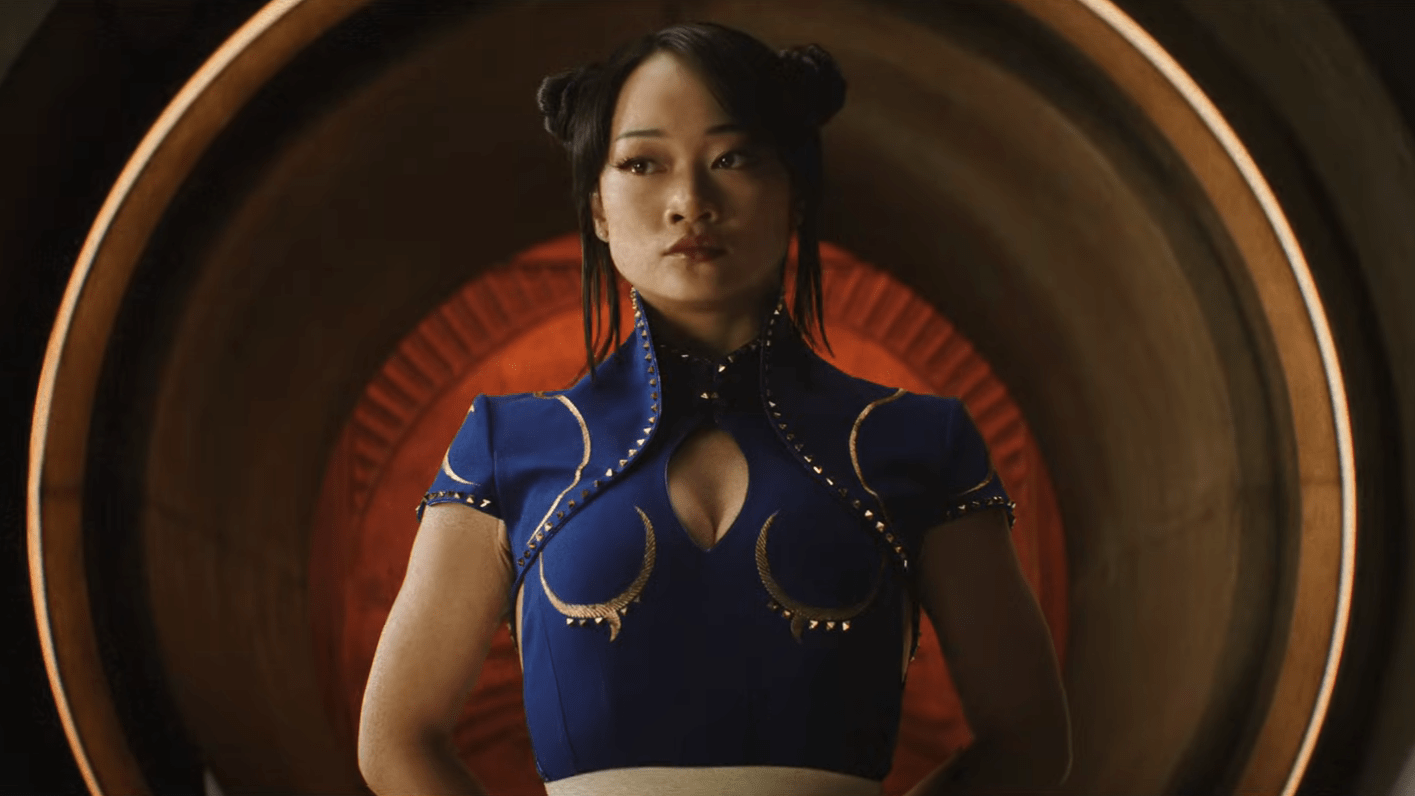
Chun-Li is one of those characters where the performance has to land on multiple levels at once. She needs athletic credibility because her fighting style is all about speed and precision, but she also needs presence because Chun-Li isn’t a background fighter. She’s an icon. Casting Callina Liang as Chun-Li sets the stage for a version that can feel sharp and modern while still honoring the character’s confidence and drive. In a tournament story, Chun-Li also works brilliantly as the person who pulls others into the larger conflict, because she can connect personal goals to bigger stakes without turning into a walking exposition machine. If the reboot gives her clear motivation and lets her command scenes, we’ll get a Chun-Li that feels like the center of gravity whenever she shows up, not just a name on the bracket.
50 Cent as Balrog and Jason Momoa as Blanka: wildcard energy
Balrog and Blanka are both characters that can steal the screen for totally different reasons. Balrog is raw force with swagger, a fighter who sells danger through intimidation and momentum. Casting Curtis “50 Cent” Jackson as Balrog leans into that persona, and it makes the character instantly legible in a movie context. Blanka, on the other hand, is a live wire. Jason Momoa as Blanka signals a big swing, because Blanka needs physicality, unpredictability, and a look that doesn’t feel like a cheap mask. If the design and performance line up, Blanka can be that “did you see that” character fans talk about for months. These are the kinds of casting choices that make the reboot feel like it has confidence. We’re not playing it safe. We’re trying to make the roster unforgettable.
The World Warrior Tournament setup and the 1993 angle
The World Warrior Tournament is the cleanest possible structure for a Street Fighter movie because it naturally creates conflict, pacing, and escalating stakes. You get matchups, rivalries, surprises, and the built-in logic of “win or go home.” Setting the story in 1993 adds a specific flavor that can shape everything from the look of the locations to the way the tournament is presented, like a slightly grimier, more analog era of spectacle. The important part is that the tournament can’t feel like a random sports event with no meaning. It needs to feel like a trap, an opportunity, or both, with characters stepping in for reasons that make sense. When done right, the bracket becomes a pressure cooker. Every round reveals character, every win costs something, and every loss has consequences beyond bruises. That’s how we turn a series of fights into a story.
Game accuracy versus movie realism: finding the sweet spot
Street Fighter fans want accuracy, but “accuracy” doesn’t mean copying the games frame-by-frame. It means capturing the identity of each fighter and the feeling of their moves. The reboot’s challenge is to translate iconic specials into something that looks believable on camera without sanding off what makes them iconic in the first place. If we go too realistic, we lose the fantasy. If we go too flashy, we risk turning fights into noisy visual soup. The sweet spot is where the movie treats the world as heightened, but consistent. If the rules of the tournament and the abilities of the fighters feel internally coherent, the audience will accept bigger moments. That’s how you earn the right to go wild. The teaser’s early impression leans toward embracing the look and attitude of the games, which is encouraging. The next step is proving it can hold that tone for a full runtime.
Fight choreography: making specials and combos feel physical
Choreography is the actual main character of any fighting franchise adaptation, because the fights are the language. The best fight scenes tell you who someone is before they say a word. A disciplined fighter moves like a metronome. A brawler moves like a wrecking ball. Street Fighter also has the added challenge of signature moves that fans can name instantly, so the choreography needs to nod to those moves while still looking like humans making contact, not stunt performers politely missing each other by a foot. Clarity matters more than shaky chaos. We want to see the setup, the feint, the counter, and the impact. If the movie nails that, every fight becomes rewatchable. And if it pairs that clarity with character-specific rhythm, we’ll get scenes that feel like the game’s spirit without looking like a stage show.
Music, sound, and spectacle: selling the vibe without drowning it out
Street Fighter has always had a musical identity, from stage themes that stick in your head to the sharp sound design of hits, blocks, and specials. A movie reboot can use that to its advantage, but the trick is knowing when to go big and when to let a moment breathe. Sound sells impact. The right hit can make a punch feel like it cracked concrete. The wrong mix can make everything feel weightless, like people are swatting air. Spectacle is similar. We want energy, neon, and cinematic flair, but we don’t want the camera doing gymnastics to prove it’s excited. The best approach is confident restraint. Let the fighters be the spectacle. Let the crowd and the arena amplify tension. Then, when the movie chooses to crank the volume for a signature moment, it will feel earned. That’s how we avoid turning hype into noise.
What the reboot can learn from the 1994 and 2009 movies
The 1994 Street Fighter movie is remembered for camp and chaos more than faithful adaptation, and the 2009 Legend of Chun-Li spin-off didn’t land as the big-screen breakthrough fans hoped for. That history matters because it creates skepticism, but it also creates a roadmap of what not to do. The biggest lesson is that you can’t be embarrassed by the source material. If the movie treats the roster like a joke, fans will feel it immediately. Another lesson is focus. A tournament movie can juggle a large cast, but it still needs a clear emotional spine and characters we actually track from start to finish. The reboot has an opportunity to keep what’s fun about Street Fighter and fix what hurt previous attempts: muddled tone, weak fight staging, and characters that felt like names instead of people. If we do that, the reboot becomes its own thing, not another cautionary tale.
What to watch next on the road to October 2026
Between now and release day, the smartest way to stay excited is to watch for signals that the movie is keeping its promises. Are the next trailers clearer about the story, or do they hide behind montage? Do character reveals show distinct fighting styles, or does everyone look like they trained in the same generic action gym? Pay attention to how the film frames the tournament itself, because that’s the engine. Also watch for consistency in the look of the world. Street Fighter’s roster is global, so locations, costumes, and atmosphere should feel intentionally varied, not like everything was shot on the same block with different lighting. Most of all, watch the fights. If the choreography stays readable and each fighter feels unique, that’s the green flag. If it turns into quick cuts and noise, that’s the warning sign. The teaser opened the door. Now we see how confidently the movie walks through it.
Conclusion
Street Fighter (2026) finally has the thing past attempts struggled to deliver: a sense of confidence in what Street Fighter actually is. The teaser leans into the roster, the tournament energy, and the larger-than-life vibe, while the confirmed release date of October 16, 2026 makes it feel real and locked in. With Kitao Sakurai directing and Dalan Musson writing, we have a creative setup that can balance attitude with structure, as long as the fights stay clear and the tone stays consistent. Andrew Koji as Ryu, Callina Liang as Chun-Li, 50 Cent as Balrog, and Jason Momoa as Blanka give the reboot both anchor points and wildcards, which is exactly what a tournament story needs. If the final movie respects the characters, keeps the action readable, and lets the spectacle come from personality instead of camera tricks, we could be looking at the first live-action Street Fighter that actually feels like Street Fighter.
FAQs
- When is Street Fighter (2026) releasing in the US?
- It is scheduled to release in the US on October 16, 2026.
- Who is directing and writing the new Street Fighter movie?
- Kitao Sakurai is directing, and Dalan Musson wrote the screenplay.
- Which cast members and roles are confirmed from the teaser information?
- Andrew Koji plays Ryu, Callina Liang plays Chun-Li, Curtis “50 Cent” Jackson plays Balrog, and Jason Momoa plays Blanka.
- What story setup is the reboot using?
- The setup centers on the World Warrior Tournament, with a story angle tied to a larger conspiracy and rivalries inside the bracket.
- Who is distributing the movie in theaters?
- Paramount is distributing the film in theaters in the US.
Sources
- Paramount, Legendary Entertainment strike deal for ‘Street Fighter’ film, Reuters, September 4, 2025
- The new Street Fighter movie Hadokens into theaters in October 2026, The Verge, September 4, 2025
- Must Watch Teaser for Live-Action ‘Street Fighter’ Movie Out in 2026, FirstShowing.net, December 11, 2025
- The Street Fighter Movie Looks Surprisingly Good In Its First Trailer, Kotaku, December 11, 2025
- 50 Cent, Eric André, Orville Peck round out Street Fighter movie cast, The FADER, September 4, 2025