














Summary:
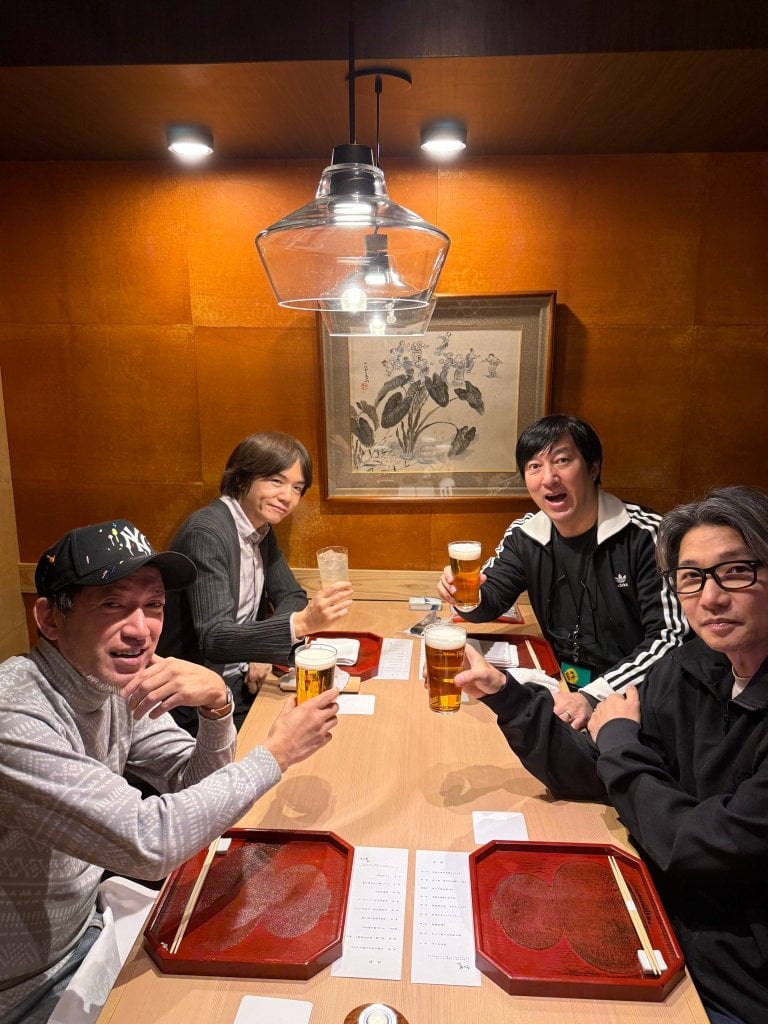
Every now and then, a single photo can light up an entire hobby. That is exactly what happened when iconic director Suda51 shared a picture on X showing four of Japan’s most beloved game creators squeezed around the same table, surrounded by plates, drinks and relaxed smiles. Sitting together were Masahiro Sakurai, the creator of Kirby and the mind behind Super Smash Bros, Suda51 himself from No More Heroes and Killer7, survival horror pioneer Shinji Mikami, and Fumito Ueda, the director of Ico, Shadow of the Colossus and The Last Guardian. For many players, seeing these four in one frame felt like watching entire eras of gaming history cross paths in a single quiet evening. This moment was not a stage presentation or a polished marketing beat. It was simply four veterans grabbing good food and good company, reminding everyone that the people behind legendary games also share friendships, memories and stories far away from studio lights.
Legendary creators sharing one table
The photo that Suda51 shared might look simple at first glance: four middle aged creators at a cozy restaurant table, glasses raised, plates scattered and warm lighting filling the frame. Yet for anyone who grew up with Japanese games, that image hit like a wave of nostalgia. In one shot, you see the man who gave players Kirby and Smash battles with friends, the punk minded director who turned assassin stories into surreal playgrounds, the architect of modern survival horror, and the quiet artist who turned loneliness and companionship into unforgettable journeys. Each of them represents a different corner of game history, so seeing them together feels a bit like spotting four constellations lining up in the same night sky. It is the sort of meeting most fans never expected to see, and that surprise is exactly what made the photo spread so quickly across timelines.
Who is Suda51
Goichi Suda, better known as Suda51, has built a reputation as one of gaming’s boldest stylists. As founder and CEO of Grasshopper Manufacture, he has been responsible for wild and experimental projects that mix action, pulp cinema, punk energy and sharp satire. Killer7 introduced many players to his offbeat direction, while No More Heroes turned the tale of an otaku assassin into a strange, stylish and often hilarious ride. His work often leans into sharp cuts, bold typography, unusual framing and storylines that zigzag between heartfelt and outrageous. Suda51’s presence at the dinner table carries a special weight because he is not just part of Japan’s mainstream history but also a symbol of creative risk taking. When he is the one sharing a snapshot of the evening, it naturally feels like an invitation into a world where famous names drop their guard and simply hang out together as friends.
Who is Masahiro Sakurai
Masahiro Sakurai is the sort of creator whose work quietly slips into everyday gaming life. He created Kirby at HAL Laboratory and later launched Super Smash Bros, a crossover fighting series that turned late night couch sessions into lifelong memories. Over the years he has become known for perfectionism and attention to detail, constantly refining controls, timing and balance until everything feels just right. Outside of development, he has shared his thoughts on design through columns and a popular YouTube channel that breaks down how games are built. Despite that visibility, Sakurai often says he prefers players to focus on the games rather than on him as a person. Seeing him at the table with a gentle smile, sparkling water in front of him, makes the moment feel grounded and human. It is not a director on stage with a controller in hand. It is simply someone who has shaped countless childhoods sharing dinner with old friends.
Who is Shinji Mikami
Shinji Mikami’s name immediately brings to mind survival horror corridors, creaking floorboards and the uneasy thrill of opening a door you probably should not touch. As the original director of Resident Evil and later Resident Evil 4, he helped define how horror and action blend together in modern games. Over his long career he has worked across multiple studios, founded Tango Gameworks and guided projects like The Evil Within, Ghostwire: Tokyo and more recent experiments that blend style, rhythm and combat. Mikami has always felt like the cool, slightly mischievous uncle of survival horror, pushing players into terrifying spaces while giving them just enough tools to fight back. At the dinner, his presence next to Suda51 and the others says a lot about how creators in very different genres still speak the same language when the workday is over. Even though his games often focus on fear and pressure, the photo shows a relaxed, almost playful side that fans rarely get to see.
Who is Fumito Ueda
Fumito Ueda sits at the opposite end of the energy spectrum from Suda51’s loud colors and wild twists. Known for Ico, Shadow of the Colossus and The Last Guardian, he has crafted quiet, poetic experiences where silence and space say as much as dialogue. His games are filled with soft light, sparse environments and small gestures that create deep emotional weight. Instead of busy HUDs and endless explanations, Ueda tends to trust players to feel their way through ruins, wind swept plains and collapsing towers. Many fans see him as an auteur whose work blurs the line between interactive play and visual art. Having him at the table with Sakurai, Suda51 and Mikami makes the image feel complete. You have the playful mascot creator, the punk storyteller, the horror craftsman and the minimalist dreamer all in one place. That mix captures how wide Japanese game making really is, even when it fits inside a single restaurant booth.
Why this dinner photo hit so hard for players
So why did a simple restaurant snapshot travel so quickly across social feeds? Part of the answer is timing, but a much bigger part is emotional weight. For many players, these four names mark different stages of their own lives. Maybe Kirby on a chunky handheld came first, followed by late nights trembling through Resident Evil, then teenage years spent chasing ranks in No More Heroes and quiet afternoons slowly crossing the plains of Shadow of the Colossus. When those memories suddenly line up at one table, it feels a bit like flipping through an old photo album where every page matters. The image also reminds everyone that creative legends are real people who share jokes, trade stories and probably complain about deadlines just like anyone else. In a world filled with highly managed announcements, this candid moment felt refreshingly honest, and that authenticity is exactly what players picked up on.
Shared history and surprising links between their games
On the surface, the four creators at the table seem to live in completely different worlds, yet there are more connections than you might expect. Suda51 and Shinji Mikami have worked together before, most notably on projects that fused Grasshopper’s surreal flair with Mikami’s experience in tension and pacing. Their styles might look far apart, but both lean on strong visual identity and memorable, often eccentric characters. Sakurai and Ueda, while rarely mentioned in the same breath, share an interest in clean design that minimizes clutter and keeps the focus squarely on how it feels to control a character. All four care deeply about rhythm, whether that rhythm comes from the timing of a Smash combo, the swing of a sword in a boss fight, the lurch of a horror encounter or the slow climb up a sunlit tower. Looking at the dinner through that lens, the gathering feels less like a random meetup and more like a quiet celebration of shared craft.
What a meetup like this might mean for future collaborations
Whenever famous creators appear in the same photo, speculation runs wild. Players start wondering whether new collaborations are brewing, brainstorming dream projects that mix styles in unexpected ways. While it is important to remember that a friendly dinner does not automatically point to a secret announcement, meetings like this always stir the imagination. You can easily picture Suda51 swapping stories with Mikami about pacing and shock, or Ueda and Sakurai talking about how to communicate emotion through simple, readable character actions. Even if no direct joint project comes out of this evening, ideas and perspectives inevitably travel with them back to their own studios. Sometimes a casual conversation over dessert can nudge a future design decision or spark a small mechanic that later grows into a standout moment. For players, that possibility alone makes the photo feel exciting, even without any official tease attached to it.
How Japanese creator culture values these quiet gatherings
There is also a cultural side to all of this that makes the scene feel special. In Japan, after work gatherings at restaurants and bars often play a key role in building trust and camaraderie. For game creators, those spaces can turn into informal salons where ideas, frustrations and dreams flow more freely than they ever could across a meeting room table. A shared meal lowers barriers. Titles, job roles and company labels fade into the background as everyone leans over hot dishes and clinking glasses. For veteran directors like Suda51, Sakurai, Mikami and Ueda, evenings like this probably offer a rare chance to step away from studio pressures and talk as peers who have all weathered similar storms. Fans might only see a single frozen image, but behind that still frame is a tradition of conversation that stretches back over decades of late night trains and neon lit side streets.
Why moments like this matter for players and developers
At the end of the day, no player needs to see creators hanging out for a game to be enjoyable, yet glimpses like this can strengthen the bond between people who play and people who build. For players, the dinner photo is a reminder that their favorite experiences did not appear from nowhere. They were shaped by humans with distinct tastes, senses of humor and personal histories. For younger developers, seeing four legends relaxed and laughing together can be deeply motivating. It shows that even after decades in the industry, it is still possible to keep friendships alive and stay passionate about the medium. These small human moments cut through the noise of release dates, patches and sales charts. They quietly say that what really lasts are the relationships and stories shared along the way, both on screen and at a crowded table filled with great food and great company.
Conclusion
The photo that Suda51 shared caught fire because it captures something people rarely get to see: four towering figures from different corners of game history sitting shoulder to shoulder, letting the weight of their public roles drop away for an evening. Masahiro Sakurai, Suda51, Shinji Mikami and Fumito Ueda have each shaped modern games in wildly different ways, yet here they are, united by simple pleasures and long running friendships. That contrast between their legendary status and the casual setting is what makes the image so compelling. It fuses nostalgia, curiosity and warmth into a single moment. Whether or not this meetup ever leads to concrete collaborations, it has already given players a powerful reminder that behind every iconic series, there are people who laugh, share stories and raise glasses together once the workday ends.
FAQs
- Who appears in the legendary dinner photo shared by Suda51?
- The photo shows four well known Japanese creators sitting together at a restaurant table: Masahiro Sakurai, best known for Kirby and Super Smash Bros, Suda51 from Killer7 and No More Heroes, survival horror pioneer Shinji Mikami from Resident Evil and related projects, and Fumito Ueda, the director behind Ico, Shadow of the Colossus and The Last Guardian. Their combined legacy stretches across platformers, action, horror and atmospheric adventures, which is why seeing them together in a single frame felt so special for many players.
- Why did the Suda51 meetup photo spread so quickly online?
- Players reacted strongly because the image brought together four creators who defined very different parts of gaming history. Many people grew up with at least one of their series, so the picture felt like a crossover event for the real world. The casual setting, the relaxed expressions and the focus on great food and company all helped the moment feel genuine. Instead of a staged promotional shot, it came across as a real evening between friends, which naturally made it easy to share and celebrate across social platforms.
- Does this dinner mean a new collaboration is being developed?
- There is no confirmed information linking the dinner directly to a specific new project. It is common for creators in the same industry to meet socially, and many such gatherings never lead to visible collaborations. That said, evenings like this can still have an indirect influence. Conversations about design, storytelling or technology often linger in the back of a creator’s mind and might shape future ideas. For now, it is safer to treat the photo as a feel good moment rather than a hidden announcement.
- What makes each of these four creators stand out in gaming history?
- Masahiro Sakurai is celebrated for intuitive, polished gameplay and multiplayer experiences that bring people together. Suda51 is known for bold, unusual storytelling and a punk inspired sense of style. Shinji Mikami helped define modern survival horror and intense third person action. Fumito Ueda is praised for quiet, emotional journeys that use minimal dialogue and striking imagery. Together they represent a wide spectrum of what games can be, from loud and experimental to subtle and contemplative.
- Why do fans care about behind the scenes moments like this?
- Moments like this help players connect their own memories to the people who created them. Seeing familiar names relaxing together makes long running series feel more personal and reminds everyone that games are built by human beings, not faceless machines. It also offers a sense of continuity, showing that even as hardware changes and trends come and go, the community of creators continues to talk, share and support each other. That feeling of shared history is a big part of why this particular dinner snapshot resonated so strongly.
Sources
- Japan: Suda51 posts photo of a legendary game creator meet up, My Nintendo News, December 6, 2025
- Goichi Suda, Wikipedia, December 2025
- Masahiro Sakurai, Wikipedia, November 2025
- Shinji Mikami, Wikipedia, August 2025
- Fumito Ueda, Wikipedia, August 2025