














Summary:
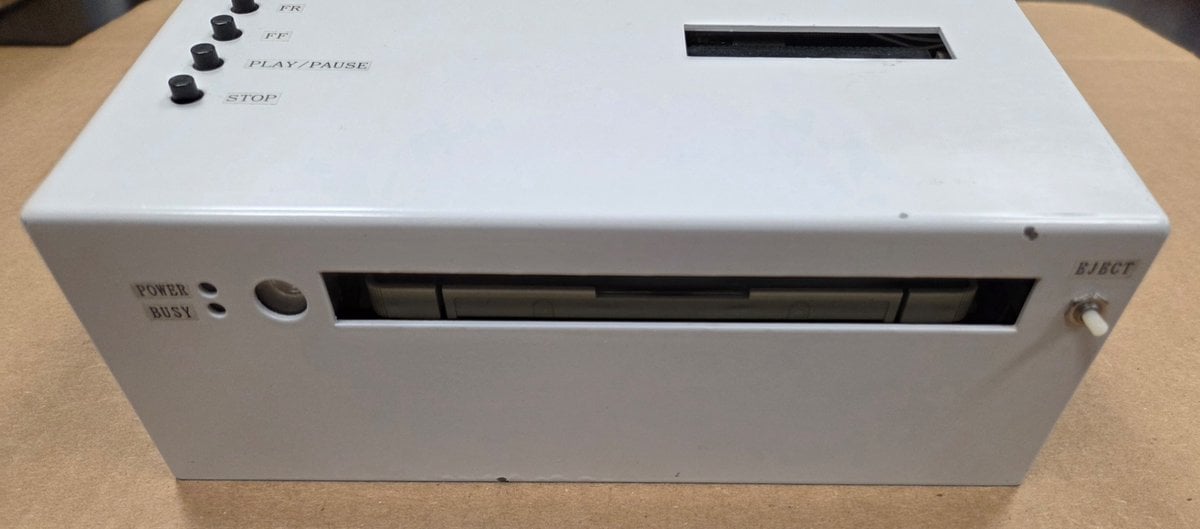
The National Videogame Museum has pulled off the kind of acquisition that instantly makes game history fans stop scrolling and stare. It now owns the Sony MSF-1, a prototype tied to the abandoned Nintendo and Sony partnership that once aimed to create a CD-based expansion for the Super Nintendo. That sentence alone carries a lot of weight, because the Nintendo PlayStation has lived for years in that strange space between rumor, legend, collector obsession, and industry turning point. People know the name. They know the story in broad strokes. But pieces this early, this rare, and this historically loaded almost never become publicly accessible in a museum setting.
What makes this moment stand out is not just rarity for rarity’s sake. The Sony MSF-1 is described as the oldest known existing Nintendo PlayStation hardware artifact and the only known unit of its type. That turns it from an interesting collectible into something closer to a fossil from the moment before gaming history split into two different timelines. One path led to a stronger Nintendo-Sony collaboration. The other led to the PlayStation becoming one of the most important gaming brands ever created. That fork in the road still fascinates people because it feels massive, messy, and very human.
There is also something refreshing about where this hardware ended up. Instead of disappearing into a private vault where only a handful of wealthy collectors might ever see it, it now belongs to the National Videogame Museum in Frisco, Texas. That matters. Museums preserve context, not just objects. They let people connect the wires between hardware, business decisions, design ideas, and cultural impact. For longtime fans, this is a chance to stand a few feet away from one of gaming’s most famous what-if machines. For newer players, it is a reminder that the industry we know was shaped by deals that almost happened, platforms that almost existed, and ideas that were just one boardroom decision away from changing everything.
A mythical Nintendo PlayStation has a new home
The National Videogame Museum’s acquisition of the Sony MSF-1 gives one of gaming’s most famous lost machines a permanent home with public visibility, and that is a big deal. For years, the Nintendo PlayStation existed in conversation like a campfire story for people who grew up reading old gaming magazines and swapping rumors online. You would hear about Nintendo and Sony once working together, someone would bring up a prototype, and then the whole thing would drift back into legend. Now that story has a physical anchor in a museum that players can actually visit. That changes the tone completely. It is no longer just history you hear about. It is history with an address. There is something almost surreal about that. A machine that sounds made up now lives in Frisco, Texas, waiting behind museum walls instead of floating around the internet like a ghost with a cartridge slot.
Why the Sony MSF-1 matters so much
The Sony MSF-1 matters because it is not merely rare hardware with a strange label and a famous backstory. It is a surviving piece from a moment when the direction of the games business could have changed dramatically. According to the museum, this unit is the oldest known existing Nintendo PlayStation hardware artifact and the only known example of its kind. That combination instantly raises the stakes. We are not talking about an ordinary prototype or a slightly different retail variant. We are talking about a machine tied to an abandoned alliance between two companies that would eventually define separate corners of the industry. That is why people care. The MSF-1 is not just old plastic and circuitry. It is a snapshot of a road not taken, and few things in gaming history trigger the imagination quite like that.
The machine feels like a missing puzzle piece
There is a reason people react emotionally to hardware like this. It behaves like a missing puzzle piece from a picture we thought we already understood. We know Nintendo. We know PlayStation. We know the decades that followed. Seeing an artifact that sits right at the point where those stories were still tangled together creates a strange jolt. It reminds us that history is not neat. It is full of half-built bridges, awkward partnerships, and ideas that nearly made it across the finish line. The MSF-1 gives that uncertainty a face. It is chunky, unusual, and gloriously specific, which somehow makes the whole story feel more real than a thousand retellings ever could.
The rarity is part of the pull, but not the whole story
Yes, rarity helps. Of course it does. The phrase “only known unit” has a kind of gravitational force in collecting circles. But what keeps people talking is not simple scarcity. Plenty of rare things gather dust in silence. This one carries narrative weight. It sits at the intersection of Nintendo history, PlayStation history, hardware development, and corporate fallout. That is why even people who do not usually care about prototypes suddenly lean in when the Nintendo PlayStation comes up. It is the kind of object that feels charged before you even step into the room.
The history behind Nintendo and Sony’s partnership
To understand why the Sony MSF-1 matters, it helps to remember the partnership that gave birth to the idea in the first place. Nintendo and Sony once worked together on plans for a CD-based attachment related to the Super Nintendo, a project that has been broadly remembered under the Nintendo PlayStation label. In hindsight, that name almost feels too dramatic to be real, yet it came from a genuine attempt to combine Nintendo’s platform power with Sony’s optical media ambitions. The partnership did not hold, and the collapse of that collaboration became one of the most famous turning points in the history of games. That fallout matters because Sony went on to develop the PlayStation brand independently, reshaping the market in the process. So when people look at the MSF-1, they are not just seeing a prototype. They are seeing the awkward, fascinating moment before a breakup that changed the industry’s future.
It represents the split before the split
That is what gives this hardware its drama. The MSF-1 exists in that uncomfortable stretch of time when an idea was still being built, even though the conditions around it were already fragile. It represents a future that had structure, engineering, and momentum behind it, but never reached consumers. In entertainment history, those in-between moments often end up being the most revealing. They show what companies thought they wanted before the public narrative hardened into something cleaner. Here, the machine points back to a version of the early 1990s where Nintendo and Sony might have remained collaborators instead of becoming separate giants with very different identities. That possibility is enough to keep this story alive decade after decade.
How the MSF-1 differs from other Nintendo PlayStation prototypes
When people hear “Nintendo PlayStation prototype,” they often imagine a single famous machine and stop there. The reality is more layered. The MSF-1 stands apart because it is described as an earlier hardware artifact tied to development work for Sony’s planned Super Nintendo CD attachment, rather than simply another variation of a later, more familiar hybrid prototype. That distinction matters. Earlier hardware can reveal different priorities, different assumptions, and different stages of product thinking. It can be rougher around the edges, but that roughness is part of the appeal. It shows process. It shows experimentation. It shows a design path before branding, polishing, and commercial presentation smooth everything out. In other words, the MSF-1 is fascinating because it does not just represent the idea of the Nintendo PlayStation. It helps show how that idea was taking shape before it became one of gaming’s most enduring legends.
Earlier hardware often tells the more interesting story
Collectors love finished prototypes because they look closer to something that could have been sold. Historians, though, often get extra excited about earlier hardware because it can expose the bones of the concept. That is exactly why the MSF-1 feels so important. It is not simply about having a rare object in a glass case. It is about owning a machine that may say more about development thinking than a cleaner, more polished model would. The earliest surviving example often gives us a better look at what the creators were trying to solve before marketing got involved. That is where the gold is. It is messy, technical, and honest.
This is where collectors and historians overlap
The fun part is that the MSF-1 works on two levels at once. For collectors, it is jaw-dropping because of its scarcity and mythic status. For researchers and preservationists, it is valuable because it can help anchor the timeline of a project that has long been discussed in fragments. Usually those two groups circle each other from a distance like cats deciding whether they are friends. Here, they meet in the middle. The object is exciting enough for collectors and meaningful enough for scholars. That is a rare combination, and it makes the museum acquisition feel even more significant.
Why museum preservation changes everything
One of the best parts of this story is that the Sony MSF-1 did not vanish into the kind of private collection that only appears in blurry photos every few years. Museum preservation changes the experience from ownership to stewardship. That is an important difference. A museum can contextualize the machine, explain why it matters, preserve it properly, and place it in a broader historical narrative for visitors who may not know the full story yet. It turns a rare object into a teaching tool. It also gives the public something invaluable: access. Maybe not everyone can fly to Texas tomorrow, but the possibility exists, and that matters more than it might seem at first. A hidden artifact belongs to rumor. A preserved and displayed artifact becomes part of shared cultural memory.
Public access gives the story more weight
There is something deeply satisfying about knowing this machine can be seen by ordinary visitors instead of only by insiders, wealthy buyers, or people lucky enough to know the right person. It makes the history feel democratic. Gaming history often slips through the cracks because hardware gets discarded, documents disappear, and prototypes end up sealed away. When a museum gets hold of something this meaningful, it slows that erosion. It says this moment is worth keeping, worth explaining, and worth showing to the next generation of players. That has real value, especially in an industry that can move so fast it sometimes forgets where it came from.
What visitors can expect from the National Videogame Museum
The National Videogame Museum already had a strong draw for anyone interested in the history of interactive entertainment, but acquiring the Sony MSF-1 gives it another layer of prestige and curiosity. For visitors, the appeal is obvious. This is not just about seeing a rare machine behind glass and nodding politely before moving on to the next display. It is about coming face to face with a turning point, the kind of object that can make someone mutter, “Wait, this actually exists?” under their breath. That kind of reaction is gold for museums. It sparks questions, conversations, and a deeper interest in the broader timeline of gaming. If the museum presents the hardware with the right historical framing, the exhibit can do far more than attract nostalgic Nintendo fans. It can pull in PlayStation fans, collectors, students of media history, and anyone who loves stories about inventions that nearly changed the world.
The museum’s location adds a practical layer
Frisco, Texas may not be the first place everyone imagines when they think of gaming mythologies, and that is part of the charm here. The museum is not hidden away in a secret collector bunker or tucked inside an industry-only archive. It is a real destination with visitor information, a public address, and a role in preserving game history for a wide audience. That accessibility grounds the whole story. The Nintendo PlayStation has always carried an almost unreal aura, but now it lives in a place people can map, plan around, and experience in person. That makes the legend feel pleasantly solid.
Why Frisco, Texas has become a destination for gaming history
This acquisition also highlights how gaming history is no longer confined to old magazines, YouTube retrospectives, and collector forums. Physical museums matter, and places like Frisco benefit when they become homes for genuine historical artifacts. Once a museum lands something as famous as the Sony MSF-1, it gains more than traffic. It gains identity. It becomes part of the conversation every time people discuss rare hardware, Nintendo history, or gaming’s most famous what-if scenarios. That can have a snowball effect. Visitors who come for the Nintendo PlayStation may leave talking about other exhibits, preserving interest across the wider history of games. In that way, one machine can serve as a gateway to an entire cultural archive. That is not bad work for a prototype that never reached store shelves.
A destination matters because context matters
Seeing a rare machine online is interesting. Seeing it in a place built to explain why it matters is something else entirely. The room, the labels, the surrounding exhibits, the conversations you overhear from other visitors, all of that adds texture. It is the difference between spotting a fossil in a photograph and seeing it in a museum where you can understand the creature it came from. Games deserve that same treatment. Hardware like the MSF-1 is not only collectible. It is cultural evidence, and giving it a public home strengthens the case that game history deserves serious preservation.
The emotional pull of gaming’s biggest what-if story
Part of the Nintendo PlayStation’s staying power comes from the emotional itch it never stops scratching. What would the industry look like if Nintendo and Sony had stayed together? Would the home console market have unfolded the same way? Would PlayStation as we know it even exist in recognizable form? These questions do not have clean answers, and that uncertainty is exactly what makes the story so sticky. People love alternate histories because they let us peek into the machinery of chance. The Nintendo PlayStation is gaming’s version of a fork in the road still glowing in the dark. The MSF-1 intensifies that feeling because it proves the alternate path was not imaginary. It had circuitry. It had hardware. It had shape. It was real enough to hold, build, and test.
This is why the story refuses to fade
Some lost projects disappear because they lacked impact. This one refuses to fade because its consequences echo through the entire modern industry. Every time someone picks up a PlayStation controller, every time someone talks about Nintendo’s platform strategy, and every time gaming history circles back to major corporate turning points, the ghost of that original partnership sneaks back into the room. The MSF-1 gives that ghost a body. That is why the museum’s acquisition feels bigger than a standard retro headline. It taps into one of the few unfinished stories that almost everyone in games recognizes instantly.
What this acquisition means for collectors and researchers
For collectors, this is the kind of museum acquisition that confirms some objects are simply too important to be reduced to auction drama alone. Yes, rare hardware attracts money, headlines, and bragging rights. But pieces like the MSF-1 also demand preservation, study, and responsible presentation. For researchers, the acquisition opens the door to sharper documentation and a more stable public reference point for discussion. Hardware legends often suffer from repeated half-truths, secondhand retellings, and missing context. A museum can help cut through that fog. It can preserve provenance, document physical details, and anchor future discussions in something verifiable. That is useful not just for historians but for the entire audience that cares about how the games business became what it is now.
A museum setting creates a healthier legacy
There is something reassuring about this machine landing in a place designed to care for it long term. Gaming still wrestles with preservation across software, hardware, and archival material. Important things get lost more easily than they should. When a piece this famous enters a museum collection, the signal is clear: this is not just memorabilia. It is part of the historical record. That framing matters because it nudges the whole conversation away from pure collector spectacle and toward a broader appreciation of why these artifacts deserve proper stewardship.
Why the Nintendo PlayStation story still fascinates players
The Nintendo PlayStation story still fascinates players because it combines all the ingredients people cannot resist. It has major brands, a collapsed partnership, strange surviving hardware, and decades of speculation. It also has emotional range. For some, it is nostalgic. For others, it is ironic. For many, it is just plain weird in the best way. Nintendo and PlayStation now feel so distinct that seeing them fused in one historical thread creates a kind of mental double take. That tension keeps the story alive. The National Videogame Museum’s acquisition of the Sony MSF-1 gives the legend fresh momentum because it turns abstract fascination into something tangible again. It is one thing to read about gaming history. It is another to know that one of its strangest surviving relics is now waiting in a museum, quietly reminding everyone how close the industry came to looking very different.
Conclusion
The Sony MSF-1 is more than a rare curiosity with a famous name attached to it. It is a surviving artifact from one of gaming’s most important crossroads, and the fact that it now belongs to the National Videogame Museum makes the story even stronger. Instead of sitting out of view, the hardware now has a public home where its significance can be preserved, explained, and shared. That gives the Nintendo PlayStation legend a fresh kind of life. It is no longer only a tale passed around by collectors and retro enthusiasts. It is a museum piece tied to a real place, a real timeline, and a very real alternate future that never happened. For anyone who cares about Nintendo, PlayStation, or the strange twists that shape entertainment history, this acquisition is not just interesting. It is genuinely important.
FAQs
- What is the Sony MSF-1?
- The Sony MSF-1 is an early Nintendo PlayStation-related hardware artifact connected to Sony’s planned Super Nintendo CD attachment. It is described by the National Videogame Museum as the oldest known existing Nintendo PlayStation hardware artifact.
- Why is this Nintendo PlayStation prototype important?
- It matters because it comes from the abandoned Nintendo and Sony collaboration that helped shape one of gaming’s biggest historical turning points. It represents a real piece of the path that existed before Sony launched PlayStation on its own.
- Where is the National Videogame Museum located?
- The National Videogame Museum is located at 8004 Dallas Parkway, Suite 300, Frisco, TX 75034. That means visitors interested in gaming history now have a public place where they may be able to see this legendary hardware.
- Is the Sony MSF-1 the same as other Nintendo PlayStation prototypes?
- No. The MSF-1 is presented as a distinct and especially early hardware artifact, which is part of what makes it so historically significant compared with more familiar Nintendo PlayStation prototype discussions.
- Why does it matter that a museum owns it?
- Museum ownership improves preservation, public access, and historical context. Rather than existing only as a collector trophy, the hardware can now be treated as part of the broader record of video game history.
Sources
- National Videogame Museum Announcement on the Sony MSF-1, X, March 4, 2026
- National Videogame Museum, National Videogame Museum, Accessed March 6, 2026
- The rare Nintendo PlayStation hardware prototype that was never released has been acquired by The National Videogame Museum, TechRadar, March 5, 2026