














Summary:
Fans of The Simpsons: Hit & Run have been holding onto hope for years, and recently that hope got a little louder. Matt Selman, a longtime writer and showrunner on The Simpsons who also helped write the 2003 game, addressed the possibility of a return in a new interview and made one thing clear: the door is not fully closed. His exact wording, “never say never,” was enough to get longtime players talking again, and it is easy to see why. This is not a formal announcement, and it is not confirmation that a remaster, remake, or sequel is in development. Still, it matters when someone so closely connected to both the show and the game openly acknowledges that fans have wanted this for years.
That reaction says a lot about the legacy of The Simpsons: Hit & Run. It is not just remembered because of nostalgia. The game built a real connection with players by capturing Springfield in a way that felt playful, chaotic, and true to the spirit of the series. It mixed exploration, driving, humor, and familiar characters into something that stood out in a crowded era of licensed releases. While plenty of games based on movies and television shows faded from memory, this one stuck around like a catchy theme song you did not expect to hum twenty years later.
The renewed attention around Selman’s comments also highlights why the game keeps coming back into the conversation. Fans are not simply asking for a quick port with a sharper resolution. Many want a respectful modern version that keeps the humor, preserves the identity of Springfield, and improves the rougher parts that came with its original era. At the same time, any return would likely involve licensing, publishing, and business decisions that are far more tangled than they look from the outside. That means excitement is fair, but expectations should stay grounded. What these comments truly offer is not certainty, but a spark. For a game with this kind of reputation, sometimes a spark is all it takes to send the internet speeding down Evergreen Terrace all over again.
The renewed hope around The Simpsons: Hit & Run
There are some games that never really leave the conversation, and The Simpsons: Hit & Run is one of them. Even after all these years, people still talk about it with the kind of affection usually reserved for childhood cartoons, favorite snacks, and consoles with suspiciously loud disc drives. Recently, that nostalgia got fresh fuel when Matt Selman commented on the possibility of the game returning in some form. For fans who have spent years asking for a remaster, remake, or sequel, that was enough to light the fuse again. The excitement is easy to understand because this is not some random bit of wishful thinking from a message board. It came from someone who was directly involved with the original game and remains closely tied to the world of The Simpsons. That alone gives the conversation more weight than the usual rumor mill chatter.
What Matt Selman actually said
Selman did not announce a project, tease a release window, or hint that development is underway behind closed doors. Instead, he chose a phrase that lands somewhere between caution and possibility: “never say never.” He also acknowledged that the fanbase has wanted the game back for years and made it clear that the people behind The Simpsons know there is real demand. That matters because recognition is the first step in any possible revival. Companies and rights holders may ignore plenty of requests, but once a demand becomes impossible to miss, it starts to shift from background noise into something more meaningful. Selman’s remarks also felt genuine because he reflected on how unexpected the game’s legacy became, admitting that he had no idea it would grow into such a beloved cult favorite.
Why those comments immediately caught attention
Fans have been hearing silence for so long that even a small crack in the wall sounds loud. That is why Selman’s remarks spread so quickly. They were careful, yes, but they were not dismissive. He did not wave off the idea or treat it as some old curiosity from another era. Instead, he recognized the affection people still have for the game, and that emotional acknowledgment goes a long way. Anyone who loved Hit & Run knows that a few hopeful words can hit like finding twenty dollars in an old jacket. Suddenly, the idea does not feel impossible. It still feels distant, but not impossible.
Why this is not confirmation of anything
At the same time, it is important to keep both feet on the ground. “Never say never” is not a promise, and it is not a roadmap. It simply means the idea has not been ruled out forever. In gaming, that can lead to anything from a serious revival years later to absolutely nothing at all. Fans should read this for what it is: a positive acknowledgment, not a green light. That may sound less exciting, but it is still more than people had before. In a world where many older licensed games disappear into legal limbo and corporate vaults, even an open door is worth noticing.
The game’s cult status did not happen by accident
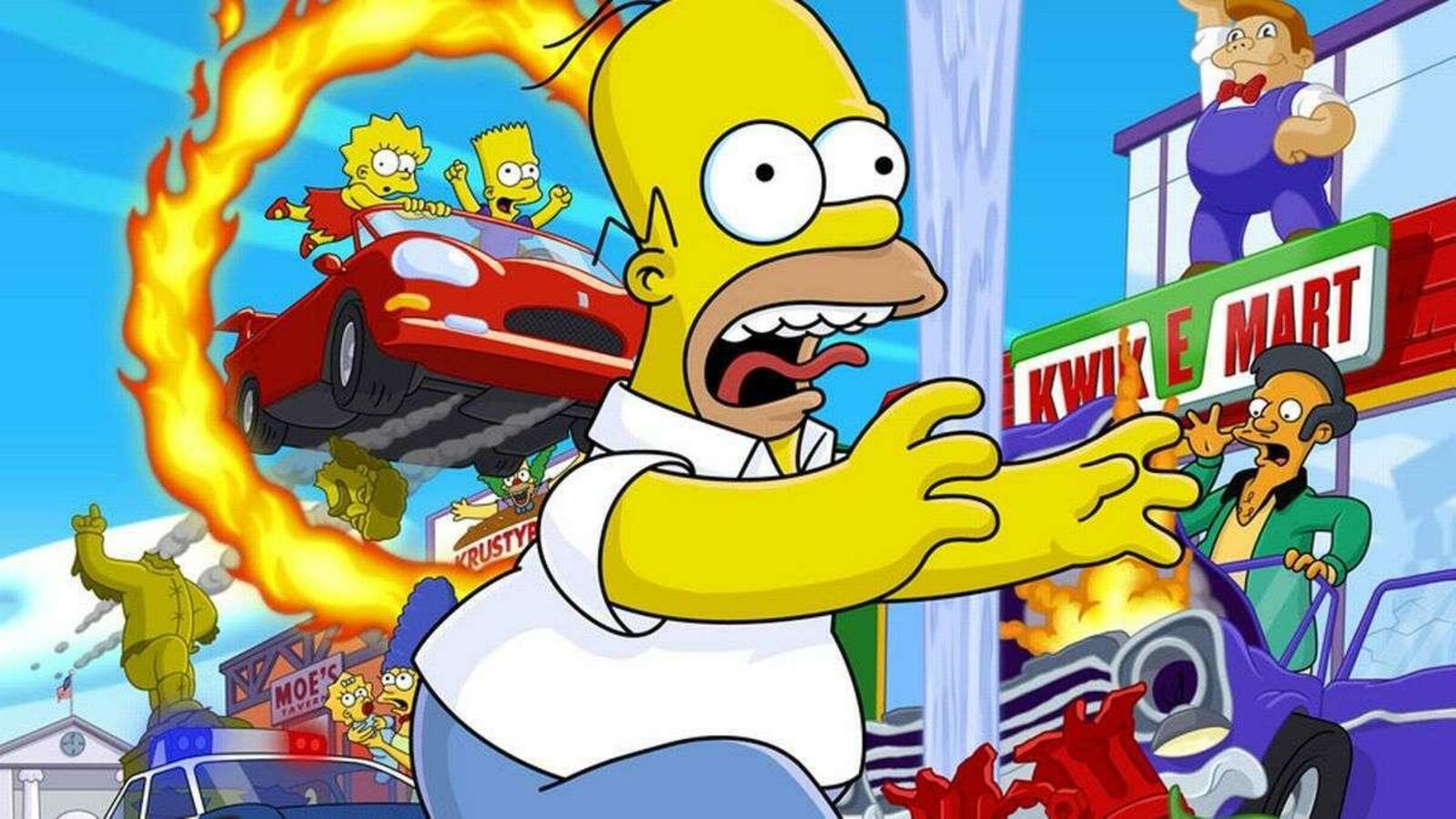
The Simpsons: Hit & Run was released in 2003, and it quickly stood out because it understood something many licensed games missed. It did not just borrow characters and slap them onto a generic formula. It tried to recreate the feel of Springfield as a place you could move through, bump into, and laugh at. That made a huge difference. Players were not only controlling Homer or Bart. They were wandering through a recognizable version of a world they had watched for years. The game mixed driving, exploration, collectibles, mission structure, and a strong comedic tone in a way that felt lively instead of stiff. It was messy at times, sure, but it had personality. And personality lasts longer than polish when people look back with affection.
How it stood apart from other licensed releases
Licensed games often had a reputation for being rushed, shallow, or forgettable. Hit & Run pushed past that. It leaned into the show’s humor while also giving players freedom to explore and cause a little cartoon chaos. That blend gave it a stronger identity than many of its peers. It also arrived at a time when open world design was becoming more exciting for players, so its structure felt familiar while still carrying a distinctly Simpsons flavor. That is part of why it has remained so memorable. It was not merely “a Simpsons game.” It was a game that made its setting matter.
The role Springfield played in its lasting appeal
Springfield was more than a background. It was the joke, the playground, and the reward. Whether you were racing down the street, smashing through traffic, or spotting familiar landmarks from the show, the environment kept feeding the experience. Fans loved the sense of recognition. It felt like stepping inside the cartoon without losing the playful absurdity that made the series special in the first place. That is not easy to pull off. Plenty of adaptations know the characters but miss the atmosphere. Hit & Run captured enough of both to feel authentic.
Why fans still bring it up decades later
People do not keep asking for this game to return just because they are nostalgic for the early 2000s. They keep asking because they feel there is still something worth reviving. The core idea remains strong. A funny, accessible, character-driven action game set in Springfield still sounds appealing now. In some ways, it sounds even better now because modern hardware could do more with the world, the visuals, and the sense of interactivity. When a game continues to inspire this kind of conversation decades later, that is not an accident. That is staying power.
Why a remake, remaster, or sequel keeps coming up
The debate around The Simpsons: Hit & Run usually splits into three paths: remake, remaster, or sequel. Each option appeals to a different kind of fan. Some want the original experience preserved with cleaner visuals and modern platform support. Others want a ground-up remake that updates mechanics, controls, and world detail while keeping the spirit intact. Then there are those who want a full sequel, something bold enough to build on the old formula instead of simply polishing it. The reason all three ideas keep resurfacing is simple: the original left a strong enough impression that people do not want to see it forgotten. They want it back in a form that feels meaningful.
Why a remaster sounds appealing
A remaster is often the easiest idea to imagine because it sounds safe. Keep the original structure, sharpen the presentation, improve performance, and bring it to current platforms. For fans who mainly want access without digging out older hardware, that would already be a win. It would also let new players understand why the game became so beloved in the first place. But there is a catch. A remaster that does too little can feel lazy, while one that changes too much starts drifting into remake territory. That balancing act is trickier than it sounds.
Why a remake has stronger long-term appeal
A remake could do more than refresh the visuals. It could modernize mission flow, improve driving feel, smooth out frustration points, and expand Springfield in ways the original hardware could never manage. That is probably the version many fans dream about when they picture a true comeback. The danger, of course, is that remakes can lose the soul of the original if they become too clean, too cautious, or too focused on modern trends. Hit & Run had a scrappy charm. Strip that away, and you risk turning a cult favorite into something oddly forgettable.
Why a sequel would be the boldest move
A sequel would let the creators start fresh while still honoring what made the original memorable. That could mean a larger Springfield, new storylines, more characters, smarter mission design, and better variety from start to finish. It would also give the team room to reflect how both gaming and The Simpsons have changed over time. The problem is that a sequel asks for the biggest commitment. It takes more time, more money, and more confidence that the audience is large enough to justify the effort. That makes it exciting to imagine, but harder to bet on.
The biggest hurdle standing in the way
If fans have learned anything from the long silence around this game, it is that wanting something and getting it are two very different things. Selman himself referred to the situation as complicated, and that is probably the most important word in the whole discussion. The Simpsons: Hit & Run sits at the intersection of television rights, game publishing history, development ownership, and modern platform realities. That is a lot of moving pieces. A revival is not as simple as one person saying yes. It would likely require several parties agreeing on terms, timing, creative direction, and commercial value. In other words, it is less like opening a garage door and more like untangling Christmas lights that have somehow formed emotional damage.
Why licensed games are harder to bring back
Licensed games often run into complications that original properties do not. Contracts expire. Publishing rights shift. Old agreements may not cleanly support modern releases. Even when there is demand, business reality can drag everything into slow motion. That is one reason so many older licensed favorites remain stuck in the past. Their return depends not only on creative interest, but also on legal and commercial alignment. Fans may see a beloved game. Rights holders see a stack of negotiations.
Why demand still matters despite those obstacles
Even with those hurdles, fan demand is not meaningless. It helps keep the conversation alive, proves there is still market interest, and gives decision-makers evidence that a revival could attract attention. Selman acknowledging that demand is valuable because it confirms the interest is visible from inside the brand, not just outside it. That does not remove the hurdles, but it does make the case stronger. And in entertainment, momentum matters. The more often a title is remembered fondly, the harder it becomes to ignore.
What a modern return could look like
If The Simpsons: Hit & Run ever comes back, fans will expect more than a nostalgia button with a glossy coat of paint. A modern version would need to preserve the humor, keep Springfield feeling alive, and improve the original’s rough edges without sanding off its personality. That could include tighter controls, better mission pacing, cleaner camera work, and a world that feels more dynamic. Visual upgrades would be welcome, but the bigger challenge would be tone. The game worked because it felt mischievous, bright, and unmistakably Simpsons. Any new version would need to hold onto that identity like Homer holds onto a donut.
What absolutely needs to stay the same
The writing, the atmosphere, and the recognizable charm of Springfield are non-negotiable. Those are the heart of the experience. The humor should feel playful and character-driven, not forced or overly self-aware. The world should still invite players to explore for the joy of being there. And the characters need to sound and behave like themselves. If a comeback loses those ingredients, it may still function as a game, but it would miss the magic that made people care in the first place.
What would benefit from a modern refresh
Mission variety is one area that could improve. The original had memorable moments, but it also repeated itself at times and leaned on frustration more than it should have. A modern take could offer better pacing, more side activities, smoother difficulty tuning, and stronger reasons to explore beyond the main objectives. Driving could also feel more responsive, especially by current standards. None of that would betray the original. It would simply help the experience age more gracefully for today’s audience.
What fans can realistically take from this update
The most reasonable takeaway is hope, not certainty. Matt Selman’s comments matter because they show awareness, affection, and openness. They do not confirm a project, but they also do not bury the idea. For a game with such a loyal following, that is enough to keep the conversation alive in a meaningful way. Fans have every right to be excited, but they should not start clearing shelf space for a collector’s edition just yet. The best way to read this moment is as a reminder that the legacy of The Simpsons: Hit & Run still has real weight. That alone says something powerful about what the game achieved.
Why this moment still feels important
Sometimes the biggest sign of a game’s importance is not a remake announcement. It is the fact that people still care enough to ask for one after all this time. Selman’s remarks underline that point perfectly. The game is not being remembered out of obligation. It is being remembered because it left a mark. That is rare, especially for licensed releases. Whether a revival happens or not, this latest update proves the game still means something to both fans and people connected to its history. That is why the reaction has been so strong, and why the conversation is not going away anytime soon.
Conclusion
The Simpsons: Hit & Run remains one of those rare licensed games that never stopped mattering. Matt Selman’s recent “never say never” comment does not guarantee a remake, remaster, or sequel, but it does show that the demand is known and the idea is not off the table. For fans, that is a meaningful update because it comes from someone who understands both the game’s history and the passion surrounding it. The real lesson here is that Hit & Run earned its reputation. It was not a passing hit. It became a lasting favorite, and that is why even a few carefully chosen words can send excitement racing through the fanbase all over again.
FAQs
- Did Matt Selman confirm a new The Simpsons: Hit & Run game?
- No. He did not confirm a new project. He said “never say never,” which keeps the possibility open but does not mean a remake, remaster, or sequel is currently announced.
- Why are fans still asking for The Simpsons: Hit & Run to return?
- The original game built a strong reputation thanks to its humor, memorable version of Springfield, and enjoyable mix of driving and exploration. It stayed popular long after release because it felt special rather than disposable.
- Would a remaster or a remake make more sense?
- Both have appeal. A remaster would make the original easier to access on modern systems, while a remake could improve mechanics and presentation more dramatically. Many fans would likely welcome either if it respected the spirit of the original.
- What is the biggest obstacle to bringing the game back?
- The biggest challenge is likely business complexity. Licensed games often involve multiple rights holders, older publishing agreements, and commercial decisions that make revivals harder than fans might expect.
- Is fan demand enough to make a revival happen?
- Fan demand helps, especially when it remains strong for years, but it is only one part of the puzzle. Interest can encourage discussions, yet a real return would still depend on legal, financial, and creative alignment.
Sources
- “The Simpsons” Executive Producer Says ‘Never Say Never’ on Potential “Hit & Run” Game Revival (Exclusive), People, March 2026
- The Simpsons showrunner is a maybe on a Hit & Run revival: “If we know people want it, never say never”, GamesRadar+, March 2026
- Executive producer on The Simpsons says ‘never say never’ regarding a Hit & Run revival, PC Gamer, March 2026
- The Simpsons: Hit & Run Review, GameSpot, September 15, 2003
- The Simpsons: Hit & Run Reviews, Metacritic, accessed March 18, 2026
- The Simpsons Hit & Run publisher ‘said no’ to a deal to make five more Simpsons games, Video Games Chronicle, November 21, 2023