














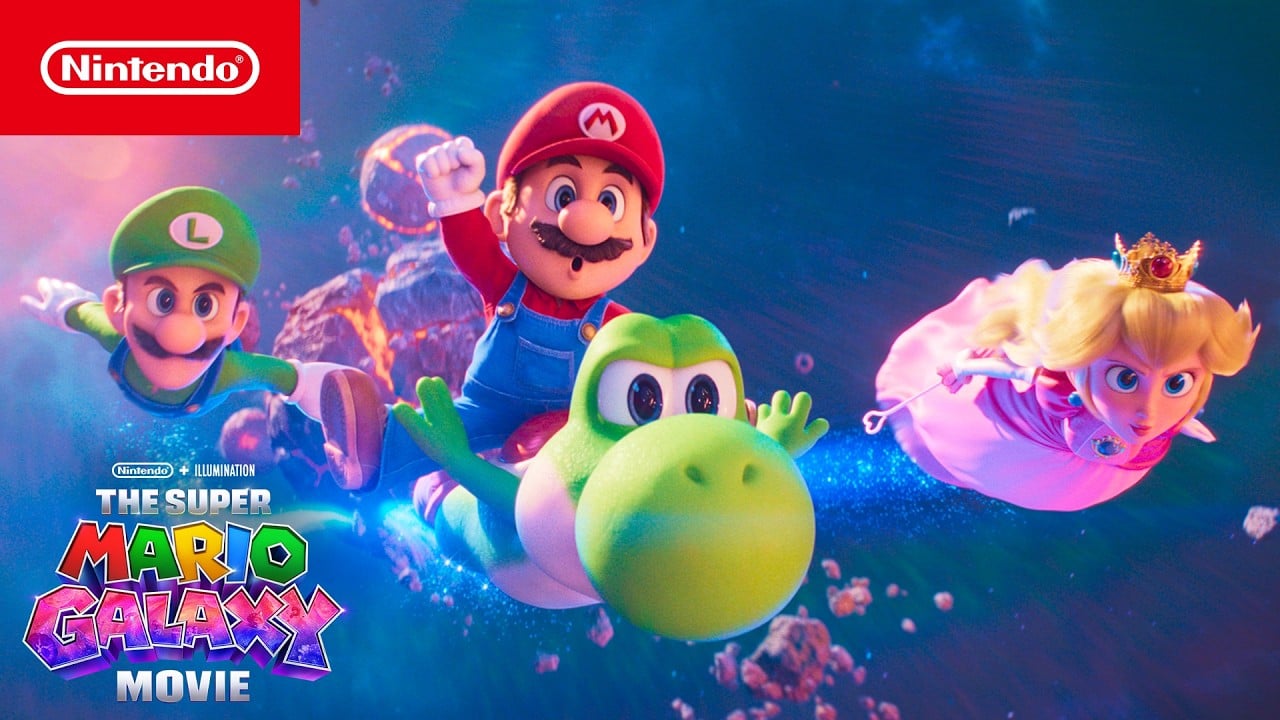
Summary:
The Super Mario Galaxy Movie has turned a strong start into one of the biggest theatrical launches of the year, giving Nintendo and Illumination another major win on the big screen. Recently, the film reached $372.5 million worldwide, with about $190.1 million coming from North America and $182.4 million arriving from international markets. Those numbers did not just make noise for a weekend – they placed the movie among the strongest animated and video game adaptation debuts ever, while also giving 2026 one of its biggest Hollywood openings so far.
What makes this launch stand out is how balanced it looks. The domestic turnout showed that Mario still has enormous drawing power in the United States and Canada, but the overseas performance made it clear that this was not a one-region success story. Audiences showed up across key markets, proving that Nintendo’s best-known hero still travels extremely well. That matters because a film franchise only starts to feel truly durable when it can pull major numbers both at home and abroad. This one did exactly that.
There is also a business angle that is hard to ignore. With reports placing the production budget around $110 million, the gap between cost and earnings already looks very healthy. In plain terms, that means the movie did not stroll into theaters – it kicked the door open. It also strengthens the case for more Nintendo films and more entries connected to Mario’s cinematic universe. When a sequel performs at this level, studios do not stare at the ceiling and wonder what to do next. They start planning.
Just as important, the film’s opening shows that family animation, strong branding, and recognizable game worlds remain a powerful mix when they are packaged for theaters the right way. For Nintendo, Illumination, and Universal, this is not just a big box office story. It is a sign that Mario’s movie future still has plenty of fuel left in the tank.
Super Mario Galaxy Movie blasts off at the worldwide box office
The Super Mario Galaxy Movie did not settle for a respectable opening. It arrived with the kind of debut that makes the rest of the industry stop and look twice. Recently, the film reached $372.5 million worldwide, a total fueled by roughly $190.1 million in North America and $182.4 million overseas. Those are not just healthy numbers for an animated release. They are the kind of figures that instantly place a movie in blockbuster territory and spark serious talk about long-term franchise value. When a release opens this big, the conversation changes fast. People stop asking whether audiences care and start asking how high the ceiling really is. For Nintendo and Illumination, that shift matters. Mario was already one of the safest names in entertainment, but this launch proves the cinematic side of the brand still has real momentum. The result feels less like a lucky bounce and more like confirmation that the audience showed up expecting a big-screen event.
A domestic debut that gave the movie instant momentum
The North American performance gave the film a powerful early push, with about $190.1 million collected domestically over its opening frame. That kind of number sends a message right away. It says families were interested, longtime Nintendo fans were interested, and casual moviegoers were willing to come along for the ride too. A debut of that size does more than fill seats. It creates urgency around the release, because once a movie starts dominating conversation, more people want to be part of it. It becomes the film everyone is hearing about at school, at work, and in group chats. Mario has always had broad recognition, but recognition alone does not guarantee a giant opening. Plenty of famous brands stumble when excitement does not turn into ticket sales. Here, it clearly did. The domestic launch gave the movie strong headlines, a bigger spotlight, and the kind of early momentum that can keep a theatrical run moving well after the first rush fades.
International markets helped turn a strong launch into a global event
The overseas total of $182.4 million is where the launch starts to feel even more impressive. Strong domestic numbers can make a film look successful, but major international support is what gives it real worldwide stature. That is exactly what happened here. The movie was not carried by one territory or one burst of nostalgia. It connected across multiple regions, helping transform a large opening into a global box office event. That matters because theatrical franchises live and grow on international reach. A movie that travels well becomes more valuable, more flexible, and more likely to inspire follow-ups. Mario has always been one of Nintendo’s most universal characters, and recently that global familiarity turned into real revenue. It is the difference between a hit that shines brightly for a moment and a franchise entry that feels built to last. In box office terms, the international turnout did not just support the domestic result – it completed the picture.
Why this opening matters for Nintendo and Illumination
For Nintendo and Illumination, this result is bigger than a flashy weekend headline. It strengthens a partnership that already had one huge success and now looks far less like a one-time lightning strike. Sequels always carry a different kind of pressure. The first film gets to surprise people. The second one has to prove the appeal is still there. The Super Mario Galaxy Movie appears to have done exactly that. It shows that the audience did not move on after one theatrical adventure. Instead, it came back in force, which is exactly the signal a studio wants before expanding a franchise. Nintendo benefits because it continues building trust around its film ambitions. Illumination benefits because it has another major animated earner connected to a beloved gaming property. Universal benefits because the release adds more weight to its family entertainment strategy. Everybody at the table has a reason to smile, and probably a reason to keep the meeting room coffee hot a little longer.
The records that put the film in rare company
Recently, the movie’s opening was described as one of the strongest in several major categories, and that is where the scale of this debut really becomes clear. Reports tied the film to milestones such as becoming the only animated franchise with two titles opening above $350 million globally, landing among the biggest global animated openings ever, and delivering one of the best debuts ever for a movie based on a video game. Those are the kinds of marks that move a film out of ordinary hit territory and into rare company. Records do not automatically guarantee long-term staying power, of course, but they do tell us how powerful the starting line was. In this case, the records suggest the sequel opened with remarkable force. It also helps frame the movie as more than just a commercial success. It becomes part of a larger industry conversation about what audiences want, which brands still matter, and how high the ceiling can be for animation tied to gaming icons.
How the sequel compares with The Super Mario Bros. Movie
Any conversation about The Super Mario Galaxy Movie naturally circles back to The Super Mario Bros. Movie. That is the shadow and the spotlight at the same time. The earlier film set a massive benchmark, so the sequel was always going to be measured against it. Recently, reporting positioned Galaxy as slightly behind the original in some opening comparisons, while still ranking just behind it in several big categories tied to Illumination, animated launches, and video game adaptations. That is an important distinction. Falling short of one of the biggest animated hits in recent memory is not a warning sign. It is more like finishing just behind a rocket ship and still breaking the track record for nearly everyone else. In practical terms, the sequel’s numbers show that audience enthusiasm remained very strong. It may not have topped every benchmark set by its predecessor, but it did enough to confirm that this film series is not running on fumes.
A production budget that gives the movie strong profit potential
Reportedly produced for about $110 million, the film already looks well positioned from a financial standpoint. That budget is significant, but it is also far from the kind of inflated cost that can make a blockbuster feel risky even after a big start. When a movie opens this strongly against that level of spend, the path toward profitability starts looking much clearer. Theatrical revenue is only one part of the picture too. Home entertainment, streaming, licensing, merchandise, and cross-promotional value all add more layers to the business case. Mario is not just a movie character. He is a brand engine with decades of recognition behind him. That means the value of a hit like this extends well beyond ticket sales. The strong start gives Nintendo and its partners room to think bigger, plan earlier, and move with more confidence. When a film opens with this kind of ratio between cost and earnings, executives do not just breathe easier – they start sketching the next map.
Family appeal, brand power, and timing all worked together
Big openings rarely happen because of only one thing. Usually, it is a stack of advantages landing at the right moment, and that seems to be the case here. Mario brings instant recognition across generations. Parents know the name, kids know the name, and plenty of adults grew up with the games and still feel attached to the world. That built-in familiarity creates a wide funnel of interest before the first ticket is even sold. Then timing enters the picture. Recently, coverage pointed to spring break and the Easter holiday corridor as part of the release advantage, which makes sense. Family audiences are more available, group outings become easier to plan, and animated releases can benefit from repeat visits when school schedules loosen. Add Illumination’s track record with crowd-pleasing animation and Universal’s marketing reach, and you have a recipe that looks pretty sturdy. None of that guarantees success on its own, but together it forms a very strong launchpad.
What this result says about video game adaptations in theaters
For years, video game movies had a reputation that was, frankly, rough around the edges. Some worked, many did not, and the category often felt like a gamble. Recently, that picture has changed in a noticeable way, and The Super Mario Galaxy Movie adds more evidence to the trend. Audiences are far more willing to embrace game adaptations when the tone feels right, the visual identity is recognizable, and the filmmakers respect what people already love about the source material. Mario, of course, has an extra advantage because the character is practically pop culture furniture at this point. Still, the movie’s opening supports a larger idea: game-based films are no longer novelty experiments. They can function as major studio events with real global weight. That does not mean every adaptation is destined for gold. It does mean the ceiling is much higher than it once was, and studios now have harder proof that gaming worlds can command the theatrical spotlight.
The franchise now looks built for a longer theatrical future
The most interesting part of a launch like this may be what it points to next. A sequel that performs this well strengthens the idea that Mario’s theatrical future can stretch well beyond a two-movie run. That does not mean every possible spin-off should sprint into production tomorrow, but it certainly opens the door wider. Success on this scale gives Nintendo and its partners more freedom to expand characters, settings, and story directions while keeping audience trust intact. It also creates more room for the wider Nintendo film strategy to grow, because one proven series can make the rest of a slate feel less risky. Mario works as the flagship, the anchor, and the crowd magnet. If the first film proved the brand could thrive in theaters, recently this sequel proved the momentum could hold. That is a very different level of confidence. It suggests that Mario’s cinematic future is not hanging by a thread. It looks like it has another power-up ready.
The result also reinforces the value of theatrical animation
Animation has always had a strong place in cinemas, but this opening is a reminder that theatrical animation still has major event potential when the right title comes along. There is sometimes a lazy assumption that family movies are automatically safe, as if audiences simply wander in because the poster is colorful. Real life is not that simple. People still need a reason to leave the couch, buy tickets, and turn a movie into an outing. The Super Mario Galaxy Movie clearly gave many families that reason. It offered familiarity, spectacle, and a world that already feels playful before the lights even dim. That combination helped it stand out in a crowded entertainment environment where every release is fighting for attention. For studios, that matters. It shows that animated movies are not just steady earners for matinees and weekend plans. Under the right conditions, they can hit the box office with the force of a live-action tentpole and leave a crater behind.
Conclusion
The Super Mario Galaxy Movie has already done more than post a flashy opening number. It has shown that Nintendo and Illumination still have a powerful theatrical formula on their hands. Recently, the film surged to $372.5 million worldwide, backed by major support in North America and strong international turnout. It also entered the record books in several important categories tied to animation, franchise performance, and video game adaptations. With a reported budget around $110 million, the business picture looks encouraging, and the larger franchise outlook looks even stronger. For moviegoers, this is the kind of result that makes a series feel alive and full of momentum. For Nintendo, it is another clear sign that Mario’s leap to the big screen was not a temporary trick. The character remains one of entertainment’s safest bets, and right now that bet looks like it is paying off all over again.
FAQs
- How much did The Super Mario Galaxy Movie make worldwide recently?
- Recently, the film reached about $372.5 million worldwide, with roughly $190.1 million from North America and $182.4 million from international markets.
- Was the opening considered a major box office success?
- Yes. The debut placed the movie among the biggest animated and video game adaptation openings, while also making it one of the strongest Hollywood launches of 2026 so far.
- How does the sequel compare with The Super Mario Bros. Movie?
- Reports indicate it opened slightly behind the 2023 film in some categories, but it still ranked just behind that release in several major box office comparisons, which is a strong result for a sequel.
- What was the reported production budget?
- Coverage recently placed the production budget at around $110 million, giving the movie a healthy financial setup after such a large opening.
- Does this improve the chances of more Nintendo movies?
- It certainly strengthens the case. A sequel opening at this level makes more Mario films, and potentially broader Nintendo theatrical plans, look much more attractive from a business standpoint.
Sources
- ‘Super Mario Galaxy Movie’ – All The Box Office Records Broken, Deadline, April 5, 2026
- It’s-a-hit: ‘The Super Mario Galaxy Movie’ box office blasts off with $372.5 million globally, Associated Press, April 6, 2026
- Easter Box Office: ‘Super Mario Galaxy Movie’ Soars to Gigantic $190M U.S. Opening, $372M Globally, The Hollywood Reporter, April 4, 2026
- Theaters flex strongest run since COVID, Axios, April 7, 2026
- “The Super Mario Galaxy Movie” Becomes Biggest Box Office Opener of 2026, People, April 6, 2026
- “The Super Mario Galaxy Movie” clobbers “Project Hail Mary” with record-breaking $372 million global box office premiere, Entertainment Weekly, April 6, 2026