














Summary:
Tose sits in a strange place within the games industry. Players rarely see its logo on screen, yet its fingerprints are all over some of the biggest Japanese series around. In the latest financial year that ended in August 2025, new filings revealed that Atlus accounted for 22.3 percent of Tose’s total revenue while Square Enix contributed 16.9 percent. Those percentages instantly tell us that two heavyweight RPG publishers are leaning heavily on a single contract studio, not just for small support tasks but for substantial development help. Put simply, the studio many people have never heard of is a central pillar behind some of the most talked about projects in modern gaming.
Looking closer at Tose’s history as a “ghost developer” and its current strategy, a clearer picture comes into focus. The Kyoto based firm has been building games since 1979, often without a name in the credits, for partners like Nintendo, Bandai Namco and Capcom as well as Atlus and Square Enix. Recent statements also show Tose shifting focus away from crowded mobile markets and toward console projects again, which lines up neatly with the rise in work for high profile publishers. For players, investors and anyone tracking how games are actually built, understanding this quiet network of relationships explains why Atlus’ and Square Enix’s upcoming slates still look busy even as internal resources are stretched.
Who Tose is and why its name rarely appears on screen
Tose is one of those companies that almost feels like an urban legend when you first hear about it. The studio was founded back in 1979 in Kyoto and has spent decades working on home console software, mobile projects and even arcade machines, yet many players would struggle to name a single title where its logo appears front and center. Instead, Tose operates as a behind the scenes specialist that other publishers call when they need extra hands or a full development team without expanding their own headcount. The firm has contributed to hundreds of releases across platforms, from Game Boy to modern hardware, while typically leaving the spotlight to the brand on the box.
This silence is not an accident. Tose openly talks about a policy of staying in the background, essentially acting as a “ghost developer” that supports client vision rather than pushing its own. Interviews with staff describe a culture that focuses on planning, execution and the end user experience, with the company often avoiding credit even when it handles large slices of a game. That low profile has helped Tose keep relationships with big publishers who appreciate a partner that can handle demanding schedules without demanding public recognition in return.
How a Kyoto studio became a silent pillar for big publishers
If you imagine the games industry as a city, publishers like Nintendo, Atlus and Square Enix are the skyscrapers, while Tose is more like the engineering firm that quietly keeps the foundations solid. Over time, the studio built trust by consistently delivering work across genres and hardware generations, from licensed tie ins to ports and remasters. Because the team is large by Japanese outsourcing standards, with several hundred employees on a consolidated basis, it can staff multiple projects at once while still preserving specialist teams for console, mobile and networked features. That scale gives publishers confidence that Tose can handle not just a handful of assets, but entire systems, levels or platform versions.
Being based in Kyoto also matters more than it might seem at first glance. Physical proximity to Nintendo and reasonable access to Osaka and Tokyo make it easy for Tose staff to meet with partner teams, adjust plans on short notice and respond to changes mid development. Over four decades, that has turned into a web of long running relationships covering everything from early handheld projects to modern HD remasters. When a publisher needs a trusted collaborator that understands their internal tools, approval processes and brand expectations, turning to a long standing partner like Tose is often less risky than bringing in a new contractor.
What “ghost developer” really means in practice
The phrase “ghost developer” sounds mysterious, but in Tose’s case it mostly describes a business choice about visibility rather than some secret group hidden in a basement. In practice, Tose often signs agreements that keep its name out of credits or marketing, especially when it joins projects mid stream to help hit deadlines or quietly rescue troubled schedules. The team may design stages, balance enemies, implement online features or build entire ports, yet only internal staff and close industry watchers know how much work came from Kyoto. For players, the logo they see is the publisher’s, which keeps brand messaging clear even when development has been shared.
This setup has pros and cons. On the positive side, it allows Tose to jump between different game worlds without getting locked into one public identity. The studio can contribute to a horror hit one year and a family friendly platformer the next, guided by whatever their partners need. On the other hand, it means individual developers and the company as a whole rarely receive recognition from the broader audience. That trade off only makes sense if the studio gains stability and repeat business behind closed doors, which is where the latest financial breakdown becomes important.
Atlus as Tose’s biggest client in the 2025 fiscal year
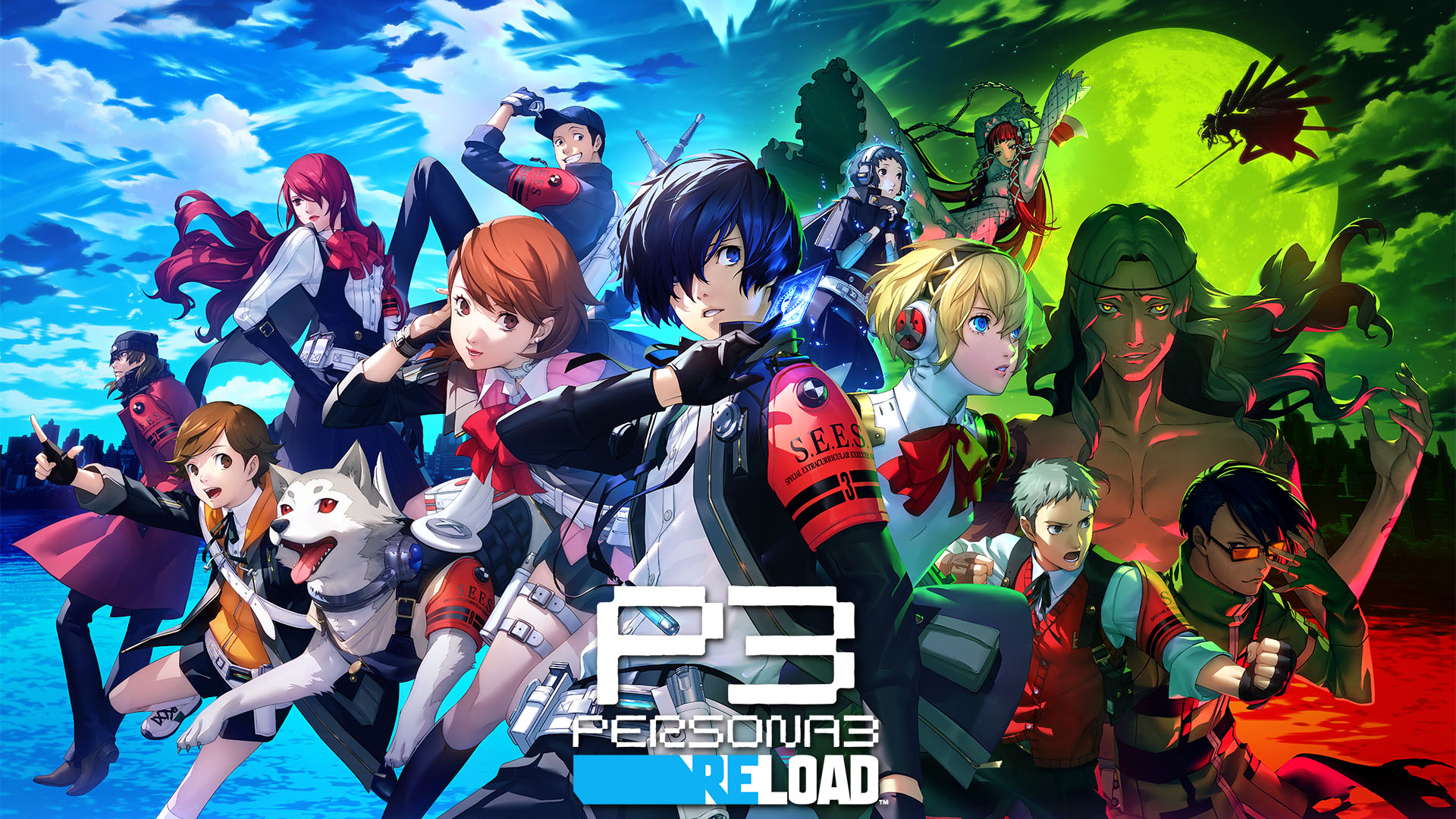
In the fiscal year that ended in August 2025, Tose’s filings revealed something that instantly grabbed attention among people who follow development studios: Atlus accounted for 22.3 percent of the company’s total revenue. That is not pocket change, it is close to a quarter of everything Tose brought in across all projects for that twelve month stretch. Reports also clarify that this is the second year in a row where Atlus holds the top spot, which suggests a stable pipeline rather than a one off collaboration. For a publisher best known for series like Persona and Shin Megami Tensei, leaning this heavily on a partner hints at the scale and complexity of its upcoming slate.
It is easy to forget how much work is involved in keeping a modern RPG ecosystem alive. Between new mainline entries, spin offs, remasters, ports and updates, Atlus needs to juggle multiple projects at once while maintaining quality that long time fans expect. Outsourcing parts of that workload to a trusted collaborator like Tose lets the publisher stretch development resources without burning out internal teams. When you see that more than a fifth of Tose’s yearly revenue comes from Atlus alone, you can safely assume that the Kyoto studio is handling sizeable portions of this portfolio, from technical support on console versions to broader co development roles.
Why Atlus leans on Tose for complex RPG projects
Atlus has grown from a cult favorite to a globally recognised name, especially after recent releases brought Persona to a wider audience on multiple platforms. That growth comes with pressure to keep new experiences flowing while also modernising older entries for new players. Tose’s history with complex role playing systems, platform ports and long running collaborations makes it a natural fit for that challenge. The studio has experience implementing dense combat systems, event scripting and UI flows across handheld and console hardware, which folds neatly into projects that demand both depth and polish.
For Atlus, working with Tose also offers strategic flexibility. When a new opportunity appears, such as bringing a previously platform locked title to additional systems, the publisher can spin up work at an experienced partner instead of overextending internal teams. Because Tose already understands how Atlus structures projects, from milestones to review cycles, collaboration can be more efficient than onboarding a fresh contractor. That shared history likely explains why Atlus remained Tose’s largest single customer two years running, transforming the relationship from occasional support into a core pillar of both companies’ long term plans.
What the 22.3 percent figure suggests about current workloads
Numbers by themselves can feel abstract, so it helps to think about that 22.3 percent in everyday terms. Imagine Tose’s yearly schedule as a large whiteboard filled with project names, deadlines and team sizes. A little under a quarter of that entire board is effectively labelled “Atlus work,” meaning programmers, artists, designers and producers are spending a huge chunk of their time advancing Atlus projects. Some of those tasks might involve assisting with flagship titles, while others focus on ports or remasters that keep catalog favourites active. Either way, that level of revenue contribution typically corresponds to several active projects at different stages.
The concentration also creates interesting dynamics for both sides. Atlus gains a partner that is deeply familiar with its tools and expectations, while Tose gains steady work and visibility into the publisher’s longer term roadmap. At the same time, both companies need to pay attention to risk. If Atlus ever cut back sharply on outsourcing, Tose would feel the impact. That is one reason why seeing Square Enix rise into a strong second place in the same fiscal year is important, because it spreads Tose’s dependency across more than one high profile client.
Square Enix’s growing reliance on Tose
Just behind Atlus in Tose’s latest filings sits Square Enix, responsible for 16.9 percent of the studio’s total revenue in the fiscal year ending August 2025. On paper that is a smaller slice than Atlus, but it still represents a significant chunk of Tose’s business and, crucially, a notable increase compared to the previous year when Square Enix’s share was reportedly under ten percent. That jump signals that projects linked to franchises like Final Fantasy and Dragon Quest are drawing more support from Kyoto, particularly on remasters, spin offs and multi platform versions where an experienced partner can keep schedules realistic.
Square Enix has a long history of working with external studios to fill gaps, especially around ports and parallel versions for different platforms. Tose fits cleanly into that pattern, offering depth in areas like performance optimisation, platform specific features and large asset pipelines. Recent reports have pointed to Tose working on high profile remasters and HD updates, which aligns with the broader industry trend of giving older hits fresh life on new hardware. When 16.9 percent of yearly revenue ties back to a single publisher, it is clear that this is more than the occasional small contract.
From Dragon Quest remakes to HD projects and beyond
While not every Square Enix collaboration is publicly confirmed, available reporting outlines a picture where Tose plays a meaningful role in some of the publisher’s most beloved series. Work on Dragon Quest related projects, including remakes and spin offs, demonstrates that the Kyoto studio can handle titles with heavy expectations from both domestic and international fans. Combined with involvement in other role playing and action projects, Tose has shown it can implement modern rendering, combat tuning and platform parity in ways that match Square Enix’s exacting standards.
This mix of responsibilities also shows why a publisher like Square Enix might prefer a long term partner instead of constantly rotating vendors. When a studio has already helped ship notable remasters or ports, handing them another project reduces the ramp up time. Staff know what quality bars to hit, which internal producers to report to and how to navigate localisation or certification headaches. As newer platforms like Nintendo Switch 2 gather momentum, having a contractor that understands both older and newer hardware makes it easier to keep catalog titles available without pulling internal teams away from brand new projects.
How a 16.9 percent revenue share changes the picture
From Tose’s perspective, Square Enix’s increased contribution in 2025 does more than pad out the top line. It balances the client mix, reducing the risk of relying too heavily on a single partner, while still letting the studio specialise in areas where it has the most experience. If Atlus and Square Enix together account for just under 40 percent of annual revenue, that combination anchors the business in a way that makes long term planning easier. Management can justify investments in console focused technology and staff training because they know there is steady demand from multiple publishers that value those skills.
For Square Enix, the benefit comes in the form of capacity. Even a large publisher can only handle so many internal projects at once, especially as budgets rise and development timelines stretch. By leaning more on Tose, Square Enix can push ahead with remasters, supplementary releases and potentially experimental projects without derailing its core slate. The revenue figure confirms that this is not a casual relationship, but a structured partnership where both sides have learned how to share workload reliably.
Other key partners and how they fit into Tose’s portfolio
Although Atlus and Square Enix dominate headlines, they are not the only important clients contributing to Tose’s success. Reports based on the same fiscal filings mention Bandai Namco Studio, Takara Tomy, Aquaplus and Bandai Namco Entertainment as other significant partners. Together, these companies cover everything from toy linked brands to niche visual novels and large entertainment franchises. That variety helps Tose avoid being boxed in as “just the RPG helper” and keeps the studio’s skills sharp across multiple genres and audience segments.
On top of that, Tose still maintains long running ties with Nintendo and Capcom, even if those relationships are not highlighted in the most recent revenue breakdown. Historical work on series like Game & Watch Gallery and various licensed projects shows how broad the studio’s reach can be. A diversified client list means that when one sector slows down, another may pick up, which is particularly important in years when mobile performance or global economic conditions shift unexpectedly. The crucial thread running through all of this is trust: each of these partners continues to come back to Tose because previous collaborations delivered results without drama.
Bandai Namco, Takara Tomy and Aquaplus in the mix
Bandai Namco and its related divisions bring a slightly different flavour of work to Tose compared to Atlus and Square Enix. Here, projects might revolve around licensed IP tied to toys, anime or multimedia pushes, where the schedule is synced to broadcast seasons or product launches. Takara Tomy and Aquaplus often operate in similar spaces, blending games with broader entertainment plans. For a contractor, this can mean handling tight turnarounds, platform specific spin offs or support updates that keep fans engaged between bigger releases.
For Tose, these relationships serve as a valuable counterweight to the RPG heavy work associated with Atlus and Square Enix. Staff can move between projects that ask for different pacing, design philosophies and technical constraints, which helps prevent creative fatigue. It also means the studio is less vulnerable if demand for a particular genre temporarily dips. The fiscal 2025 breakdown shows that, while two clients occupy the top spots, the broader base of partners still plays a vital role in shaping yearly revenue and keeping teams busy.
Why Tose is prioritising console games after mobile saturation
Alongside the client breakdown, another piece of the puzzle comes from recent management comments: Tose has decided to prioritise console game development as Japan’s mobile market becomes increasingly saturated. Internal briefings and external reporting describe revenue from self operated mobile titles flattening out, while console projects tied to major publishers have grown. Rather than chase ever tougher competition and rising user acquisition costs on mobile, Tose is choosing to put more weight behind areas where its track record and client relationships give it an advantage.
This strategic shift lines up neatly with the numbers we see from Atlus and Square Enix. Both companies are heavily invested in console and PC platforms, including upcoming hardware generations. By focusing on console work, Tose positions itself as an even more attractive partner for those publishers, especially as they plan multi year pipelines that stretch across current and next generation devices. For players, this means that when they hear about new RPGs, remasters or ports from these brands, there is a good chance that Tose staff are contributing behind the scenes, keeping performance solid and schedules on track.
What this shift means for Atlus and Square Enix players
If you are mainly interested in what you will actually be playing in the next few years, Tose’s strategic choices still matter more than you might think. A contract studio that focuses on console development will tend to invest in optimisation, platform specific features and quality assurance that directly impact how games feel in your hands. When Tose aligns its internal roadmap with the needs of Atlus and Square Enix, it becomes easier for those publishers to greenlight ambitious projects that span multiple platforms without compromising on frame rate or stability.
In practical terms, this could mean smoother launches for ports that bring beloved RPGs to new systems, faster turnarounds on remasters that polish up older favourites, and more consistent support updates for titles that stay active over long periods. Players might never see Tose’s name on a splash screen, yet they will absolutely notice the results when a complex game runs well on their platform of choice. The closer the partnership between publisher and contractor, the more likely it is that design goals survive the long journey from concept to controller.
What to watch for in future financial reports
For anyone who enjoys reading between the lines of financial documents, Tose’s current position opens up several interesting signals to track. One is whether Atlus remains the top client in the next fiscal year, or whether Square Enix’s growing share continues to rise. Another is how the percentage tied to mobile projects evolves as the studio leans harder into console work. Changes in headcount, investment in new development centres or technology teams can also hint at where future collaborations will land.
It is also worth keeping an eye on mentions of new major partners or shifts in regional focus. If, for example, more Western publishers began appearing in client lists, that could signal an expansion beyond Tose’s traditional base of Japanese relationships. For now, though, the latest filings tell a clear and fascinating story: a long standing ghost developer has anchored itself firmly to Atlus and Square Enix at a moment when both publishers are navigating a demanding, multi platform future. Even without a logo on the box, Tose is quietly shaping what many players will be enjoying over the next few years.
Conclusion
Tose’s latest numbers pull back the curtain on a world that usually stays hidden from view. Atlus contributing 22.3 percent of annual revenue and Square Enix adding 16.9 percent reveals a studio that sits at the crossroads of some of the most important Japanese game projects in development today. Backed by a long history of ghost development, a conscious shift toward console work and a diverse roster of other partners, Tose has turned discretion into a competitive advantage. For players, the takeaway is simple: when Atlus or Square Enix announce new releases, there is a good chance that an experienced team in Kyoto is helping those ideas reach your screen in better shape and on more platforms than would otherwise be possible.
FAQs
- Why is Tose called a ghost developer in Japan
- Tose earns the ghost developer label because it often works under contracts that keep its name out of credits and marketing, even when it handles large parts of a project. The studio prefers to let publishers take public credit, which helps it maintain long term relationships and move quietly between very different franchises without drawing attention to itself.
- How much of Tose’s revenue came from Atlus in the latest fiscal year
- In the fiscal year that ended in August 2025, filings based on Tose’s financial documents show that Atlus accounted for 22.3 percent of the company’s total revenue. This made Atlus Tose’s largest client for the second consecutive year and suggests multiple ongoing projects ranging from major releases to ports or remasters.
- What share of Tose’s revenue came from Square Enix in 2025
- Square Enix was Tose’s second largest client in the same fiscal period, contributing 16.9 percent of total revenue. That figure represents a clear increase compared to the previous year, when Square Enix’s share sat below ten percent, and it highlights a growing partnership around console focused projects and remasters.
- Which other publishers rely on Tose besides Atlus and Square Enix
- Beyond Atlus and Square Enix, reports on Tose’s recent filings list companies such as Bandai Namco Studio, Takara Tomy, Aquaplus and Bandai Namco Entertainment as notable clients. Historically, Tose has also supported Nintendo and Capcom among others, making it a widely connected contractor across Japan’s game industry.
- Why is Tose shifting its focus from mobile to console development
- Management commentary and news coverage explain that Tose is prioritising console game development because revenue from its mobile operations has flattened while competition in that market has intensified. By concentrating on console projects, the studio can lean on its strengths in large scale co development and align more closely with partners like Atlus and Square Enix that are heavily invested in console and PC releases.
Sources
- Square Enix and Atlus were the biggest clients of Tose in the past year, My Nintendo News, November 28, 2025
- Atlus and Square Enix were the biggest clients of “ghost developer” Tose in the past year, AUTOMATON WEST, November 28, 2025
- Major Japanese co-development studio Tose decides to prioritize console game development in face of mobile market’s saturation, AUTOMATON WEST, July 12, 2025
- Corporate Profile, TOSE CO., LTD., August 31, 2025
- Tose (company), Wikipedia, May 31, 2024
- Inside Tose Software, the biggest Japanese game dev you have never heard of, GameDeveloper.com, April 26, 2017