














Summary:
There’s a very specific kind of moment that makes you feel time tap you on the shoulder, and Naoki Hamaguchi just described one of them. In a recent interview, the Final Fantasy VII Remake series director said that newer Square Enix employees are less likely to name Final Fantasy VI as their favorite, and more likely to point to Final Fantasy XIII instead. That one detail sounds small, but it’s loaded. It’s not really about “which game is best,” because that argument never ends and it never has a winner. It’s about what shaped someone when they were young, what felt huge at the time, and what got them to care about making games in the first place.
Final Fantasy XIII launched in 2009 on PlayStation 3 and Xbox 360, and it landed like a fireworks show. It was glossy, cinematic, and confident, and for plenty of players it became the entry that defined what Final Fantasy looked and sounded like. If those players are now the ones walking into Square Enix as new hires, of course their nostalgia sounds different than the older generation’s. Hamaguchi’s comment is a reminder that the franchise has lived through multiple “home eras,” each with its own first love: the Super Famicom era, the PlayStation era, and the HD era. When the internal conversation shifts from VI to XIII, it’s not a verdict on quality. It’s proof that the series has become big enough to raise multiple generations on different starting lines, and that reality will keep shaping what Final Fantasy becomes next.
The quote that made Hamaguchi feel time is speeding up
Hamaguchi’s comment hits because it’s so ordinary and so brutal at the same time. He’s not talking about sales charts, awards, or some carefully rehearsed studio message. He’s talking about a casual workplace exchange that turns into a mirror. When newer employees say their favorite Final Fantasy is XIII, it signals that the people entering the building grew up in a totally different era of the series than the ones who entered before them. That’s why his reaction lands with so many fans. We all have that one “wait, that was how long ago?” moment, whether it’s a console generation, a school year, or a game you still think of as “recent.” In his case, it’s the realization that the franchise has already produced at least one full generation of developers who were formed by the HD era, not the classic 16-bit or early PlayStation years.
Why “favorite Final Fantasy” is a generational fingerprint
When someone says “my favorite Final Fantasy,” they’re usually revealing more than a preference. They’re revealing the age they were when they first fell in love with the series, the kind of storytelling they were used to, and the design trends that felt normal at the time. Favorites often behave like a hometown. You can move away, discover new places, and still feel that gravitational pull when you think back. That’s why workplace favorites matter in a creative studio. Those memories shape instincts: what feels like “proper pacing,” what feels like “a satisfying battle system,” and what counts as a “big emotional beat.” Hamaguchi pointing out the shift from VI to XIII is basically him noticing that the studio’s shared memory is being rewritten in real time. It’s not a crisis, it’s just time doing what time does.
Final Fantasy VI as a classic creator touchstone
Final Fantasy VI has long been treated like a creator’s favorite for a reason. It’s often praised for its ensemble cast, its tonal range, and the way it balances intimate character moments with huge set pieces, all within the constraints of its era. For many developers who grew up closer to the 16-bit period, VI wasn’t just a game they played, it was a blueprint for what RPG storytelling could be. So when Hamaguchi hears fewer younger colleagues name VI, it can feel like the room’s cultural “default setting” has changed. That doesn’t make VI smaller or less important. It just means the people walking in the door didn’t have the same childhood context. They didn’t meet the series in the same decade, on the same hardware, with the same expectations. That difference is the whole point of his observation.
Final Fantasy XIII as a modern childhood landmark
For younger employees, Final Fantasy XIII can be the game that looked like the future. It arrived in the HD era with a sharp visual identity, a heavy cinematic style, and production values that screamed “event release.” If that was your first major Final Fantasy, it makes sense that it sticks to you like a song you heard at the exact right age. People don’t just remember the mechanics, they remember the feeling of seeing something that big and polished for the first time. And if XIII was the one that made someone think, “I want to make games,” that emotional imprint matters more than online debates. Hamaguchi’s reaction isn’t really about XIII winning a popularity contest. It’s about recognizing that the franchise has already become someone else’s childhood, and that someone else is now his coworker.
Why Final Fantasy XIII sticks with newer developers
It’s easy to forget how defining XIII’s release window was. In 2009, HD consoles were still in the phase where big-budget presentation felt like a flex, and studios were racing to show what their new tools could do. Final Fantasy XIII leaned into that. It delivered a strongly directed experience with a clear visual language and a cinematic rhythm that felt modern for its time. If you’re a newer developer, you might not carry the baggage of older arguments about what Final Fantasy “should” be. You might simply remember XIII as a confident, high-gloss RPG that took itself seriously and looked incredible on your TV. Nostalgia is sneaky like that. It doesn’t ask permission, and it doesn’t care about review-score spreadsheets. It just moves in and redecorates your memory.
2009 timing and the jump to Xbox
Final Fantasy XIII also mattered historically because it launched in 2009 on both PlayStation 3 and Xbox 360, and that platform story made noise at the time. For a long stretch, many players mentally associated mainline Final Fantasy with PlayStation hardware, so seeing XIII arrive on Xbox 360 helped signal that the franchise was entering a more cross-platform reality. For younger players, that kind of platform shift can shape accessibility. It changes who gets to play the “big one” when it’s new, which changes who forms nostalgia around it. In other words, platform decisions don’t just affect units sold, they affect which future developers fall in love with the series. That’s a butterfly effect you can’t really measure, but you can definitely feel it when the next generation joins the studio and names a different favorite.
Big-budget spectacle and cinematic ambition
XIII’s presentation is a major reason it remains memorable. It’s not subtle about its cinematic goals, and it doesn’t pretend to be. The art direction, the dramatic camera work, and the high-detail character models all push the experience toward something that feels closer to a blockbuster than a cozy slow burn. For players who grew up in that era, that level of polish can become part of what “Final Fantasy” means. You might remember specific scenes the way you remember a movie trailer that lived rent-free in your head. That kind of memory can be powerful for aspiring creators, because it’s tied to craft. Even if someone later prefers other entries, the moment of first awe still matters. It’s the spark, not the final verdict.
Lightning and the cast as an entry point
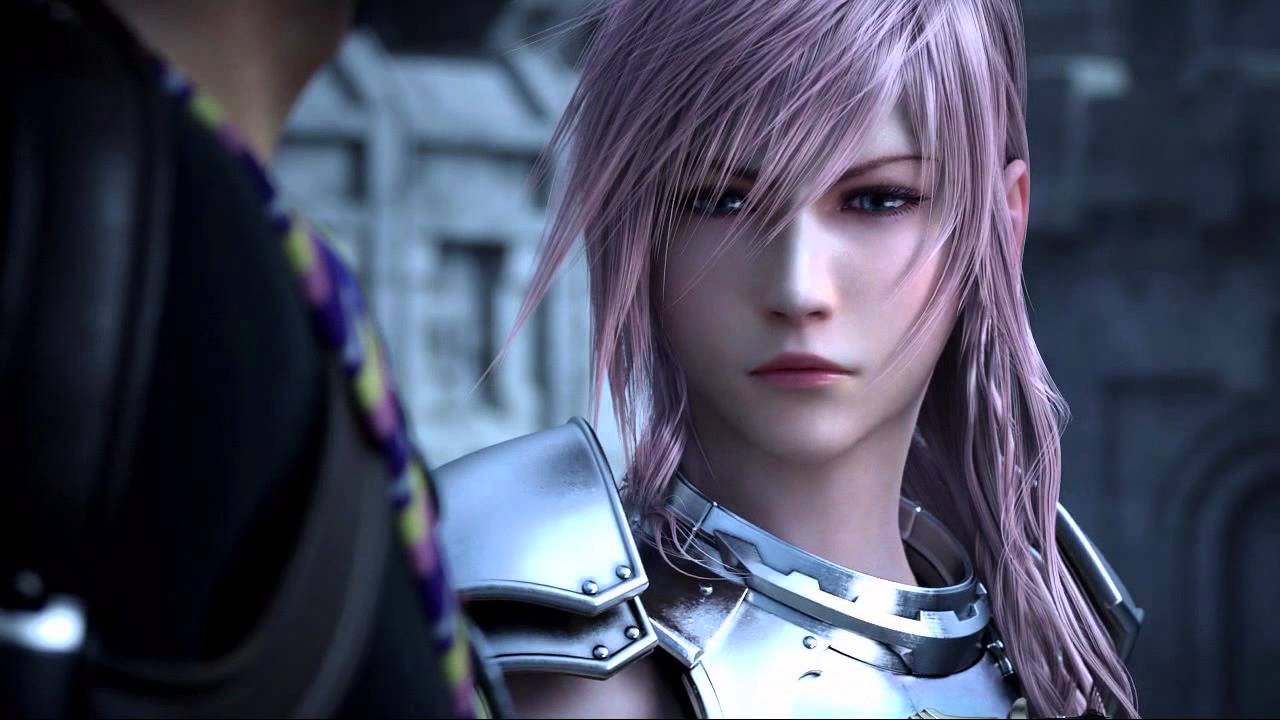
Characters are often the real reason favorites form, and XIII has a cast that left a strong imprint on many players. Lightning, in particular, became a recognizable face of the franchise for the HD era, and the game’s focus on character drama made it easy for players to latch onto personalities and relationships. When a game becomes someone’s “first,” the cast is usually the glue that holds that memory together. That’s especially true for players who didn’t grow up with pixel-era sprites and are more used to fully voiced scenes and cinematic framing. For them, XIII’s approach can feel like the version of Final Fantasy that speaks their language. If those players are now working at Square Enix, it’s not surprising that their emotional anchor point sounds different than it did for earlier generations.
How Square Enix changes when new people join
Studios aren’t museums. They’re living ecosystems, and they change every time new people arrive with new reference points. Hamaguchi’s comment is basically a peek behind the curtain at how that evolution feels internally. When a company grows, it brings in creators who were shaped by different games, different consoles, and different cultural moments. That shift can be exciting, because it injects new ideas into the bloodstream, but it can also feel surreal for veterans. One day you’re the new hire who grew up on a classic, and the next day someone calls a game you still think of as “modern” their childhood favorite. That’s not a warning sign. That’s the franchise proving it has staying power. A series that never becomes someone else’s first love eventually stops being anyone’s love at all.
Studio growth reshapes internal nostalgia
When more young developers join, the studio’s shared nostalgia naturally rebalances. The “common language” shifts from one era to another. That can influence everything from what gets referenced in casual conversation to what design ideas feel intuitive in a brainstorming session. If the room is full of people whose first Final Fantasy was XIII, then cinematic pacing, HD-era presentation, and certain combat expectations might feel like the baseline. Meanwhile, veterans who grew up with VI might think in terms of different constraints and different storytelling rhythms. Neither is “right,” and neither should dominate by default. The interesting part is what happens when those perspectives collide in a healthy way, because that’s where new ideas tend to appear. It’s like a band where half the members grew up on vinyl and the other half grew up on streaming. Same love of music, different instincts.
“Favorite game” talk influences creative instincts
Favorites aren’t just trivia, they’re a map of creative instinct. If you adore a certain entry, you probably love something specific about it: the pacing, the mood, the sense of exploration, the way battles feel, or how the characters talk. Those preferences quietly influence the choices you make when you build something new. That’s why Hamaguchi noticing a shift matters. It suggests that the next wave of creators at Square Enix may bring different default assumptions about what Final Fantasy is supposed to emphasize. That doesn’t mean the series will suddenly become “more like XIII.” It means the palette of influences inside the studio is expanding. And honestly, that’s healthier than a single era being treated as the only correct one, because it keeps the series from becoming a nostalgia reenactment.
Final Fantasy XIII’s reputation shift over time
XIII’s place in the fandom has always been complicated, and that’s part of why it’s fascinating to see it named as a favorite by younger staff. At release, it drew loud criticism in some corners for being more linear than what many players expected. Over the years, that conversation has shifted as design trends in the wider industry have changed. The modern landscape is full of enormous worlds, endless checklists, and games that can feel like second jobs if you’re not careful. Against that backdrop, a strongly directed RPG can feel refreshing, especially to players who want a focused experience. So when newer employees cite XIII, it can reflect both personal nostalgia and a changing relationship with what players want from big RPGs.
The linearity debate and why it still matters
Linearity became the headline complaint for XIII in many discussions, but “linear” isn’t automatically a flaw. It’s a tool. A linear structure can support strong pacing, tighter storytelling, and a more controlled sense of escalation, like a rollercoaster that’s built to hit its drops at the perfect second. The pushback happens when players expect a different kind of freedom, especially if they associate the franchise with wandering, optional discoveries, or broader exploration. What’s changed over time is the wider context. In a world where many big RPGs can feel bloated, a directed structure can feel like relief. That doesn’t erase the criticisms that existed, but it explains why some newer players might experience XIII differently. They aren’t comparing it to the same trend lines the original audience was comparing it to.
Trend whiplash from open worlds to fatigue
In the years after XIII, open-world design became increasingly dominant, and that dominance has brought both incredible highs and very real fatigue. Players love the best open worlds because they feel alive and surprising, but they also get tired of repetitive tasks and overstuffed maps. That’s where a more directed RPG can regain appeal. It’s like the difference between an all-you-can-eat buffet and a chef’s tasting menu. One can be thrilling, the other can be satisfying in a totally different way. When newer Square Enix employees cite XIII as a favorite, part of that could be nostalgia, and part of it could be a simple preference for focus. And if those creators later build new games, that preference might push them to value pacing and clarity, even in bigger modern productions.
What players remember most when they look back
With time, people often remember how a game made them feel more than the arguments around it. They remember the atmosphere, the music, the characters, and the sense of momentum. That’s why reputation can soften or shift. A game that was debated at launch can later be remembered as bold, distinctive, or simply different in a way that stands out. XIII’s identity is strong, and strong identities tend to age in interesting ways because they don’t blur into the background. That distinctness is exactly what can make it someone’s favorite, even if it isn’t universally loved. Favorites are personal. They’re not elections. And Hamaguchi’s surprise reaction is a reminder that the people entering the studio now have their own personal “first awe” memories, and those memories deserve to exist without needing permission from older fans.
What this means for the Final Fantasy VII Remake trilogy
Hamaguchi’s comment also connects to a real challenge facing any modern remake project: the audience is not one single group anymore. Some people come to Final Fantasy VII Remake with decades of attachment to the original. Others come to it with XIII, XV, or even later entries as their baseline for what Final Fantasy feels like. That means the remake series has to communicate across multiple generations at once. It needs to honor the original’s emotional core while also feeling modern and readable to players who didn’t grow up with 1990s RPG conventions. If anything, the “FFXIII is my favorite” moment is a reminder of why that balancing act matters. The franchise has multiple entry points now, and the remake series is trying to be a bridge, not a private club.
Designing for multiple “first Final Fantasy” generations
When a franchise is this old, “newcomer” doesn’t mean “has never played a JRPG.” It often means “started with a different era.” Someone whose first was XIII might be used to a certain cinematic rhythm and a certain presentation style. Someone whose first was VI might care more about party dynamics and classic pacing. Someone whose first was VII might be chasing a very specific emotional feeling tied to the original’s tone. The smart move is not choosing one group and ignoring the others. The smart move is making the experience legible and emotionally satisfying from multiple angles. That’s hard, but it’s also what keeps a series alive. And in a weird way, Hamaguchi feeling old is a compliment to the franchise. It means the series didn’t just survive. It became someone else’s childhood.
Respecting the past without freezing it in amber
One of the most difficult parts of revisiting a beloved classic is deciding what “respect” actually means. Respect can mean preservation, but it can also mean interpretation. If every decision is driven by fear of change, the result can feel stiff, like a cover band that plays every note correctly and still somehow misses the spirit. The remake trilogy exists in a world where many players expect modern readability, modern pacing standards, and modern production values. Meeting those expectations doesn’t have to betray the original. It can be a way of translating its strengths for a different generation. The fact that newer employees cite XIII as a favorite suggests that modern presentation can become nostalgic too. Today’s “modern” eventually becomes tomorrow’s classic, and that cycle is exactly what Hamaguchi is noticing.
Hamaguchi as a bridge between eras
Hamaguchi sits in an interesting position. He’s leading a project rooted in one of gaming’s most iconic classics, while also operating in an industry that has shifted dramatically since the original release. His remark about younger employees is not just a personal “wow, time flies” moment. It’s a real observation about how the people making games now are shaped by different landmarks. That mix can be a strength. When creators from different “first Final Fantasy” eras collaborate, they can challenge each other’s assumptions. They can ask better questions. They can avoid treating any single era as sacred law. If the remake trilogy is trying to feel like Final Fantasy VII while also feeling like it belongs in the modern landscape, that kind of cross-generational perspective is exactly what helps.
The bigger lesson for fans
There’s a temptation in fandom to treat favorites like identity badges. If you love one entry, it can feel like you’re signing up for a tribe. That’s when discussions get messy, because people start defending their favorites like they’re defending their childhood. Hamaguchi’s comment is a gentle reminder to loosen the grip. If younger developers at Square Enix love XIII, that doesn’t threaten anyone else’s love for VI, VII, IX, or anything in between. It just proves the series has range. And range is good. A long-running franchise that can’t create new favorites is a franchise that slowly turns into a history lesson. Nobody wants that. We want new players to find their own “this is the one” moment, because that’s how the series keeps breathing.
How to argue about favorites without turning it into a feud
If you want a simple rule, it’s this: treat favorites like stories, not like rankings. Ask people what they loved and why, instead of trying to prove them wrong. Was it the combat rhythm? The characters? The music? The sense of discovery? When you frame it that way, you learn something instead of just trading punches. It also makes room for the idea that a favorite can be personal even if the game has flaws. Most favorites do have flaws. That’s normal. Loving something isn’t the same as claiming it’s perfect. Hamaguchi’s reaction works because it’s human. He’s not lecturing anyone, he’s just reacting to a shift he can feel. Fans can take that same energy and make the conversation lighter. The series is big enough for multiple favorites to coexist without anyone needing to “win.”
Why the series needs room for different tastes
Final Fantasy has never been a single rigid thing. It changes. That’s part of its DNA. Some entries lean into experimentation, some lean into tradition, and some try to do both at once and spark arguments for years afterward. If younger Square Enix staff love XIII, that could encourage future projects to take bold stylistic swings without assuming only one era deserves to be the template. The healthiest possible outcome is variety: different tones, different structures, different combat approaches, and different storytelling rhythms. That kind of flexibility is how a series survives decades. It’s also how it stays interesting. If every new entry tried to be the same “ideal” version of Final Fantasy, the franchise would eventually feel like it’s repeating itself. The fact that favorites differ across generations is proof that change has value.
Where the conversation goes next
Hamaguchi’s observation also invites a practical question: if the internal favorites keep shifting, how do we make sure the older landmarks remain easy to experience? It’s one thing for veterans to reminisce about VI or VII. It’s another thing for younger fans to actually play them without friction. Accessibility matters because it shapes the next wave of favorites. If older entries are hard to find or awkward to play on modern hardware, fewer new players will build memories with them. Meanwhile, the games that are easiest to access will naturally become more common reference points. That doesn’t mean the classics disappear, but it does mean the ecosystem of nostalgia keeps moving. If the franchise wants to keep its full history alive, making older entries approachable is one of the simplest ways to do it.
Making older entries easier to play today
The easiest way to keep a franchise’s history relevant is to remove barriers to playing it. That can mean modern platform availability, clean ports, and quality-of-life touches that respect players’ time without flattening the original experience. When older games remain accessible, they can keep winning new fans, not just living as legends people talk about. And when new players can actually try them, the “favorite” conversation becomes richer. It stops being a debate between generations and becomes a shared library. Hamaguchi hearing XIII more often than VI is a signal that the entry points have shifted. Accessibility is one of the levers that can broaden those entry points again. Not to force anyone to prefer a certain game, but to let curiosity do its job.
Letting every era keep its champion game
Here’s the fun truth: every era gets its champion game, and it doesn’t have to be the same champion forever. For some people, it’ll always be VI. For others, it’ll always be XIII. For others, it’s the original VII, or the remake trilogy, or something entirely different. That variety is a sign of life, not division. Hamaguchi’s comment is memorable because it captures that reality in a single workplace moment. It’s a reminder that the franchise is older than some of its newest creators, and that’s both hilarious and kind of beautiful. If you ever catch yourself feeling defensive about someone else’s favorite, try flipping it. A new favorite means the series is still reaching people. It’s still making memories. And that’s the whole point of keeping a long-running franchise alive in the first place.
Conclusion
Naoki Hamaguchi hearing newer Square Enix employees call Final Fantasy XIII their favorite is funny, relatable, and quietly meaningful. It’s funny because it triggers that universal “wait, that was my time, not history” feeling. It’s meaningful because it shows how a franchise becomes a timeline of entry points, where each generation has its own first big moment. XIII launching in 2009 on PlayStation 3 and Xbox 360 made it a defining landmark for many players, and those players are now old enough to be the ones making games. That shift doesn’t replace the classics, and it doesn’t downgrade anyone’s favorite. It simply proves that Final Fantasy has enough range and staying power to keep creating new anchor points for new creators. If anything, the best takeaway is the simplest one: the series is still alive, still evolving, and still capable of being someone’s “this changed everything” game, even if that game isn’t the one you expected.
FAQs
- What did Naoki Hamaguchi say about Final Fantasy XIII being a favorite?
- He said that newer employees joining Square Enix often name Final Fantasy XIII as their favorite Final Fantasy, and that hearing that shift makes him feel the passing of time.
- Why is Final Fantasy VI often cited as a favorite by older creators?
- It has a long-standing reputation for strong storytelling, an ensemble cast, and influential RPG design, which made it a formative experience for many developers who grew up in that era.
- Why might younger developers connect with Final Fantasy XIII?
- XIII was a major HD-era event game with cinematic presentation and a distinct identity, and for many players it served as an entry point that shaped their idea of what Final Fantasy is.
- Does this mean Square Enix will make future games like Final Fantasy XIII?
- Not automatically. It suggests the studio’s mix of influences is changing as new hires bring different “first favorite” experiences, which can broaden ideas rather than force one template.
- What’s the healthiest way to discuss “favorite Final Fantasy”?
- Ask what someone loved and why, instead of treating favorites like rankings. A favorite is often about timing and emotion, not a claim that the game is flawless.
Sources
- Final Fantasy VII Remake director states newer Square Enix employees put Final Fantasy XIII as their favorite in the series, Nintendo Wire, January 8, 2026
- Final Fantasy 7 Remake lead feels “a generational shift” with new Square Enix developers calling FF13 their childhood favorite, not 6, GamesRadar+, January 9, 2026
- Final Fantasy XIII Is The Most Liked Entry In The Series Among Younger Employees At Square Enix, TwistedVoxel, January 8, 2026
- Final Fantasy VII Remake director says younger employees state that Final Fantasy 13 is their favourite, My Nintendo News, January 9, 2026