














Summary:
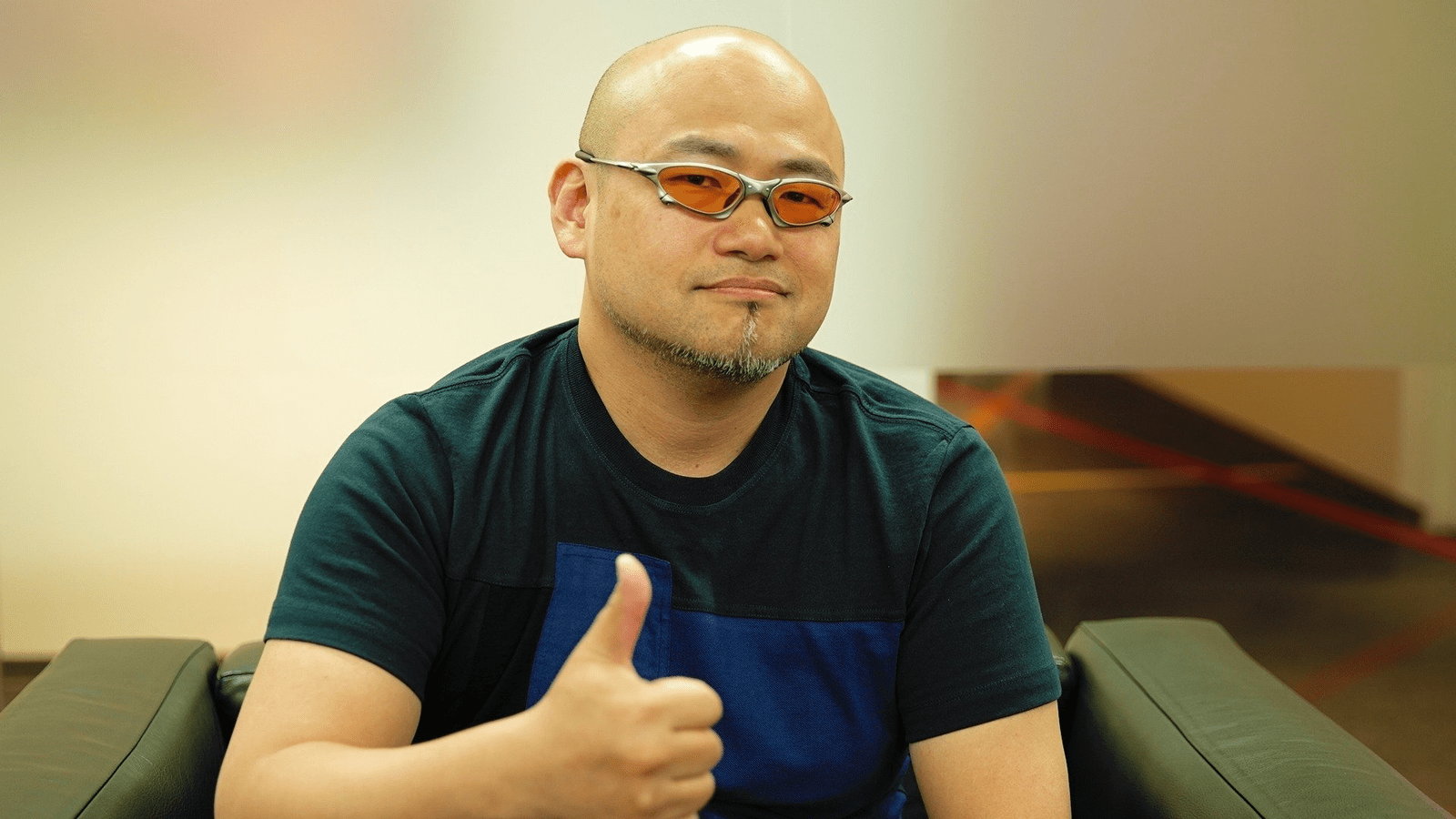
We have a pretty familiar internet problem: a creator makes something people love, the creator becomes “public,” and suddenly the comment section turns into a crowded train at rush hour. Most folks are fine, some are overly excited, and a few decide the rules of basic human decency are optional. In a recent conversation tied to CLOVERS’ Cafe Four Leaf, Yoko Taro shared why he thinks Hideki Kamiya’s notorious habit of blocking and firing back at rude messages is not just funny, but genuinely reassuring for other developers. Taro’s point is simple: when you’re a game creator, you can’t always respond at full volume, even when someone is acting absurd, because the audience includes customers. Kamiya, on the other hand, does respond, sometimes bluntly, sometimes with a joke, and sometimes with the kind of line that makes bystanders spit out their drink. That contrast matters because it changes expectations. If people believe creators will always sit quietly and absorb whatever gets thrown at them, the throwing never stops. If people know there’s a line and that crossing it can get you blocked or called out, the atmosphere can shift. Kamiya also chimed in with a “punching bag” analogy that captures why pushback can feel shocking to the loudest hecklers. We also touch on a key nuance: according to the people around him, Kamiya’s online persona is not how he behaves at work or in private. The bigger takeaway is not “be mean online.” It’s that boundaries, clearly enforced, can protect creators and improve the space for everyone who actually wants a normal conversation.
Hideki Kamiya’s behavior is a good thing?
The moment didn’t come out of nowhere. It landed because it touches a nerve that a lot of players and creators recognize instantly: the weird expectation that public-facing developers should be endlessly polite, endlessly available, and endlessly grateful, even when someone is behaving like a menace. This particular discussion surfaced around a CLOVERS video series called Cafe Four Leaf, where developers chat in a relaxed, talk-show style setting. Yoko Taro, known for creating the NieR series and for having a public persona that mixes sincerity with mischief, spoke about what it’s like to be a creator who also has to exist online. The point wasn’t that all fans are bad. It was the opposite: most people are normal, but a small percentage can be relentless and out of line, and that small percentage can dominate the mood. When that happens, the question becomes less about being nice and more about survival. Do you absorb it, ignore it, or push back? This is where Hideki Kamiya enters the chat, loudly, with the kind of energy that makes the internet either cheer or clutch its pearls.
Cafe Four Leaf and what was actually said
In the Cafe Four Leaf conversation, Yoko Taro described a situation that many developers face: as soon as you’re visible, you attract attention from everyone, including people who say things that are absurd or openly disrespectful. He framed it as a trap. These people are also part of your audience, and that means creators often feel they can’t respond honestly, even when the message deserves a firm “no.” Taro then contrasted that restraint with Kamiya’s reputation for snapping back and blocking people quickly, including with a line that has basically become a calling card: “Go away, you insect!” delivered with laughter, as something both blunt and theatrical. Taro’s argument was not “everyone should do this exact thing.” His argument was that it’s reassuring to have peers in the industry who prove creators don’t have to be passive targets. Kamiya agreed and added his own framing: some people assume developers will just sit there and take hits, so they’re stunned when a developer hits back. That exchange is the heart of the story, and it’s why people keep repeating it.
Why public-facing creators attract “real weirdos”
If you’ve ever posted something online that got traction, you already know the math is unfair. The bigger the audience, the more likely you are to run into someone who treats a reply button like it’s a stress ball. Game creators get an extra layer of this because games can become part of someone’s identity. When a player says “this saved me during a rough year,” that’s heartfelt, and it’s real. But when someone else says “you owe me answers, you owe me updates, you owe me the exact decision I want,” that’s entitlement wearing a fandom mask. Taro’s wording about “real weirdos” hits because it’s blunt, but it also describes something creators often tiptoe around. There are messages that are not criticism, not feedback, not even disappointment. They’re boundary-testing. They’re attempts to provoke a reaction, to extract attention, or to turn a developer into a punching bag for a bad day. And once you notice that pattern, it’s hard to unsee it. It’s like spotting one mosquito in your room at night – you start listening for the buzz everywhere.
The customer dilemma: why many creators hold back
Taro’s point about customers matters because it explains why so many developers speak carefully, even when they’re furious. In many industries, if someone is rude, you can shut the conversation down and move on. In games, the relationship is messier. Players buy the work, talk about it, stream it, mod it, critique it, and sometimes treat it like a personal relationship. That creates pressure to be endlessly polite, because anything sharper can be framed as “unprofessional” or “ungrateful,” even when it’s a response to harassment. Taro basically described a situation where creators feel forced to swallow their real reaction, because the audience is also the market. That’s not a small thing. It shapes how studios communicate, how individuals use social platforms, and how quickly a conversation can spiral into outrage. Even when a creator is right, being right can still be costly online. This is why Kamiya stands out: he refuses to play the silent target, and that refusal has ripple effects.
The “Go away, you insect!” approach and what it signals
Let’s be honest, “Go away, you insect!” is not a corporate press release line. That’s the point. It’s theatrical, it’s sharp, and it draws a bright boundary in a way that polite language often fails to do. Taro’s framing is that this kind of pushback can be healthy because it changes what people think they can get away with. In real life, if you harass someone in public, you might get called out, and the embarrassment alone can stop you. Online, the usual punishment is… nothing. A block, however, is a consequence that actually works, because it cuts off the attention supply. And a blunt reply, used sparingly, can signal that the creator is a person, not a customer-service kiosk. The important nuance is that Taro wasn’t praising cruelty. He was praising the existence of a creator who will not quietly accept being treated badly. It’s like having a “beware of dog” sign on a fence. The goal isn’t to bite everyone walking by. The goal is to stop the one person who thinks jumping the fence is a fun hobby.
Boundaries as a tool, not a tantrum
It’s easy for onlookers to reduce this conversation into a simple debate: “Is Kamiya rude or funny?” That framing misses what boundaries are actually doing. Boundaries are not about winning arguments. They’re about protecting your ability to keep working, keep living, and keep enjoying your own life without your mentions turning into a daily punishment. Taro’s comments land because they imply something many creators don’t say publicly: the polite, diplomatic approach can sometimes train bad behavior. If someone learns they can spam, insult, and demand, and the worst outcome is being ignored, they keep going. If someone learns they can do that and get blocked instantly, the behavior often stops, at least toward that person. The healthiest online spaces are not the ones where nobody ever gets blocked. They’re the ones where expectations are clear. If you’re respectful, you can talk. If you’re not, the door closes. That isn’t a tantrum. It’s a bouncer at the club, and frankly, some comment sections need one.
Blocking, muting, and the psychology of attention
Harassment thrives on attention the way fire thrives on oxygen. Remove the oxygen, and the flames die down. That’s why tools like muting and blocking are more than “personal preference.” They are safety features, even when the situation isn’t physically dangerous. When a developer blocks someone, it’s not always about punishment. Often it’s about reducing noise and protecting focus. And focus is not optional in game development. You can’t build worlds, systems, and stories while constantly swatting at strangers in your notifications. What makes Kamiya’s approach stand out is how visible it is. It’s not a quiet mute that nobody notices. It’s a public demonstration that the creator is willing to enforce a line. Some people will hate that. Others will find it refreshing, because it breaks the illusion that creators are obligated to absorb everything. The bigger point is that social platforms reward engagement, not quality. If you’re a creator, you have to decide whether you’re going to be trained by that reward system, or whether you’ll use the platform on your own terms.
The “punching bag” moment and why it resonated
Kamiya’s “punching bag” analogy hits because it describes a real dynamic. Some people behave online in ways they would never attempt face-to-face, because they assume there are no consequences. The “stunned when you suddenly punch them back” line is not a call for constant aggression. It’s a description of surprise: the surprise of someone who expected a one-way relationship, where the developer exists to be criticized, mocked, and demanded of, without ever responding as a person. That surprise is revealing. It shows how normalized the one-way expectation has become. The reason it resonated is because plenty of developers have experienced the same thing, even if they handle it differently. They get treated like a brand, not a human. They get spoken to like an object that should produce answers on demand. And when they respond with any edge at all, the reaction is often outrage, as if basic self-defense is a betrayal. Whether you personally love Kamiya’s style or not, the analogy explains why some creators feel pushed into taking a harder stance.
The split between online persona and real life workplace
One detail that keeps getting repeated is that Kamiya’s online behavior does not reflect how he behaves at work or in private. Taro and others around him have described him as very different in those settings, which matters because it undercuts the lazy assumption that “he’s like that all the time.” Online, people perform versions of themselves. Some perform “always polite.” Some perform “always funny.” Some perform “always sharp.” Kamiya’s public persona is clearly a heightened one, and it’s part of why his posts travel so far. The key takeaway here is not that everyone should create a dramatic persona. It’s that audiences shouldn’t confuse a platform performance with a full personality. If you’ve ever been the “different you” at a family dinner versus a work meeting, you already understand this. Online is another room, with different rules and different incentives. The problem is that the internet often pretends it’s the only room that matters. Taro’s comments push back on that. A creator can be kind in person and still be strict online. That combination can be a form of self-protection, not hypocrisy.
Where this fits in Japan’s wider “customer harassment” conversation
This discussion also connects to a broader issue in Japan that gets referred to as “customer harassment,” where service workers and public-facing staff can face abusive treatment under the logic that “the customer is always right.” In the gaming world, that mentality can bleed into expectations around developer behavior, especially when creators are visible on social platforms. Taro’s framing suggests that creators often feel trapped by that cultural pressure: the audience is paying attention, the audience can spend money, so the creator must be endlessly restrained. But if companies and creators start treating harassment as unacceptable rather than inevitable, the culture can shift. That doesn’t mean criticism disappears. It means the line between criticism and abuse becomes clearer. It also means creators can protect themselves without being painted as villains for having normal human limits. Kamiya’s style is one extreme example of boundary enforcement, but it highlights a problem that is not extreme at all. If the default assumption is “developers should endure anything,” then the system is broken. A healthier assumption is “developers can choose who gets access to them,” because access is not a human right. It’s a privilege.
What fans can take from it without turning it into a team sport
Here’s where things get tricky, because the internet loves turning nuance into jerseys. One group will treat Kamiya as a hero who “says what everyone thinks.” Another group will treat him as proof that developers are “arrogant.” Neither reaction is particularly useful. The more useful takeaway is about expectations. We can want transparency and communication from creators, but we can’t demand it like we’re banging on a vending machine. We can dislike a decision in a game, but we can’t treat the person behind it as a punching bag. And we can recognize that creators have different tolerance levels and different strategies for staying sane online. Taro’s comments are interesting because they don’t ask everyone to copy Kamiya. They simply argue that it’s reassuring to know creators can push back, because it reminds the loudest hecklers that the relationship is not one-way. For regular fans, the practical question is simple: do you want a space where creators feel safe enough to speak, joke, and share, or do you want a space where they vanish because it’s not worth the stress? The answer should be obvious, but the timeline doesn’t always act like it.
Practical takeaways for healthier fan-creator spaces
If we want better interactions between players and creators, we need to stop pretending it’s all about “tone.” Tone matters, sure, but behavior matters more. The baseline should be respect, not because creators are above criticism, but because respect is the minimum price of admission for conversation. On the creator side, tools like boundaries, moderation, and selective engagement are not signs of weakness. They’re maintenance, like changing the oil so the engine doesn’t seize. On the fan side, it helps to remember that a developer doesn’t owe you a reply, even if you’re polite. A reply is a gift, not a transaction. If you want to ask a question, ask it clearly and accept “no answer” as a possible outcome. If you want to criticize, criticize the work without treating the person like a target. And if you see harassment, don’t feed it. Don’t quote-tweet it, don’t dogpile it, don’t turn it into entertainment. Starve it. The reason Taro’s comments hit is that they describe a reality people often ignore: creators are not punching bags, and the sooner everyone accepts that, the more normal the whole space becomes.
Conclusion
Yoko Taro’s defense of Hideki Kamiya isn’t really about whether you personally enjoy blunt comebacks. It’s about the reality that online spaces can turn hostile fast, and “just ignore it” is not a universal solution, especially when the harassment is constant. Taro described the creator’s dilemma clearly: you’re visible, you attract attention, and some of that attention is absurd or out of line, but you feel pressure to stay restrained because the audience includes customers. Kamiya represents the opposite approach, enforcing boundaries loudly and publicly, sometimes with humor, sometimes with sharpness, and that visibility can change expectations. Kamiya’s “punching bag” line also captures why pushback can feel shocking to people who assume creators will always take hits without responding. The nuance that matters is this: people close to Kamiya describe him as different in private and at work, which suggests the online persona is a deliberate mode, not a full personality. The healthiest takeaway is not “be rude.” It’s “set boundaries.” When boundaries are real, the loudest trolls lose leverage, creators keep their sanity, and everyone who actually wants a normal conversation gets a better space to exist in.
FAQs
- What did Yoko Taro actually praise about Hideki Kamiya’s online behavior?
- He praised the fact that Kamiya pushes back instead of silently absorbing rude or absurd messages, and he described that visible boundary-setting as reassuring for other developers.
- Did Yoko Taro say everyone should copy Kamiya’s approach?
- No. The point was that having someone in the industry who refuses to be treated like a passive target can change expectations, not that every developer should use the same tone.
- Why does the “customer” angle matter in this conversation?
- Taro highlighted that creators often feel they can’t respond honestly because the people speaking to them are also part of their audience, which creates pressure to stay restrained even when harassment happens.
- What did Kamiya mean by the “punching bag” comment?
- He meant some people assume developers will accept insults without reacting, and those people are shocked when a developer responds with pushback instead of silence.
- Is Kamiya’s online persona the same as how he behaves at work?
- According to comments repeated around the discussion, people who know him say he behaves differently in the workplace and in private, suggesting the online persona is a distinct mode rather than his full personality.
Sources
- “He’s a net-positive for the game industry.” Nier creator Yoko Taro on why Hideki Kamiya’s famous social media blocking sprees actually work in developers’ favor, AUTOMATON WEST, January 29, 2026
- Yoko Taro: Hideki Kamiya’s blocking sprees and snark are positive for game industry, My Nintendo News, January 30, 2026
- Hideki Kamiya’s Block-Happy, Take-No-Crappery Is “Super Reassuring”, Says Yoko Taro, Nintendo Life, January 30, 2026
- CLOVERS Launches Official YouTube Channel, CLOVERS, September 19, 2025
- Hideki Kamiya, Wikipedia, January 25, 2026
- Yoko Taro, Wikipedia, November 22, 2025