














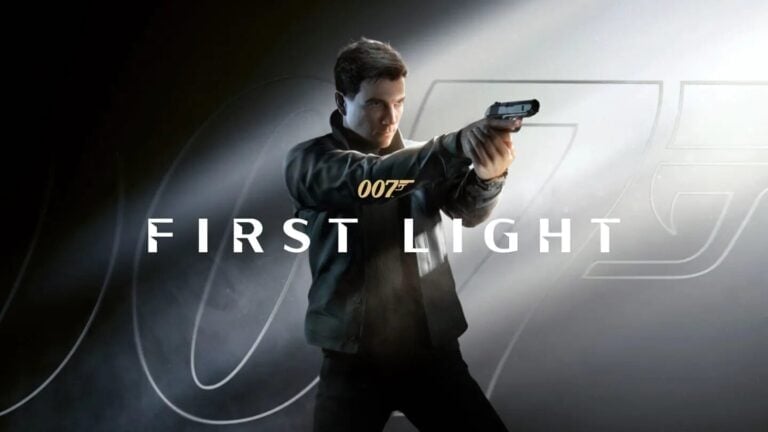
Summary:
007 First Light is officially moving back by two months. Instead of launching in late March 2026, IO Interactive now has the new James Bond game locked to May 27, 2026 across Switch 2 and the other announced platforms. The key detail is that this is not framed as a restart or a rethink – it’s framed as a finishing pass. IO Interactive says the game is already playable from beginning to end, but the team wants extra time to polish and refine the experience so it hits the quality bar players expect on day one. That wording matters because it points to late-stage work: smoothing performance, tightening mission flow, fixing edge-case bugs, improving AI behavior, and making sure big cinematic moments land without awkward hiccups.
We’re also seeing the studio talk about this project as its most ambitious effort so far, which is a polite way of saying there are a lot of moving parts that need to click at launch. When a game leans on globe-trotting set pieces, gadgets, stealth, action, and vehicle moments, the smallest rough edge can feel huge. Two months is enough time to turn “great idea” into “great execution,” especially when the base game is already complete and the goal is refinement. IO Interactive also signaled that more updates are coming in early 2026, so the delay doesn’t mean silence – it means a slightly longer runway before the final sprint.
What changed with the 007 First Light release date
IO Interactive has shifted 007 First Light from its previously planned March 27, 2026 date to May 27, 2026. That’s a clean two-month move, and the studio didn’t dress it up with vague calendar language or fuzzy “later this year” phrasing. We get a specific day, a specific month, and a simple explanation: the team wants more time to polish. From a player perspective, this is the difference between circling the end of March and circling the start of summer. If you were already planning time off, budgeting for new releases, or lining up co-op nights with friends for other games around it, this is the kind of change you actually feel in your schedule.
What’s also notable is the tone. The message is confident, not panicked. It frames the game as progressing well and emphasizes quality at launch, which is basically the studio saying, “We’d rather be slightly late than slightly messy.” Nobody loves delays, but in 2025 and 2026, players have gotten very good at spotting the difference between a delay that smells like trouble and a delay that looks like caution. This one lands firmly in the “caution” bucket based on how it’s described.
An important update regarding the release date of 007 First Light. pic.twitter.com/DLej5bLxun
— 007 First Light (@007GameIOI) December 23, 2025
The update in plain English
Here’s the simple translation of IO Interactive’s message: 007 First Light is in good shape, it’s playable end-to-end, and the team wants extra time to tighten everything up so launch day feels strong. That includes the unglamorous parts of game development – fixing bugs that only happen once every fifty playthroughs, tuning difficulty spikes, and making sure the “Bond fantasy” feels smooth instead of clunky. If you’ve ever worn a suit that fits almost perfectly, you know the feeling: it’s fine, but the moment you step into a room, you wish the shoulders were a touch cleaner. This delay is the tailoring appointment.
IO Interactive also points out its position as an independent developer and publisher. That matters because it explains why the studio can make a decision like this without sounding like it’s waiting for permission. It’s owning the schedule, owning the quality bar, and taking responsibility for the day-one experience. The message also sets expectations for what happens next: more updates are planned for early 2026, so the conversation should continue, just on a slightly adjusted timeline.
“Fully playable” and what that actually signals
When a studio says a game is “fully playable from beginning to end,” it’s telling us something very specific. It means the spine of the experience exists: missions connect, story beats trigger, core systems function, and you can finish the main path without hitting a wall. That doesn’t mean everything is perfect, and it definitely doesn’t mean the game is ready for millions of different play styles, weird controller setups, speedrunners, and people who will test every boundary like it’s their day job. But it does suggest the work ahead is refinement rather than reconstruction, which is a much better place to be this close to release.
It also hints at where the pressure is likely sitting. A Bond game isn’t just a checklist of features – it’s pacing, flair, and confidence. A stealth moment that feels a little slow, an action sequence that stutters for a second, or an AI behavior that breaks immersion can take the wind out of the fantasy. “Fully playable” says the fantasy is built. The delay says they want to make sure the fantasy never trips over its own shoelaces.
Polish time – the practical reasons teams ask for it
“Polish” is one of those words that sounds small until you’ve played a game that clearly needed it. Polish is the difference between a door that opens instantly and a door that makes you wait half a second while textures pop in. It’s the difference between a chase that feels thrilling and a chase that feels like the camera is fighting you. It’s also about consistency: if one mission feels brilliant and the next feels slightly off, players remember the wobble, not the highs. Two extra months can be used to sand down those wobbles so the whole experience feels like one confident, continuous ride.
It can also mean accessibility improvements, clearer tutorials, better checkpoint placement, tighter UI feedback, and smarter difficulty tuning. None of that is headline-grabbing, but all of it is the stuff people talk about after launch when they’re deciding whether a game feels premium or merely “pretty good.” If IO Interactive is calling this its most ambitious project, there’s a strong chance there are lots of systems interacting at once. Polish time is where those interactions get tested, retested, and made reliable.
What late-stage fixes usually look like
Late-stage fixes are rarely about adding brand-new pillars. They’re about stability, pacing, and removing friction. This is where performance targets get nailed down across platforms, streaming is tuned so big environments don’t hitch, and animation transitions get cleaned up so characters don’t move like they’re made of rubber bands. It’s also where QA finds “impossible” bugs that only happen when you reload a save after doing a side objective in the wrong order while wearing a specific outfit. Players do stuff like that constantly, so those bugs stop being impossible the second the game ships.
It’s also where studios tighten the feel of core actions: aiming response, stealth takedown prompts, detection timing, enemy awareness, and gadget usability. In a Bond experience, gadgets and spycraft need to feel slick, not fiddly. If you have to wrestle the controls to do something cool, it stops being cool. That’s why polish time matters. It’s not about making more game – it’s about making the same game feel sharper in your hands.
Why two months can matter more than it sounds
Two months can sound modest, but in production terms, it can be a focused sprint with clear priorities. The game is already end-to-end playable, so the team isn’t trying to build the house – they’re inspecting every room, checking every lock, and making sure the lights don’t flicker. That kind of work benefits from time because it’s iterative. You fix one thing, you test it, it affects another thing, you fix that, you test again. Rushing that loop is how you end up with a day-one patch that feels like a second launch.
There’s also the reality of day-one expectations. Players now expect a new release to be stable and smooth immediately, especially when it’s a high-profile licensed world with a reputation to protect. Bond isn’t an underdog IP where people shrug off rough edges as “charming.” Bond is the kind of name where every rough edge gets a spotlight shined on it. If IO Interactive wants launch day to feel like a clean tuxedo entrance instead of a frantic costume change backstage, those extra weeks are valuable. It’s a small delay that aims for a big payoff.
What we know about the Bond angle so far
007 First Light is positioned as a James Bond origin story, focusing on a younger Bond and the path that leads him into the spy world. That framing is interesting because it gives the game freedom. Instead of trying to recreate a specific movie beat-for-beat, it can build its own Bond identity while still hitting the essentials people expect: confidence, improvisation, danger, and style. Origin stories also let the gameplay grow alongside the character. You can start with a Bond who’s talented but still rough around the edges, then evolve toward the polished agent fantasy as the story progresses.
This approach also fits IO Interactive’s strengths. The studio has built a reputation on systems, infiltration, and letting players solve problems creatively. Bond as a character is at his best when he adapts – using charm in one moment, a gadget in the next, and a quick escape plan when everything goes sideways. If the game is aiming for that blend, the “fully playable” claim suggests the structure is in place, and the delay is about making the moment-to-moment experience feel as smooth as the concept sounds.
The promise – action, spycraft, gadgets, car chases
IO Interactive’s own description leans on classic Bond ingredients: action, globe-trotting, spycraft, gadgets, and car chases. That’s a big menu, and it’s also the kind of menu where everything needs to be cooked properly or the whole meal feels off. If stealth and spycraft are great but action feels floaty, players will notice. If gadgets are cool but clumsy to use, players will stop using them. If car chases look cinematic but control poorly, they’ll become the part everyone dreads instead of the part everyone replays.
This is exactly why polish time is believable here. A project that mixes stealth, action, and vehicles across different locations tends to have lots of edge cases. The camera needs to behave in tight interiors and wide outdoor spaces. The animation system needs to handle careful creeping and frantic sprinting. The pacing needs to shift from quiet infiltration to loud chaos without feeling like two different games stitched together. If the team wants an “unforgettable” Bond experience, those transitions need to feel effortless. Extra time helps make that happen.
Switch 2 expectations and what to keep in mind
Switch 2 being part of the platform lineup means a lot of eyes will be on performance and parity. Players don’t just want the game to run – they want it to feel like the same experience. That can be challenging for any multi-platform release, especially when the game is aiming for spectacle alongside stealth systems. The good news is that a two-month delay for polishing suggests the team is giving itself breathing room to make sure the launch build meets its day-one standards everywhere, not just on one platform.
For Switch 2 specifically, it’s smart to keep expectations grounded in what the studio has actually promised: a May 27, 2026 release date and extra time to refine. That refinement can include performance tuning, stability work, and ensuring controls feel responsive whether you’re playing handheld or docked. If you’re the kind of player who worries about stutter during big set pieces, this kind of delay is often a positive sign. Nobody wants to be the platform where the jokes start, and studios know that. The delay reads like an effort to make sure the jokes never materialize.
Planning your wait without losing the hype
Delays mess with momentum, but they also give you something rare: time you didn’t know you had. If you were already stacking your 2026 calendar with releases, that extra gap can turn into breathing space for finishing whatever you’re halfway through right now. It can also be a chance to reset expectations. Instead of treating May 27 as “finally,” treat it as the actual plan. That mental switch matters because it keeps the wait from feeling like a punishment. You’re not stuck in traffic – you’re just taking a slightly later train that’s less likely to break down.
It’s also a good moment to decide what kind of Bond experience you want to have. Do you want to go in spoiler-free and discover everything fresh? Or do you want to watch the next wave of official updates and get a better sense of gameplay style first? There’s no wrong answer, but deciding early helps. The worst feeling is arriving at launch day already tired of the game because you’ve watched every clip ten times. Hype is like cologne – a little goes a long way, and too much can ruin the vibe.
How to follow updates in early 2026 without spoilers
IO Interactive has said more updates are coming in early 2026, which likely means new trailers, details, and possibly gameplay segments. If you want to stay informed without getting the story spoiled, focus on official summaries and high-level feature callouts. Watch for things like platform performance notes, control options, accessibility features, and general gameplay structure rather than story-heavy trailers. If a video looks like it’s leaning into narrative reveals, save it for later. Launch week is more fun when surprises still exist.
Another tactic is to follow only primary channels and ignore the “frame-by-frame” crowd. The internet has people who can turn a two-second clip into a thesis, and they will do it with a grin. If you prefer discovery, keep it simple: read the headline-level announcements, note the key dates, and move on. Then when May 27 arrives, you’ll be walking into the experience with curiosity intact. That’s the best kind of fuel for a spy adventure – curiosity, not exhaustion.
What this says about IO Interactive’s approach as publisher
IO Interactive calling out its role as both developer and publisher is more than a throwaway line. It signals ownership. The studio is essentially saying it’s willing to take the short-term hit of disappointing people now to protect the long-term reception later. That’s the kind of decision that can be harder when multiple layers of publishing approvals are involved. Here, the message implies a direct line between the team’s assessment and the final call, which often results in clearer communication and more realistic targets.
It also suggests confidence in the product’s foundation. Studios that are genuinely in trouble tend to avoid specifics or hide behind vague language. Here we have a specific date, a clear rationale, and an emphasis on a playable build. If IO Interactive wants 007 First Light to land as a major statement project, this delay reads like the studio choosing quality control over calendar pride. In a world where players remember launches forever, that’s not just sensible – it’s strategic in the most player-friendly way possible.
Conclusion
007 First Light is now set for May 27, 2026, moving two months from its original March 27 target. IO Interactive’s reasoning is straightforward: the game is playable end-to-end, and the extra time is for polish and refinement so launch day meets the quality bar players expect. That’s the kind of delay that usually pays off because it focuses on the details that shape real enjoyment – stability, pacing, responsiveness, and consistency across platforms, including Switch 2. The best way to handle the wait is to treat the new date as the plan, keep hype at a healthy level, and watch for official updates in early 2026 without drowning in spoilers. If the goal is a Bond experience that feels slick in your hands and confident on day one, a two-month tailoring session is a pretty reasonable ask.
FAQs
- What is the new release date for 007 First Light?
- 007 First Light is now scheduled to launch on May 27, 2026.
- What was the original release date before the delay?
- The game had been planned for March 27, 2026 before being moved by two months.
- Why did IO Interactive delay the game?
- IO Interactive said the game is fully playable from beginning to end, but the team wants additional time to polish and refine the experience for day-one quality.
- Does the delay suggest development problems?
- The studio described development as progressing well and framed the delay as extra polish time rather than a restart or major change in direction.
- When should we expect more official updates?
- IO Interactive said it plans to share more updates about 007 First Light in early 2026.
Sources
- 007 First Light Release Date Delayed To May 2026, Game Informer, Dec 23, 2025
- 007 First Light’s release date gets shaken up, The Verge, Dec 23, 2025
- 007 First Light, IO Interactive’s James Bond game, is delayed ‘to ensure the experience meets the level of quality you players deserve on day one’, PC Gamer, Dec 23, 2025
- 007 First Light delayed to May 27, 2026, Gematsu, Dec 23, 2025
- 007: First Light has officially been delayed, with the next James Bond adventure now targeting a May 2026 release window, Windows Central, Dec 23, 2025