














Summary:
Not too long ago, Animal Crossing: New Horizons got a real shot of energy with a major 3.0 update, and it lands in the exact places many of us have been grumbling about for years. Decorating is smoother, routines feel less fiddly, and the island loop is easier to enjoy in longer sessions without constantly stopping to juggle materials. The headline quality-of-life shift is simple but huge: we can craft using materials stored away, instead of stuffing pockets with wood and iron like we’re preparing for a weeklong camping trip. Add bulk crafting on top, and suddenly the game stops fighting us during the moments that are supposed to feel calm and creative.
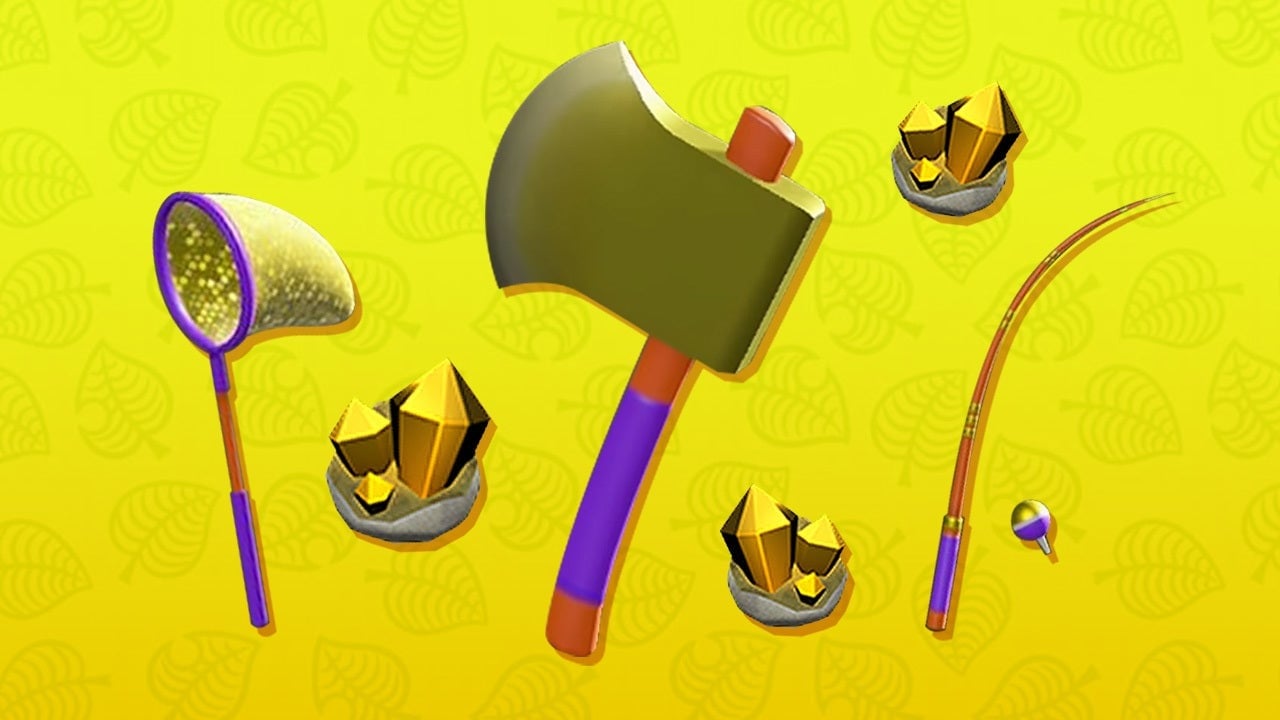
But there’s still one thorn that pokes through the comfy blanket every single time we play: tool durability. It’s the kind of system that makes sense on paper, then quietly drains the joy out of daily chores in practice. And nowhere is that mismatch louder than with golden tools. These aren’t casual upgrades. They’re long-haul milestones tied to big goals – things like catching every bug, catching every fish, maintaining a five-star island, breaking piles of axes, or helping Gulliver over and over until you feel like you should start charging him rent. Then we finally craft the reward using a gold nugget, and the game still treats it like a disposable utensil. That moment when a golden net snaps is the opposite of satisfying. It feels like the game is shrugging at our effort.
So let’s talk about why golden tools breaking doesn’t just feel annoying, it actively breaks the reward loop. And let’s also be fair: unbreakable gold tools raise balance questions, especially around trading and boosting new players. The good news is that none of this is unsolvable. With smart rules, optional settings, or a repair path that respects the grind, Nintendo could keep the spirit of durability while letting golden tools finally mean what they look like – lasting rewards that make the island life feel lighter, not heavier.
Animal Crossing: New Horizons: what the 3.0 update changes
The 3.0 update is the kind of return that makes the island feel busy in a good way again. We’re not talking about tiny tweaks you only notice if you squint – this update adds new activities and big-ticket features, including a resort hotel and other additions that make the world feel less “done” once you’ve terraformed everything into your dream layout. It also leans into fun crossover energy with new Nintendo-themed items, which scratches that collector itch without forcing anyone to play a certain way. Most importantly, it patches the day-to-day friction that used to interrupt creative flow. When we’re decorating, planning paths, or rearranging furniture, the game now feels more like a tidy workshop and less like a messy garage where we can never find the screwdriver. The overall vibe is clear: Nintendo wants us back on the island, not just visiting out of guilt because we haven’t checked on our villagers in months.
Crafting finally respects your time
Crafting has always been one of those “good idea, rough edges” systems in New Horizons. Early on, it’s charming to make a flimsy net from a few sticks, like we’re starring in the gentlest survival show ever created. But later, crafting becomes a constant interruption. We’re trying to decorate, we run out of fences, we craft more, we realize the wood is in storage, we walk to storage, we forget what we needed, we walk back, we get distracted by a balloon, and suddenly it’s been twenty minutes and the beach still looks like a half-finished DIY project. The 3.0 update takes a big chunk of that annoyance and tosses it into the sea. The result is that creativity lasts longer per session. We stay in the zone. And in a game built around calm momentum, staying in the zone is everything.
Crafting from storage anywhere on the island
Being able to craft using materials from storage is one of those changes that instantly rewires how the game feels. Instead of treating our pockets like a moving van, the island finally behaves like a place we actually live in. We can gather resources naturally, stash them away, and still craft when inspiration hits. It also makes big decorating projects realistic without turning them into inventory management puzzles. Want to build a shopping street? Great – we don’t need to carry stacks of hardwood like we’re training for a lumberjack competition. Want to craft a batch of items for a themed room? We can do it without running laps between a workbench and storage sheds. This one change makes the island feel more modern, more flexible, and honestly more respectful of how players actually play when they’re deep into customization.
Bulk crafting and the new decorating rhythm
Bulk crafting pairs perfectly with storage-based crafting because it fixes the second half of the problem: repetition. Even if materials are available, crafting the same item over and over can feel like being stuck in a polite little assembly line. Bulk crafting lets us keep momentum when we’re building fences, cooking items, or producing a bunch of decor pieces for a big redesign. It also helps with those “I only need a few more” moments that used to drag, especially when the island is mid-makeover and everything looks worse before it looks better. Bulk crafting turns tedious stretches into quick pit stops. And when we stack that with easier access to storage, the entire decorating loop becomes smoother. It’s like Nintendo finally oiled the squeaky hinge that’s been annoying everyone since launch, and suddenly the door opens without a complaint.
Tool durability: the relaxation tax that never went away
Now we get to the part that still makes people groan: tool durability. Tools breaking isn’t new in games, and it can even be satisfying when it pushes meaningful choices. The problem is that New Horizons isn’t really about hard choices. It’s about gentle routines, creativity, and the slow-building pride of shaping a space. Durability interrupts that flow constantly, especially when we’re doing chores that are already repetitive: chopping wood, hitting rocks, digging up flowers, or fishing for that one last shadow that refuses to show up. The annoyance isn’t just “tools break.” It’s the stop-start rhythm it forces on everything. Even with improved crafting, durability still feels like a little toll booth on the road to fun. Pay the toll, keep driving, pay again, keep driving. After years with the game, that toll booth doesn’t feel like design anymore – it feels like habit that never got questioned.
Why durability feels worse in a cozy routine
Durability hits differently in a game that’s supposed to feel like a warm drink. In action games, breakage can be tension. In New Horizons, it’s mostly friction. When our shovel breaks mid-project, we’re not thinking, “Ah, interesting survival pressure.” We’re thinking, “Really? Now?” The cozy loop depends on uninterrupted focus. We plan, we place, we adjust, we step back, we tweak again. Tool breakage yanks us out of that headspace. It also punishes the exact players who engage most deeply with the game’s long-term systems, because heavy decorators and routine players use tools far more than someone who logs in once a week. The funniest part is that durability is less noticeable early on, when the island is small and goals are simple. Later, when we’ve earned the right to have smoother play, durability stays stubbornly loud.
Golden tools: the promise versus the reality
Golden tools are framed like endgame rewards. They look special, they’re tied to hard goals, and they carry that classic “you made it” shine that older Animal Crossing games treated as a true upgrade. In New Horizons, they are better tools in a few ways, and they do last longer than basic versions. But they still break, and that single detail changes how we value them. Instead of being a proud milestone, a golden tool can feel like an expensive rental. We craft it, enjoy it, and then wait for the moment it snaps, because we know it will. That knowledge makes the reward feel smaller. Worse, it makes the grind behind the reward feel less meaningful, because the game never lets us settle into that “permanent improvement” feeling. And for a game built on long-term investment, permanent improvements are the emotional payoff.
What it takes to unlock each golden recipe
Unlocking golden tools isn’t a casual weekend task. Some recipes are tied to huge checklists, like catching every fish or every bug, which can take months depending on seasons and play habits. Others are tied to long-term milestones, like achieving a five-star island rating. The golden axe asks for raw repetition – breaking a large number of axes – which is time-consuming even if we min-max it. Then there’s the golden slingshot, which depends on the right kind of balloon appearing. And after all that, crafting a golden tool still costs a gold nugget alongside the base tool. Gold nuggets are not something we casually farm in bulk without effort, and that matters because it makes every eventual break feel like losing something valuable, not just losing time. The end result is a reward that asks for patience, dedication, and rare resources – then behaves like a normal tool with a fancy coat of paint.
The golden shovel problem and the Gulliver lottery
The golden shovel is where the frustration really concentrates, because the requirement is both long and inconsistent. Helping Gulliver repeatedly means waiting for him to show up, then doing the same recovery task again and again across many separate days. It’s not hard in the skill sense, but it’s demanding in the calendar sense. It asks us to keep a steady routine over a long stretch, and that’s exactly the kind of commitment that a “forever tool” should reward. The sting comes from the randomness around visits and the feeling that progress is locked behind time gates rather than mastery. When we finally earn the recipe, it feels like we’ve completed a marathon that nobody else can see. So when the tool breaks anyway, it’s like getting a participation medal after running the full distance. Technically, yes, it’s something – emotionally, it lands flat.
Gold nuggets as a “premium fee” that doesn’t feel premium
Gold nuggets are positioned like special crafting currency, and that’s fine when they buy something that feels lasting or meaningful. But when a golden tool breaks, the gold nugget stops feeling like a crafting ingredient and starts feeling like a fee. We’re paying extra to keep using something we already earned, and that makes the whole system feel backwards. Imagine buying a fancy fountain pen that writes beautifully, but it shatters every few pages and demands a rare gem to replace it. That’s not luxury, that’s stress with sparkle. The rare material should amplify the reward, not amplify the resentment when it’s gone. The weirdest part is that by the time we’re crafting golden nets and rods, we’ve already proven we’re committed players. We’re not being taught the loop anymore. We’re just being taxed by it.
Why golden tools breaking undercuts the whole reward loop
Rewards work when they change how we feel while playing. Golden tools should make the island feel easier, smoother, and more “ours,” because we’ve put in the time. Instead, breakable golden tools keep us in the same mental space as early-game tools: always watching, always anticipating the next snap, always keeping backup materials ready. That’s not an upgrade in feeling, it’s an upgrade in anxiety. And it’s especially strange because several golden tool unlock conditions are already “completion style” goals. If we caught every fish and every bug, we’re not in need of extra friction to extend playtime. We already did the big journey. At that point, the reward should be a victory lap, not another treadmill. Unbreakable golden tools would also create a clean, satisfying long-term goal for new players: reach the endgame, and island life becomes lighter. Right now, the reward is mostly bragging rights and slightly improved performance, but the emotional payoff is muted by inevitability.
The sharing and balance argument – and why it’s not a dealbreaker
The main pushback against unbreakable golden tools is easy to predict: trading. If golden tools never break, veteran players could craft them and hand them to friends who haven’t earned the recipes, giving them a big boost. That’s a real concern, especially because golden tools can have advantages beyond durability, and gifting endgame perks can mess with progression. But New Horizons already thrives on generosity. Players share fruit, bells, DIY recipes, furniture sets, and rare items constantly. The game is practically built on “come visit, I’ll help you out.” The better question is whether unbreakable golden tools would actually harm the experience, or just speed up chores for players who were going to keep playing anyway. Plus, this is solvable with design rules. Nintendo could make unbreakable durability apply only to tools crafted by the player who owns the recipe, or make gifted golden tools revert to normal durability. There are plenty of ways to protect progression without punishing the people who did the work.
Better fixes than endless breakage
If Nintendo doesn’t want fully unbreakable golden tools, there are still smarter paths than the current setup. The biggest improvement would be transparency. Let us see durability clearly, so breakage doesn’t feel like a surprise party nobody asked for. Another improvement is repair. Instead of recrafting the whole tool with a gold nugget, let us repair golden tools using a cheaper material, or let gold nuggets restore durability fully. That keeps gold meaningful without making it feel wasteful. Another option is a late-game upgrade system where we “master” a tool line, turning breakable golden tools into permanent ones after additional milestones. That turns durability into a progression ladder, not an endless loop. The point isn’t to remove all friction. The point is to align friction with meaning. Right now, golden tool breakage feels like friction for friction’s sake, and the 3.0 update shows Nintendo is willing to smooth old pain points when the community has been loud enough.
Repair options, durability visibility, and smart upgrades
A repair kit system would fit New Horizons beautifully because it matches the DIY theme without repeating the same crafting animation a hundred times. We could craft repair kits in batches, store them, and apply them when needed, which keeps momentum during big island projects. Durability visibility could be as simple as an optional meter in the tool ring – nothing intrusive, just a clear “heads up” before the snap. And smart upgrades could reward the same kind of long-term play that golden tools already demand. For example, once we earn a golden tool recipe, we could unlock a final “gilded” upgrade that costs a few gold nuggets once and makes the tool permanent. That’s a clean trade: pay a premium one time, then enjoy the reward forever. It keeps gold rare, keeps goals meaningful, and stops the system from stepping on the player’s toes every time they’re finally relaxing.
What we can do right now to reduce the pain
Even without changes, we can soften the durability sting with a few practical habits. Stockpiling base tools helps, because recrafting a golden tool requires the standard version anyway. Keeping a dedicated materials stash for frequent crafting items makes it less annoying when things break mid-project, especially now that storage-based crafting is in play. For golden tools specifically, it’s worth asking what we actually use them for. If we’re done catching everything, do we really need to swing a golden net daily? Sometimes the best move is to treat golden tools like “special occasion” items and use regular tools for routine chores. It’s not satisfying, but it’s realistic. We can also lean into purchasing better tools where possible, reserving gold nuggets for projects that feel more permanent, like certain high-value crafts. Basically, until the system changes, the goal is to keep island life smooth and stop golden tools from turning into emotional traps.
What Nintendo could change without breaking the game
Nintendo doesn’t need to rip out durability entirely to fix the golden tool problem. The simplest change is the most obvious: golden tools become unbreakable. That’s it. That single switch would make golden tools feel like true endgame rewards and would instantly create a satisfying “finish line” for long-term goals. If Nintendo wants to protect progression, it can apply smart restrictions to traded tools, or require that unbreakable status is tied to the player profile that earned the recipe. Another safe approach is making golden tools effectively permanent by pushing durability so high that breakage is rare enough to be a non-issue for most players. But honestly, rare breakage still keeps the anxiety alive. The 3.0 update proves Nintendo understands how small friction points can shape the mood of the whole experience. Fixing golden tools would do the same. It would turn a long-running complaint into a long-running victory, and it would make the island feel like a place we’ve truly mastered, not a place that still demands we babysit our tool ring forever.
Conclusion
The 3.0 update does a lot to make New Horizons feel smoother and more inviting again, especially for decorators and routine players who spend hours shaping the island into something personal. Crafting from storage and bulk crafting are the kind of changes that make us wonder how we ever lived without them, and they bring the game closer to the relaxed, creative vibe it always wanted. But tool durability, and especially breakable golden tools, still clashes with that vibe. Golden tools ask for long-term commitment, rare resources, and serious milestones, then they respond with the same disposable behavior as early-game gear. That mismatch turns a proud reward into a recurring annoyance. Whether the solution is unbreakable golden tools, repair systems, clearer durability visibility, or a final mastery upgrade, the end goal is the same: let big achievements feel big. If we’ve already put in the months of effort, the game should let us enjoy the payoff without waiting for the next snap.
FAQs
- Do golden tools break in Animal Crossing: New Horizons?
- Yes. In New Horizons, golden tools have durability and can break, even though they generally last longer than standard versions.
- Why do golden tools feel frustrating compared to normal tools?
- Because they take major milestones and rare materials to earn and craft, so when they break, it feels like losing a hard-won reward instead of just replacing a basic tool.
- What makes the golden shovel recipe take so long?
- It requires helping Gulliver 30 times on different days, which can take a long stretch of regular play because his appearances are not something you can fully control.
- Would unbreakable golden tools ruin balance for new players?
- It could speed up progression if veterans hand them out, but Nintendo could limit unbreakable status to players who earned the recipes, or reduce durability for gifted tools to protect progression.
- What is the biggest quality-of-life change in the 3.0 update for crafting?
- Crafting with materials pulled from storage and bulk crafting both reduce interruptions, making decorating and building projects feel much smoother.
Sources
- New Horizons – Free update version 3.0, Nintendo, January 2026
- Out now! Welcome back to the island with updates for both Nintendo Switch and Nintendo Switch 2, Nintendo, January 15, 2026
- Animal Crossing: New Horizons – Nintendo Switch 2 Edition Upgrade Pack, Nintendo, January 2026
- Animal Crossing: New Horizons is getting a big Switch 2 upgrade in January, The Verge, October 2025
- Golden tool, Nookipedia, March 7, 2025
- Animal Crossing: New Horizons – Golden Tools (How To Get…), Nintendo Life, March 31, 2020