














Summary:
Eiji Aonuma’s latest comments land with that familiar Zelda mix of calm confidence and mischievous teasing. In a 4Gamer interview, he admits Nintendo wanted to be the first team to ship a fresh Zelda title on Nintendo Switch 2, but Koei Tecmo’s Hyrule Warriors: Age of Imprisonment ended up taking that “first” spot. Instead of sounding bitter, he laughs it off, then pivots to the part that really makes fans lean closer to the screen: the collaboration itself may be reflected in the Zelda Nintendo creates next.
That wording matters. We are not hearing a promise that the next mainline adventure will suddenly become a Warriors-style game. What we are hearing is that working side by side with Koei Tecmo, sharing story notes, and building a big Zelda experience together can spark new approaches. Sometimes that spark is about workflow and tools. Sometimes it’s about how battles communicate information, how characters move through space, or how a story moment hits harder because the pacing is sharper. Age of Imprisonment also gives Switch 2 owners something immediate: a new release set in the Imprisoning War era, with big battles, familiar faces, and a chance to look at Zelda’s past through a slightly different lens. If we play with our eyes open, we can enjoy what’s in front of us while also noticing the kinds of ideas Nintendo might want to carry forward into the next true Zelda adventure.
What Aonuma said about being first on Switch 2
Aonuma’s quote is refreshingly human: he says Age of Imprisonment is the first Zelda title released for Nintendo Switch 2, and admits Nintendo wanted to be the first to do it themselves, then laughs. That laugh does a lot of work. It tells us we’re not looking at corporate panic or a messy handoff, but more like a friendly rivalry inside the broader Zelda family. We can picture it like showing up to a party with the perfect dessert, only to find your friend already brought something amazing. Annoying for about three seconds, and then you just start eating.
More importantly, he doesn’t stop at the “we wanted to be first” line. He adds that the inspiration gained from collaborating with Koei Tecmo may be reflected in the Zelda Nintendo creates, and asks fans to imagine that while playing Age of Imprisonment. That’s the headline within the headline. It’s Aonuma saying: enjoy this, and also pay attention, because the process behind it may have nudged the next adventure in a real way.
Why Hyrule Warriors got there first
On paper, it can sound strange that a spin-off beats a mainline Zelda team to the first Switch 2 release. In practice, it makes plenty of sense. A platform transition is a juggling act: new hardware, new tools, new performance targets, and new expectations from players who want to see what the system can really do. A Warriors-style release can be a strong early signal for action, scale, and spectacle, especially when the development is led by a partner experienced in that specific kind of battlefield chaos.
We should also remember that “first” is a calendar trophy, not a quality trophy. Being first doesn’t automatically mean being the most important release on the system, and it definitely doesn’t mean something else is delayed or troubled. Sometimes it simply means one project’s scope and schedule aligned better with the launch window. If anything, Aonuma’s tone suggests Nintendo sees this as a win for the Zelda brand on Switch 2, even if it wasn’t the exact win they originally pictured.
How Nintendo schedules big releases
When we talk about Nintendo scheduling, it helps to think of it less like a single timeline and more like multiple lanes of traffic merging into one highway. A big Zelda release has enormous weight: it needs polish, stability, and that particular Nintendo “this feels inevitable” finish. A collaboration project, especially one built around an established action format, can sometimes move through production differently. Different teams, different pipelines, different problem sets. That doesn’t make it easier, it just makes it distinct.
We can also see how Nintendo treats messaging around timing. Aonuma isn’t hinting at a specific date for the next mainline game. He’s doing something more measured: framing the collaboration as a creative exchange and inviting fans to be excited without locking anyone into a promise. That’s classic Nintendo energy. We get a clear nudge toward the future, and just enough restraint to keep expectations from turning into a countdown clock taped to the wall.
What “first” really means to a platform launch
“First” can mean a lot of things, and Aonuma’s comment sits right at the intersection of marketing, pride, and player perception. For a new system, the first entry in a beloved franchise is like the first flag planted on a mountain. It signals that the franchise is present, alive, and ready to define the era. Nintendo likely wanted the first Switch 2 Zelda-branded release to feel unmistakably “Nintendo Zelda team,” because that’s the gold standard many fans associate with the series.
But “first” also has a quieter meaning: it’s the first chance to learn from real players on real hardware at real scale. Launch windows are full of surprises, even when everything is tested. Having Age of Imprisonment arrive early gives Nintendo more real-world feedback around Switch 2 expectations for performance, readability, and pacing in a Zelda-flavored package. That’s not a replacement for a mainline release, but it can be useful wind in the sails.
What Hyrule Warriors: Age of Imprisonment covers
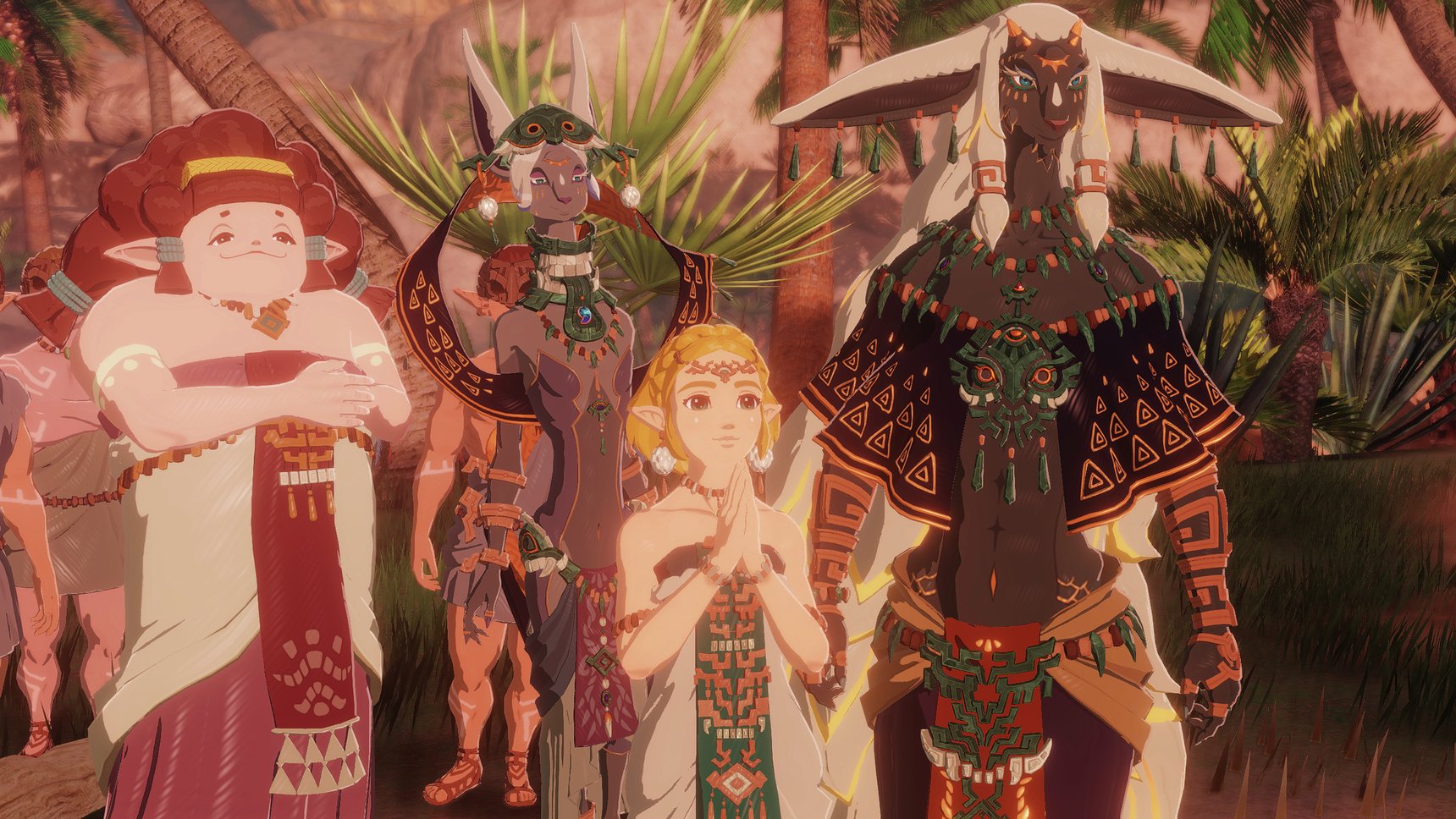
Age of Imprisonment is positioned around the Imprisoning War era connected to The Legend of Zelda: Tears of the Kingdom, letting players experience major battles and key figures tied to ancient Hyrule. On Nintendo’s own game pages, we see it framed as fighting hordes of enemies during the Imprisoning War, with Princess Zelda, King Rauru, and other characters in the spotlight. That alone sets the tone: it’s story-heavy by Warriors standards, but still built for action, momentum, and big moments.
And yes, it’s already out in the world. Nintendo lists a Switch 2 release date of 06/11/2025 in the UK, and Nintendo’s regional news has talked about it being available on Switch 2 in early November 2025. That timing matters because it explains why people are talking about “first” in such a specific way. It isn’t a vague someday. It’s a concrete release that now sits at the start of Switch 2’s Zelda timeline.
What the Koei Tecmo partnership brings to Zelda
Koei Tecmo is known for large-scale action systems that keep you moving, hitting, dodging, and managing crowds without losing the thread of what you’re supposed to be doing. That’s a skill, and it’s not automatically the same skill required for a mainline Zelda, where exploration, discovery, and puzzle logic are often just as important as combat. Still, collaboration can be like borrowing a neighbor’s fancy power tool. You might not use it every day, but once you know it exists, you start thinking about jobs you could tackle differently.
Aonuma’s phrasing is careful: the inspiration “may be reflected.” That suggests a transfer of ideas, not a copy-paste of mechanics. It can mean production approaches, story presentation tricks, UI clarity, or even how the teams talk to each other about lore constraints. Sometimes the biggest takeaway from collaboration isn’t the gameplay feature everyone can point at. Sometimes it’s a better way to build the thing you already wanted to build.
Collaboration lessons that can carry over
One practical lesson from partnerships is communication. Zelda lore, characters, and tone are tightly held, and a partner studio needs guidance to keep everything consistent. That process forces decisions to be written down, explained, and defended. The funny part is that this can also benefit the original team. When you have to explain why something is Zelda, you often end up rediscovering what makes it special in the first place.
We also shouldn’t underestimate the morale boost of sharing creative energy. Big franchises can become heavy. Every decision feels like it has a thousand eyes on it. Working with another studio can introduce fresh questions and different instincts, which can push the core team to rethink assumptions. Aonuma’s invitation to “imagine this while playing” feels like he’s telling us the collaboration didn’t just produce a game, it produced momentum.
Combat readability and crowd control, without losing Zelda’s identity
Warriors combat is all about managing space, crowds, and threats that come from multiple angles. If there’s one thing that can influence a future Zelda without turning it into a musou game, it’s readability: how clearly the game tells you what’s happening in a fight. We’ve all had that moment in an action game where we get hit and think, “Wait, by what?” Improving that feeling is a universal win, regardless of genre.
If Nintendo takes inspiration here, we might see future Zelda combat communicate danger more cleanly, highlight opportunities more naturally, and make group encounters feel fairer without becoming easy. Think of it like cleaning a window, not changing the view. The landscape stays the same, but suddenly you notice details you couldn’t see before. That kind of influence fits Aonuma’s wording perfectly: a reflection, not a reinvention.
Scale, performance, and battleflow on Switch 2
Large battles stress a system in a very specific way. Enemy counts, particle effects, animation blending, and camera behavior all compete for resources. A Warriors release on new hardware is basically a stress test you can play. If the team learns anything from it, it could be about how Switch 2 handles intense scenes, how to keep performance stable, and how to keep the action readable even when the screen is busy.
This doesn’t mean the next mainline Zelda will be nothing but massive battles. It means Nintendo could take lessons about optimization, streaming, and the rhythm of action sequences. Even in an exploration-first Zelda, there are big moments: a boss arena, a siege-like set piece, a dramatic escape. If Age of Imprisonment helps Nintendo make those moments smoother and clearer on Switch 2, that’s an influence fans will feel immediately, even if they can’t point to a single mechanic and say, “That came from Warriors.”
What “influence” can mean without promising specifics
It’s tempting to hear “influence” and start drawing a straight line to specific features. But Aonuma doesn’t give us a checklist, and we shouldn’t pretend we have one. The safest, most accurate read is that collaboration can influence process and priorities. It can nudge how Nintendo approaches storytelling, pacing, combat clarity, or even how it documents lore internally. These are the kinds of changes that shape a project quietly, like changing the recipe before anyone tastes the dish.
We can also keep our feet on the ground with one simple rule: until Nintendo announces the next mainline Zelda, we don’t treat anything as confirmed beyond Aonuma’s own words. We can be excited without turning excitement into certainty. Aonuma ends by asking fans to look forward to the next Zelda adventure, and that’s the clean takeaway. The next adventure is coming at some point. The collaboration left an impression. The details are intentionally not in our hands yet.
How to spot the influence while playing Age of Imprisonment
Aonuma basically gives us permission to play detective, so let’s do it the fun way. While playing, we can pay attention to how the game presents story beats, how characters are framed in cutscenes, and how the pacing moves between narrative and action. If a moment feels especially “Zelda team,” that’s worth noticing, because it likely reflects close coordination and shared decision-making. If a moment feels uniquely Warriors-like, that’s worth noticing too, because it might show what Koei Tecmo brings when given Zelda’s building blocks.
We can also look at the small things that make action readable: telegraphs, camera behavior, audio cues, and how quickly we understand the battlefield objective. Those are often areas where one team can learn from another without changing the identity of the franchise. And if we catch ourselves thinking, “Wow, this explains a part of Tears of the Kingdom’s past in a clearer way,” that’s also part of the picture. Inspiration doesn’t always show up as a mechanic. Sometimes it shows up as a better way to communicate ideas players already care about.
What Switch 2 owners can expect next, and what we should not assume
What we can expect, confidently, is that Nintendo is aware of how much weight the next mainline Zelda carries on Switch 2. Aonuma’s “we wanted to be first” line only makes sense if being first mattered to them as a statement. The flip side is equally true: they won’t rush the next adventure just to claim a calendar win. If Nintendo has taught us anything over the years, it’s that they’d rather be late than ship something that feels unfinished.
What we should not assume is a release window, a title, a specific gameplay direction, or a genre shift. Aonuma’s comments are not a promise of Warriors combat inside the next mainline Zelda. They’re a promise that working with Koei Tecmo gave Nintendo useful inspiration. That’s it, and it’s plenty. If we treat it like a seed instead of a blueprint, we’ll enjoy the wait a lot more. Nobody needs a conspiracy wall covered in string and sticky notes. Save that energy for finding Koroks, where it belongs.
Why this interview matters for the future of The Legend of Zelda
This interview matters because it’s a rare, direct hint from the series producer that the next mainline Zelda is on people’s minds in a very active way. Aonuma doesn’t talk like someone closing a chapter. He talks like someone turning the page and smirking because he knows what’s on the next one. The collaboration with Koei Tecmo is framed as creatively energizing, and the invitation to “imagine this while playing” is almost like a wink to the audience.
It also matters because it positions Switch 2 as the stage for Zelda’s next era without needing any dramatic declarations. Age of Imprisonment already puts Zelda on Switch 2 in a big, playable way, and Aonuma’s comments connect that release to what comes next. We end up with a neat chain: a new Switch 2 Zelda-branded release, a collaboration that sparks ideas, and a producer telling fans to look forward to Nintendo’s next adventure. That’s not hype for hype’s sake. That’s a clear signal that Zelda’s future is being shaped right now, and we get to watch it happen from the front row.
Conclusion
Aonuma’s comments are simple, but they carry weight. Nintendo wanted to be first with a fresh Zelda title on Switch 2, but Koei Tecmo’s Age of Imprisonment claimed that moment, and Aonuma laughs rather than sulks. The real headline is the follow-up: the inspiration gained from collaborating with Koei Tecmo may be reflected in the Zelda Nintendo creates next. That doesn’t confirm a release date or a gameplay direction, and it doesn’t need to. It tells us the Zelda team is absorbing ideas, refining its approach, and already thinking about how the next adventure should feel on Switch 2. If we want the best way to respond as fans, it’s straightforward: enjoy Age of Imprisonment for what it is, keep an eye out for the kinds of ideas it showcases, and stay excited for the next mainline journey without inventing details Nintendo hasn’t shared. That balance is where the fun lives.
FAQs
- Did Aonuma confirm a new mainline Zelda game is coming soon?
- No. He encouraged fans to look forward to the next Zelda adventure, but he did not share a title, date, or timeframe.
- Is Age of Imprisonment the first Zelda title released on Nintendo Switch 2?
- Yes. Aonuma says it is the first Zelda title released for Switch 2, and Nintendo lists it as a Switch 2 release in early November 2025.
- Does “influence” mean the next Zelda will play like a Warriors game?
- Not necessarily. Aonuma says inspiration from the collaboration may be reflected in what Nintendo creates next, which can mean approaches and ideas rather than a genre shift.
- What’s the best way to “imagine this” while playing Age of Imprisonment?
- Pay attention to pacing, presentation, combat clarity, and how story moments are framed. Those areas can carry lessons between teams without changing Zelda’s identity.
- Where did these quotes come from?
- The remarks were shared in an interview with Japanese outlet 4Gamer, and have been reported and summarized by multiple gaming news sites.
Sources
- [インタビュー]知られざる封印戦争の側面を描く「ゼルダ無双 封印戦記」,任天堂×コーエーテクモゲームによるコラボの舞台裏, 4Gamer, December 5, 2025
- The next Legend of Zelda game could be inspired by Hyrule Warriors: Age of Imprisonment, producer suggests, TechRadar, December 23, 2025
- The next Zelda game could be partly inspired by a recent spin-off, hints series boss Aonuma, Video Games Chronicle, December 20, 2025
- Hyrule Warriors: Age of Imprisonment, Nintendo UK, June 11, 2025
- Domineer het slagveld met deze 5 tips voor Hyrule Warriors: Age of Imprisonment, Nintendo NL, November 7, 2025