














Summary:
Arcade Archives has been marching toward a milestone for years, and release number 500 lands with a name almost everyone recognizes: Space Invaders. It’s a neat bit of symmetry. The series is known for bringing arcade staples forward with modern conveniences, and Space Invaders is one of the roots of the whole arcade obsession in the first place. We get the familiar setup with options that make it easier to enjoy in 2025 without sanding off what made the original click. That means we can adjust difficulty, tune display settings to match the old-school vibe, and jump into online rankings that turn a simple run into a friendly grudge match against strangers worldwide.
There’s also a practical split worth knowing about. The standard Arcade Archives version is available on Nintendo Switch and playable on Switch 2, while a Switch 2-only edition exists under Arcade Archives 2. That newer line leans into quality-of-life extras like rewind, rapid-fire, and multiple save slots, which can be a blessing when you want to practice a tricky rhythm without repeating the early minutes a hundred times. Whichever version we pick, the headline stays the same: Space Invaders arrives with both black-and-white and color versions, and the focus is on reproducing the classic feel while still letting us play the way we actually live now. Short sessions. Quick restarts. One more try before bed. Then another, because that last run was obviously “warm-up.”
Arcade Archives reaches 500 on Switch and Switch 2
Hitting 500 releases is the kind of number that makes you stop scrolling and actually look. Arcade Archives didn’t get there by dumping a pile of ROMs into a folder and calling it a day. The whole point is consistency: classic arcade games delivered in a familiar package, with sensible options and online rankings that keep each release from feeling like a museum display behind glass. Space Invaders being the 500th entry feels like a victory lap with a wink. It’s not just another classic, it’s one of the classics that helped define what an arcade game even was. And yes, it’s also funny in the best way that a game about an endless invasion is the one chosen to celebrate a series that just keeps coming, week after week.
Space Invaders as the milestone pick
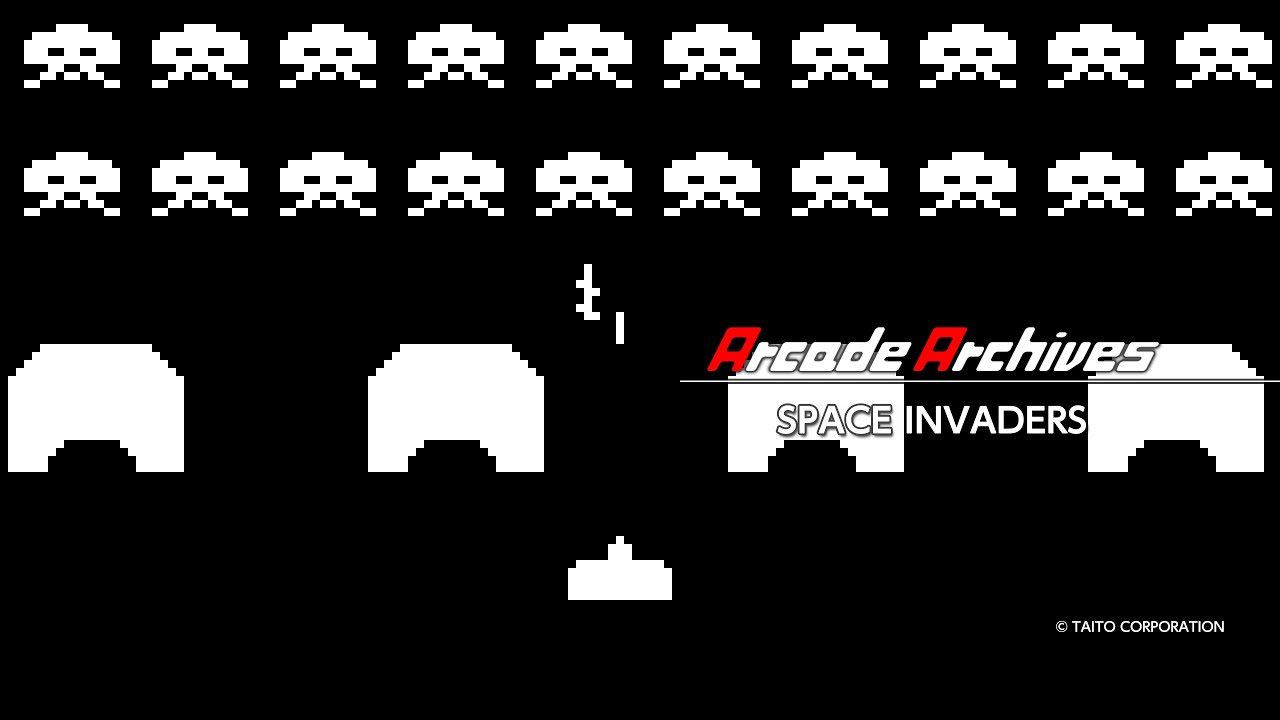
Some milestones beg for a flashy pick, something rare or weird that makes collectors point and shout. Space Invaders goes the other direction: it’s instantly readable. Even if you’ve never played the original cabinet, you know the silhouette of the aliens, the bunker shields, and the creeping pressure as the formation drops lower. That readability matters for a celebration release because it invites everyone in, not just the people who can name obscure boards from memory. It also fits the Arcade Archives identity perfectly. If the series is about honoring arcade history in a playable form, then Space Invaders is practically a handshake with the past. It’s simple, tense, and still weirdly hypnotic, like tapping your foot to a song you haven’t heard in years and somehow knowing the beat.
Why 1978 still feels modern
Space Invaders is old enough to feel mythical, but its design still lands because it’s built on clean pressure. You have limited cover, a single cannon, and a problem that gets worse on a timer. The aliens don’t need fancy animations or cinematic cutscenes to create drama. The drama is math and nerves. Shots in the air. The bunkers crumbling into Swiss cheese. The formation speeding up as you thin it out, which is a delicious little trick that turns success into danger. That loop still works today because it’s honest. It doesn’t pretend to be anything else. It’s just you, a shrinking margin for error, and that tiny voice in your head saying, “We can save the last bunker piece, right?”
The rhythm of the invaders
If Space Invaders had a slogan, it would be “panic, but in tempo.” The famous march-like cadence isn’t just a sound effect, it’s a metronome for your decision-making. Early on, you feel in control, picking off targets and tidying up the formation. Then the pace changes, the rhythm tightens, and suddenly your hands start doing that thing where they grip the controller a bit harder than necessary. That rhythm is why the game survives era shifts. It’s not only about aiming, it’s about timing your fear. When you miss a shot, you don’t just lose a shot, you lose a beat. And once you start losing beats, the whole song turns into a sprint.
What faithful reproduction really means
Arcade Archives talks a lot about faithfully reproducing classic arcade games, and with Space Invaders that idea has real teeth. Faithful doesn’t mean “untouchable.” It means the core game behaves like the original, while we still get modern ways to enjoy it. In practice, that usually shows up as configurable options: difficulty settings, display adjustments, and modes that make score chasing feel structured rather than random. The goal is to let us experience the classic without having to pretend we’re standing in an arcade in 1978 with a pocket full of coins and no distractions. We’re playing at home. We want the authentic bite, but we also want the freedom to tune the experience so it fits our screen, our session length, and our patience level on any given day.
Two versions in one release: black-and-white and color
One of the coolest touches here is that we’re not stuck with a single presentation. Space Invaders arrives with both the black-and-white and the color versions included, which is more important than it sounds. The black-and-white look is part of the original identity, especially when you think about how older cabinets and display setups shaped what people saw. The color version changes the feel in a subtle but real way, making the aliens pop differently and shifting how your eyes track threats across the screen. Having both versions means we can choose our mood. Some nights you want the raw, minimal vibe. Other nights you want something a little more vivid without changing the underlying game.
Sound and presentation: chasing that arcade feel
Space Invaders is a game where sound is half the tension, so it matters that this release aims to reproduce the audio as it sounded back then. That doesn’t mean it has to be “perfect” in an audiophile sense. It means it has to feel right, like the game is breathing down your neck as the formation speeds up. Pair that with presentation options and the release becomes more than a history lesson. It becomes a time machine you can tune. We can lean into a clean modern display, or we can tweak settings to bring back some of that old arcade atmosphere. Either way, the point is that the game’s identity stays intact. The sights and sounds aren’t window dressing. They’re the pulse.
Display options and difficulty tweaks
Options can be a slippery slope. Add too many and you risk turning a classic into a science project. Arcade Archives tends to keep it practical: difficulty choices, screen and display adjustments, and settings that help recreate that older arcade vibe. The win here is flexibility without chaos. If you’re new to Space Invaders, a difficulty change can be the difference between “this is fun” and “why do I feel personally attacked by pixels?” If you’re experienced, settings let you chase a specific feel, whether that’s a tighter challenge or a more relaxed warm-up run before you go hunting for a serious score. The best part is that you get to decide what kind of evening it is: cozy nostalgia or sweaty palms.
Online rankings and the joy of chasing one more point
Online rankings are the secret sauce that keeps simple arcade games sticky on modern systems. Space Invaders is already built around score pressure, so giving it online leaderboards turns every run into a tiny story with stakes. You’re not just surviving, you’re proving something, even if you’ll never meet the people you’re competing against. The fun is that the competition is quiet. No trash talk required. Your score is your argument. And when you see someone just a few points above you, it’s like the game is whispering, “We’re that close. Come on.” This is how a 1978 shooter becomes a 2025 habit.
How score modes turn into friendly rivalries
Arcade Archives releases often frame play around structured modes, and that structure is perfect for leaderboard chasing. A single credit run feels different when you know it’s being measured against other single credit runs. A time-limited mode feels different when every second becomes part of the score story. Even if you’re playing casually, online rankings give your session a finish line. You can say, “We’ll do one run,” and then immediately lie to yourself when you realize you can climb a few spots with one cleaner attempt. It’s not toxic competition, it’s playful competition. The scoreboard isn’t there to shame you. It’s there to tempt you, like a dessert menu you didn’t plan to open.
Arcade Archives and Arcade Archives 2 on Switch 2: what changes
Here’s the practical part that saves headaches later: on Nintendo hardware, Space Invaders shows up in two related forms. The standard Arcade Archives version is available on Nintendo Switch and is also playable on Switch 2. Separately, there’s a Switch 2-only release under Arcade Archives 2. That naming might look like a tiny difference, but it signals a shift in features and expectations. Arcade Archives is the familiar framework people have been using for years. Arcade Archives 2 is built with newer conveniences in mind, and that’s especially relevant for a game that rewards repetition and practice. If you like dialing in tiny improvements, those conveniences can feel like someone finally handed you the right tools.
Rewind, rapid-fire, save slots, and quality-of-life extras
Arcade Archives 2 leans into features that make classic games easier to live with. Rewind is the obvious one, because it turns “I messed up” into “let’s fix that instantly” instead of “start over and hope we get back to that moment.” Rapid-fire can make the action feel snappier, especially if you’re playing for comfort or experimenting with strategies. Multiple save slots are also huge for practice, letting you keep different points or setups without overwriting your own progress. Importantly, these features don’t have to replace the classic experience. They can sit in your back pocket as optional helpers. Some days you want pure arcade rules. Other days you want to learn, test, and improve without paying for every mistake with another full restart.
Picking the right version for how you play
So which one should we pick? It comes down to your relationship with friction. If you want the straightforward Arcade Archives experience, the Switch version is the cleanest lane: classic modes, settings, online rankings, and that familiar feeling of playing the game as it’s traditionally presented in the series. If you know you’ll be practicing a lot, chasing tighter results, or just prefer modern quality-of-life tools, Arcade Archives 2 on Switch 2 is the tempting option. Rewind alone can change how you learn the game, because you can drill a tough moment until it clicks. There’s no wrong answer, but there is a best match for your personality. Do we enjoy earning every retry the old way, or do we enjoy getting better faster? Both are valid. One just involves fewer dramatic sighs.
A quick refresher on Space Invaders history
Space Invaders isn’t just famous because it’s old. It’s famous because it created a kind of tension that games kept borrowing for decades. A descending threat, limited resources, and a pace that accelerates as the situation gets worse is a blueprint we still see in modern games, just dressed up in different outfits. When you go back to the original, it’s almost shocking how much feeling it squeezes out of so little. It’s the gaming equivalent of a campfire ghost story. No expensive effects, just timing, imagination, and a growing sense that you might not make it to the end of the night.
The game that reshaped arcade culture
We don’t need to romanticize the past to admit this: Space Invaders helped define an arcade era. It’s the kind of title that became a cultural shorthand for video games themselves. That matters for the Arcade Archives 500 milestone because it ties the series to the wider story of gaming history, not just a list of weekly releases. When we play it now, we’re not only chasing a score, we’re touching a piece of design that influenced what came after. And it still holds up because the hook isn’t complicated. It’s pressure, clarity, and that tiny thrill when you clear a wave and feel, for a second, like you’re in control again.
Why this release matters on modern Nintendo hardware
Space Invaders works on modern systems because the game fits modern life. Sessions can be short. Attempts can be quick. You can play a few runs handheld while something simmers on the stove, then dock later and chase a more serious score on the TV. That flexibility is a perfect match for a classic arcade game, because the original arcade experience was also built on short bursts. You walked up, played, stepped away, and came back later. The difference now is that we can do that on our own schedule, with our own settings, and with online rankings that keep the competitive spark alive even if we’re playing alone on the couch.
Handheld sessions vs TV mode nostalgia
Handheld play makes Space Invaders feel like a pocket-sized ritual. You pick up the system, run a few attempts, and put it down, like flipping through a favorite comic strip. TV mode, on the other hand, is where the nostalgia hits hardest. Bigger screen, more presence, and a stronger sense of that classic arcade framing. Both styles have their own charm, and the best part is that you don’t have to pick one forever. Some games demand a certain setup. Space Invaders is happy as long as you show up. It’s like an old friend who doesn’t care where you meet, just that you did.
Tips for your first night back with the invaders
Coming back to Space Invaders after a long time can feel like riding a bike, except the bike is on fire and the road keeps getting narrower. The basics return fast, but the rhythm takes a few runs to settle into your hands again. The best tip is to play like you’re budgeting stress. Don’t spray shots mindlessly. Don’t hide forever either. Find a pace that lets you stay calm as the formation speeds up, because the late-game panic is where scores either soar or evaporate. Also, give yourself permission to warm up. The first few runs aren’t failures, they’re your hands remembering the language.
Early survival habits that actually stick
Early game is where you build the foundation for a strong run, and it’s mostly about discipline. Keep your shots purposeful so you’re not constantly waiting for bullets to clear while threats descend. Use the shields as tools, not as permanent homes, because those bunkers won’t stay pretty for long. Pay attention to lanes, too. If you clear a path on one side, you give yourself breathing room to manage the last few invaders when the speed ramps up. Think of it like tidying a room before guests arrive. It’s not glamorous, but later you’ll be thankful you did it when the pressure hits.
When to risk a shot and when to hide
Space Invaders is a game of small risks taken at the right time. Sometimes the safest play is to step out, take the shot, and return to cover quickly, even if it feels scary. Other times the smartest move is to wait half a second so you don’t eat a shot that you could have avoided. The trick is to avoid playing purely reactive. If you’re always responding to the last bullet, you’ll get boxed in when the formation speeds up. Instead, try to anticipate the next two beats. Where will the aliens be in a moment? Where will your escape lane be? It’s like crossing a busy street. You don’t stare at your feet. You look ahead, choose your gap, and move with confidence.
Making the most of settings without breaking the vibe
Settings are there to help, not to turn Space Invaders into a completely different game. The best approach is to change one thing at a time and notice how it affects your feel. Difficulty adjustments can make the game more welcoming if you’re rusty, while display tweaks can pull the presentation closer to the atmosphere you remember or the look you prefer. If you’re using Arcade Archives 2 features like rewind, treat them like training wheels you can remove whenever you want. Use them to learn patterns and recover from silly mistakes, then try a few pure runs when you’re feeling confident. The goal isn’t to prove anything. The goal is to have fun and keep coming back.
Controls, audio, and display tweaks that feel right
The best setup is the one that makes you forget you’re tweaking settings in the first place. Controls should feel immediate and comfortable so you can focus on timing, not on fighting your own hands. Audio should be loud enough that the game’s rhythm stays present, because that rhythm is part of how you judge speed and pressure. Display tweaks should support clarity, especially when things get fast and you’re threading shots through tight spaces. The funny thing about Space Invaders is that it’s visually simple, yet it punishes visual sloppiness. If your setup makes you strain, you’ll feel it when the pace ramps up. Make it clean, make it comfortable, then let the invaders do the rest.
What comes after title 500
Milestones are satisfying, but they also raise the obvious question: what’s next? The answer is probably the same thing that got Arcade Archives here in the first place: steady releases, playable classics, and a balance between preservation and practicality. Title 500 being Space Invaders signals that the series is comfortable celebrating the big pillars of arcade history, not only the obscure curiosities. That’s good news if you like recognizable names, and it’s still good news if you like surprises, because a big headline release doesn’t stop smaller gems from showing up later. If anything, this kind of moment keeps the series visible and healthy, which helps everything that follows.
Keeping a weekly classic series fun in 2026
For a long-running series, the challenge is avoiding fatigue. Arcade Archives stays interesting when each release feels like an invitation, not an obligation. Online rankings help, because they turn each game into a living contest instead of a static download. Feature evolution helps too, and Arcade Archives 2 is a clear sign that the framework can grow without abandoning what people like about it. The best-case future is simple: more classics, more ways to play them comfortably, and more reasons to revisit old favorites beyond a quick nostalgia hit. Space Invaders is the perfect reminder of why this works. A great arcade game doesn’t need a makeover. It just needs a good home, a few smart options, and a scoreboard that dares you to do better.
Conclusion
Arcade Archives hitting 500 with Space Invaders feels like a clean, confident celebration. It’s a pick that makes sense historically, and it still plays well today because the pressure-and-rhythm formula never really got old. We get both black-and-white and color versions, an emphasis on recreating the classic sound and feel, and the modern pull of online rankings that makes every run feel like it matters. The only real decision is which version fits your habits: the familiar Arcade Archives release that’s available on Switch and playable on Switch 2, or the Switch 2-only Arcade Archives 2 edition with extra quality-of-life tools like rewind and multiple save slots. Either way, the result is the same: a legendary arcade name back in your hands, ready to steal “just five minutes” of your time and then, somehow, an entire evening.
FAQs
- Is Space Invaders really the 500th Arcade Archives release on Nintendo systems?
- Yes. Space Invaders was announced and released as the Arcade Archives 500th commemorative title, landing as part of the milestone celebration and releasing digitally in late December 2025.
- What’s the difference between Arcade Archives SPACE INVADERS and Arcade Archives 2 SPACE INVADERS?
- The standard Arcade Archives version is available on Nintendo Switch and can also be played on Switch 2, while Arcade Archives 2 is a Switch 2-only version that adds newer quality-of-life features like rewind, rapid-fire, and multiple save slots.
- Does this release include both black-and-white and color versions?
- Yes. Space Invaders arrives with both versions included, letting us choose the presentation style without changing the core gameplay.
- Can we compete with other players online?
- Yes. Arcade Archives supports online rankings, so we can compare high scores with players around the world through online scoreboards.
- When did Space Invaders release for Arcade Archives on Nintendo Switch?
- The Nintendo eShop listing and official announcements place the release date on December 25, 2025 for the Nintendo Switch version.
Sources
- Announcing Arcade Archives 500th Release Commemorative Title “SPACE INVADERS” now available!, HAMSTER Corporation, Dec. 25, 2025
- The 500th game in the Arcade Archives series is out on Christmas Day, and it’s an iconic one, Video Games Chronicle, Dec. 24, 2025
- Space Invaders is this week’s Arcade Archives game on Nintendo Switch 2, Switch, Nintendo Everything, Dec. 24, 2025
- Arcade Archives SPACE INVADERS, Nintendo Official Site, Dec. 25, 2025
- Arcade Archives 2 SPACE INVADERS, Nintendo Official Site, Dec. 25, 2025
- Arcade Archives Celebrates 500 Retro Releases With Special Commemorative Game, Nintendo Life, Dec. 28, 2025