














Summary:
Ubisoft’s Avatar: Frontiers of Pandora has always been the kind of game that makes people stop mid-scroll and say, “Wait… that’s real gameplay?” It launched in December 2023 with a big emphasis on visual fidelity, and that’s exactly why the Nintendo Switch 2 question keeps coming back around. In a recent interview, narrative director Aoife O’Friel and game design lead Amandine Lauer were asked if the game could come to Nintendo’s newer handheld. Their answer wasn’t a tease, a wink, or a carefully scripted non-denial. It was simple: they don’t know if it would be possible, and they’re focused on the platforms they already targeted.
That kind of response can feel deflating if you were hoping for a surprise announcement, but it’s also one of the most useful answers we can get. It signals that there is no active plan they can speak to, and that feasibility depends on more than raw optimism. Porting a visually heavy open-world game isn’t just about “turning settings down.” It’s about memory behavior, streaming speed, CPU and GPU balance, thermal limits, and whether the end result still looks and feels like Pandora rather than a blurry postcard. It also depends on timing, resourcing, and whether the team wants to spend months or years reworking systems instead of building what’s next.
We’re going to unpack what was said, what it implies, and what to watch for if you want a clearer signal in the future. No panic, no rumor-chasing, and no pretending a quote is a promise. Just a grounded look at why “we don’t know” might be the most honest thing Ubisoft could have said.
The question everyone keeps asking: can Pandora run on Switch 2?
When a game is known for being visually striking, the Switch 2 question is basically inevitable. We see the same pattern every generation: a big, tech-forward release lands on high-end platforms, people fall in love with the world, and then the handheld crowd asks if it can come along for the ride. Avatar: Frontiers of Pandora sits right in that lane because its identity is tied to Pandora feeling alive, dense, and high-fidelity. That doesn’t automatically mean it can’t happen on Nintendo hardware, but it does mean expectations need to be realistic. A “yes” would require real engineering time, real compromises, and a real plan that Ubisoft is ready to talk about. Until then, the only responsible starting point is this: we can want it, we can imagine it, but we can’t treat hope like a release plan.
What the interview actually said, and what it did not
The most important part of the recent Switch 2 chatter is that Ubisoft’s developers didn’t pitch a version, hint at a timeline, or say it’s secretly in progress. They were asked directly, and the answer was essentially a shrug with honesty attached. Game design lead Amandine Lauer said, “Honestly, I don’t really want to wonder there, because I don’t know,” and narrative director Aoife O’Friel followed with, “That’s something we don’t know about.” That matters because it closes the door on the idea that a Switch 2 version is quietly “basically confirmed.” At the same time, it also avoids the harsher language you’d expect if a version was impossible in principle. The message is simpler: they can’t speak to it because it isn’t something they’re currently working on or ready to evaluate publicly.
Why “we don’t know” can be the most honest answer
We’re used to PR language that sounds polite but reveals almost nothing, so a direct “we don’t know” can feel strangely refreshing. It can also be misread as a secret hint, like there’s a hidden plan they’re trying not to spoil. In reality, “we don’t know” often means there are too many variables to give a responsible answer. Hardware access, dev kit maturity, performance profiling, staffing, schedule, and internal priorities all shape what’s possible. If the team is heads-down shipping updates and expansions, they may not have the bandwidth to run the kind of deep technical investigation needed to answer the Switch 2 question. And even if a port is technically possible, the bigger question is whether the result would meet their quality bar. Nobody wants to be the studio that finally brings Pandora to a handheld… only for it to feel like Pandora through foggy glasses.
Why Avatar: Frontiers of Pandora is a tough port in the first place
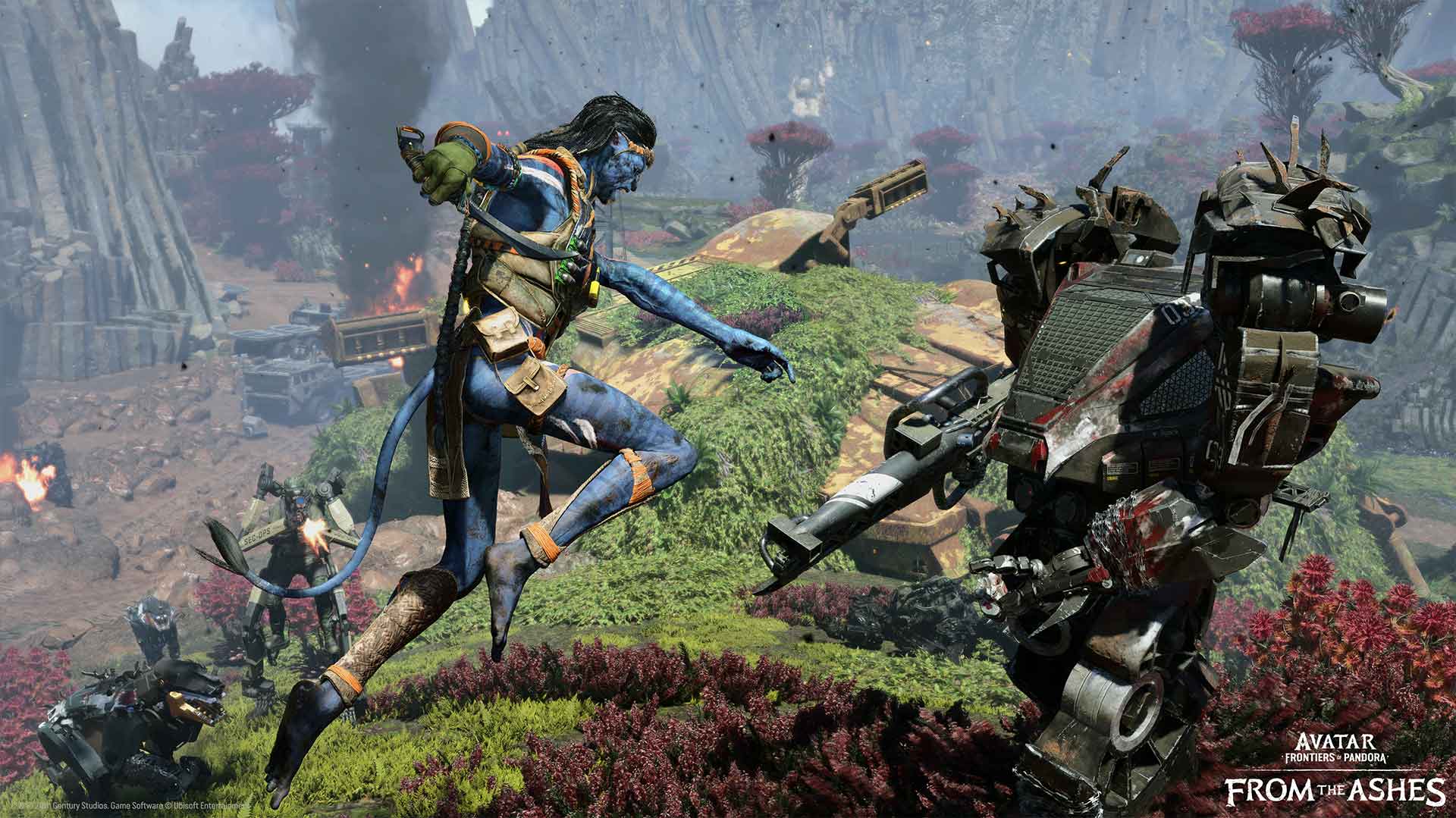
Some games scale down gracefully. Others fight you the whole way, like trying to fold a camping tent back into the tiny bag it came in. Avatar: Frontiers of Pandora leans into large environments, dense foliage, complex lighting, and the kind of scene composition where the background is not “just background.” That’s a big part of why people talk about its visuals, but it’s also why performance targets can be hard to hit on any constrained device. A port isn’t only about pushing pixels. It’s also about maintaining responsiveness, stable frame pacing, and readable visuals in motion. If the world turns into shimmering leaves, muddy textures, and unstable performance, it stops being the fantasy of exploring Pandora and starts being a technical compromise you feel every time you move the camera.
Snowdrop engine realities and open-world streaming
Ubisoft’s Snowdrop engine has powered large, detailed worlds, and those worlds tend to rely heavily on streaming data as you move through them. In an open-world setup, you’re constantly loading new geometry, textures, and effects while unloading what you left behind. On a handheld, that pipeline has less room to breathe because memory and bandwidth are tighter, and you still need headroom for AI, physics, animation, and gameplay logic. Even if raw GPU power is strong, open-world smoothness can still be limited by how quickly assets can be moved around without stutters. That’s why “it boots and runs” isn’t the same as “it feels good.” A successful version would need more than a settings menu drop. It would need real tuning around how the world streams, how effects are budgeted, and how the game stays stable during fast traversal and busy combat.
The hidden cost: memory, bandwidth, and asset density
When people talk about visual fidelity, they often focus on resolution and frame rate, because those are easy to argue about on the internet. The quieter constraint is memory behavior: how much can be kept resident, how quickly new assets can be pulled in, and how often the system has to swap things around. Dense foliage and rich environments are basically a stress test for asset density, because there are so many unique surfaces and layers on screen at once. If you cut too aggressively, Pandora can start to look flat, like a theme park set after closing time. If you cut too little, you risk instability and stutters. That balance is where ports live or die. The best handheld versions aren’t the ones that chase bragging rights. They’re the ones that preserve the feel of a world while making smart trade-offs that most players won’t notice after five minutes of play.
Ubisoft’s platform focus and why timing matters
In the same conversation, Lauer also made the team’s priority clear: they’ve been focused on shipping for the platforms they targeted, and they’re happy that those platforms let them push graphics quality. That statement isn’t a dunk on Nintendo. It’s a reminder that teams have finite time and energy, and big games are always a list of trade-offs. If Ubisoft is supporting Avatar with major updates and expansions, that work competes directly with any large porting effort. Timing matters because a port isn’t just “extra.” It can become a second development track with its own testing needs, performance bugs, and feature parity concerns. If the Switch 2 version ever happens, the odds improve when the base game and its major update cadence are more stable. In other words, the less the main version is changing, the easier it is to justify building and maintaining another version without the whole schedule turning into a juggling act.
What a Switch 2 version would need to feel good in your hands
If we’re being honest, nobody is asking for a technical miracle just to say it exists. People want a version that feels good, looks coherent on a portable screen, and doesn’t punish them with constant compromises. That means stable performance and consistent frame pacing first, then visual clarity, then bells and whistles. It also means smart UX decisions that fit handheld play: quick resume behavior that doesn’t break systems, readable UI at portable viewing distance, and control tuning that works whether you’re using handheld controls or a separate controller. The best “big game on handheld” releases don’t feel like a downgrade you tolerate. They feel like a different way to play that you actively choose. If Pandora ever lands on Switch 2, that should be the target. Otherwise, it’s just a bullet point on a box, and we’ve all seen how that movie ends.
Visual targets versus battery and thermals
Handheld power isn’t just about peak performance. It’s also about sustained performance. A device can sprint, but can it run a marathon without overheating or throttling? That’s why battery and thermals sit in the background of every ambitious portable port. If a game needs to run at a high load constantly to maintain its look, you can end up with a version that either drains the battery quickly or pulls back performance after extended play. Neither outcome is great for a big open-world adventure where sessions often stretch longer than intended. We all know the feeling: you say “one more mission,” and suddenly it’s two hours later. A successful handheld version would likely prioritize consistency over peak visuals, keeping image quality clean and motion stable. Think of it like choosing comfortable shoes for a long walk. The fancy pair looks great for five minutes, but the smart pair gets you home smiling.
The business side: licensing, teams, and opportunity cost
Even when a port is technically feasible, there’s the business reality that decides whether it happens. Avatar is a major licensed universe, and licensed games often have timelines, approval processes, and brand expectations that add complexity. On top of that, Massive Entertainment and Ubisoft teams have to decide what they build next, and every large project competes for experienced engineers, technical artists, and QA bandwidth. A Switch 2 version would likely require a dedicated group for optimization and platform-specific work, plus ongoing support once it ships. That’s opportunity cost in plain terms: if we do this, what do we not do? Do we delay other plans, slow down expansions, or pull people off future projects? Those are the questions that quietly shape whether “we don’t know” becomes “we’re doing it,” and they matter just as much as teraflops, memory, or any other spec debate.
What players can do now if they want Pandora on Nintendo hardware
It’s easy to feel powerless when a developer says they don’t know, but there are still practical ways to help the idea without turning into rumor fuel. First, make your interest visible in places studios actually monitor: official surveys when they appear, publisher support channels, and platform feedback programs. Second, support the kind of ports you want to see. When companies see that players show up for well-built handheld versions, it strengthens the internal case for investing in more of them. Third, talk about what you want in a way that’s actionable. “Bring it to Switch 2” is a mood. “Bring it to Switch 2 if it can hit stable performance and keep visual clarity” is a target. Studios can’t build vibes, but they can build targets. And yes, being patient helps, even if patience is the least fun stat to level up.
How to read Ubisoft’s wording without spiraling into rumors
When people are excited, every quote becomes a Rorschach test. One person reads “we don’t know” as “it’s impossible.” Another reads it as “it’s happening but they can’t say.” The grounded read is in the middle: there is no confirmed plan they’re sharing, and they are prioritizing the platforms already targeted. That’s it. Anything beyond that is fan fiction, and fan fiction can be fun, but it’s not a schedule. If you want a real signal, watch for concrete steps: platform listings, ratings board entries, official press releases, or Ubisoft talking about specific platform work rather than general interest. Until then, treat the situation like weather forecasting without a radar map. You can guess, you can hope, but you shouldn’t plan your weekend around it.
A realistic path forward if it ever happens
If Avatar: Frontiers of Pandora ever lands on Switch 2, the most realistic version of that story probably looks boring from the outside, and that’s a good thing. It would mean the team has time to profile performance properly, rebuild or retune the most expensive visual features, and make sure the world still reads as Pandora at handheld viewing distance. It would also likely mean choosing a clear target for how it plays and feels, rather than trying to match every visual flourish of the highest-end versions. In other words, it would be a carefully planned adaptation, not a rushed sprint to hit a headline. The upside is obvious: a huge audience gets to experience Pandora portably. The downside is also obvious: it takes time, resources, and a willingness to say “no” to some visual goals so the overall experience stays strong. If that trade is made thoughtfully, a Switch 2 version could feel like an invitation, not a compromise.
Conclusion
Ubisoft’s answer to the Switch 2 question is simple but meaningful: they don’t know if Avatar: Frontiers of Pandora can run satisfactorily on Nintendo’s latest handheld, and they’re focused on the platforms they already targeted. That’s not a promise, and it’s not a rejection carved in stone either. It’s a snapshot of priorities and uncertainty at a specific moment. If you want the healthiest way to think about it, treat “we don’t know” as the honest middle ground between hype and doom. A port would require serious optimization work to preserve what makes Pandora special, and it would also need to make sense financially and strategically inside Ubisoft. For now, the best move is to watch for concrete signals and keep expectations grounded. If it happens, it should happen because the end result feels good, not because the internet demanded a checkbox.
FAQs
- Did Ubisoft confirm Avatar: Frontiers of Pandora for Nintendo Switch 2?
- No. Ubisoft developers said they don’t know if it would be possible, and they did not announce a Switch 2 version or a release window.
- What did the developers actually say about a Switch 2 version?
- They said they don’t know whether they could get it running satisfactorily on Nintendo’s latest handheld and that the team is focused on the platforms they targeted.
- Why is Avatar: Frontiers of Pandora considered difficult to port?
- It’s known for high visual fidelity and dense open-world environments, which can stress performance, streaming, and memory behavior on more constrained hardware.
- Does “we don’t know” mean it will never happen?
- No. It means there’s no confirmed plan they can share right now and they are not prepared to state feasibility publicly at this time.
- What should we watch for if a Switch 2 version becomes real?
- Look for official announcements, platform store listings, ratings board entries, or Ubisoft statements that mention concrete platform work rather than general questions.
Sources
- Could Avatar: Frontiers of Pandora come to Nintendo Switch 2? Ubisoft genuinely “don’t know” if it’s even possible, FRVR, December 10, 2025
- Avatar: Frontiers Of Pandora Probably Won’t Come To Switch 2 Anytime Soon, Nintendo Life, December 15, 2025
- Avatar: Frontiers of Pandora – Release Date Announced, New Gameplay Revealed, Ubisoft News, June 12, 2023
- How Avatar: Frontiers of Pandora immerses players in Pandora, launching December 7, PlayStation.Blog, June 12, 2023
- Avatar: Frontiers of Pandora gets major story expansion – and a third-person mode, Windows Central, September 23, 2025
- Avatar: Frontiers of Pandora is getting a huge free update later this year that brings two major, all-new ways of playing, TechRadar, July 22, 2025