














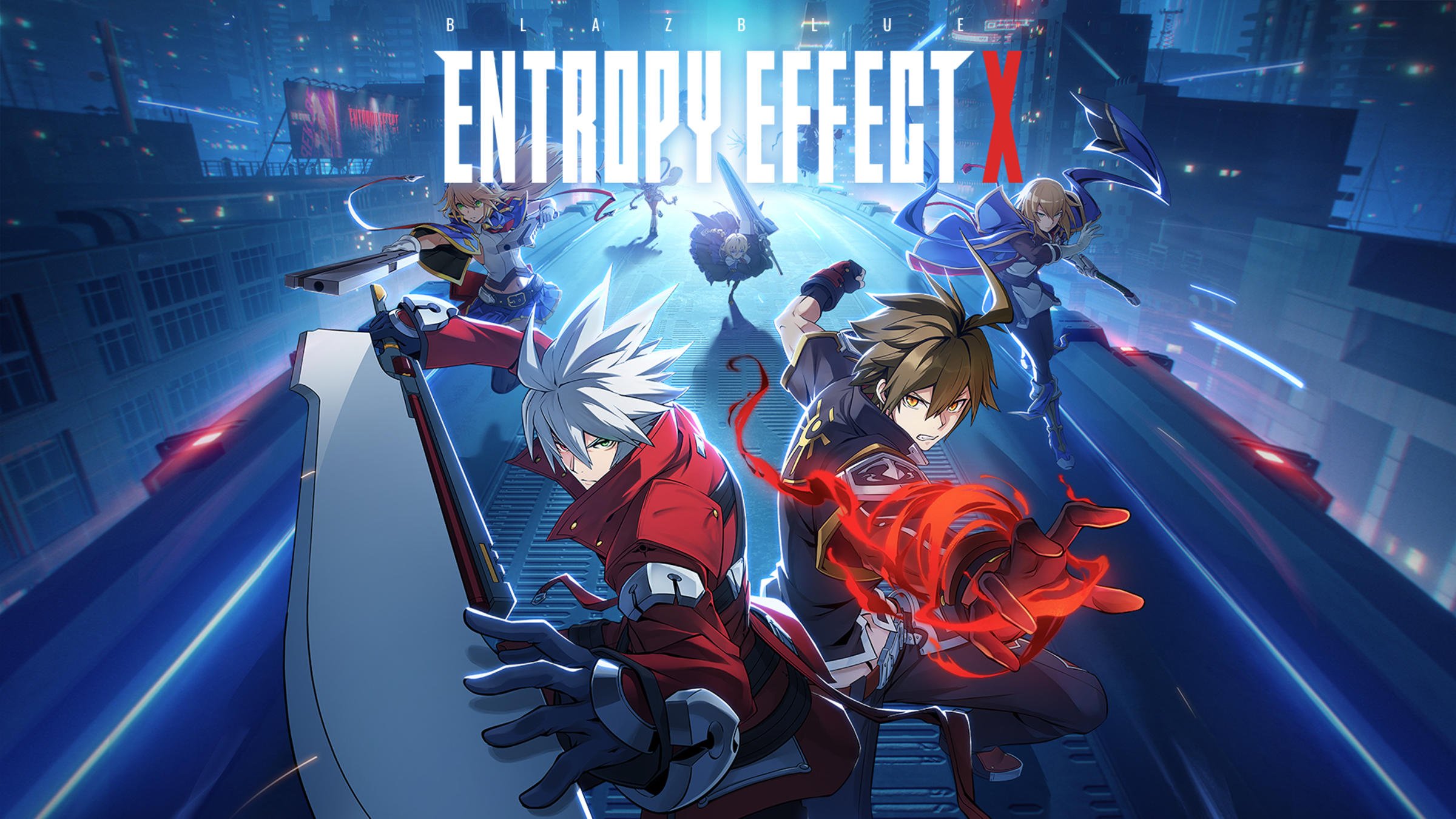
Summary:
BlazBlue Entropy Effect X has two kinds of momentum right now: the kind you feel in a roguelite run when everything finally clicks, and the kind you see outside the game when listings start lining up. On the Nintendo Switch side, we have a clear date to circle on the calendar – February 12, 2026. On the ratings side, we have an ESRB entry that does something players always notice: it lists Nintendo Switch 2 alongside Nintendo Switch and PlayStation 5. That platform mix matters because ratings listings are not fan speculation. They are part of the paperwork trail that usually shows where a game is headed, even if the publisher has not done a big “here’s the trailer on this platform” moment yet.
The ESRB label is also straightforward. The game is rated Teen and carries descriptors for Blood, Fantasy Violence, and Suggestive Themes. The rating summary paints a clear picture of what we do in the game: we move through 2D side-scrolling stages, fight ninjas, armored soldiers, and larger creatures, and use a mix of swords, guns, spears, and lasers in quick, close-range action. It also spells out presentation details that can affect whether someone is comfortable playing or watching – sword-slash effects, explosions, splashes of red blood, and scenes that highlight sexualized character animation. If you are the type who likes knowing what you are getting into before you buy, the summary is basically a flashlight in a dark hallway.
Now the fun part is connecting the dots without making stuff up. We can talk about what the listings say, what the descriptors mean, and what questions remain open, like whether a Nintendo Switch 2 version will be a separate release or simply another way to play. Either way, the direction is clear: BlazBlue Entropy Effect X is about to land on Switch, and the Switch 2 mention adds an extra layer of intrigue for anyone who cares about performance, feel, and that silky “one more run” rhythm.
BlazBlue Entropy Effect X is set for Nintendo Switch on February 12
February 12, 2026 is the date we can treat as solid for Nintendo Switch, because it appears directly on Nintendo’s store listing for the game. That matters in a world where rumors move faster than facts and everyone wants to be first. Here, we do not have to guess. If you are planning your February gaming like it’s a fridge calendar full of sticky notes, this is the kind of entry you can write in ink, not pencil. It also frames the bigger conversation: when a release date is locked for one platform, anything else that shows up around it, like a rating entry for another system, gets noticed fast. The timing invites a simple question: are we looking at a Switch launch plus a Switch 2 listing that points to the same window, or is it a separate version with its own plan? We can’t claim the answer yet, but we can map what is actually visible and why it is meaningful.
What the ESRB listing actually confirms
The ESRB entry confirms three things that are easy to miss if you only read headlines. First, it confirms the game’s age category: Teen. Second, it confirms the specific content descriptors that drove that rating: Blood, Fantasy Violence, and Suggestive Themes. Third, and most relevant to the platform chatter, it lists the platforms tied to the rating entry: PlayStation 5, Nintendo Switch, and Nintendo Switch 2. That platform line is the key detail because it is not a vibe or a wink. It is a formal part of a rating listing. The rating summary also gives us a snapshot of what the moment-to-moment action looks like: 2D side-scrolling stages, fast melee combat, and a mix of weapons that includes blades and firearms. If you want the cleanest takeaway, it is this: the ESRB listing anchors the game’s tone and presentation, and it places Switch 2 in the same breath as the other platforms attached to that rating.
The Teen rating, descriptors, and why they matter
Teen is a broad category, and it can cover everything from “cartoon chaos” to “stylish violence with sharper edges,” so the descriptors do the real work. Blood and Fantasy Violence tell us we are not in squeaky-clean territory, and the summary goes further by mentioning splashes of red blood during combat. That is not the same as realism, but it is still a deliberate aesthetic choice, like adding hot sauce to a meal. Some players love the extra bite because it makes hits feel weightier. Others would rather keep things cleaner, especially if kids are watching. Suggestive Themes is the other flag worth pausing on, because it often signals sexualized visuals, dialogue, or animation. Here, the summary explicitly mentions female characters with deep cleavage and breast jiggle. Whether that is a dealbreaker, an eye-roll, or a shrug depends on the player, but the point is that the rating language gives you the heads-up before you spend money.
The rating summary details that tell you what play looks like
Rating summaries can be more useful than a glossy trailer because they are oddly specific in the ways that matter for comfort and expectations. In this case, the summary describes us traversing 2D side-scrolling levels and fighting enemies like ninjas, armored soldiers, and large creatures. It also lists the tools we use: swords, guns, spears, and lasers. That combination hints at a pace where positioning and timing matter, but build variety matters too. If you have played roguelites before, you already know the feeling of a run changing because you found the right weapon or the right synergy at the right time. The summary also calls out visual intensity: sword-slashing effects, large explosions, and blood splashes. That tells us the action is meant to read fast and loud, like a fireworks show where the sparks are also feedback. If you are sensitive to flashing effects or just prefer calmer visuals, it is useful to know the style leans punchy.
Why the Nintendo Switch 2 platform mention turns heads
When Nintendo Switch 2 appears on an ESRB platform list, people pay attention because it usually means a version was submitted for rating tied to that platform. It does not automatically tell us how that version will be delivered, marketed, or timed, but it is still a meaningful signal. Think of it like seeing a luggage tag on a suitcase: it does not guarantee the bag arrives at the same time as you, but it tells you the bag is in the system. For players, the practical question is not just “is it coming,” but “how will it feel.” Roguelites live and die by responsiveness, load times, and consistency. If a Switch 2 version exists, many players will immediately wonder about frame pacing, sharper visuals, or faster transitions between runs. Even small gains can matter because this genre thrives on repetition that stays satisfying, not repetitive in the bad way.
Nintendo’s Switch 2 compatibility note and what it implies
Nintendo’s store listing for the Switch version includes a Switch 2 compatibility section that says the game is supported and behaves consistently with Nintendo Switch. That line is worth reading carefully. It suggests that, at least for the eShop listing we can see, Nintendo is describing how the Switch release behaves on Switch 2 rather than presenting a separate Switch 2 purchase page. In plain terms, it points toward “you can play this on Switch 2” without promising a distinct, upgraded build on day one. That can still be great news, especially if you plan to move your library forward and want reassurance that your next purchase won’t be stranded. It also keeps the door open for different possibilities later, like a separate version or enhancements, but we do not need to invent that future to appreciate the present. Right now, the visible facts say: Switch release date is listed, Switch 2 compatibility is noted, and the ESRB platform list includes Switch 2.
Why this matters more for roguelites than for slower games
In a slower game, a little hitch here and there can be annoying but survivable. In a fast action roguelite, tiny delays can feel like stepping on a Lego brick in the dark. The genre is built on rhythm: dodge, punish, reposition, repeat, and then do it again with a slightly different build that changes the dance. If controls feel crisp, you blame yourself when you get hit, which is weirdly satisfying because it means you can improve. If controls feel mushy, you blame the game, and that is where the loop starts to lose its magic. That is why players get curious the moment Switch 2 enters the chat. Even if the Switch version is the main purchase, playing on stronger hardware can sometimes make the experience steadier. For a “one more run” game, steadier often means stickier, and stickier is the nicest kind of trouble to get into.
The setup: the Lab, the Sea of Possibility, and why Ace keeps diving
The Nintendo store description frames the story around a place called the Lab, where elite researchers are trying to save a collapsing world. Their plan involves collecting Shards of Possibility from a realm between worlds called the Sea of Possibility. That is a very roguelite-friendly setup because it turns repetition into narrative logic. We are not running the same gauntlet again and again “because it is a game.” We are diving again and again because the story says this is the only way forward, and because Ace is the only one who can survive the dive. It is a neat sci-fi excuse for the loop, like a TV show where every episode resets the board but the character learns a little more each time. If you like your action with a side of mystery, this framing helps. You get the thrill of the run plus the slow drip of what the Lab is really doing and why Ace starts seeing strange visions.
How a roguelite run feels here: upgrades, momentum, and mistakes
Even without listing every system detail, we can talk about the heart of what makes this genre tick: momentum. A run typically starts with modest tools and big dreams, and then it becomes a snowball. You pick up upgrades, learn enemy patterns, and stack advantages until you are either unstoppable or one bad decision away from a dramatic faceplant. The best roguelites make failure feel like tuition, not punishment. You pay for a mistake, but you also learn something that makes the next attempt smarter. BlazBlue Entropy Effect X is positioned as a stylish action roguelite, so the expectation is that the loop rewards skill, not just stats. That is good news if you like games where your hands get better, not just your numbers. And let’s be honest, few feelings beat the moment you realize you are no longer surviving by luck. You are driving.
Weapons, characters, and the “fast hands” combat vibe
The ESRB summary explicitly mentions swords, guns, spears, and lasers, which implies variety not only in damage types but in pacing. A sword leans into close-range timing, a spear can suggest spacing, guns and lasers can shift the rhythm toward mid-range pressure. Variety matters in roguelites because it keeps runs from blending together. You want each attempt to feel like a different playlist, not the same song on repeat. The Nintendo listing also frames the game around a roster of characters from the BlazBlue universe, which hints at distinct move sets. In practice, that usually means you find a style that fits your brain. Some players want speed and aggression. Others want control and safe angles. The sweet spot is when the game lets both types feel clever. If the combat is as responsive as it is presented, the loop becomes less about grinding and more about mastering, which is the kind of mastery that makes you sit up straighter without realizing it.
What “Suggestive Themes” can include in ESRB language
ESRB descriptors are deliberately plain, and “Suggestive Themes” is one of those labels that can mean different things depending on the game. Sometimes it is mild sexual humor, sometimes it is revealing outfits, sometimes it is camera angles or animation emphasis. In this specific listing, the summary spells it out: it mentions female characters with deep cleavage and jiggling breasts. That level of specificity helps you make a decision without playing detective. If you are fine with a bit of fanservice in an action game, you now know what kind of fanservice is being referenced. If you are not, you also know, and you can steer clear or at least avoid being surprised. It is also useful context for households where someone might watch over your shoulder. This is not about policing taste. It is about expectations. Nobody likes buying a game and then thinking, “Well, that was an awkward surprise,” especially when the awkwardness was totally avoidable.
How violence is presented: effects, blood, and readability in motion
“Fantasy Violence” is a familiar label, but the summary adds detail that shapes the vibe: sword-slashing effects, large explosions, and splashes of red blood. In other words, hits are meant to pop. That can be a good thing in a fast 2D action game because readability is everything. When the screen gets busy, clear effects help you understand what happened and why you got clipped. At the same time, a lot of effects can become visual noise if not tuned well, like listening to five conversations at once in a crowded café. The best action games find a balance where things look flashy but still communicate. Blood splashes can also affect tone. It makes combat feel sharper and more intense, even if enemies are stylized. If you enjoy action that feels like it has teeth, this presentation can be appealing. If you prefer a cleaner look, it is still playable, but the aesthetic may not be your favorite flavor.
Why this presentation can be a plus for skill-based play
There is a practical upside to loud feedback: it teaches you. When the game clearly shows you the moment you got hit, the arc of an explosion, or the sweep of a blade, you can adjust. You start noticing patterns instead of reacting late. That is where skill growth lives, and skill growth is the oxygen of a roguelite. It is also where the “just one more run” voice in your head gets louder, because you can feel progress even when you fail. That voice can be a menace, by the way. You will tell yourself you are going to stop after this run, and then suddenly it is midnight and you are negotiating with yourself like a tiny lawyer. Still, when a game’s feedback is clean, you do not feel cheated. You feel challenged. That is the kind of relationship players want with this genre. Tough, fair, and a little addictive in the best way.
Who this fits: BlazBlue fans, roguelite fans, and total newcomers
If you love BlazBlue characters and aesthetics, the appeal is obvious: familiar faces in a format built for replay. If you love roguelites, the hook is also obvious: a run-based structure with fast action and a toolset that can shift from attempt to attempt. The more interesting question is how it lands for newcomers. A good action roguelite can be welcoming because each run is a bite-sized challenge. You are not committing to a 60-hour epic right away. You can play for 20 minutes, learn something, and walk away. The risk is that speed and effects can feel overwhelming at first, like being dropped into a dance class mid-routine. The solution is pacing yourself and treating early runs like practice, not performance. If the game supports that learning curve, it can be a great entry point, especially for players who like improvement-driven gameplay but do not want the stress of competitive multiplayer.
How to decide if you will enjoy the loop before buying
Ask yourself a few simple questions. Do you enjoy games where you repeat scenarios but get better each time? Do you like combat that rewards timing and movement rather than slow planning? Are you okay with stylized blood and flashy effects? And are you comfortable with the kind of suggestive visuals explicitly mentioned in the rating summary? If most answers are yes, this is likely in your lane. If you are on the fence, pay attention to what kind of challenge you prefer. Roguelites can feel empowering when you are in the mood to learn, and exhausting when you just want a relaxed story night. There is no wrong answer. It is like choosing between an espresso and herbal tea. Both are fine. One just keeps you awake and slightly feral. If you want that energized focus, this style of game can hit perfectly, especially when a release date is close enough to feel real.
Small habits that help your first sessions feel better
On your first day, the goal is not to be a hero. The goal is to build a mental map. Pay attention to enemy tells, spacing, and which weapons feel natural in your hands. If a run goes badly, treat it like a scouting trip, not a disaster. Try one new character or one new approach each session so you learn what clicks. Also, be kind to your thumbs. Fast action games can turn your hands into cranky grandparents if you play like you are trying to win a tournament on day one. Take breaks, adjust sensitivity if the game offers it, and let your muscle memory catch up. The good news about roguelites is that repetition is built in, so improvement is not only allowed, it is expected. Once the loop clicks, you will know. It feels like catching a rhythm in a song. Suddenly you stop thinking and start flowing.
What to watch before launch day: editions, DLC, and store details
Before February 12 arrives, the smartest thing we can do is watch official store pages and publisher channels for specifics that affect buying decisions. Nintendo’s listing already confirms the release date and shows the ESRB descriptors, and it also references downloadable content, including a Deluxe Upgrade Pack with the same release date. That hints at version choices, and version choices matter because nobody likes buying twice out of confusion. Outside Nintendo’s ecosystem, there are also official platform posts that frame the game and its release window on other systems, which helps confirm that February 12 is not a random one-off date. What we cannot do, responsibly, is claim details that are not published, like the exact nature of a Switch 2 version, whether it is a separate purchase, or what enhancements it may include. But we can still keep our eyes on the right places. When publishers clarify, it usually appears in the simplest spots first: store listings, official blog posts, and short update messages.
How to interpret the Switch 2 mention without overthinking it
The Switch 2 mention is exciting, but it is also the kind of thing that can make the internet sprint ahead of the facts. The healthiest approach is to treat it like a strong hint rather than a finished announcement. The ESRB platform list includes Nintendo Switch 2, which typically means there is a version associated with that platform in the rating pipeline. Nintendo’s store listing, meanwhile, emphasizes Switch release details and includes a Switch 2 compatibility statement, which reassures players who intend to play on newer hardware. Those two pieces can coexist in more than one way. The important part is that both are official-facing touchpoints, not anonymous claims. So if you are deciding whether to buy on Switch, you can lean on the date and listing details already posted. If you are waiting specifically for Switch 2 news, the right move is to keep watching for a clear publisher statement that explains what that version actually is.
Release-day expectations that keep you from getting burned
On release day, the best expectation is simple: you will get the game that is listed for Nintendo Switch on February 12. Anything beyond that should be treated as a bonus until it is explicitly stated. If you are playing on Switch 2, the compatibility note suggests you should be able to play with behavior consistent with Nintendo Switch, which is a fancy way of saying it should run as intended in that mode. If a distinct Switch 2 version is announced, it will likely come with its own store language, purchase path, or upgrade details. Until then, do not let hype bully you into imaginary features. Hype is like cotton candy. It is fun, it looks huge, and it disappears fast if you try to build a meal out of it. Stick to what the official listings say, and you will have a better time, whether you jump in on day one or wait for more clarity.
Conclusion
BlazBlue Entropy Effect X is lining up as a February 12, 2026 release on Nintendo Switch, and that alone is enough to matter if you love fast action and run-based progression. The ESRB listing adds a second layer that is hard to ignore: it lists Nintendo Switch 2 alongside Nintendo Switch and PlayStation 5, while also spelling out exactly why the game landed at a Teen rating. Between the descriptors and the rating summary, we have a clear picture of tone, combat style, and the kinds of visuals players should expect, including blood effects and the specific suggestive presentation mentioned in the listing. The smartest way to approach the Switch 2 angle is to stay grounded. We can acknowledge what the official listing shows, enjoy the hint it provides, and still wait for a direct publisher explanation of how a Switch 2 version will be delivered. In the meantime, the practical plan is easy: if you want it on Switch, the date is set, the listing is live, and the loop looks ready to steal a few late nights in the most predictable way possible.
FAQs
- Is BlazBlue Entropy Effect X confirmed for Nintendo Switch?
- Yes. Nintendo’s store listing shows the game for Nintendo Switch with a release date of February 12, 2026.
- Does the ESRB rating confirm a Nintendo Switch 2 version?
- The ESRB listing for BlazBlue Entropy Effect X includes Nintendo Switch 2 in its platform list. That indicates the game has been rated with Switch 2 attached to the listing, but it does not, by itself, explain how that version will be sold or timed.
- What does the Teen rating describe in plain language?
- The listing describes 2D side-scrolling action with fast melee combat, weapons like swords and guns, visual effects like explosions, splashes of red blood, and suggestive visual presentation called out in the rating summary.
- Is the Switch 2 version guaranteed to be upgraded compared to Switch?
- No official listing detail guarantees upgrades. Nintendo’s store page includes a Switch 2 compatibility note that says the game is supported and behaves consistently with Nintendo Switch, which is different from promising a separate enhanced release.
- What should we watch for next if we care about Switch 2 details?
- Watch for a direct statement from the publisher or an official store listing that clearly identifies a Nintendo Switch 2 version, including how it is purchased, whether it is separate, and whether any enhancements are described.
Sources
- BlazBlue Entropy Effect X, ESRB, February 3, 2026
- Blazblue Entropy Effect X, Nintendo, February 3, 2026
- BlazBlue Entropy Effect X announced for Nintendo Switch, Nintendo Everything, February 2, 2026
- BlazBlue Entropy Effect X launches February 12 on PS5, PlayStation Blog, November 11, 2025
- The Journey of BlazBlue Entropy Effect X, Xbox Wire, December 19, 2025
- BlazBlue Entropy Effect X, Astrolabe Games, February 3, 2026