














Summary:
Blue Prince has officially arrived on Nintendo Switch 2, giving players a fresh way to experience one of the most talked-about puzzle adventures in recent memory. Set inside the strange and ever-changing Mt. Holly manor, the game builds its identity around mystery, experimentation, and that irresistible feeling that every door might lead to something brilliant, useful, or deeply unsettling. That setup alone is enough to hook puzzle fans, but what really gives Blue Prince its spark is the way it turns exploration into a constant series of meaningful decisions. You are not simply walking through a mansion. You are shaping your route, weighing risk against reward, and trying to push deeper into a place that seems determined to rearrange itself whenever you start getting comfortable.
The Nintendo Switch 2 version adds another layer of appeal thanks to Joy-Con 2 mouse controls, which suit a game like this remarkably well. Blue Prince is all about observation, precision, and making thoughtful choices, so a control feature that helps movement and interaction feel smoother has the potential to make the entire experience even more inviting. It also helps Blue Prince stand out during a busy release period. This is not the loudest game in the room, and it does not need to be. Its strength comes from atmosphere, smart design, and the kind of slow-burning intrigue that pulls you in one clue at a time. For players who enjoy mysteries, puzzle solving, and the thrill of uncovering secrets behind closed doors, Blue Prince on Nintendo Switch 2 looks like a perfect match. It is the kind of release that quietly sneaks onto the system and then refuses to leave your brain alone.
Blue Prince arrives on Nintendo Switch 2
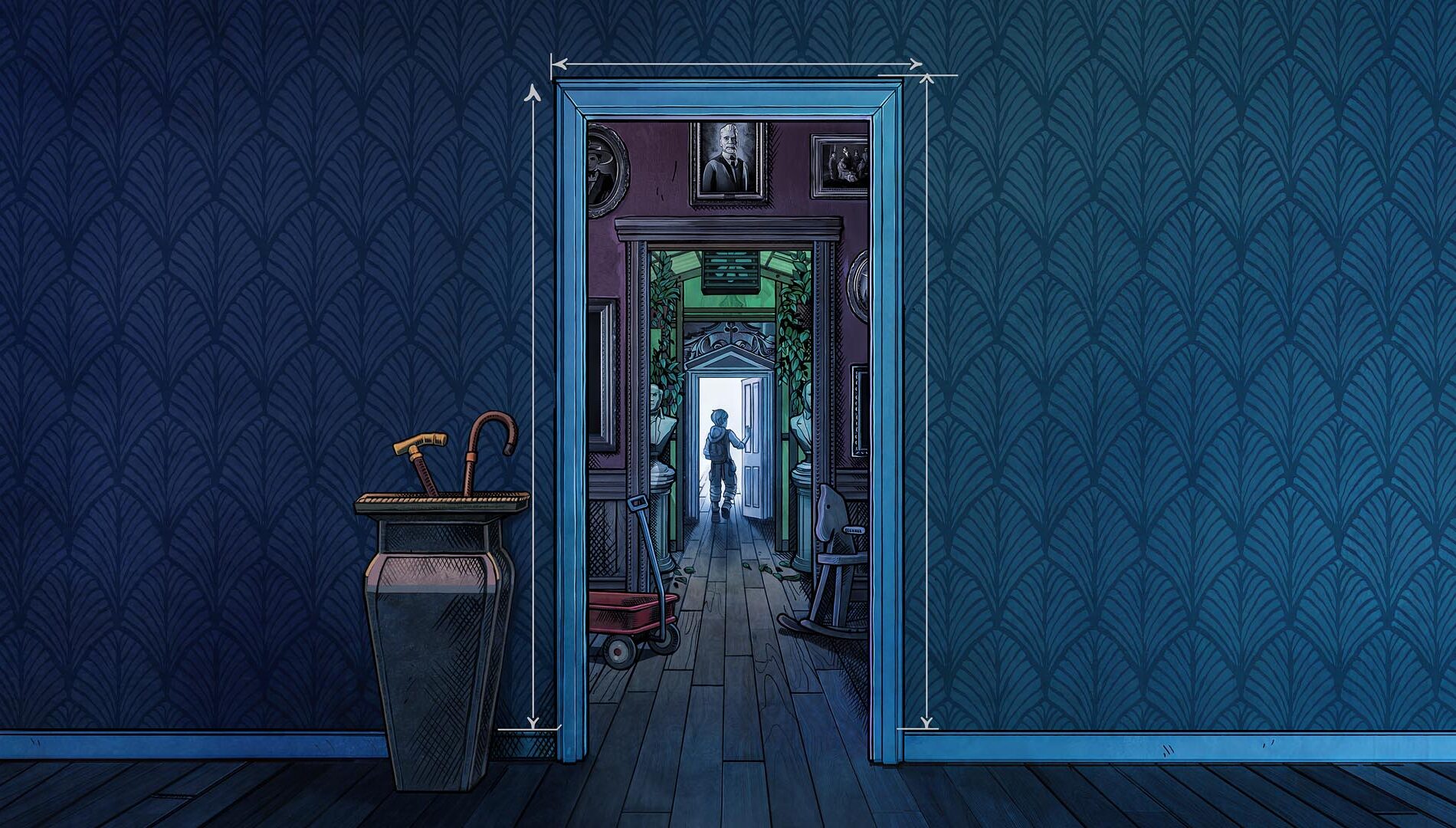
Blue Prince has made its way to Nintendo Switch 2, and that alone is enough to turn heads among players who love puzzle-heavy experiences with a strong sense of mystery. The game drops you into Mt. Holly, a manor packed with shifting rooms, strange rules, and a constant sense that something important is hiding just out of sight. That setup gives the whole experience an almost storybook quality, but not the cozy kind where everyone sits by a fireplace with tea. This is the kind of storybook where the walls move when you are not looking and every hallway feels like it might be testing you. Blue Prince immediately stands out because it is built around uncertainty in the best possible way. You are not just exploring a map. You are trying to understand a place that keeps rewriting itself. That makes every discovery feel earned, every wrong turn feel meaningful, and every clue feel like a small victory. On Nintendo Switch 2, the game feels right at home because it suits players who enjoy picking up a system, jumping into a mystery, and telling themselves they will stop after one more run. Famous last words, of course.

Why the Indie World reveal landed so well
The reveal worked because Blue Prince does not need fireworks to make an impression. It has a strong premise, a distinct atmosphere, and a concept that becomes more interesting the more you think about it. During an Indie World presentation, a game like this can cut through the noise because it offers something a little different from fast action, loud spectacle, or familiar sequel beats. Instead, it promises tension through discovery. That is a powerful hook. When players hear about a mysterious manor, constantly changing rooms, and the search for a hidden Room 46, curiosity does the heavy lifting. It is the gaming equivalent of hearing a strange noise downstairs and knowing you absolutely should not investigate, then doing it anyway. Blue Prince turns that feeling into its identity. The reveal also landed because it paired the game’s mystery with immediate availability on Nintendo eShop, which always gives an announcement extra energy. People do not have to file it away for later. They can hear about it, look it up, and step into Mt. Holly the same day. That kind of momentum matters, especially for a puzzle game that thrives on intrigue.
Mt. Holly makes a memorable first impression
Some games rely on characters to grab you right away. Blue Prince leans on place, and that is one of its smartest choices. Mt. Holly feels like more than a backdrop. It feels like an active participant in everything you do. From the moment you understand that the manor shifts and resets, the building becomes something almost alive, like a magician that keeps changing the deck the second you think you know the trick. That makes the setting memorable before you have even scratched the surface of its deeper mysteries. A good puzzle game needs a reason for players to keep pushing forward, and Blue Prince has one built directly into its walls. You want to know how this place works. You want to know what it is hiding. You want to know why the search for Room 46 matters so much. That natural pull is one of the hardest things to create in interactive storytelling, and Blue Prince seems to understand it well. The manor is not just where the game happens. The manor is the question you are trying to answer.
The search for Room 46 drives the mystery
Room 46 is the kind of goal that instantly sparks imagination. You hear the number, and your brain starts racing. Why that room? What is inside it? Is it a reward, a truth, a trap, or all three at once? Blue Prince uses that mystery as a north star, giving players a clear objective without flattening the sense of wonder that makes discovery exciting. That balance is important. A vague mystery can feel slippery, but a mystery with one sharp focal point becomes irresistible. Room 46 works because it gives all of the exploration a sense of direction. Every choice, every drafted room, and every clue can be measured against that larger question. Are we getting closer, or are we wandering into another elegant dead end? That tension adds flavor to the experience. It keeps the puzzle solving from becoming abstract and gives the whole journey a narrative heartbeat. Even when progress feels messy, the goal remains simple and magnetic. Find the room. Uncover the truth. Try not to lose your mind in the process.
The shifting room mechanic changes everything
At the center of Blue Prince is a mechanic that feels both clever and immediately exciting: when you reach a closed door, you decide what kind of room appears behind it. That means navigation is not just movement. It is strategy. The manor becomes something you partly build and partly survive, which is a fantastic combination for a game built on puzzle solving and mystery. Each room is a choice, and each choice shapes the run in ways you may not understand until much later. That creates a wonderful kind of tension where every decision feels small in the moment but potentially huge in hindsight. It is like packing for a trip without knowing the weather, the destination, or whether the hotel even exists. You make the best call you can, then deal with the consequences. This design keeps the experience lively because it hands some power to the player without ever letting things feel fully under control. Blue Prince is not about mastering a fixed layout. It is about adapting to uncertainty and trying to be smarter than a house that changes the rules every day.
Why every run feels different
The daily reset is one of the most interesting parts of the game’s structure. It prevents the experience from becoming predictable and encourages players to treat each attempt as a new puzzle rather than a repeated routine. That matters because repetition can flatten even strong ideas, especially in a game that asks you to think carefully and stay observant. Blue Prince avoids that problem by turning each run into its own little story. One day, you might uncover a promising route and gather useful tools. The next, the manor might hand you an entirely different set of opportunities and roadblocks. That unpredictability creates suspense and gives your successes more weight. It also makes failure easier to accept because a setback is not simply a loss. It is information. It is one more piece of the larger puzzle. In that way, Blue Prince taps into the same satisfying rhythm that makes strong roguelike systems work. You are not just chasing progress on a scoreboard. You are building understanding. The house resets, but your knowledge does not, and that is where the real momentum lives.
The puzzle design thrives on observation
Blue Prince looks built for players who enjoy slowing down and paying attention. In many games, speed is king. Here, observation feels like the sharper weapon. That is exciting because it changes the emotional rhythm of play. Instead of rushing from one objective marker to the next, you are encouraged to notice details, test assumptions, and think about how one discovery might connect to another. A game like this can turn a single object, note, or room layout into something memorable because it teaches you that details matter. That creates a wonderful feedback loop. The more you notice, the more invested you become, and the more invested you become, the more carefully you look. Before long, you are the kind of person staring suspiciously at a bookshelf in a digital manor because it feels just a little too innocent. Blue Prince appears to understand that puzzle fans do not only want answers. They want the thrill of feeling clever on the way to those answers. That is a big difference, and it can turn a good mystery into one that lingers.
Strategy matters as much as curiosity
Curiosity gets you through the front door, but strategy is what helps you keep moving. Because rooms, tools, and routes all influence how deep you can go, Blue Prince is not just asking players to solve isolated riddles. It is asking them to make broader decisions about risk, reward, and long-term planning. That adds a satisfying layer of tension to every run. You may find yourself weighing whether a room seems promising, practical, or dangerous, knowing that one bad choice could close off future options. That kind of decision-making turns the manor into a mental chessboard, except the chessboard occasionally rearranges itself and refuses to explain the rules. For puzzle fans, that is catnip. It means progress depends on more than just noticing clues. It also depends on how well you manage your path and resources. Blue Prince becomes more than a mystery with locked doors. It becomes a test of judgment. The result is a game that can feel thoughtful and surprising at the same time, which is not an easy balance to pull off.
Mouse controls are a smart fit on Switch 2
One of the most interesting details about the Nintendo Switch 2 version is support for Joy-Con 2 mouse controls. That feature feels like a natural match for Blue Prince because the game’s appeal rests so heavily on precision, observation, and deliberate interaction. In a fast action game, mouse support can be flashy. In a puzzle game like this, it can be quietly transformative. Smooth pointing and navigation could make examining rooms, selecting options, and moving through the manor feel more immediate and comfortable. That matters because friction in a puzzle game can interrupt your thinking. When the controls disappear into the background, the mystery itself gets to take center stage. Blue Prince seems like the kind of experience where players will spend a lot of time considering choices, scanning the screen, and interacting with environmental details, so a control option built around accuracy is more than a gimmick. It is a practical enhancement. It also helps Blue Prince stand apart on the system, giving puzzle fans another reason to view this release as something tailored to the strengths of Nintendo Switch 2 rather than a simple port that happened to land there.
Why the feature could improve immersion
Immersion is not always about graphics or sound. Sometimes it comes down to how naturally a game responds to you. That is where mouse controls could make a real difference for Blue Prince. In a mystery-focused game, the smallest interruption can break the spell. If you are busy fighting the interface, the manor stops feeling mysterious and starts feeling mechanical. Better control precision can help preserve that sense of being absorbed in the space, letting players focus on the decisions and discoveries that matter. Blue Prince is built around careful thought, and the best input methods for careful thought are often the ones that feel effortless. That does not mean traditional controls cannot work well. It simply means Blue Prince has a design style that seems particularly well suited to something more exact. Imagine leafing through a complicated notebook with clumsy winter gloves on, then taking the gloves off. The notebook did not change, but everything suddenly feels easier to read and navigate. That is the promise of mouse support here, and it could end up being one of the version’s most appreciated touches.
Blue Prince rewards patience instead of rushing
There is something refreshing about a game that is willing to slow players down and ask them to think. Blue Prince seems built around that philosophy. Rather than pushing constant urgency, it encourages careful exploration, experimentation, and a willingness to sit with uncertainty. That makes it appealing for players who enjoy puzzle experiences that trust them to connect the dots. Not every answer needs to be handed over instantly. Not every locked door needs to become a loud cinematic moment. Sometimes the most satisfying breakthroughs come from quiet persistence, the kind that makes you put the system down for a minute, stare at the ceiling, and suddenly realize what a clue really meant. Those are the moments puzzle fans live for. Blue Prince appears ready to deliver them. The mansion reset mechanic, the search for Room 46, and the layered room choices all point toward a design that values patience over brute force. It is less about charging ahead and more about learning how the house thinks. And let’s be honest, outsmarting a creepy mansion has a certain charm.
Why this release matters for puzzle fans
Puzzle players are often looking for something specific, even if it is hard to describe. They want challenge, yes, but they also want texture. They want a game that respects their intelligence, offers a strong atmosphere, and gives them stories they can tell afterward. Blue Prince looks poised to deliver that kind of experience on Nintendo Switch 2. The appeal is not limited to one gimmick or one twist. It comes from the combination of shifting architecture, strategic room drafting, long-form mystery, and thoughtful exploration. That blend gives the game a distinct identity in a crowded market. For fans of the genre, a release like this can feel like finding a hidden door in a familiar hallway. It offers something recognizably puzzle-focused, yet still full of surprises. The Nintendo Switch 2 launch also broadens the game’s reach, placing it in front of an audience that often embraces portable, session-friendly experiences with strong hooks. Blue Prince fits that profile beautifully. It invites short sessions, but it also dares you to stop thinking about it once you turn the system off. Good luck with that.
What players can expect on Nintendo eShop
For anyone browsing Nintendo eShop and wondering whether Blue Prince deserves a closer look, the answer seems fairly simple. This is a mystery puzzle adventure built around shifting rooms, meaningful choices, and the search for a hidden room inside a manor that resets day after day. That premise alone gives it a striking identity, but the real draw is the mood it creates. Blue Prince does not seem interested in throwing cheap surprises at you. Instead, it builds tension through possibility. Every room may matter. Every route may reveal something useful. Every run may teach you something the previous one could not. On Nintendo Switch 2, that style of play feels especially appealing because it suits both focused sessions and late-night stretches where you tell yourself you are only going to check one more door. Then another. Then another. Before you know it, the mystery has its hooks in you. For players who enjoy puzzle games with atmosphere, strategic decision-making, and a setting that feels full of secrets, Blue Prince looks like an easy recommendation and a very intriguing addition to the system’s growing library.
Conclusion
Blue Prince looks like a natural fit for Nintendo Switch 2. Its mix of mystery, shifting room layouts, strategic choices, and puzzle-solving tension gives it a strong identity, while Joy-Con 2 mouse controls add a feature that feels genuinely useful rather than decorative. Mt. Holly already sounds like the kind of place that can pull players in and refuse to let go, and the search for Room 46 gives the entire experience a wonderfully sharp sense of purpose. For anyone who enjoys puzzle adventures that reward patience, curiosity, and careful thinking, this release has plenty to be excited about.
FAQs
- What is Blue Prince about on Nintendo Switch 2?
- Blue Prince is a mystery puzzle adventure set inside Mt. Holly, a manor filled with shifting rooms, hidden secrets, and the ongoing search for Room 46.
- Is Blue Prince available now on Nintendo eShop?
- Yes. Blue Prince launched on Nintendo Switch 2 and became available on Nintendo eShop on March 3, 2026.
- Does Blue Prince support mouse controls on Nintendo Switch 2?
- Yes. The Nintendo Switch 2 version supports Joy-Con 2 mouse controls, which should suit the game’s careful and precise puzzle-focused design.
- Why are people interested in Blue Prince?
- The game stands out because of its shifting room system, mystery-heavy structure, strategic decision-making, and the strong atmosphere created by Mt. Holly and the hunt for Room 46.
- Who might enjoy Blue Prince the most?
- Players who like puzzle adventures, layered mysteries, slow-burning discoveries, and games that reward observation and patience will likely find a lot to enjoy here.
Sources
- New Indie World Showcase spotlights upcoming games on Nintendo Switch 2 and Nintendo Switch, Nintendo, March 4, 2026
- Blue Prince for Nintendo Switch 2, Nintendo, March 3, 2026
- Blue Prince Out Now on Switch 2!, Raw Fury, March 3, 2026