



Summary:
Captain Tsubasa 2: World Fighters is real, it’s coming in 2026, and it’s aiming to feel bigger and bolder than its predecessor. The announcement makes a few things crystal clear right away: we’re getting 22 teams, over 110 playable characters, and a game that wants every match to look like the most dramatic highlight reel of your life. If you’ve ever watched Captain Tsubasa and thought, “Normal football is fun, but what if a pass felt like a thunderclap?” this is the lane we’re in. The reveal also confirms that there’s no specific release date yet, which is important because it sets expectations. We can circle 2026 on the calendar, but we can’t book time off work for an exact week.
The more interesting part is what those headline numbers imply. A roster that large changes how we think about variety, rivalries, and experimentation. It’s not just about picking your favorite character once and sticking with them forever, it’s about trying different squads, learning different signature actions, and finding a style that fits you. The announcement also leans hard into spectacle, with more than 150 special move animations highlighted, which signals that moment-to-moment flair is still the heart of the experience. For Nintendo Switch players, the big question becomes feel: how satisfying it is to play a match in handheld mode, how readable the action is when things get chaotic, and whether the pacing keeps you in that “one more match” loop. Right now, the reveal gives us enough to get excited, enough to set realistic expectations, and enough room for Bandai Namco to show deeper details as 2026 gets closer.
Captain Tsubasa 2: World Fighters is official
The headline is simple: Captain Tsubasa 2: World Fighters has been announced as the next major entry after Captain Tsubasa: Rise of New Champions, and it’s slated for release in 2026. That “2” in the name matters because it signals a direct continuation in spirit, even if the new entry is clearly trying to scale up. If you’re the kind of player who loved the first game’s anime flair but wished there were more matchups, more personalities, and more reasons to keep rotating your squad, the reveal is basically speaking your language. It’s also a reminder of what makes Captain Tsubasa games different from typical simulation-focused football titles. We’re not chasing realism like a referee with a whistle. We’re chasing drama, signature techniques, and those wild momentum swings where a single action can flip the entire match’s mood.

What the reveal actually confirms (and what it doesn’t)
We have a firm release window – 2026 – but no exact release date has been announced yet, and that distinction is worth keeping front and center. Announcements like this often arrive with big promises and a few carefully chosen numbers, and that’s exactly what happened here. We know the roster size, we know the number of teams, and we know the special move count being highlighted. We also know the platform lineup includes Nintendo Switch, alongside other systems, which tells us this isn’t being treated as a niche side release. What we do not have yet is a full breakdown of modes, online details, and how progression is structured moment to moment. If you’re trying to picture the finished experience right now, think of the reveal like a movie trailer that shows the best stunts but doesn’t tell you every plot beat. It’s hype, but it’s also a placeholder for deeper specifics later.
The scale jump: 22 teams and 110+ characters
“Over 110 playable characters across 22 teams” is the kind of line that changes the conversation instantly. A roster that large isn’t just a brag, it’s a promise of variety. It means more matchups that feel meaningfully different, more signature interactions, and more room for the game to reward experimentation. For returning players, it also hints that we’re not simply getting the previous roster with a few extra names sprinkled on top. The focus on national teams suggests big, clear identity cues: different styles, different strengths, different vibes. And honestly, that’s half the fun. In Captain Tsubasa, a team isn’t only a jersey color – it’s personality, attitude, and that loud anime confidence that says, “Yes, we absolutely meant to kick the ball like a comet.”
Why a bigger roster changes how we play
When a sports game has a small roster, we tend to settle into habits fast. We pick the strongest option, we memorize a few patterns, and we ride that comfort until it stops being interesting. A huge roster pushes against that. It nudges us to try characters we wouldn’t normally touch, because curiosity becomes its own reward. It also makes rivalries feel personal, because you start recognizing not just the star names, but the matchups that give you trouble. Think of it like a giant spice rack in a kitchen. If you only own salt and pepper, every meal tastes similar. If you suddenly have a hundred options, you start mixing, tasting, and laughing at your own experiments when you go a little too bold. That’s the potential upside of 110+ characters: more discovery, more surprises, and more reasons to keep playing after the “first finish.”
Special moves and presentation: the “Super Action Soccer” feel
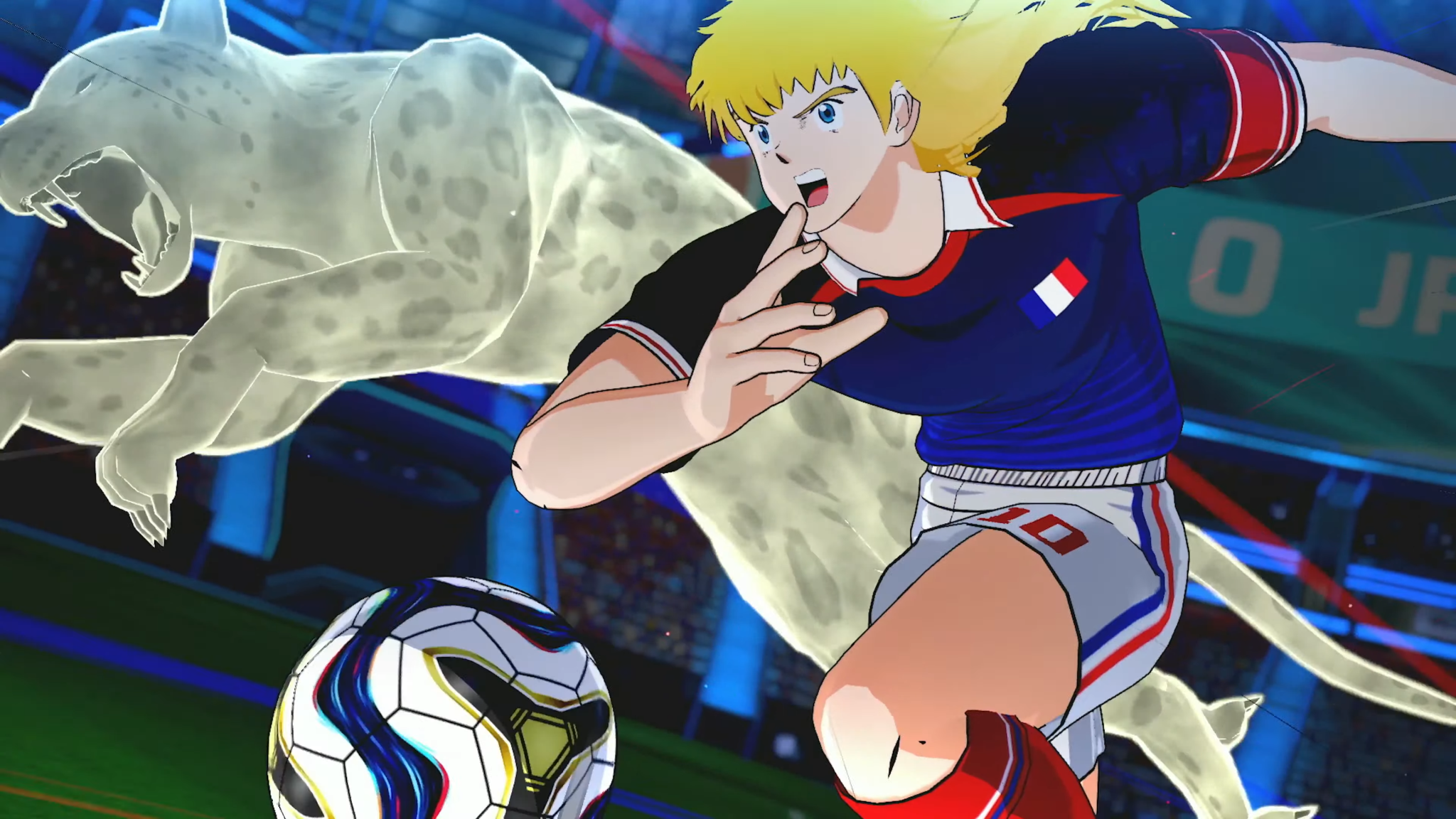
The reveal leans hard into spectacle, highlighting more than 150 unique special moves. That’s a very specific kind of promise, because it tells us exactly what the game wants to be remembered for: moments. Captain Tsubasa has always been about turning ordinary football actions into dramatic set pieces, and special moves are the fireworks that make the night feel like a festival. More special moves usually means more visual variety, but it can also mean more strategic variety if those moves have different timing, positioning needs, or counterplay. Either way, it’s a clear signal that the developers want matches to feel like an anime episode you can control, not a quiet tactical chess game. If you’re the type who plays for the thrill of landing that perfect shot, this is the part of the announcement that should make you grin.
How animation style affects readability
Big animations are a double-edged sword, and that’s not a complaint – it’s just reality. On one hand, they’re the identity of the series. They make every action feel like it has weight, intention, and flair. On the other hand, the more chaotic the spectacle gets, the more important readability becomes, especially when you’re playing on a smaller screen. The good news is that Captain Tsubasa’s style tends to use bold framing and clear character focus, which can actually help you track what matters in the moment. The best-case scenario is that the animation isn’t just pretty, it’s informative – it tells you what’s happening and why it matters. The worst-case scenario is visual noise, where you’re dazzled but slightly lost. The announcement doesn’t answer that yet, but the emphasis on crafted scenes suggests presentation is a top priority.
The emotional payoff of landing a signature move
Let’s be honest: the reason special moves work is because they feel like a punchline and a victory lap at the same time. You set it up, you commit, and then you get that big animated payoff that says, “Yes, that was the right call.” It’s the same feeling as hitting the perfect bowling strike or timing a rhythm game note perfectly – your brain does a little happy dance. In Captain Tsubasa, that payoff is amplified because the move isn’t just mechanics, it’s character. The shot looks like the character, the energy looks like the story, and the moment feels like it belongs to you because you made it happen. If World Fighters really delivers 150+ special moves that each feel distinct, the match highlights could be a constant stream of “Did you see that?” moments. And those moments are what keep people talking after the controller is down.
Modes and match flow: what we can reasonably expect
The announcement focuses on scale and spectacle rather than listing every mode, so we should be careful not to invent features that haven’t been confirmed. Still, we can talk about what “match flow” usually means for a Captain Tsubasa game, because the identity is consistent: fast momentum shifts, dramatic clashes, and a rhythm where building toward a big action matters. The national team framing hints at structured competition, and the roster size hints at replay-friendly selection variety. What matters most is whether matches feel like they have an arc – a beginning where both sides test each other, a middle where tactics and stamina start to matter, and an ending where someone pulls out a statement play. If that arc is strong, you don’t need a hundred different modes to stay engaged. You just need a reason to queue up the next match because the last one ended with your heart rate slightly higher than it should be for a sports game.
Why pacing is everything in an arcade-styled football game
Pacing is the invisible hand that decides whether a match feels exciting or exhausting. If the game fires off huge animations too often, they stop feeling special. If they happen too rarely, the game can feel flat compared to the anime fantasy it’s trying to deliver. The sweet spot is when the game makes you earn the big moments, but doesn’t make you wait so long that you forget why you’re excited. Good pacing also respects the player’s time. It lets you play “just one match” without realizing an hour disappeared, which is both a compliment and a slight life hazard. World Fighters is pitching itself as big and dramatic, so the pacing will likely be tuned to keep energy high while still giving those signature actions room to breathe.
Creating a personal story: why the series leans into identity
Captain Tsubasa has always been more than a scoreboard. It’s about characters, rivalries, pride, and that slightly ridiculous belief that willpower can bend physics. When a game in this series talks up its roster and teams, it’s also talking up identity. You’re not just selecting stats, you’re selecting a vibe. Some players want the disciplined, surgical approach. Others want chaos, flair, and a finishing shot that looks like it punched a hole in the sky. A big roster supports that because it gives more players a chance to find “their” team, not just the “best” team. It’s the difference between wearing a generic jersey and wearing a jersey that feels like it has your name stitched inside, even if it literally doesn’t.
How national teams change the fantasy
National teams bring a different kind of energy than club teams. There’s an immediate “big stage” feeling, like every match is a headline event. That fits Captain Tsubasa perfectly because the franchise thrives on heightened stakes. A national team setup also makes it easier to create clear match themes: styles that contrast, philosophies that collide, and rivalries that feel bigger than any single character. And because the reveal emphasizes teams that weren’t in the previous title, it suggests a broader world being pulled into the spotlight. That can make the roster feel like a celebration of the broader Captain Tsubasa universe rather than a tight selection. If the game nails that feeling, every matchup can feel like a story, even before you know who wins.
Competitive play and replay value: keeping matches fresh
A sports game lives or dies on replay value. You can only watch the same highlight so many times before you start craving a new challenge, a new matchup, or a new style to master. A large roster helps, but it’s not automatic. The real replay value comes from meaningful differences in how characters play, how teams function together, and how matchups demand adaptation. If World Fighters makes you think on your feet – adjusting positioning, managing risk, and choosing when to commit to a big action – then matches will stay interesting longer. The reveal’s focus on special moves suggests that mastery is part of the appeal. You’re not only trying to win, you’re trying to win your way, with a signature rhythm that feels personal. That’s the kind of loop that keeps a community active, because players love comparing styles almost as much as they love comparing scores.
The fun of learning counters and mind games
Once players get comfortable, the real fun often starts: the mind games. You fake a setup, bait a response, and punish the reaction. Or you hold your big move until the opponent gets impatient, then swing the momentum when they least expect it. Even in an arcade-styled sports game, those little psychological battles can be the difference between a match you forget and a match you talk about later. The best part is that mind games don’t require perfect realism. They require clear options and readable outcomes. If World Fighters supports that kind of push and pull, then “over 110 characters” becomes more than a marketing number. It becomes a toolbox for creativity, where every player builds their own way of being annoying in the most entertaining way possible.
Nintendo Switch expectations: performance, feel, and portability
World Fighters is confirmed for Nintendo Switch, and that matters because Switch players often care about one thing as much as graphics: feel. Does the game respond cleanly? Are the animations readable in handheld mode? Does the match stay smooth when the screen gets busy? These are the questions that decide whether a sports game becomes a quick favorite or a “cool idea, but I’ll play it elsewhere” situation. Captain Tsubasa’s style can actually be a benefit here, because bold character-focused scenes can look great on smaller screens when they’re framed well. The key is consistency. A game like this should feel like a steady drumbeat you can dance to, not a song that keeps skipping. The announcement doesn’t provide technical specifics, so the best approach is to keep expectations grounded: we know it’s coming, we know the scale, and we’ll learn more about how it runs as 2026 progresses.
Handheld play: why quick matches can shine
Handheld play is where Switch sports games can become little rituals. One match on the couch. One match on the train. One match while dinner is in the oven and you’re pretending you’re “just checking something.” Captain Tsubasa fits that lifestyle well because it’s built around high-impact moments rather than slow buildup. If World Fighters supports quick, satisfying match sessions, it could become the kind of game you dip into often, not just the kind you binge once. The portability also changes how we appreciate spectacle. A dramatic special move that fills a living room TV is awesome, but that same moment landing in your hands can feel strangely personal, like the anime is happening in your lap. If the pacing and readability are tuned for handheld comfort, the Switch version could be a perfect fit for the series’ punchy style.
Who this is for: anime fans, football fans, and arcade lovers
World Fighters is clearly targeting a crossover audience. Anime fans get the drama, the personalities, and the signature techniques that feel like character themes made playable. Football fans get the core thrill of outplaying an opponent and watching a match swing on a single decision. Arcade lovers get the bigger-than-life presentation where style is part of the win, not a bonus on top. The best part is that you don’t have to fit neatly into one box. You might not know every character’s backstory and still have a blast because the game sells emotion through action. Or you might know the franchise inside out and treat every matchup like a personal rivalry. The reveal’s focus on roster size and national teams suggests an experience built for variety, which usually means more entry points for different kinds of players.
What returning players should be excited about
If you played Rise of New Champions, the biggest reason to get excited is the promise of expansion. More teams, more characters, more special moves – that’s the kind of trio that usually translates into more things to try and more reasons to keep playing. It also suggests the developers are leaning into what made the previous entry memorable rather than trying to reinvent the identity. Returning players often want two things that sound contradictory but actually aren’t: familiarity and surprise. Familiarity in the feel and style, surprise in the roster and matchups. World Fighters is positioning itself as exactly that. The “2” says it’s a continuation, and the scale says it’s not playing it safe.
What to watch next before launch
Between now and release, the most useful updates will be the ones that turn big promises into practical details. Roster reveals that show how characters differ, team breakdowns that explain playstyle identity, and gameplay clips that demonstrate match pacing on real hardware – those are the things that will sharpen the picture. The announcement trailer is the starting gun, not the whole race. If you’re following this closely, keep an eye out for specifics like how special moves are earned or triggered, how matches handle momentum, and what options exist for playing against friends. Also watch for any mention of exact timing, because “2026” is a window, and windows can be wide. The good news is that Bandai Namco has already planted a clear flag: World Fighters is meant to be big, dramatic, and packed with variety. Now it just needs to show the day-to-day rhythm of how it plays.
Conclusion
Captain Tsubasa 2: World Fighters has been announced with the kind of headline stats that immediately set expectations: 22 teams, over 110 playable characters, and more than 150 special moves showcased as a key pillar of the experience. It’s coming in 2026, but there’s no specific release date yet, so the smart move is to enjoy the hype while staying patient for the practical details. The reveal’s message is clear: this is still “Super Action Soccer,” still built on spectacle and personality, and now aiming to feel larger in both roster and match variety. If you want a football game that treats every big moment like a season finale, this is one to watch. And if you’re a Nintendo Switch player, the promise is especially tempting: a portable, dramatic sports experience that could turn spare minutes into one more match, and then one more after that.
FAQs
- Is Captain Tsubasa 2: World Fighters confirmed for Nintendo Switch?
- Yes. Nintendo Switch is listed as one of the confirmed platforms for Captain Tsubasa 2: World Fighters. That means Switch players can expect the full core experience on the system, not a vague “maybe later” situation. The key unknown right now is timing within 2026, since no exact date has been announced yet. As more gameplay and platform-specific footage appears, we’ll get a clearer sense of how it looks and feels on Switch.
- When is Captain Tsubasa 2: World Fighters coming out?
- The announced release window is 2026, and no specific release date has been provided yet. That’s important because “2026” can mean early, mid, or late in the year, depending on development and scheduling. If you’re planning around it, the safest approach is to treat it as a 2026 title until Bandai Namco narrows the window with a date. Expect more precise timing closer to launch.
- How many characters and teams are confirmed?
- The announcement highlights over 110 playable characters and 22 teams. Those numbers are a big deal because they suggest variety is a core goal, not an afterthought. More characters typically means more signature actions and more distinct matchups, especially in a franchise that leans into personality and dramatic techniques. Exact roster lists haven’t been fully detailed yet, but the confirmed scale is already substantial.
- What kind of football game is this – realistic sim or arcade action?
- This is firmly in the arcade-styled, anime-forward camp. The reveal emphasizes “Super Action Soccer” energy, with special moves and dramatic scenes being a major part of the pitch-to-pitch experience. If you want strict realism, this probably isn’t trying to compete in that lane. If you want big moments, signature shots, and matches that feel like highlights, the announcement is pointing directly at that style.
- What should we watch for next after the announcement trailer?
- The most useful next updates will be gameplay breakdowns that show match pacing, how special moves are triggered, and how teams and characters differ in practice. Roster reveals can be fun, but footage that shows real match flow is what answers the biggest questions. Also watch for a narrowed release window or a fixed date, because that’s the missing piece right now. As 2026 gets closer, expect more detailed reveals that move beyond headline numbers.
Sources
- CAPTAIN TSUBASA 2: WORLD FIGHTERS, launching in 2026, Bandai Namco Entertainment Europe, February 5, 2026
- CAPTAIN TSUBASA 2: WORLD FIGHTERS | Official Site, Bandai Namco Entertainment, February 5, 2026
- CAPTAIN TSUBASA 2: WORLD FIGHTERS BRINGS ANIME SOCCER BATTLE ACTION, gamespress, February 5, 2026
- Captain Tsubasa II: World Fighters announced for PS5, Xbox Series, Switch, and PC, Gematsu, February 5, 2026
- Latest Nintendo Direct: Partner Showcase features new and classic titles coming to Nintendo Switch 2 and Nintendo Switch, Nintendo, February 5, 2026