














Summary:
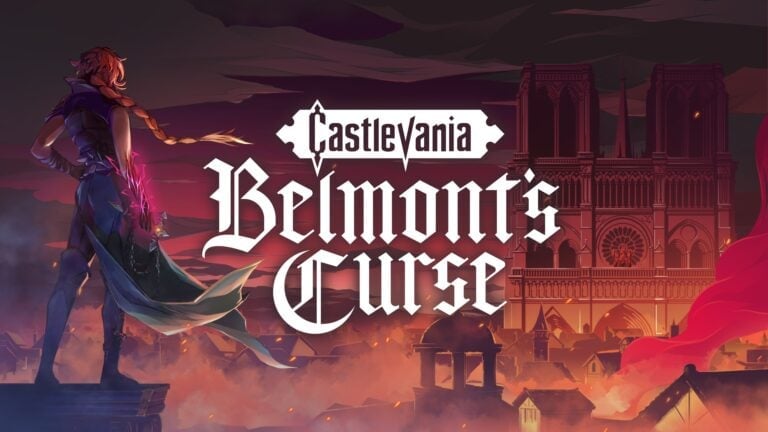
Castlevania: Belmont’s Curse sets the tone with a place and time that instantly screams trouble in the best way. Paris, 1499. Bells toll, flames climb, and the city feels like it is one bad decision away from being swallowed whole. Konami is teaming up with Evil Empire and Motion Twin, and that pairing matters because it suggests a game that respects Castlevania’s old-school tension while still moving with modern confidence. We are not just swinging a whip to hit things anymore. The Vampire Killer is framed as the star of the show, which hints at movement that is expressive, precise, and a little bit showy, like a trapeze act performed in a burning cathedral.
The setup is simple and sharp: monstrous creatures spill into the streets, a looming castle threatens the skyline, and Trevor Belmont’s successor heads straight into the mess with the kind of bravery that looks heroic right up until you remember how Castlevania worlds usually treat heroes. From there, the promise is variety and pressure. We have whip mechanics designed for mobility, multiple weapons and abilities that push tactical decisions, and environments that fight back with traps, secrets, and puzzles. Add a new colorful gothic art style and the return of series staples like hidden chambers, strong foes, and surprising characters, and the picture becomes clear. This is aiming for that sweet spot where exploration feels tempting, combat feels crisp, and every victory feels earned rather than handed out like a participation trophy.
Whispers, bells, and fire – why 1499 Paris fits Castlevania
Paris in 1499 is a smart pick because it already carries a natural mood: narrow streets, heavy stone, candlelight fighting for its life, and history pressing in from every side. When the premise says the bells are tolling and the city is engulfed in flames, we immediately understand the vibe without needing a long lecture. This is a place where shadows feel believable, where a monster stepping out of an alley does not feel like a random jump scare, it feels like the city revealing its true face. That matters for exploration, because exploration works best when you actually want to peek behind every door even though you know it might be a terrible idea. The “burning streets plus looming castle” image also sets up a strong contrast: grounded chaos below, mysterious power above. If we are moving between districts, rooftops, and interiors while the skyline screams danger, the setting itself becomes a constant reminder that we are racing a curse, not strolling through a museum.

A new Belmont steps forward – legacy, pressure, and purpose
When a Belmont enters the scene, expectations show up with them, like uninvited guests who still eat all the snacks. The official setup frames the protagonist as Trevor Belmont’s successor, armed with the Vampire Killer, and that instantly ties the story to the series’ most iconic symbol: the idea that some families inherit a job nobody sane would apply for. What makes that interesting is the tension between duty and survival. A successor is not just “the next hero,” they are someone measured against a legend, whether they want that comparison or not. In a city under attack, every small decision becomes personal. Do we push deeper into the castle because it feels like the correct heroic move, or do we sweep the streets first because people are screaming and the air smells like smoke? Castlevania stories shine when the world is bigger than the hero, and this setup gives us that immediately. We are not saving a single room. We are trying to stop Paris from tipping into permanent darkness.
The Vampire Killer takes center stage – whip movement and control
The biggest gameplay promise here is that the whip is more important than ever, and that line alone changes how we should picture moment-to-moment play. The Vampire Killer has always been iconic, but when it becomes a mobility tool, it turns into a language we can speak fluently. If we can crack it to move freely like a trapeze artist, then traversal is not just “walk, jump, climb,” it is momentum, timing, and swagger. That kind of movement can make exploration feel playful even when the stakes are grim, like sprinting across a tightrope while the city burns below. It also creates a delicious risk-reward loop: the whip lets us take bolder lines through the environment, but bold lines tend to have sharp consequences when you miss. Mastering it should feel like learning a musical instrument. At first it is noise and mistakes, then it becomes rhythm, and eventually it becomes instinct. And once the whip feels like an extension of our hands, combat naturally becomes faster, because we are not just reaching enemies, we are hunting them.
Fast fights with sharp choices – reading enemies and staying alive
Fast-paced combat only feels good when it is readable, and Castlevania is at its best when it makes us respect the opponent rather than mash our way through. If enemies hit hard, move unpredictably, or punish greedy swings, then we need a flow that rewards patience without feeling slow. The whip-focused design suggests spacing will matter a lot. We will likely be asked to decide when to play at range, when to pull ourselves into danger, and when to disengage before the room turns into a blender. That is where the “pounce on your prey” language becomes important. Predators do not sprint forever. They wait, they watch, then they strike. If we are meant to feel like that wolf, then the best moments will be the ones where we bait an attack, slip past it, and answer with a clean punish. And yes, we should expect mistakes to hurt, because Castlevania without consequences is like a vampire without fangs: technically still there, but missing the point.
More than a whip – weapons, abilities, and smart loadouts
The whip may be the star, but the promise of a large selection of weapons and abilities is what keeps a long run from feeling samey. Variety is not just about collecting shiny toys. It is about giving us answers to different problems. Some enemies might demand burst damage, others might demand control, and some might demand a quick “nope” button so we can escape before we get turned into wall decoration. If the design encourages strategic planning, then switching tools should feel like adjusting tactics mid-fight, not like pausing the fun to play inventory manager. The best loadouts are the ones that make us feel clever. We want moments where we realize a specific ability turns a frustrating enemy into a manageable one, or where a weapon choice makes a hazardous room feel like a playground instead of a punishment. A Castlevania world is full of threats, but it is also full of solutions, and the fun is discovering which solutions fit how we like to play.
Layering builds – mixing tools without turning it into chaos
When a game offers lots of weapons and abilities, the hidden challenge is clarity. If everything is powerful, nothing feels special, and if everything stacks, balance can fall apart fast. The sweet spot is synergy that feels intentional. Think of it like cooking: a little heat, a little acid, a little salt, and suddenly the dish makes sense. We want builds where the whip sets the tempo, a secondary weapon covers a weakness, and an ability adds a twist that changes how we approach rooms. Maybe we use mobility to reposition, then a weapon that punishes clustered foes, then a utility skill that buys breathing room when the environment turns nasty. The game does not need to explain this with a chalkboard. It just needs to give us tools that naturally invite experimentation. And if a build fails, it should fail in a way that teaches us something, like touching a hot pan once and never forgetting the lesson.
Biomes that bite back – traps, puzzles, and risky shortcuts
Environmental hazards can be a pain, but they can also be the spice that makes exploration memorable. When biomes are packed with secrets, traps, and puzzles, we are not just testing reflexes, we are testing awareness. That shifts the mindset from “clear enemies, move on” to “read the room.” A corridor might look safe until a hidden mechanism turns the floor into a problem. A tempting ledge might be a shortcut, or it might be bait. This is where Castlevania’s identity shines because the series has always loved making us feel clever for paying attention. If hazards make us grit our teeth, that is a good sign, as long as the sting feels fair. We want danger that we can learn, not danger that feels random. The best hazards are the ones that become familiar enemies of their own. We start hating them, then we start respecting them, and eventually we start using them to our advantage, like luring foes into a trap we already know how to avoid.
Secret hunting mindset – hidden chambers, items, and payoffs
Secret chambers are the lifeblood of classic Castlevania exploration, and they matter because they give curiosity a real reward. If we suspect there is a hidden wall, we should feel that itch to test it, even if we have been burned before. Hidden items also change how we approach risk. Do we push deeper with low resources because we suspect a useful upgrade is nearby, or do we retreat and come back stronger? That choice creates stories players actually remember. A well-placed secret can turn a rough stretch into a victory lap, or it can tempt us into trouble we were not ready for. And because the setting is Paris under siege, secrets can feel grounded in the world rather than just gamey rewards. A hidden room might be a survivor’s stash, a forgotten chapel passage, or a brutal reminder that the city has dealt with darkness long before we arrived. When secrets feel like part of the place, exploration stops being a checklist and starts feeling like detective work in a haunted city.
A bold new look – colorful gothic style and mood
A new art style is not just a coat of paint, it is a promise about how the world will feel. The description points to a unique colorful style that expands the classic gothic vibe, and that contrast can be powerful. Gothic settings thrive on shadows, but color can make the horror sharper, not softer. Blood-red highlights, sickly greens, warm firelight against cold stone, and stained-glass hues cutting through darkness can all make the world feel vivid instead of muddy. The risk with “colorful” is losing the menace, but the opportunity is making every area instantly recognizable. If Paris has multiple biomes, distinct palettes can help each one stick in our memory, like flipping through a nightmare storybook where every chapter has its own mood. And if the animation sells weight and impact, then every whip crack and enemy stagger becomes satisfying on a purely visual level. Sometimes you do not need a stats screen to feel stronger. Sometimes you just need the game to make you look and sound dangerous.
Familiar DNA, fresh muscle – what feels classic, what feels new
The key promise is that beloved elements return: colorful characters, powerful foes, secret chambers, hidden items, and challenging areas. That is basically Castlevania comfort food, but served with a new seasoning. The reason this collaboration stands out is simple: Evil Empire and Motion Twin have experience building fast, responsive action, and Konami has the legacy and the world. If those strengths meet in the middle, we get something that respects the series’ roots without feeling stuck in the past. We should expect an emphasis on mastery, where skill matters, but also a sense of forward motion, where we do not feel like we are dragging a heavy chain through every room. The most exciting outcome is a rhythm that feels unmistakably Castlevania while still surprising us with modern pacing and tool variety. We want moments where we think, “Yes, this feels like Castlevania,” followed immediately by, “Wait, that was new, and it worked.”
2026 release and platforms – what we know, what to watch for
Right now, the clean facts are the most useful ones: Castlevania: Belmont’s Curse has been announced for a 2026 release, with platform listings that include Nintendo Switch, PC, and other consoles depending on the announcement source. That means we should treat the release year as the anchor while keeping expectations flexible on the exact date until Konami locks it in across regions and storefronts. The trailer and official descriptions set expectations on the core pillars: whip-centric movement, fast combat, multiple weapons and abilities, and environments built around hazards and secrets. The smart move as fans is to watch for three kinds of updates: a firm launch date, extended gameplay that shows how exploration and whip traversal actually flow, and details on progression systems so we understand how builds and abilities develop over time. 2026 sounds close, but game development can be slippery, and the best outcomes usually come when a team has the breathing room to polish controls and readability. If this game nails feel and momentum, we will not remember the wait. We will remember the whip crack echoing through Paris.
Conclusion
Castlevania: Belmont’s Curse has the kind of pitch that feels instantly familiar and strangely fresh at the same time. The series is built on atmosphere, pressure, and that constant temptation to explore one more room even when you are already low on health and high on regret. Setting the action in Paris in 1499 gives the story a strong frame, and putting the Vampire Killer whip front and center hints at a faster, more expressive style of movement than we usually associate with classic entries. Add a lineup of weapons and abilities, hazards that demand attention, and secrets that reward curiosity, and we get a package that aims to make every corridor feel like a choice, not just a hallway. If Konami, Evil Empire, and Motion Twin can land the feel of the whip and keep combat readable under pressure, this could be the kind of return that makes old fans grin and new fans finally understand why Castlevania has such a stubborn grip on people’s imaginations.
FAQs
- What is Castlevania: Belmont’s Curse?
- It is a newly announced Castlevania entry set in Paris in 1499, where Trevor Belmont’s successor uses the Vampire Killer whip to fight monstrous creatures and investigate a looming castle.
- Who is developing Belmont’s Curse?
- Konami is working with Evil Empire and Motion Twin, the studios connected to Dead Cells, on development and support roles as described in official announcements.
- What makes the whip different this time?
- The Vampire Killer is described as more important than ever, with whip mechanics that support freer movement and creative combat positioning rather than only direct attacks.
- Will there be weapons and abilities beyond the whip?
- Yes. The official feature list mentions a large selection of weapons and abilities, encouraging tactical planning and flexible approaches to fights.
- When and where is it releasing?
- The release window is listed as 2026, with platform announcements including Nintendo Switch and PC, alongside other consoles depending on the official channel.
Sources
- Castlevania: Belmont’s Curse Official Website, KONAMI, February 2026
- Castlevania: Belmont’s Curse coming 2026, KONAMI, February 12, 2026
- Castlevania: Belmont’s Curse launches this year on PS5, PlayStation Blog, February 12, 2026
- Castlevania: Belmont’s Curse announced for PS5, Xbox Series, Switch, and PC, Gematsu, February 12, 2026
- Castlevania: Belmont’s Curse – Announcement Trailer, YouTube (PlayStation), February 12, 2026