














Summary:
Konami has cleared up one of the biggest questions surrounding Castlevania Belmont’s Curse, and the answer is likely to calm a lot of nerves among longtime fans. Despite early speculation tied to the studios involved, this is not a roguelike or roguelite. Instead, Konami says the game is a 2D action-exploration experience built around freely exploring vast, carefully designed maps. That single clarification changes the whole conversation. Rather than being built around repeated runs, randomization, or the familiar loop of dying, resetting, and trying again with slight variations, Belmont’s Curse is being framed as a deliberate return to the style that helped define Castlevania for decades.
That matters because the title was announced with Evil Empire and Motion Twin attached to it, and those names naturally pushed many people toward one assumption. Dead Cells is one of the most recognizable games in the roguelite space, so the leap was easy to make. Konami has now stepped in and drawn a clean line between the studios’ history and what this new Castlevania actually is. The official description points toward exploration, crafted map design, environmental hazards, secrets, puzzles, weapons, abilities, and a whip that doubles as both a weapon and a traversal tool.
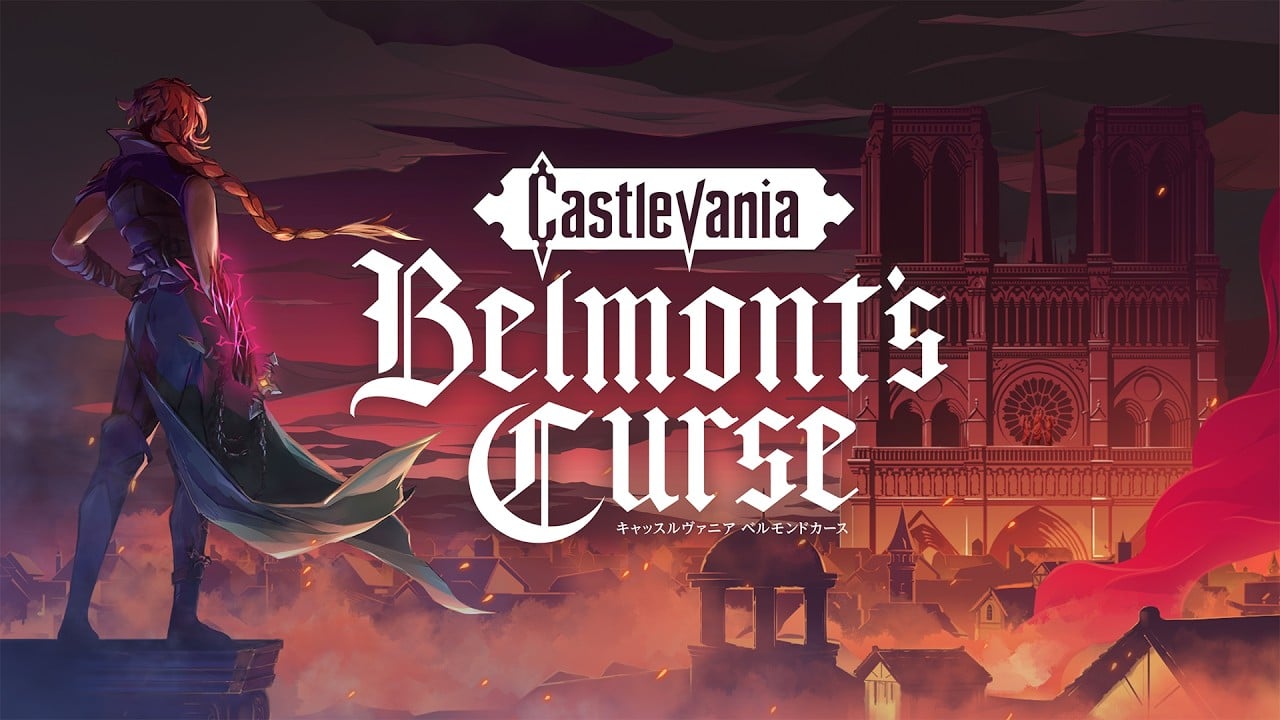
There is also a strong thematic pull here. The game is set in 1499 Paris, more than two decades after Castlevania III: Dracula’s Curse, and follows Trevor Belmont’s successor as monstrous creatures overrun the city. That setup gives Belmont’s Curse a clear identity before you even touch the controller. It sounds gothic, dramatic, and proudly rooted in the series’ classic strengths. More than anything, Konami’s statement tells us this is trying to feel like Castlevania again in the most direct way possible.
Castlevania Belmont’s Curse is not a roguelike
Konami has made the central point unmistakably clear. Castlevania Belmont’s Curse is not being built as a roguelike or a roguelite, even though that was one of the first labels many people reached for after the reveal. According to Konami, the game is a 2D action-exploration experience where players can freely explore vast, elaborately crafted maps. That wording does a lot of heavy lifting. It tells us the structure is built around authored spaces rather than shuffled runs, designed progression rather than repeated resets, and exploration that feels intentional instead of disposable. For Castlevania fans, that is a meaningful distinction. The series has always thrived when its world feels like a haunted machine full of hidden gears, locked routes, nasty surprises, and rewarding detours. Belmont’s Curse sounds like it wants to tap directly into that feeling. The clarification also helps set expectations early, which is important because nothing sours excitement faster than people imagining one kind of game and getting another. Here, Konami has stepped in before that confusion could grow teeth.

Why the confusion started in the first place
The confusion was understandable, and honestly, it happened for a very simple reason. Evil Empire and Motion Twin are closely tied to Dead Cells, which sits firmly in the roguelite conversation. Once those studio names appeared next to Castlevania Belmont’s Curse, many players connected the dots in the most obvious way possible and assumed the new game would follow a similar loop. That assumption was not random guesswork pulled from a candle stand. It came from the reputations of the developers involved and from how modern action games are often packaged when studios carry recognizable design DNA from one project to the next. But studio history is not genre destiny. A team can bring polish, combat feel, movement ideas, and production confidence from one type of game into another without copying the entire formula. That seems to be what is happening here. Konami’s statement matters because it separates the creative pedigree from the mechanical identity. In other words, the people involved may remind you of one style, but the game itself is aiming at something far more in line with traditional Castlevania structure.
A return to 2D action-exploration
The phrase 2D action-exploration is doing more than filling space in a press quote. It points to the bones of the experience. Castlevania has long been associated with side-scrolling combat, moody traversal, map progression, secrets tucked behind suspicious walls, and that steady sense that every new ability or item opens a fresh path forward. Belmont’s Curse appears to be leaning into those strengths rather than chasing a trendier structure. That is an encouraging sign because Castlevania rarely feels more alive than when it turns exploration into tension. Every corridor can hide a shortcut, a trap, or a hard lesson. Every room can feel like a whispered dare. A roguelike structure can absolutely produce excitement, but it creates a different rhythm. What Konami is describing instead is a world you learn, internalize, and gradually master. That matters in a series where place is part of the magic. Dracula’s domain should not feel like a vending machine of random rooms. It should feel like a cursed labyrinth with memory, logic, and malice.
Vast maps are the real focus
The mention of vast, elaborately crafted maps may be the most revealing detail of all. It suggests that Belmont’s Curse is being built around spatial design, not around repetition for repetition’s sake. A large, carefully designed map invites a different kind of player relationship. You start to remember where a locked gate sits, where an odd platform seemed unreachable, where a suspicious dead end looked like it might hide something useful later. That sort of map design turns progress into a conversation between the player and the world. You are not just clearing obstacles. You are learning the shape of the place and slowly bending it to your will. Konami’s official material also points to secrets, puzzles, traps, and hidden areas, which fits neatly with that approach. Put simply, the game sounds less like a shuffle bag of challenges and more like a gothic mansion that keeps producing new teeth every time you think you understand it. For Castlevania, that is exactly the sort of energy many people were hoping to hear.
Medieval Paris gives the game its identity
Setting Belmont’s Curse in 1499 Paris gives the game immediate flavor and helps it stand apart from merely being described as another series revival. Konami’s official material paints a city under siege, with monstrous creatures pouring into the streets and a looming castle pushing over the skyline like bad news made of stone. That image works because it feels both theatrical and grounded within Castlevania’s gothic tradition. Paris is not just a backdrop here. It sounds like an active part of the mood, a place where chaos spills into everyday life and where the line between sacred and cursed starts to crack. Bells tolling through smoke, burning streets, panicked citizens, and a dark fortress hanging over it all – it is the sort of setup that can make exploration feel dramatic before the first enemy even swings. A good Castlevania setting should feel oppressive, mysterious, and just a little operatic. Medieval Paris has the potential to do all of that while giving the game a visual identity that feels distinct within the series.
Trevor Belmont’s successor leads this chapter
Konami says the story takes place 23 years after Castlevania Dracula’s Curse and follows Trevor Belmont’s successor. That is a smart angle because it ties Belmont’s Curse to one of the most beloved eras in the franchise without making it feel trapped by nostalgia. It carries legacy forward rather than simply dusting it off and putting it under museum glass. A successor to Trevor immediately signals lineage, expectation, and pressure. The Belmont name comes with history, and history in Castlevania is rarely quiet. It creaks. It haunts. It shows up at the door with a whip and unfinished business. By choosing this framing, the game gets to draw from familiar bloodlines while still introducing a fresh lead and a new crisis. That balance matters. Fans want continuity, but they also want a reason to care about what is happening now. Belmont’s Curse appears to understand that. It is using the past as a backbone, not as a crutch, and that usually makes for a stronger return.
The Vampire Killer shapes combat and movement
The Vampire Killer is back, and Konami is not treating it as a simple nostalgia prop. Official details suggest the whip serves both combat and traversal functions, which opens the door to a more layered flow of movement through the world. That is a strong fit for Castlevania because the whip has always been more than a weapon in spirit, even when older games used it more traditionally. Here, it seems to become part of how players read the world, cross gaps, reach hidden spaces, and attack from unusual positions. That combination can do a lot for pacing. It keeps movement expressive without turning the game into pure acrobatics, and it lets combat feel physical in a way that suits Castlevania’s style. A sword can look cool, sure, but a holy whip snapping across a room has attitude. It also carries the series’ identity in a way few other tools can. If Belmont’s Curse gets that balance right, the whip could become the thread that ties together exploration, combat, and discovery with real elegance.
Secrets, traps, and puzzles matter as much as combat
One of the more encouraging signs from Konami’s official descriptions is the emphasis on secrets, traps, puzzles, and environmental danger. That tells us the game is not just interested in being a hallway full of things to hit until they stop moving. Castlevania is usually at its best when the world itself feels hostile, clever, and slightly smug about it. A room full of spikes, a hidden switch, a suspicious alcove, a platform placed just a bit too far away – these are the ingredients that make exploration memorable. They also slow the player down in a good way. You are not simply rushing forward with tunnel vision. You are observing, testing, and occasionally muttering at the screen when the castle outsmarts you. That kind of design makes victory feel earned. It also supports replay value without needing randomization, because a strong map can keep revealing itself over time. In that sense, Belmont’s Curse seems to be betting on classic craft. Not smoke and mirrors, but solid design with enough bite to leave a mark.
What Konami’s clarification means for the series
Konami’s statement does more than correct one misunderstood label. It signals what kind of future the company wants for this return. By stressing that Belmont’s Curse is a 2D action-exploration game with crafted maps, the publisher is effectively saying this revival is rooted in the series’ traditional strengths rather than in a genre twist designed to shock people into paying attention. That choice matters because Castlevania has spent years in a strange position. The brand remained beloved, but new mainline momentum felt quiet for a long time. When a name with that much history comes back, the first question is always whether it still knows what made it special. Konami’s clarification suggests the answer is yes, or at least that the company understands what many players wanted to hear. It does not guarantee greatness, of course. Nothing does. But it does tell us the foundation is pointed in a direction that fits Castlevania rather than fighting against it. Sometimes the most reassuring update is the one that removes the wrong expectation before it hardens into disappointment.
Why longtime fans and newcomers should pay attention
Longtime fans should pay attention because Belmont’s Curse sounds like a sincere attempt to reconnect the series with the exploration-driven identity people associate with its best-known side-scrolling entries. Newcomers should pay attention because this kind of structure can be one of the most welcoming ways into Castlevania when it is done well. A carefully designed map offers clarity and reward. You learn by moving, experimenting, and noticing details. You are not being asked to memorize a run-based economy or commit to a structure that resets the board every time things go wrong. Instead, the world remembers. Your progress sticks. Your understanding grows. That creates a very different emotional texture. It is less about chasing one perfect run and more about slowly taking control of a place that initially feels impossible. For a series like Castlevania, that approach fits like a black velvet glove. Konami still has to deliver on all of this when players finally get their hands on the game, but the message is now refreshingly clear. Belmont’s Curse is trying to win people over by being more recognizably Castlevania, and that is a strong note to hit.
Conclusion
Castlevania Belmont’s Curse looks much clearer now that Konami has addressed the biggest point of confusion. This is not a roguelike detour wearing a familiar family name. It is being presented as a 2D action-exploration game built around crafted maps, secrets, hazards, movement tools, and the gothic atmosphere that helped define the series in the first place. The studios involved may have made the speculation understandable, but the official direction points somewhere else entirely. That is good news for players who wanted a return to deliberate exploration rather than a run-based loop. Between the 1499 Paris setting, the Belmont lineage, the traversal-focused whip, and the emphasis on hidden paths and environmental danger, the game sounds committed to classic strengths while still trying to feel fresh. Now the job is simple, even if making it look simple is never easy: deliver a world worth getting lost in, and make every cracked wall and cursed hallway feel like it matters.
FAQs
- Is Castlevania Belmont’s Curse a roguelike?
- No. Konami has explicitly said the game is not a roguelike or roguelite.
- What type of game is Castlevania Belmont’s Curse?
- Konami describes it as a 2D action-exploration game with vast, elaborately crafted maps that players can freely explore.
- Why did people think it might be a roguelite?
- The connection came largely from the involvement of Evil Empire and Motion Twin, two studios strongly associated with Dead Cells.
- Where is Castlevania Belmont’s Curse set?
- The game is set in 1499 Paris, where monstrous creatures have overrun the city and a dark castle looms over the crisis.
- What gameplay features have been confirmed so far?
- Konami has pointed to exploration, large crafted maps, multiple weapons and abilities, traversal with the Vampire Killer whip, and areas filled with secrets, traps, and puzzles.
Sources
- Confirmed: the new Castlevania game isn’t a roguelike., The Verge, March 3, 2026
- Castlevania: Belmont’s Curse coming 2026, KONAMI unveils next chapter of the legendary Belmont Clan, Konami, February 12, 2026
- Castlevania: Belmont’s Curse Official Website, Konami, 2026