














Summary:
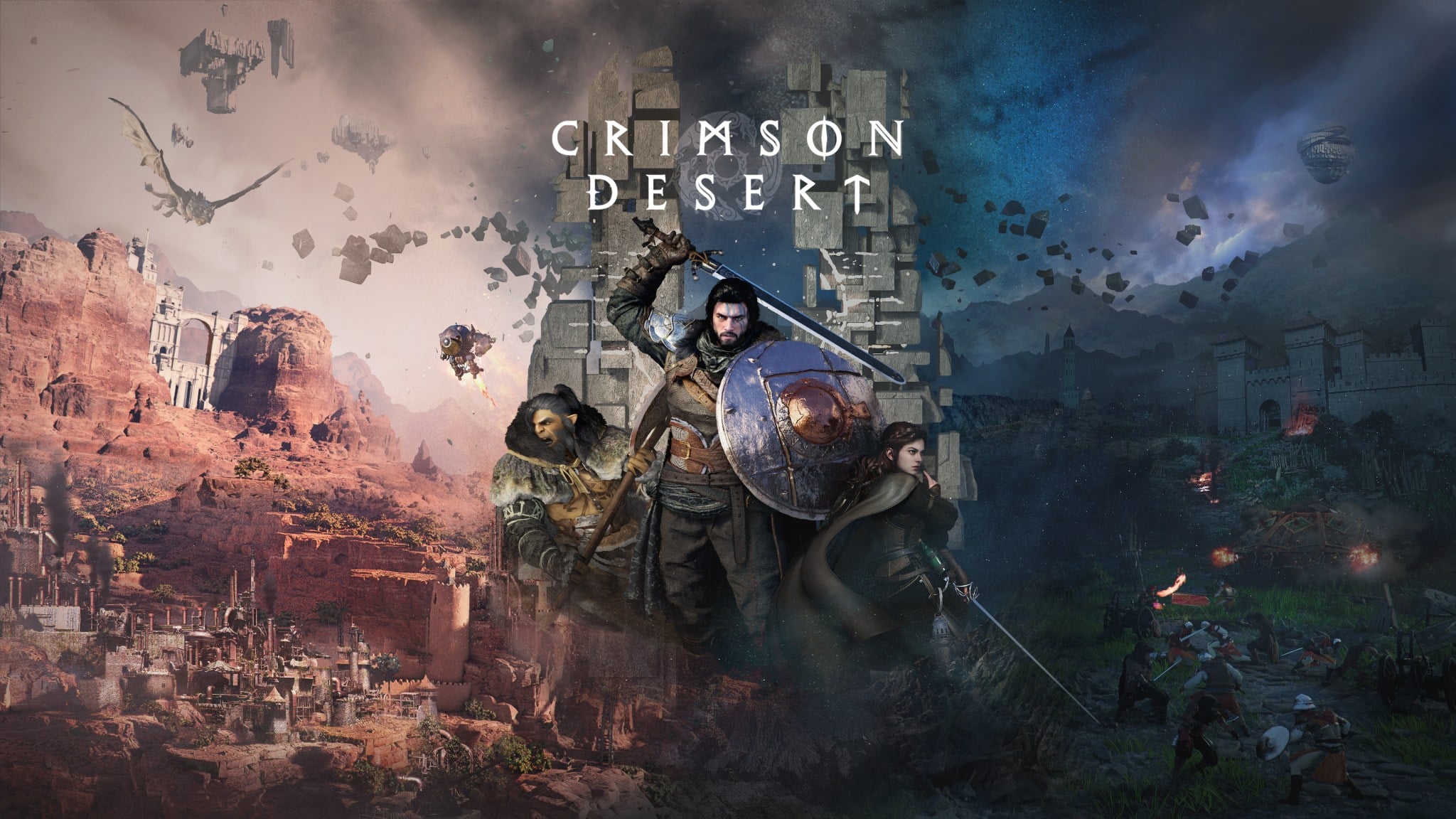
Crimson Desert has had one of those launches that gets people talking for all kinds of reasons. Long before release, it built real excitement as a huge action adventure with striking visuals, large-scale battles, and a world that seemed determined to stuff every hill, road, and battlefield with something to do. Once players and reviewers finally got their hands on it, the reaction became more complicated. Some praised its scale, combat, and sense of freedom, while others pointed to rough edges, awkward systems, and a story that did not land the way many hoped. That split response matters because it changes how people look at the next move from Pearl Abyss. Instead of simply asking where Crimson Desert might go next, people are asking whether a new platform version could smooth over some of the conversation or make the game feel fresh again.
That is why the studio’s recent comments about Nintendo Switch 2 stand out. Pearl Abyss CEO Heo Jin-Young said the company has started research and development around the idea, while also making it clear that Nintendo’s hardware would require trade-offs. That makes this more interesting than a vague rumor and more cautious than a formal announcement. Right now, the message is simple: the studio is looking into it, nothing is confirmed, and any version for Switch 2 would need careful adjustments. Even so, the fact that internal work has started is enough to put the idea firmly on the radar. For Nintendo players, it raises an obvious question. Could one of the more demanding open-world games in recent memory really make the jump to a hybrid system without losing the spark that made people curious in the first place?
Why Crimson Desert on Switch 2 is suddenly in the conversation
Crimson Desert was always the kind of game that invited big expectations. It looked expensive, ambitious, and eager to prove something, almost like a studio had poured its entire imagination onto the table and said, “Let’s see how much of this we can make real.” That sort of build-up naturally made people wonder where the game could go after launch, especially once Nintendo Switch 2 entered the market and started becoming part of the wider platform conversation. What has changed recently is that the idea no longer sits in the rumor bin with a dozen other wish-list fantasies. Pearl Abyss has now acknowledged that it is actively researching and developing around the possibility. That does not mean a release is locked in, but it does mean the question has moved from idle fan speculation to something grounded in the studio’s own public remarks. For a game this large, that shift matters. It turns the conversation from “wouldn’t it be nice?” into “what would that actually look like?” and that is a far more interesting place to be.
What Pearl Abyss actually said about Nintendo’s hardware
The most revealing part of the discussion is not that Pearl Abyss is interested. It is the way the studio framed that interest. Heo Jin-Young did not paint a dreamy picture of a flawless handheld version landing without effort. Instead, he acknowledged that Nintendo’s hardware still sits below other consoles in raw specifications and said there are aspects the team would have to give up. That kind of wording is refreshing because it sounds grounded rather than theatrical. Too often, game companies talk about future versions like magicians promising rabbits out of hats. Here, the message is more practical. Yes, the studio has begun R&D. No, that does not erase the technical reality of the platform. In many ways, that honesty makes the prospect more believable. When a developer admits the mountain is steep before even pretending to climb it, you get the sense that the team is looking at the challenge seriously instead of tossing out empty hype. For Nintendo players, that makes this update worth noticing, even without a release window or announcement trailer attached to it.
Why technical compromises are part of the discussion already
Once a studio openly says compromises would be necessary, you can start to picture what that usually means in practice. Open-world games do not move to smaller or less powerful hardware by magic. They get trimmed, optimized, and rebalanced, sometimes with surgical precision and sometimes with a chainsaw that has very little bedside manner. Visual density may need to come down. Draw distance might tighten. Effects, shadows, crowd behavior, physics detail, or environmental complexity could all become candidates for revision. That is not unusual, but with Crimson Desert it becomes especially important because so much of the game’s identity is tied to scale and spectacle. If you strip too much away, you risk keeping the skeleton while losing the personality. Nobody wants a version that feels like a grand castle reduced to a cardboard cutout. At the same time, smart optimization can surprise people. Plenty of games that once looked impossible on Nintendo hardware have found workable solutions through careful engineering. The real challenge is not whether sacrifices will happen. It is whether those sacrifices can happen without making the experience feel hollow.
Why the game’s scale makes this port harder than a typical conversion
Crimson Desert is not a small, focused action game that lives or dies on a single mechanic. It is the opposite. It sprawls. It reaches in several directions at once. Combat, exploration, storytelling, side activities, environmental detail, and sheer world presence all compete for attention, which gives the game its appeal but also makes adaptation far more complicated. Porting a tightly contained game can be like moving a neatly packed suitcase from one car to another. Porting something like Crimson Desert is closer to moving a crowded attic while trying not to break the things people actually care about. Every system touches another system. A visual cut can affect atmosphere. A performance tweak can affect combat feel. A world-density reduction can change how alive the map seems. That interconnected design is what makes the Switch 2 discussion so fascinating. Pearl Abyss is not just seeing whether the game can boot up. It is likely trying to determine whether the version would still feel like Crimson Desert once the necessary compromises start stacking up.
Mixed reactions to launch changed the tone around the game
Part of what makes this moment so intriguing is that Crimson Desert did not arrive to one clean, universal verdict. The conversation around it quickly split into praise, criticism, curiosity, and second chances. Some players admired the ambition and got swept up in the world. Others bounced off the rougher parts, whether that meant control issues, storytelling frustrations, or a general sense that the game was trying to do so much at once that not every piece landed gracefully. That kind of response can create a strange afterlife for a major release. Instead of disappearing after the first wave of reviews, the game stays in motion. It remains part of the discussion because people feel like they are still figuring it out. In that environment, a possible Switch 2 version becomes more than a port story. It becomes a chance to reframe the game, or at least reintroduce it to a different audience. Sometimes a second platform is not just another shelf in the store. Sometimes it is a new lens.
Strong world design kept interest alive despite criticism
Even among people who had complaints, one thing kept coming up again and again: Crimson Desert has presence. Its world has the kind of visual pull that makes you stop, stare, and wonder what is over the next ridge. That matters because players can forgive a surprising amount when a game keeps sparking curiosity. A rough control quirk can be patched. A menu annoyance can be improved. A story that does not fully connect may still leave room for people to enjoy the systems around it. But if the world itself feels lifeless, the whole structure tends to wobble. Crimson Desert seems to have avoided that problem. Whatever disagreements followed launch, the game continued to attract attention because there was something undeniably compelling about its scale and atmosphere. For a possible Switch 2 version, that is both encouraging and risky. Encouraging, because there is a strong foundation worth preserving. Risky, because that foundation is exactly what a weaker platform version must protect. If the magic comes from the sense of being dropped into a vast, active place, then preserving that feeling has to be the priority.
What a Switch 2 version would need to get right
If Pearl Abyss eventually turns this research phase into a real release, the goal should not be perfection. The goal should be smart priorities. A Switch 2 version would need stable performance, sensible visual cuts, readable menus on a smaller screen, and controls that feel responsive from the opening minutes rather than only after a long adjustment period. It would also need to respect what makes the game memorable in the first place. That may sound obvious, but plenty of ports miss the point by chasing marketing checkboxes instead of player experience. Nobody sits down and thinks, “I hope this version has every technical bullet point on the back of the box but none of the atmosphere.” Players want the soul of the game, even if some polish gets sanded down along the way. In practical terms, that means the version would need to feel deliberate, not merely squeezed through the door. If it runs reliably, looks respectable, and preserves the thrill of roaming a huge world on a portable-friendly system, many players would be willing to meet it halfway.
Why portability could still make the idea appealing
There is a reason people keep getting excited whenever a demanding game seems even remotely possible on Nintendo hardware. Portability changes the emotional math. A giant open world played on a television is one experience. That same world carried around in your hands, chipped away at during a commute, on the couch, or late at night when you only have forty minutes to spare, becomes something slightly different. It feels more personal. More flexible. More inviting. That does not erase technical concerns, of course. Nobody is going to cheer for portability alone if the final result struggles so badly that every dramatic moment turns into a slideshow with swords. Still, the appeal is obvious. Crimson Desert is built around discovery, detours, and getting pulled into the horizon. Those are exactly the kinds of qualities that can suit a hybrid system, provided the performance is good enough to support them. In that sense, the idea is not absurd at all. It is tempting for a reason. The trick is making sure temptation does not outrun execution.
What this could mean for Pearl Abyss and Nintendo players
For Pearl Abyss, even publicly acknowledging this R&D says something important about how the company sees the market. A Switch 2 version would not just be another port tucked quietly into a release calendar. It would be a statement that the studio believes Crimson Desert still has room to grow, travel, and reach players beyond its initial launch platforms. For Nintendo players, it hints at the broader direction of the platform as well. Every time a large-scale third-party game becomes a real candidate for Switch 2, the conversation around Nintendo hardware changes a little. It becomes less about whether outside publishers are willing to experiment and more about which games can be adapted well enough to feel worthwhile. That is the real tension here. A successful version could strengthen confidence in Switch 2 as a home for ambitious third-party projects. A weak version would do the opposite and feed the old narrative that some games simply belong elsewhere. So while this is only R&D for now, the stakes feel larger than one title.
Why patience matters before anyone gets too excited
It is easy to see a phrase like “we have begun R&D” and mentally sprint straight to a future Nintendo Direct reveal. Fans do that all the time, and to be fair, gaming history is built on people reading a breadcrumb and instantly baking a whole loaf around it. But this is exactly the point where patience matters. Research and development is not a release announcement. It is not a platform confirmation. It is not a guarantee that Pearl Abyss will find a version of Crimson Desert that meets its own standards. Sometimes R&D leads to a product. Sometimes it leads to a quiet internal conclusion that the cost, compromises, or technical headaches are just not worth it. That does not make the current update any less meaningful. It simply means the right reaction is interest rather than certainty. The smart takeaway is that Pearl Abyss is exploring the possibility seriously enough to talk about it in public, while also being honest that the road would be difficult. For now, that is the story, and it is already interesting enough without pretending it is something bigger.
Conclusion
Crimson Desert on Switch 2 is no longer just a fan fantasy floating through social media. Pearl Abyss has confirmed it has started research and development around the idea, while also making it clear that Nintendo’s hardware would force compromises. That combination of ambition and caution is what gives the story its weight. It suggests the studio sees real value in the platform, but it also understands that getting a huge open-world game onto hybrid hardware is not as simple as pressing a magic button and hoping for the best. For now, the most sensible view is measured optimism. The door is open, but nobody should mistake an open door for an arrival. If Pearl Abyss can preserve the world, the feel, and the freedom that made Crimson Desert stand out, a Switch 2 version could become one of the platform’s more intriguing third-party stories. Until then, the idea remains promising, challenging, and very much unfinished.
FAQs
- Has Crimson Desert been officially announced for Nintendo Switch 2?
- No. Pearl Abyss has said it has begun research and development around the possibility, but that is not the same as a formal platform announcement.
- Why would a Switch 2 version need compromises?
- Pearl Abyss has already indicated that Nintendo’s hardware would require trade-offs compared with other consoles, which could affect visual detail, performance targets, or other parts of the experience.
- Why are people still interested despite the game’s uneven launch reaction?
- Crimson Desert made a strong impression with its world design, scale, and combat ideas, so even criticism has not stopped players from being curious about how the game could evolve on other platforms.
- Would portability make a real difference for this game?
- Yes, potentially. Large open-world adventures often gain extra appeal on hybrid hardware because players can explore in shorter sessions and take that sense of discovery anywhere.
- What should players expect next?
- Right now, the most realistic expectation is more waiting. Unless Pearl Abyss formally announces a version, the current situation remains an internal exploration rather than a confirmed release plan.
Sources
- As Crimson Desert nears 5 million sales, Pearl Abyss CEO says it’s looking into a Switch 2 port, Video Games Chronicle, March 27, 2026
- “We Have Begun R&D” – Crimson Desert Dev Shows Interest In A Switch 2 Port, Nintendo Life, March 27, 2026
- Crimson Desert devs are looking into bringing the massive open-world game to Switch 2, says Pearl Abyss CEO, which sounds like a tall task, GamesRadar+, March 28, 2026
- Crimson Desert Launches To A “Mixed” Rating On Steam, Receiving Almost 5,000 Negative Reviews In Under 12 Hours, OpenCritic, March 20, 2026
- Crimson Desert Reviews, Metacritic, March 19, 2026