














Summary:
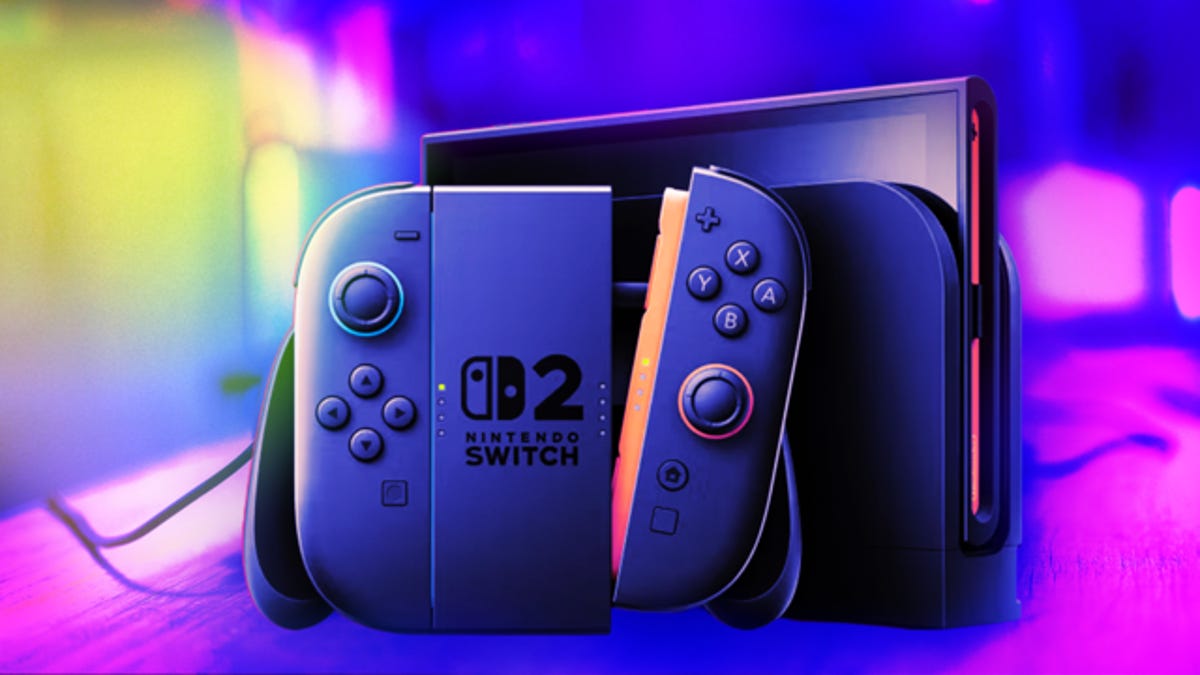
Nintendo’s Switch 2 lands as a confident sequel that refines almost every corner of the eight-year-old hybrid formula. Digital Foundry hails the console’s efficient Nvidia T239 silicon and DLSS upscaling for coaxing native 1080 p handheld play out of titles like Mario Kart World while sipping power. The bigger chassis feels lighter than it looks, and the revamped Joy-Con 2 controllers ditch drift-prone mechanisms for a sturdier, magnetic snap. Yet one element trips the applause: the 7.9-inch LCD. With peak brightness hovering around 420 nits, HDR barely earns its badge, and motion clarity dips below even the 2017 launch screen. Variable refresh rate support shows potential—40–120 Hz with low-frame-rate compensation—but inconsistencies expose unfinished firmware. In short, Switch 2 is the original concept polished almost to a sheen, and you’ll sense the upgrade everywhere except on that hazy panel.
Why Switch 2 Matters Now
Eight years is a geological age in consumer electronics, yet Nintendo’s first hybrid remains a bestseller. The sequel therefore shoulders two jobs at once: reward veterans with tangible upgrades and woo newcomers who’ve watched the Steam Deck muscle in on portable power. Digital Foundry’s verdict echoes the public mood—“a proper generational upgrade with highly impressive efficiency.” By retaining the pick-up-and-play DNA while bolting on modern silicon and creature comforts, Switch 2 feels less like a reboot and more like a well-worn hoodie that’s been stitched with smart fabric. The question is whether those stitches hold under scrutiny or unravel when the lights dim.

A Slimmer Shell With a Bigger Canvas
Nintendo stretched the chassis to fit a 7.9-inch panel yet kept thickness in line with the first model, sidestepping the bulk that dogs many PC handhelds. In daily use this translates to a device that slips into the same travel pouch but gifts your thumbs extra breathing room—and your eyes a wider window into Hyrule. Digital Foundry praises the industrial design, calling it “significantly less bulky than Steam Deck and other PC handhelds.” The matte finish shrugs off fingerprints, steel shoulder buttons upgrade tactility, and tiny rubber feet let the console sit flat without scuffing a desk. It’s the sort of quiet refinement you only notice after living with the machine—like discovering hidden pockets in a favorite jacket.
The Display Dilemma: Size vs Clarity
Here’s where the honeymoon falters. Nintendo promises HDR, yet the edge-lit LCD peaks around 420 nits, leaving specular highlights muted and blacks closer to charcoal than true midnight. More jarring is the motion blur: during fast pans in Mario Kart World, trailing ghosts smear across the screen, a regression from even the 2017 panel. Digital Foundry calls the blurring “easily worse than the 2017 Switch’s display.” Side-by-side with the OLED model, colors still pop thanks to improved calibration, but clarity pays the price. If OLED was a crisp photograph, this LCD is a glossy postcard left in the sun too long.
Blurring and Ghosting Under the Microscope
What causes the haze? The panel’s response time hovers around 22 ms, long enough for adjacent frames to overlap at 60 fps. In motion tests, white squares leave faint shadows, most noticeable against high-contrast backdrops—think Splatoon’s neon ink. For casual platformers the effect fades into the background, yet in twitch shooters every millisecond matters. Players sensitive to persistence blur may need to dial in frame-rate caps or lean on the dock and a better TV.
How It Compares to the 2017 LCD and 2021 OLED
The launch-year LCD topped out at 720 p but enjoyed quicker transitions, resulting in sharper motion despite lower resolution. The 2021 OLED raised blacks to inky depths and halved response times. Switch 2 swaps in full-HD resolution yet takes a step back in pixel persistence—a trade-off that feels like swapping reading glasses for sunglasses indoors. Your mileage will vary, but display purists may pine for OLED once the novelty wears off.
HDR on Switch 2: Promise Meets Physics
High dynamic range relies on two pillars: blazing brightness for highlights and inky blacks for contrast. The Switch 2’s edge-lit LCD achieves neither. Digital Foundry notes that “an edge-lit LCD that barely tops out at 420 nits will never deliver anything like a decent HDR experience.” Sunlight on metallic Mario Kart karts appears more like a faint glow than a dazzling gleam. In dim bedrooms the difference shrinks, but play outdoors and the panel’s HDR badge feels like a participation trophy. Firmware updates might fine-tune tone mapping, yet without hardware-level local dimming true HDR remains wishful thinking.
VRR and LFC: Theory vs Reality
Variable refresh rate could rescue performance dips by syncing the screen to fluctuating frame rates. A built-in VRR showcase hints at a 40–120 Hz window and even low-frame-rate compensation (LFC) to double frames below the floor. “A fully featured VRR on Switch 2 is possible,” Digital Foundry insists. In practice, early firmware sometimes loses sync, producing stutter rather than smoothness. Docked mode disables VRR entirely, likely to avoid HDMI handshake headaches. It’s a classic Nintendo half-step: the feature is technically present yet functionally fledgling, waiting for a patch to spread its wings.
Real-World Testing in Dynamic Games
Fire up Cyberpunk 2077 in handheld mode and you’ll catch the refresh meter bouncing between 50 and 70 Hz, neat proof of concept. But drop into a dense night-market scene and the window closes, forcing 30 fps lock and an abrupt judder. Until Nintendo tightens the VRR algorithm, competitive players may prefer fixed 60 fps caps to avoid hitches mid-gunfight.
Under the Hood: Nvidia T239 & DLSS Magic
The heart of Switch 2 is an Ampere-based Nvidia T239 SoC paired with 12 GB of unified memory—9 GB allocated to games. DLSS injection lifts sub-1080 p render targets to crisp full-HD without melting the battery. Digital Foundry spotted titles like Mario Kart World running at native 1080 p, while heavier hitters rely on DLSS to bridge the gap. In benchmark loops the chip draws roughly 7 W—about half of Steam Deck’s typical load—keeping the fan whisper-quiet even in summer heat. For a handheld younger sibling to the RTX 30-series, that’s efficiency that would make Tesla engineers blush.
Joy-Con 2: Small Tweaks, Big Wins
No more drift jokes—Nintendo swapped to Hall-effect sensors and magnetically attaching rails that snap with a satisfying clack. Longer rails reduce wobble, and optional textured backs anchor sweaty palms during marathon sessions. Digital Foundry labels the revised controllers “an improvement,” while Laptop Mag highlights the stronger grip yet still yearns for deeper ergonomics. Motion sensors now track subtler wrist flicks, handy for Splatoon rollers. The only grumble? Joy-Con 2 remain pricey accessories when bought separately, a reminder that Nintendo hardware rarely goes on sale until the next console drops.
Real-World Performance in Handheld Mode
Switch 2 turns yesterday’s struggling ports into smooth rides. The Witcher 3 hovers around 60 fps at 900 p DLSS-Quality, a feat that seemed witchcraft in 2019. Load times shrink to seconds thanks to UFS storage—Cyberpunk’s Afterlife bar appears before the opening riff fades. Battery life, however, still dances between two and four hours in taxing titles, mirroring Steam Deck rather than surpassing it. Players planning cross-country flights should pack a power bank unless they fancy speed-running indies.
Quality-of-Life Touches You’ll Notice Daily
Some upgrades dodge spec sheets but elevate daily use. Detachable USB-C power and camera cables replace the hard-wired leads of the first dock, letting you swap in a longer cord—handy when your surge protector hides behind the couch. Digital Foundry’s only gripe: Nintendo still bundles stubby one-meter cables. The kickstand spans the console’s width, doubling as a portrait prop for vertical shmups. Speakers gain rear-firing ports, projecting louder audio without cranking volume to distortion. Tiny rubber nubs on the underside stop tablet-mode slip-and-slide. Each tweak is minor, yet together they make the old Switch feel like a beta prototype.
Shortcomings and Firmware Fix Hopes
Beyond the display, software wrinkles mar the sheen. The eShop still lacks folders, themes, or a quick-resume function akin to Xbox’s. HDR toggles hide behind nested menus, and VRR defaults to “Auto,” confusing newcomers. Nintendo’s track record suggests incremental updates rather than overnight miracles, yet some pain points—like inconsistent Bluetooth headset latency—could vanish with a patch. Until then, enthusiasts resort to third-party dongles or keep wired buds handy. Hardware can’t change, but firmware can age like wine… or like milk.
Should You Upgrade or Wait?
If your launch Switch’s battery wheezes and Joy-Con drift like shopping carts, Switch 2 will feel night-and-day better. Docked players with OLED TVs might stick to the older model until an inevitable OLED-equipped Switch 2 revision surfaces. For newcomers, the choice is simpler: no other handheld balances first-party exclusives, modern performance, and couch-to-lap versatility this gracefully. Just set expectations for the screen: think “very good mid-range phone,” not “mini-OLED TV.” And maybe stash a microfiber cloth—the thin bezels love fingerprint art.
Conclusion
Switch 2 proves Nintendo can iterate without losing its spark. It sidesteps a horsepower arms race, focusing on efficiency, ergonomics, and clever silicon. DLSS elevates visuals, Joy-Con 2 banish drift nightmares, and the chassis feels premium in a way the toy-like original never did. Yet ambition stops at the glass: HDR that barely sparkles and motion blur that muddies fast action dampen hand-held magic. If Nintendo patches VRR quirks and someday blesses us with an OLED refresh, Switch 2 could flirt with perfection. Until then, it’s a brilliant upgrade—just a little blurry around the edges.
FAQs
- Does Switch 2 support true HDR?
- The console outputs HDR10, but the 420-nit LCD limits dynamic range, so highlights are muted compared with OLED TVs.
- Is Joy-Con drift finally solved?
- Yes. Hall-effect sensors in Joy-Con 2 eliminate the wear that caused drift in older sticks.
- How does battery life compare to the original Switch?
- Expect roughly two to four hours in demanding titles—similar to late-model Switch but with far higher frame rates.
- Can I transfer all my games from my old Switch?
- Absolutely. A streamlined transfer tool moves digital purchases, saves, and profile data in minutes.
- Will there be an OLED version of Switch 2?
- Nintendo hasn’t confirmed plans, but historical patterns suggest an OLED refresh is likely down the road.
Sources
- Digital Foundry: Nintendo Switch 2 ‘Impressive Upgrade Marred by Sub-Par Display’, My Nintendo News, June 21 2025
- I Played the Nintendo Switch 2 for One Week and I Desperately Want It—But Not All of It, Laptop Mag, June 18 2025
- Switch 2 Is the Continuity Candidate That Might Just Win, Polygon, June 13 2025