














Summary:
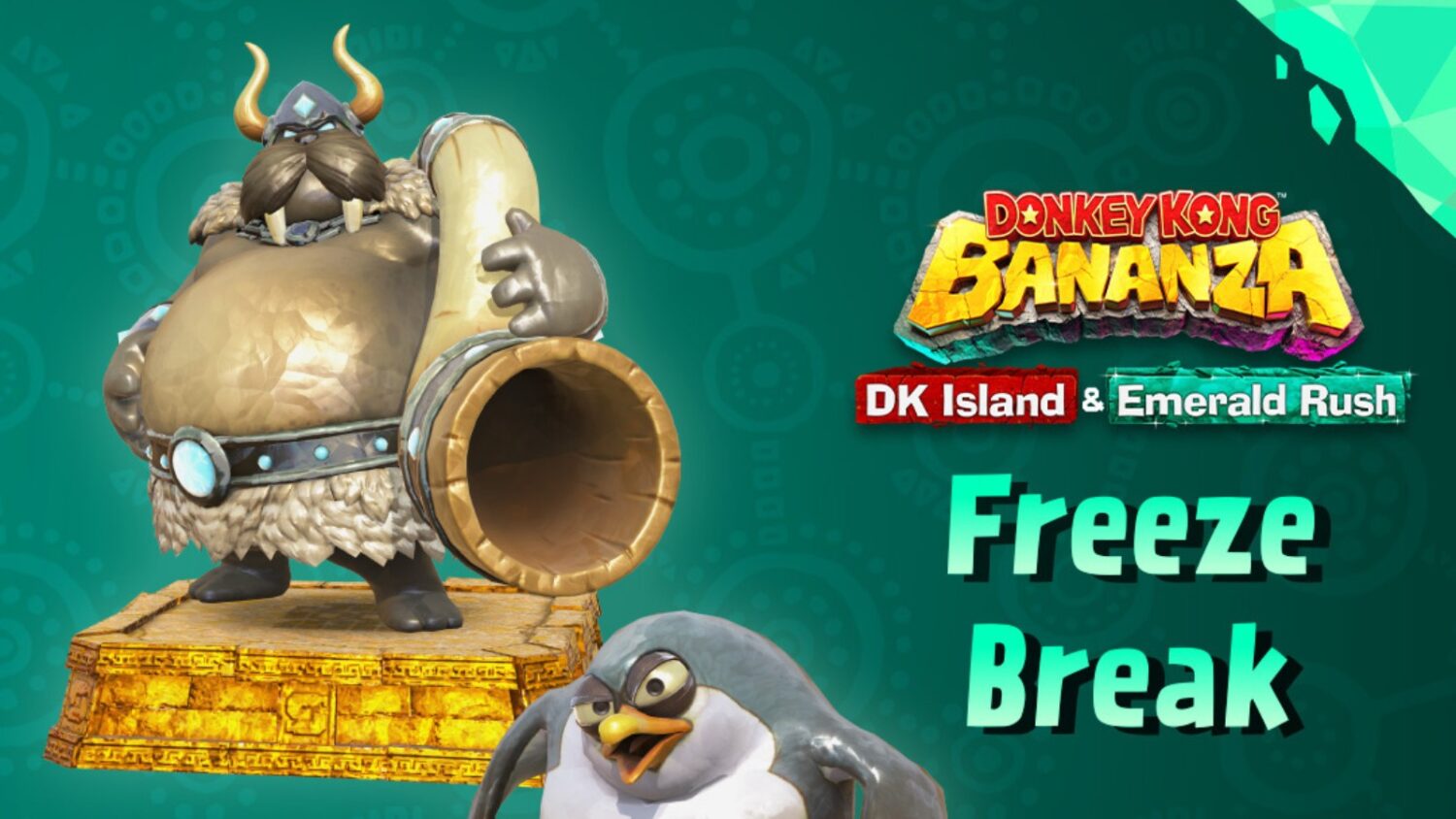
Freeze Break is the next special Emerald Rush event tied to the DK Island & Emerald Rush DLC for Donkey Kong Bananza, and it has a simple hook that’s hard to ignore: score high enough during the event window and we can unlock exclusive in-game statues based on Lord Fredrik and Tucks from Donkey Kong Country: Tropical Freeze. If we’ve been collecting statues like they’re little trophies for our best moments, this one is basically Nintendo dangling two icy carrots in front of us and saying, “Alright, show us what you’ve got.” The event runs for a limited stretch in late January 2026, so timing matters, especially if friends in different regions start talking about it like it’s already live while we’re still staring at a countdown.
What makes Freeze Break more than “the usual run, but colder” is the way it changes the feel of Emerald Rush. Instead of leaning on randomness, the event sets expectations by locking certain normally unpredictable elements into predetermined outcomes. That means preparation gets rewarded. We can learn the flow, understand what the game is handing us, and then focus on execution: clean movement, smart risk-taking, and a route that keeps the score climbing without throwing the run away at the finish line. We also get a clear theme to play around with, since the challenge takes place in a frosty setting and the rewards point straight back to Tropical Freeze. In other words, it’s part competition, part nostalgia, and part “just one more run” energy.
Freeze Break: what the event is and why it matters
Freeze Break is a limited-time Emerald Rush event inside Donkey Kong Bananza’s paid DK Island & Emerald Rush DLC, and it’s built for players who like chasing a cleaner run, a higher score, and that sweet little rush of improvement. The reward angle is the headline: by posting a high score during the event window, we can obtain exclusive in-game statues based on Lord Fredrik and Tucks, both pulled from Donkey Kong Country: Tropical Freeze. If we’ve ever looked at the statue collection and thought, “This is basically a scrapbook, but with shiny figurines,” Freeze Break adds two more pages we can only earn during this event. It matters because it’s time-limited, it has unique rewards, and it nudges us to play Emerald Rush in a more intentional way. Instead of hoping the run feels good, we’re pushed to make it good, like tightening the laces before a sprint.
Event dates and regional timing that prevents confusion
Freeze Break runs from January 20, 2026 to January 27, 2026, and the exact start and end times can vary by region depending on how Nintendo lists it for local time zones. That’s why it’s worth checking the in-game event notice and the official event listing for our region before we plan a session around it. Nobody wants to save “the grind night” for the evening only to discover the event ends that morning. If friends in the UK, Europe, or North America are talking about it at different hours, it’s not because anyone is making things up, it’s because global rollouts land differently on the clock. The practical move is simple: we confirm the event window inside the game, then treat the final day as a deadline with a buffer. Think of it like catching a train: arriving two minutes early feels boring, but arriving two minutes late feels like tragedy.
Where Freeze Break sits inside DK Island & Emerald Rush DLC
Freeze Break is exclusive to the DK Island & Emerald Rush DLC, so we need that add-on to participate. In plain terms, this is not a base-game freebie where everyone can jump in. Nintendo is using these events to keep the DLC feeling alive, with rotating challenges that give us a reason to return even after we feel settled into the main rhythm. If we already have access, the flow is straightforward: we enter Emerald Rush, select the event, and then chase the best run we can produce while the event is active. If we do not have access, the event still exists, but it’s behind that DLC gate, like a party we can hear through the wall until we get an invite. The upside is that event rules tend to be clearly explained in the event description, so we can adjust our approach quickly without guessing what’s different.
What changes in Freeze Break compared to standard Emerald Rush
The Freeze Break twist is that it reduces the usual swing of randomness by making normally random elements predetermined. That changes the mindset. In a standard Emerald Rush run, we might roll with what we get and treat it like improvisational comedy: sometimes brilliant, sometimes a mess, usually funny in retrospect. In Freeze Break, we can treat it more like rehearsal. We learn what’s coming, then refine how we respond. That rewards repetition in a healthy way because each run teaches us something useful instead of teaching us that luck exists. It also means skill gaps become easier to spot. If we keep losing time in the same section, it’s not because the game “did us dirty,” it’s because our route or execution needs work. This is the kind of event where small improvements stack up, and suddenly we’re not just playing more, we’re playing smarter.
Rewards: the exclusive Lord Fredrik and Tucks statues
The big prize for Freeze Break is a pair of exclusive statues based on Lord Fredrik and Tucks from Donkey Kong Country: Tropical Freeze. Statues are fun because they’re both collectible and visible. They are proof. When we place them on DK Island, they become a little flex that doesn’t require words. “Oh, that one?” Yes, we earned it. The event framing also matters: these are not generic statues, they are themed, and they tie the DLC event back to a beloved Donkey Kong entry. If we care about completion, this is obvious motivation. If we care about vibe, it’s still motivation, because a frozen villain statue is the kind of decor choice that makes DK Island feel like our personal trophy room. The key is that the statues are tied to performance, so we should treat the event like a short season where we show up ready to compete with our own best runs.
Who Lord Fredrik and Tucks are in Donkey Kong Country: Tropical Freeze
Lord Fredrik is the icy leader of the Snowmads in Donkey Kong Country: Tropical Freeze, the kind of villain who shows up and instantly changes the temperature of the room, literally and emotionally. He’s memorable because the theme is so clear: cold, control, and that smug boss energy that makes victory feel extra satisfying. Tucks, meanwhile, is one of the Snowmad characters associated with the same wintry crew. The reason this matters in Freeze Break is that the statues are not random picks, they are a direct nod to Tropical Freeze’s frosty identity. So when we’re running through a cold-themed challenge and chasing these statues, the whole thing feels like Nintendo lining up the set, the costume, and the prop all at once. It’s nostalgia with purpose, and it gives the rewards a story instead of making them feel like generic unlocks.
Understanding scoring so we stop guessing and start climbing
If we want a high score, we need to treat scoring like a system, not a mood. The best runs usually come from consistency: clean movement, fewer mistakes, and smart choices that keep momentum going. In score-based challenges, panic is expensive. It makes us rush, and rushing makes us sloppy, and sloppy runs end with that quiet moment where we stare at the result like it personally insulted us. The better approach is to identify what gives points, what risks cost time or points, and what sections are reliable score builders. Because Freeze Break uses predetermined elements, we can actually learn the pattern and build a repeatable plan. We can also set micro-goals, like “I will exit this section with X score,” so the run becomes a sequence of checkpoints instead of one long blur. It’s like cooking: we get better when we measure, taste, and adjust, not when we throw ingredients and hope for magic.
Route planning in Freezer Layer: momentum beats improvisation
Freeze Break takes us into a frosty setting that Nintendo describes as Freezer Layer, and the name alone tells us what to expect: slippery vibes, cold visuals, and sections that punish hesitation. Route planning is where we win or lose time without even realizing it. If we wander, we bleed seconds. If we choose a path that looks safe but is slow, we might finish clean but finish lower on the leaderboard. A good route is one we can repeat. We want a line that keeps us moving forward, keeps our actions purposeful, and avoids “dead air” moments where nothing valuable happens. The first few runs should be scouting. We learn where the score opportunities are, where the biggest time sinks live, and where we tend to make the same mistake twice. Then we stop treating the course like a maze and start treating it like a track.
Working with fixed Skills and predetermined outcomes
When Skills and other normally random elements are fixed, we should treat them like guaranteed tools, not surprises. That means we can plan around them. If we know what we’ll receive, we can decide in advance how to use it, where it saves time, and where it’s not worth forcing. A common trap is trying to use every tool just because it exists. Sometimes the best use of a tool is not using it at all, especially if it pulls us off-route or breaks our rhythm. The advantage of a fixed setup is that we can practice the same sequence until it becomes muscle memory. The first run might feel awkward. The fifth run feels familiar. The tenth run feels like we’re playing with a map in our head. That’s the moment scores jump, not because we “got lucky,” but because we removed uncertainty from our decisions.
Small details that can quietly save a run
Freeze Break is the kind of event where tiny habits make a big difference. Restarting quickly after a bad early segment can be smarter than dragging a doomed run to the finish, especially if our goal is a top score rather than a “good enough” clear. Watching the clock and our score together helps, because sometimes a run is fast but not rich, and sometimes it’s rich but slow, and we need the balance that best fits the scoring rules. Another quiet trick is controlling our emotional pacing. If we get tilted, we play worse, period. So we build a routine: two serious attempts, one lighter attempt to reset, then back to serious. We also keep an eye on consistency. A slightly lower-risk route that we can execute perfectly might beat a high-risk route we only nail once every twenty tries. Reliable points are still points, and they add up like interest.
Claiming, placing, and showing off statues on DK Island
Statues are more fun when they do not just vanish into a menu, and Donkey Kong Bananza treats them as real objects we can find and place on DK Island. That means the reward has presence. Once we earn the Freeze Break statues, we can integrate them into our island setup like trophies in a clubhouse. Placement becomes part of the reward loop: we earn, we display, we smile every time we pass them. If we’re the type who loves collecting, this is where the collection stops being a checklist and starts being a space that tells a story. If we’re the type who does not care about decorating, it still matters because statues are proof of participation and performance. Either way, the key is making sure we claim the rewards properly during the event window and then confirming they appear in our statue collection afterward.
Common pitfalls and quick troubleshooting habits
The most common Freeze Break mistake is waiting too long. Limited-time events feel generous until the final day shows up and suddenly life gets busy, the schedule gets weird, and the event ends before we hit our target score. Another pitfall is assuming every run should be a personal best. That’s not how practice works. Some runs are scouting, some are warmups, some are resets, and a few are the real attempts. We also want to avoid chasing a perfect run when a strong run is already within reach. If we land a score that feels competitive, we can bank it, then decide whether to push higher with less pressure. On the technical side, we should verify we are connected properly when the event requires online features for leaderboards or reward validation, and we should check the event screen for any specific conditions. The game usually tells us what’s different, and reading it saves time and frustration.
Conclusion
Freeze Break is a short, focused Emerald Rush event that rewards preparation, repeatable routing, and calm execution. The window from January 20 to January 27, 2026 gives us enough time to learn the course, refine a plan, and still chase a higher score without turning it into a week-long obsession, unless we want it to be, of course. The exclusive statues based on Lord Fredrik and Tucks give the event a clear purpose, and the Tropical Freeze connection makes the whole theme feel intentional instead of random. If we approach it like a sprint, we might burn out. If we approach it like a series of smart attempts, we’ll improve naturally, lock in a strong score, and walk away with rewards that look great on DK Island. And honestly, nothing beats the feeling of placing a new statue and thinking, “Yeah, we earned that.”
FAQs
- When does the Freeze Break event run?
- Freeze Break runs from January 20, 2026 to January 27, 2026, with exact start and end times depending on region, so we should confirm the window in-game for our time zone.
- Do we need the DK Island & Emerald Rush DLC to participate?
- Yes. Freeze Break is an Emerald Rush event that is exclusive to the DK Island & Emerald Rush DLC, so access requires owning that add-on.
- What rewards can we earn during Freeze Break?
- By achieving a high score during the event, we can obtain exclusive in-game statues based on Lord Fredrik and Tucks from Donkey Kong Country: Tropical Freeze.
- What makes Freeze Break different from a standard Emerald Rush run?
- Freeze Break changes the feel by using predetermined outcomes for elements that are normally random, which means preparation and repeatable planning matter more than luck.
- What is the best way to improve our score quickly?
- We get the fastest improvement by learning a consistent route, reducing mistakes, and treating early runs as scouting so later runs are focused execution rather than improvisation.
Sources
- Donkey Kong Bananza | Nintendo Switch 2 games, Nintendo, July 17, 2025
- Statues featuring characters from Donkey Kong Country: Tropical Freeze are up for grabs in the next #DonkeyKongBananza Emerald Rush event, Nintendo of Europe (X), January 15, 2026
- Donkey Kong Bananza Emerald Rush DLC gets Freeze Break event with Tropical Freeze statues, Shacknews, January 15, 2026
- Nintendo Download – Thursday, January 15, 2026, Worthplaying, January 15, 2026
- Donkey Kong Bananza: All Emerald Rush Events & Rewards, Nintendo Life, November 2025