














Summary:
Donkey Kong Bananza has already earned attention for being linked to the same Nintendo team behind Super Mario Odyssey, but a recent comment from producer Kenta Motokura adds another layer to the conversation. According to Motokura, the shift from Odyssey to Bananza was not a straight line, yet certain experiments, concepts, and technical ideas from one project helped point the way toward the next. He now expects something similar to happen again, with parts of Donkey Kong Bananza potentially acting as clues for whatever the team builds after this. That does not mean Nintendo is simply recycling old work or turning every game into a remix with a different mascot. It means the studio’s process appears to thrive on testing mechanics, discovering what feels exciting, and then carrying forward the strongest sparks into a fresh setting where they can grow into something bigger.
That makes this quote especially interesting because it says a lot about how Nintendo develops major releases. Bananza and Odyssey may share development DNA, but they are clearly built around different identities. One leans into agile platforming and transformation-driven creativity, while the other pushes power, destruction, and a heavier physical presence. Motokura’s comment suggests that Nintendo sees each release not only as a finished experience but also as a stepping stone. Ideas that do not fully bloom in one game can return later in a stronger, more focused form. For fans, that opens the door to plenty of speculation. Could the next title build on Bananza’s sense of scale, world interaction, or mechanical boldness? Maybe. What matters most is that Nintendo appears to be using each project as a workshop for the future, and that gives this quote real weight.
Donkey Kong Bananza and the Super Mario Odyssey connection
From the moment Donkey Kong Bananza was revealed, plenty of players noticed the fingerprints of the Super Mario Odyssey team. That connection was not just fan guesswork thrown at the wall like a bunch of bananas. It came through in the expressive animation, the playful energy, and the sense that the people making it understood how to build movement, surprise, and spectacle into every corner of a game world. Even so, Bananza did not end up feeling like Odyssey wearing a Donkey Kong costume. That would have been the easy route, and Nintendo rarely gets excited by the easy route. Instead, the team used shared experience as a launchpad while steering the game toward something with a different rhythm, a different physicality, and a different fantasy at its core. That is what makes Kenta Motokura’s remarks so revealing. He is pointing to a development pattern where one project leaves behind traces, experiments, and half-open doors that the next project can walk through.
What Kenta Motokura actually said
Motokura explained that the jump from Super Mario Odyssey to Donkey Kong Bananza already showed how this process works. Some concepts and technical discoveries from Odyssey acted as hints that later helped shape Bananza. He then said he expects the same thing to happen again, with ideas from Donkey Kong Bananza likely offering future hints for the team’s next project. That phrasing matters because it is measured and specific. He did not promise direct sequels, and he did not spell out a roadmap in giant neon letters. Instead, he described a creative handoff, almost like one game leaving breadcrumbs for the next. It is a very Nintendo kind of statement. The company often speaks in careful terms, but even careful terms can say a lot. Here, the message is that Bananza may be more than a standout release in its own right. It may also be a testing ground for mechanics, design lessons, and development ideas that could reappear in surprising ways later on.
Why the quote lands with fans
Fans love a comment like this because it invites speculation without drifting into fantasy football territory. There is enough there to be meaningful, but not so much that the mystery disappears. People naturally want to know what comes next from a team with such a strong track record. When the same creative group has now helped define both Super Mario Odyssey and Donkey Kong Bananza, every small remark starts to feel like a clue hidden under the floorboards. And honestly, that excitement makes sense. Nintendo’s best teams often do not throw away good ideas just because one project ships. They refine them, reshape them, and wait for the right moment to let them shine. That makes Motokura’s quote feel less like casual promotion and more like a peek into the workshop. You can almost hear the tools clanking in the background while somebody says, “Keep that one, we might need it later.”
Why the quote matters for Nintendo fans
For Nintendo fans, this is the kind of statement that sticks because it reveals how the company thinks about momentum. Big releases are rarely isolated islands. They often carry lessons from earlier work, whether that comes through technical foundations, design instincts, or ideas that needed more room to breathe. Bananza appears to be part of that chain. It stands on experience gained from Odyssey, but it also seems ready to hand something forward. That is exciting because it suggests Nintendo is still building with long-term creative continuity in mind. Fans are not just looking at one successful release. They may be looking at the early shape of another one that has not even been announced yet. It is like catching a reflection in a shop window before you realize what is standing behind you. You do not see the full picture, but you know something is there, and suddenly every detail feels worth studying.
How Nintendo often builds from prior work
This approach lines up with how Nintendo development has been described over the years. Teams experiment, prototype, and explore unusual ideas, then revisit them later when hardware, timing, or the right game concept makes them more viable. Bananza itself reflects that kind of evolution. Rather than feeling like a clone of Odyssey, it seems to have taken certain underlying lessons and rebuilt them around Donkey Kong’s strengths. That difference is important. Nintendo is not just copying a formula from one mascot to another like swapping hats on the same actor. It is more like taking a good engine out of one vehicle and designing a completely different machine around it. That helps explain why Motokura’s quote rings true. It is not about repeating success in the most obvious way. It is about keeping the best sparks alive until they can ignite something new.
Why this does not point to a simple sequel
It would be easy to read this and immediately jump to the idea of a direct follow-up, maybe another 3D Mario game or another large-scale Donkey Kong release from the same team. But that is not really what the wording suggests. Motokura talks about ideas acting as hints, not as a blueprint that locks the future into one lane. Nintendo tends to chase freshness, and that means the next project could look very different on the surface even if it borrows hidden lessons from Bananza under the hood. Think of it like a chef reusing a technique rather than the full dish. You may recognize the touch, the structure, or the balance, but the final meal still arrives with its own flavor. That is why the quote is more intriguing than a straight sequel tease. It opens the door wider than that.
How Super Mario Odyssey quietly shaped Donkey Kong Bananza
One of the most interesting parts of this whole story is how openly Nintendo has discussed the broader connection between Odyssey and Bananza. The overlap is not only about staff members moving from one project to the next. It is also about development knowledge carrying over. That kind of continuity matters because great games are rarely made from scratch in the purest sense. Teams bring their habits, tools, discoveries, and hard-won lessons with them. In Odyssey, the focus was on lively movement, inventive interaction, and constantly rewarding curiosity. Bananza took a different route, yet the spirit of experimentation clearly remained. You can see how a team that learned to surprise players through action and environmental play in one project might later channel that experience into a heavier, more forceful style built for Donkey Kong. The costume changed, but the creative confidence stayed in the room.
The importance of technical experiments
Official Nintendo materials around Donkey Kong Bananza have already highlighted that technical experimentation played a major role in the game’s evolution. That matters here because Motokura’s quote is not just about broad inspiration or vague creative vibes. It likely touches on real development building blocks, the nuts and bolts that made certain features possible or helped the team think differently about what a character could do in a space. Sometimes a mechanic appears in one project before it finds its true purpose in another. That is the fun part of Nintendo development. It often feels like a toy box where one strange prototype can sit quietly for years before suddenly becoming the star of the room. Bananza seems to be another example of that philosophy in action, and now it may be the one leaving a few new toys on the floor for the next game to pick up.
Shared DNA, different identity
Even with those connections, Bananza still had to stand on its own. A Donkey Kong game cannot just borrow Mario’s shoes and hope nobody notices. The personality has to be different. The sense of power has to be different. The way players read movement, impact, and space has to fit Donkey Kong rather than Mario. That is where shared DNA becomes interesting instead of limiting. It gives the team a strong foundation, but it also challenges them to bend that foundation into a different shape. Judging by the conversation around Bananza, that seems to be exactly what happened. The end result is not important because it resembles Odyssey. It is important because it proves the team can transform familiar experience into something that feels built for another hero entirely.
The lesson hidden inside that transition
The real lesson from the Odyssey-to-Bananza shift is that Nintendo’s best ideas are not always tied to one franchise forever. A mechanic, a technical trick, or a design philosophy can migrate if the next project gives it a stronger home. That makes Bananza’s role in the studio’s future especially interesting. It may contain pieces that are not yet finished speaking. Some might evolve into a future Mario game. Some might feed another Donkey Kong adventure. Some could even surface in something unexpected. That uncertainty is part of the appeal. It turns Bananza into more than a destination. It becomes a signpost.
The role of experimentation in Nintendo development
Nintendo has long treated experimentation as a core part of game creation, and Motokura’s comment fits right into that tradition. The company often seems happiest when it finds one unusual idea and then starts twisting it from every angle to see what happens. Sometimes that leads to a central mechanic. Sometimes it becomes a supporting feature. Sometimes it disappears for a while and then comes back wearing a fake moustache in a later release. Bananza sounds like the kind of project that came out of sustained trial and error rather than a single clean pitch from day one. That is usually where the magic comes from. Not from a perfect plan that dropped from the sky, but from a room full of smart developers testing strange possibilities until one of them suddenly feels electric. When Motokura says Bananza may hint at the future, he is really describing the afterglow of that process.
Why experimentation helps Nintendo stay fresh
Experimentation protects Nintendo from becoming too predictable. Even when the company returns to familiar characters, it usually tries to bring a new hook, a new structure, or a new perspective to the experience. That keeps long-running series alive instead of letting them gather dust in a trophy case. Players do not just want to see a mascot again. They want to feel something new with that mascot. That is why Motokura’s additional emphasis on freshness matters so much. Yes, ideas may carry forward from Bananza. But they will only survive if they still feel new to players in whatever form comes next. That is a healthy filter. It stops the team from treating old ideas like sacred relics and forces them to ask the harder question: does this still feel exciting right now?
Why Donkey Kong Bananza became its own thing
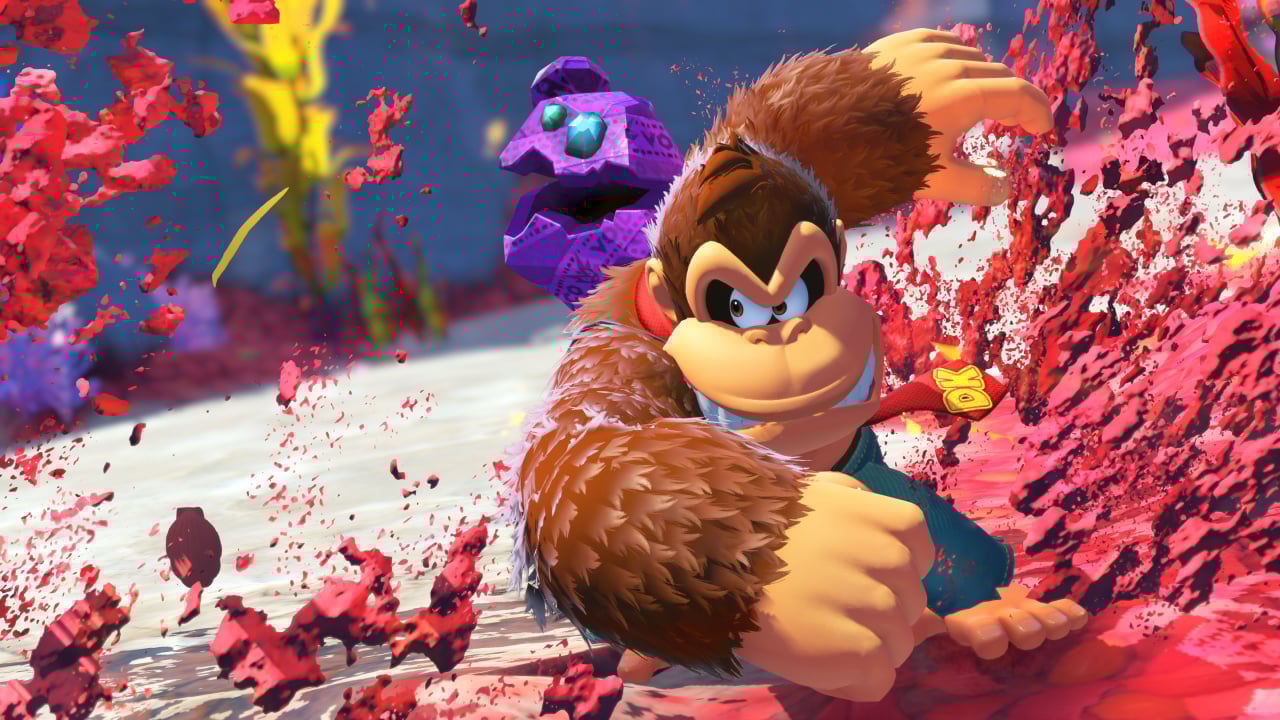
Bananza may share roots with Odyssey, but it clearly developed its own identity through the way it handles action, momentum, and environmental interaction. That is important because a lesser studio might have leaned too hard on familiar success. Nintendo instead seems to have looked at Donkey Kong and asked what kind of experience only this character could support. That sort of thinking changes everything. Instead of building around nimble acrobatics alone, the team could emphasize force, impact, and tactile chaos. The result is a game that seems shaped around Donkey Kong’s personality rather than one awkwardly squeezed into a Mario-flavored mold. That is exactly why the quote about future hints carries so much weight. If the team has already shown it can convert shared experience into a distinct identity once, there is every reason to believe it can do it again with whatever comes next.
Character-first design makes the difference
Character-first design is often the secret sauce in Nintendo’s strongest releases. Mechanics matter, of course, but they feel richer when they seem inseparable from the hero you are playing. With Bananza, the ideas that carry over from Odyssey do not matter because they once existed elsewhere. They matter because the team found a way to rebuild them around Donkey Kong’s strengths. That is the difference between inspiration and imitation. One creates something new. The other just photocopies the old thing until the ink fades. Bananza appears to have landed on the right side of that line, which is why Motokura’s latest remarks feel promising rather than worrying.
What ideas could carry into the next project
This is where speculation gets fun, but it also needs to stay grounded. Motokura did not identify specific mechanics, so any prediction has to remain careful. Even so, it is reasonable to think the most transferable elements would be broader development lessons rather than one gimmick lifted whole cloth. That could include how the team handles environmental interaction, how it teaches players through playful experimentation, how it balances spectacle with responsiveness, or how it builds worlds that encourage curiosity without losing momentum. In other words, the next project may not copy Bananza’s surface features, but it could inherit the confidence behind them. The real carryover might be in how the team thinks, not just in what the player sees. And honestly, that is often where the most exciting evolution happens. The visible change comes later. The mindset shifts first.
Scale, interaction, and player freedom
If Bananza leaves behind any strong hint for the future, it may be in the team’s willingness to let players interact with space in bold ways. Modern Nintendo releases often shine when they trust players to poke, prod, and experiment instead of just marching down a narrow path. Bananza seems to fit that philosophy while expressing it through Donkey Kong’s particular strengths. That does not mean every future game from this team will look destructive or heavy. It does suggest that the developers are interested in richer forms of interaction and the kind of systems that make players grin because they discovered something themselves. That feeling is gold. Once a studio knows how to create it reliably, you can bet it will not leave that skill sitting on the shelf.
Freshness remains the real priority
The most important part of Motokura’s broader message may actually be the caution built into it. He did not say the next project will simply build on Bananza because that is what the team does. He made clear that the real standard is whether something feels fresh in a new title. That line keeps expectations grounded. It tells fans that Nintendo is open to carrying ideas forward, but only when those ideas still create a sense of novelty. That is a good sign. It means the studio is not trapped by its own success. Instead, it is using past work as material, not as a cage. Freshness is the compass. Bananza may point north, but the next game still has to find its own path through the jungle.
Why that philosophy matters more than any single tease
Fans naturally chase direct clues, but the broader design philosophy may be more revealing than any individual hint. A studio that openly values freshness while still learning from prior work is a studio that can keep surprising people. That is what has helped Nintendo stay relevant across generations. The company often looks backward for lessons, yet it tries not to sound or feel trapped in nostalgia. It is a tricky balance. Lean too far one way and everything feels disconnected. Lean too far the other and everything feels recycled. Motokura’s wording suggests the team understands that balance well. Bananza may help shape what comes next, but only if the result still feels genuinely new when players finally get their hands on it.
What this could mean for Nintendo’s next major release
So what should fans take away from all of this? The safest conclusion is that Donkey Kong Bananza may matter beyond its own launch window. It could end up being one of those releases that looks even more important in hindsight because it helped set the stage for whatever the team creates next. That does not confirm a new 3D Mario, a second Bananza, or some surprise project nobody sees coming. What it does confirm is that Nintendo’s internal creative pipeline is active, connected, and still willing to evolve. That alone is worth paying attention to. When a producer with Motokura’s background says a game may offer hints about the future, it is not random small talk. It is a reminder that major Nintendo releases often leave echoes behind them, and sometimes those echoes grow into the next big thing.
Why this is worth watching going forward
Going forward, the smartest way to read comments like this is with curiosity rather than certainty. Fans do not need to force every detail into a prediction machine. Sometimes the most useful takeaway is simply understanding how Nintendo’s teams think. Bananza appears to be part of a creative chain that stretches back through Odyssey and forward into an unannounced future project. That is exciting enough on its own. It means the game is not just a one-off spark. It may be part of a larger fire still being built. And for anyone who enjoys tracking Nintendo’s major studios, that is the kind of detail worth circling in red ink. Quietly, patiently, and maybe with a banana-shaped bookmark for dramatic effect.
Conclusion
Kenta Motokura’s remarks give Donkey Kong Bananza extra significance because they frame it as both a finished experience and a possible source of ideas for what comes next. The team behind Super Mario Odyssey has already shown it can take lessons from one project and transform them into something with a very different identity, and Bananza looks like another example of that creative process at work. The most important takeaway is not that Nintendo has confirmed a specific sequel or genre direction. It is that Bananza may contain early signals of the studio’s future thinking. That matters because Nintendo tends to do its best work when it experiments, refines, and then reintroduces strong ideas in ways players did not expect. If Motokura is right, the real legacy of Donkey Kong Bananza may not end with this release. It may continue in the shape of the team’s next big surprise.
FAQs
- What did Kenta Motokura say about Donkey Kong Bananza and Nintendo’s next project?
- He said that just as ideas from Super Mario Odyssey helped hint at the future development of Donkey Kong Bananza, some ideas from Bananza could also provide hints for the team’s next project.
- Does this mean Nintendo has confirmed a new 3D Mario game?
- No. The quote does not confirm a specific game. It only suggests that certain ideas or lessons from Bananza may carry into whatever the team develops next.
- Why are people linking Donkey Kong Bananza to Super Mario Odyssey?
- Because Bananza is associated with key talent from the Odyssey team, and Nintendo has also discussed development connections between the two projects.
- Could the next project be another Donkey Kong game instead?
- That is possible, but not confirmed. Motokura’s wording leaves room for many outcomes, including a different franchise or a brand-new direction.
- What is the biggest takeaway from this quote?
- The biggest takeaway is that Nintendo appears to be treating Bananza as part of a larger creative progression, where experiments and strong ideas can help shape future releases.
Sources
- “Some ideas from Donkey Kong Bananza” may inform Nintendo’s next big project, producer says, but “the standard is really what will feel fresh to a player in a new title”, GamesRadar+, March 15, 2026
- Ask the Developer Vol. 19: Donkey Kong Bananza – Part 1, Nintendo, July 15, 2025
- Ask the Developer Vol. 19: Donkey Kong Bananza – Part 2, Nintendo, July 15, 2025