














Summary:
Dungeons of Dusk is stepping into the spotlight as New Blood Interactive and 68k Studios bring a classic style dungeon crawling RPG to Nintendo Switch and Nintendo Switch 2 in 2026. Set between the episodes of the cult hit shooter Dusk, this new project takes the grim world and heavy metal energy of the original and reshapes it into a turn based crawl packed with traps, monsters and chunky weapons. A full 30 level campaign with character progression and NPCs sits at the core, backed by an endless arena, boss rush and survival modes that exist purely to see how long you can keep your nerve. For Nintendo players, this means a chance to experience Dusk’s universe in a very different format, with portable play making those slow, tactical turns perfect for long commutes or late night sessions. With releases planned across multiple platforms in 2026 and a demo on the way for PC, Dungeons of Dusk is already looking like one of the more interesting RPG announcements to land on Switch and Switch 2.
Dungeons of Dusk on Nintendo Switch and Nintendo Switch 2: what has been announced
Dungeons of Dusk has been officially confirmed for both Nintendo Switch and Nintendo Switch 2, with a launch window set for 2026. Publisher New Blood Interactive and developer 68k Studios have outlined that this project is a classic turn based dungeon crawling RPG rather than a straight shooter, even though it shares a name and universe with the original Dusk. The Switch and Switch 2 versions sit alongside releases on PlayStation, Xbox, PC and mobile, but the Nintendo announcement is especially eye catching because it brings a cult PC focused series to a hybrid system where RPGs often thrive. The reveal came with a trailer and feature breakdown that highlight a full campaign, multiple challenge modes and support across modern platforms, making it clear this is not a tiny side experiment.
Where Dungeons of Dusk sits in the Dusk universe
If you bounced off the original Dusk or simply never got around to it, the positioning of Dungeons of Dusk within that universe might sound confusing at first. Rather than retelling the story of the shooter, this RPG takes place canonically between the episodes of Dusk, filling in some of the gaps and letting players spend more focused time in locations that might have flown past in a whirlwind of bullets. The world still leans heavily into rusted metal, haunted farmland and occult scenery, but decisions are now made turn by turn instead of in a split second. Long time fans get a fresh lens on familiar threats and themes, while newcomers can treat this as their first visit to the setting without needing to memorise every detail of the original campaign. It is a bridge piece that indulges nostalgia without locking out new players.
Gameplay overview for Nintendo players
On Nintendo hardware, Dungeons of Dusk plays out as a grid based, turn based dungeon crawler with a heavy focus on positioning, resource management and risk taking. You move through twisting corridors, interact with NPCs and explore rooms step by step, deciding when to push forward and when to fall back to avoid being surrounded. Attacks, spells and weapon skills all consume resources in different ways, so reckless play can leave you short of ammunition or health when a bigger threat appears. Rather than the constant strafing and circle shooting that defined Dusk, this project wants you to plan ahead, set up ambushes and learn enemy patterns over time. The mood remains loud and grimy, with big weapons and unsettling monsters, but Nintendo players can enjoy it at their own pace, pausing between turns or closing the system mid dungeon without losing progress.
Game modes in Dungeons of Dusk
One of the big hooks that helps Dungeons of Dusk stand out is the range of modes packed into the package. Instead of offering only a single campaign, the game ships with a 30 level story path, an endless arena, a dedicated boss rush and a punishing survival mode. Each of these takes the same core combat rules and enemy pool but twists the goals and pacing so that you are never just repeating the same flow. It means that people who prefer story can focus on the campaign, while players who love testing their builds and skills against tougher and tougher odds can live in the challenge modes. For a Nintendo audience used to dipping in and out of games on the go, those shorter, high intensity modes are likely to feel especially natural.
The 30 level campaign with character progression and NPCs
The main campaign in Dungeons of Dusk spans 30 distinct levels, each designed to push you deeper into the twisted world between Dusk’s episodes. Along the way you meet NPCs that offer quests, flavour dialogue, shops or hints, making the crawl feel more like a journey than a simple sequence of fights. Character progression underpins everything: you build and refine your hero as you go, selecting stats, abilities and gear that suit your playstyle. Maybe you lean into raw damage with brutal weapons, or perhaps you focus on tools that control space and delay enemy turns. Because the campaign is finite rather than endless, every decision lands with more weight. There is always another room to clear, another staircase to descend and another choice to live with as you push toward the final floor.
Endless arena mode for score chasers
The endless arena mode flips the structure on its head by stripping away the travel and story pacing and dropping you straight into repeated combat encounters. Here the question is simple: how long can you last as waves of enemies escalate in speed, damage and variety. Instead of worrying about long term progression across dozens of levels, you experiment with builds that spike early power or lean into sustain, trying to squeeze one more round out of each attempt. For players who love chasing leaderboards or personal records, this mode has obvious appeal. It is also perfect for quick sessions on a handheld, since you can jump in, play a few waves and back out again without losing track of a larger campaign plot.
Boss rush mode for pattern masters
Boss rush mode is designed for the kind of player who looks at a huge health bar and a screen filling attack pattern and smiles. Instead of clearing out regular rooms, you face major encounters back to back, each one built to highlight a different twist in the combat system. Some bosses might emphasise positioning, forcing you to keep your distance or dance around hazards, while others press you with adds or tight turn timers. Because these fights come in sequence, resource management becomes a puzzle of its own. You cannot burn every healing item or powerful ability on the first threat if you want to see the later ones. It is a natural fit for fans of Dusk’s most memorable encounters who want to test themselves again in a new format.
Survival mode for players who thrive under pressure
Survival mode, as the name suggests, cares about how long you can keep going when the odds are stacked against you from the first step. Instead of a gentle early ramp, the game throws frequent threats at you and dares you to adapt on the fly. Maybe you find a powerful weapon early but very little healing, or perhaps the dungeon layout and enemy mix change in ways that punish familiar routines. Surviving here is less about building a perfect run and more about staying calm when everything is falling apart. It can be a stressful way to play, but for people who enjoy edge of the seat tension and stories of last turn escapes, survival mode might become the place they spend most of their time.
Enemies: new horrors and familiar faces from Dusk
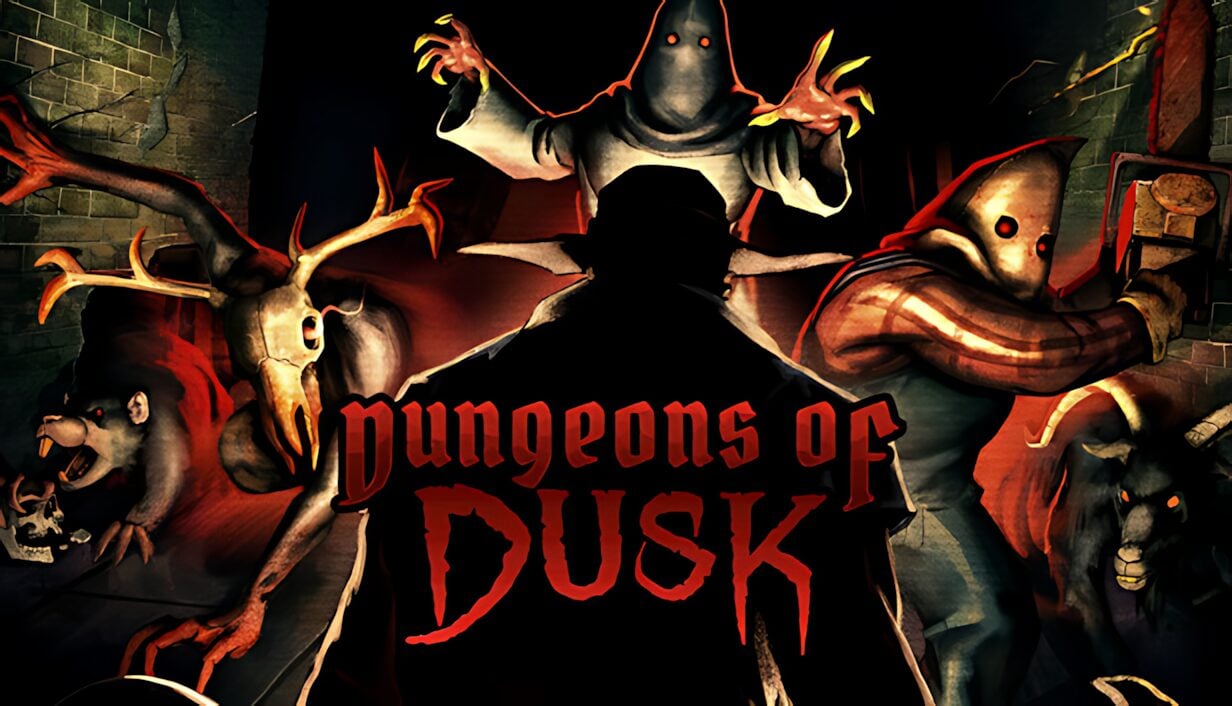
The enemy roster is another area where Dungeons of Dusk leans hard into its roots while still giving veterans something fresh to chew on. New monsters arrive specifically tuned for turn based play, with abilities that control the grid, force movement or punish careless positioning. At the same time, familiar foes from Dusk appear in new forms, their behaviours translated into rules that work in a slower, more tactical context. A creature that used to rely on fast rushdown might now close distance over several turns, while ranged threats can pin you in place or deny safe tiles. The marketing language leans into the idea of new enemies messing with your head and familiar ones eager to eat your lead, and within a turn based system that combination promises a mix of mind games and raw damage that should keep fights from feeling routine.
Platforms, release window and support beyond Nintendo
While the focus here is on Nintendo Switch and Nintendo Switch 2, it is worth noting just how wide the platform list is for Dungeons of Dusk. New Blood Interactive has confirmed versions for PlayStation 5, Xbox Series consoles, PC through Steam and GOG, macOS, iOS, Android and even Steam Deck support, with the game targeting a 2026 launch across the board. A PC demo is planned ahead of release, giving curious players a taste before committing. The team has also used social channels to highlight that the project is coming to mobile as well as traditional platforms, which says a lot about their confidence in the turn based format and interface scaling. For Nintendo players, this broad push is a good sign, since it usually means continued updates, balancing and bug fixes across all supported systems rather than a one and done drop.
Why Dungeons of Dusk feels built for handheld play
Even though Dungeons of Dusk is landing on big living room systems, there is something about its structure that feels tailor made for a handheld like Nintendo Switch and Switch 2. Turn based dungeon crawlers are easy to pause, pick up and put down, which fits perfectly with short sessions on the couch, in bed or on the train. The 30 level campaign divides progress into neat chunks, while the arena, boss rush and survival modes give you satisfying runs that do not demand an entire evening. Visuals rooted in retro horror and stylised environments also tend to scale well across docked and handheld resolutions. Add in the simple satisfaction of planning out your moves on a smaller screen with headphones on, and it is easy to picture Dungeons of Dusk becoming one of those games you chip away at over months rather than binging in a single weekend.
How to prepare for launch and stay updated
If this project has landed on your radar and you already know you want to explore its dungeons on Nintendo hardware, there are a few easy ways to get ready ahead of the 2026 release. On PC, you can already wishlist Dungeons of Dusk on platforms like Steam and GOG, which helps you track updates, trailers and demo news. Following New Blood Interactive and 68k Studios on social media also keeps you in the loop whenever a new clip, developer comment or feature breakdown appears. Since a demo is planned on PC before launch, trying that version is a smart way to learn the basics, test performance on your hardware and decide which difficulty or mode feels best for you. By the time the Switch and Switch 2 versions arrive, you will already have a feel for what kind of build you want to chase.
Wishlist, follow New Blood Interactive, and try the demo on PC
Being proactive now can make your first hours with the Nintendo release smoother and more rewarding. Adding the game to your wishlist on digital stores not only sets up handy notifications but also signals interest, which can support visibility for projects like this. Keeping an eye on New Blood Interactive’s official accounts and the personal feeds of developers often reveals small design insights, fun gifs and clarifications that do not always make it into trailers. When the PC demo arrives, treating it as a playground rather than a one off trial lets you experiment with different playstyles, control options and difficulty settings. All of that carries forward mentally when you eventually sit down with the Switch version, helping you spend less time second guessing early choices and more time enjoying the ride down into the dungeon.
Why this announcement matters for retro shooter and RPG fans
Dungeons of Dusk is interesting not just because it brings a new RPG to Nintendo hardware, but because of what it represents for fans of older shooters and their worlds. Instead of simply remastering or lightly tweaking the original Dusk again, New Blood Interactive is expanding that universe sideways into a different genre and embracing a slower, more tactical format. For players who fell in love with the atmosphere and music but wished for more time to soak in each location, this is a chance to linger. For RPG fans who have heard people praise Dusk for years but never felt at home in a fast first person shooter, this might be the most welcoming entry point yet. On Switch and Switch 2, where plenty of players already hop between action, strategy and role playing, Dungeons of Dusk has the potential to become a shared meeting place for both groups.
Conclusion
Dungeons of Dusk brings together the mood of a cult shooter and the pacing of a classic dungeon crawler in a way that feels surprisingly natural, especially on hardware like Nintendo Switch and Nintendo Switch 2. A meaty 30 level campaign, a line up of challenge modes and a mix of new and familiar enemies all point toward a project that respects its roots while still trying something different. With a broad platform rollout planned for 2026, a PC demo on the horizon and clear support from New Blood Interactive, it already looks like a strong option for players who enjoy methodical, turn based combat with a horror edge. If you have ever wanted to wander the world of Dusk at your own pace, making careful decisions instead of reacting purely on instinct, this announcement is a very easy one to get excited about.
FAQs
- What kind of game is Dungeons of Dusk on Nintendo Switch and Switch 2
- Dungeons of Dusk is a classic style turn based dungeon crawling RPG that takes place between the episodes of the original Dusk shooter. Instead of fast first person action, you move through dungeons step by step, manage resources and make tactical decisions as you fight monsters, talk to NPCs and develop your character across a 30 level campaign and various challenge modes.
- When will Dungeons of Dusk release on Nintendo Switch and Nintendo Switch 2
- The game is currently scheduled to launch in 2026 on Nintendo Switch and Nintendo Switch 2 alongside other platforms. A specific day and month have not been announced yet, but the year window is confirmed, and a PC demo is planned to arrive ahead of the full release, giving players an early taste of how the game feels.
- How does Dungeons of Dusk connect to the original Dusk shooter
- Dungeons of Dusk is set canonically between the episodes of Dusk, using the same universe, tone and broad story backdrop while changing the gameplay style. You will encounter locations, enemies and themes that echo the shooter, but they are presented in a turn based format that lets you take your time. You do not need to finish the original Dusk to follow what is happening here, although fans will recognise plenty of nods.
- What modes are included in Dungeons of Dusk on Nintendo consoles
- Alongside the main 30 level campaign, Dungeons of Dusk includes an endless arena mode focused on waves and high scores, a boss rush mode that chains major encounters together and a survival mode that throws constant pressure at you. These different modes reuse the same combat rules and enemies but change the structure and goals so that you can always find a style of play that suits your mood or available time.
- On which platforms besides Nintendo Switch will Dungeons of Dusk be available
- Beyond Nintendo Switch and Nintendo Switch 2, Dungeons of Dusk is planned for PlayStation 5, Xbox Series consoles, PC via Steam and GOG, macOS, iOS and Android, with Steam Deck support also confirmed. This broad release plan suggests that updates and support will be shared across the various versions, while still giving players the choice to experience the game on a handheld hybrid like Switch or on more traditional home systems.
Sources
- Dungeons of DUSK on Steam, Valve / New Blood Interactive, 2025
- Dungeons of Dusk announced for PS5, Xbox, Switch 2, Switch, iOS, Android, macOS, and PC, RPG Site, December 5, 2025
- Turn based dungeon crawler Dungeons of Dusk announced for PS5, Xbox Series, Switch 2, Switch, PC, iOS, and Android, Gematsu, December 5, 2025
- Dungeons of Dusk announced for Nintendo Switch 2, Switch, Nintendo Everything, December 4, 2025
- Dungeons of Dusk coming to Switch and Switch 2 2026, GoNintendo, December 5, 2025
- Dungeons of DUSK platform and release year announcement, New Blood Interactive on X, December 5, 2025