














Summary:
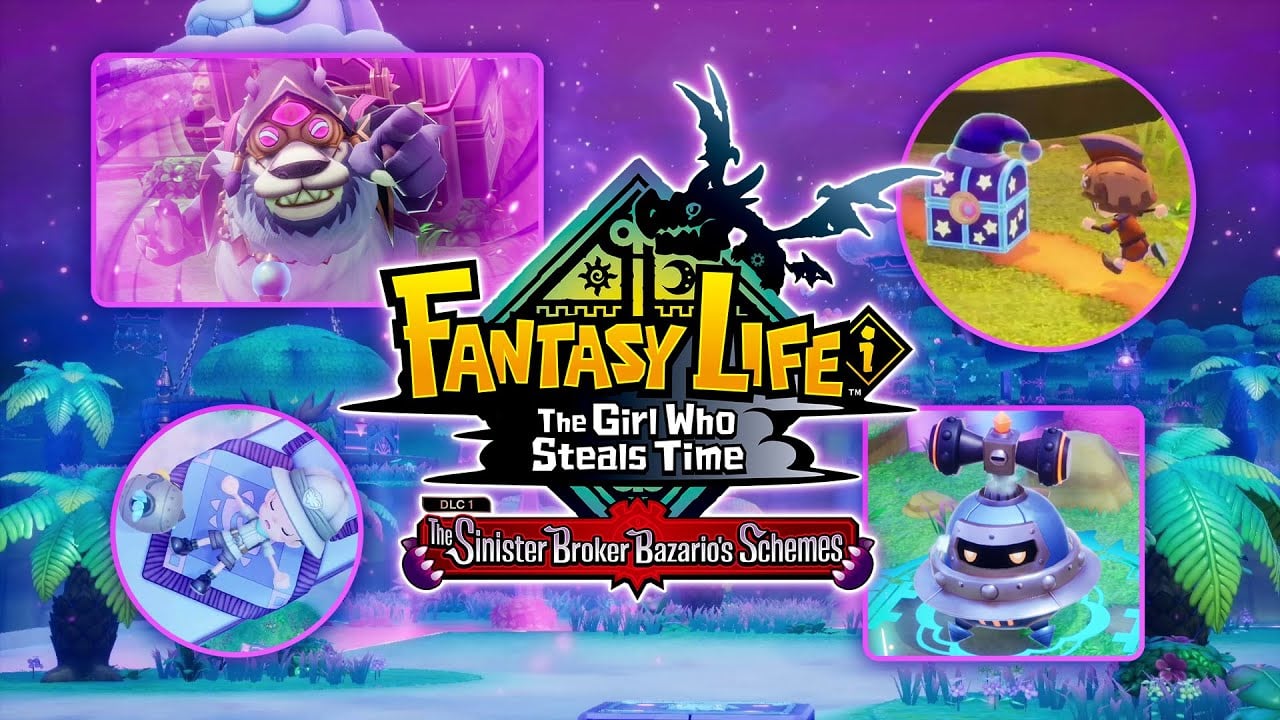
Level-5 has kept the momentum going for Fantasy Life i: The Girl Who Steals Time with the free Version 2.0 update, themed around “The Sinister Broker Bazario’s Schemes.” The headline addition is Snoozaland, a dreamlike new area built around a “Roguelike x Open World” structure. In simple terms, we enter a shifting realm where the map and enemies can change from run to run, and where each attempt starts fresh at Level 1 with nothing but your character. That reset is the whole point, because it turns familiar Fantasy Life rhythms into a new kind of challenge: fast leveling, smarter risk-taking, and a strong push to improvise with whatever the dream world throws at you.
At the center of it all is Bazario, the new character tied to how this mode opens up, and the vibe is deliciously suspicious. The setup leans into classic Fantasy Life whimsy with a twist, pulling us from Base Camp into a nightmare-tinged version of Ginormosia called Snoozaland. Along the way, we also get new items that are exclusive to the DLC area, plus equipment, mounts, and craftable objects that can still be useful back in the main game. On top of that, Version 2.0 introduces quirky helpers like the Drowsy Mimic and the Alchemy Robots, which bring a little chaos, a little luck, and plenty of “just one more run” energy.
FANTASY LIFE i – The Sinister Broker Bazario’s Schemes
Let’s start with the big picture: “The Sinister Broker Bazario’s Schemes” is a major free update that adds a new playable loop rather than a tiny side quest you forget about after dinner. We get a new stage called Snoozaland, described as a dream realm with roguelike rules layered onto open-world exploration. That combination matters because it changes how we approach time, gear, and risk. Instead of slowly building power the usual way and carrying it everywhere, Snoozaland pushes us into runs that begin from scratch, then ramp up quickly as we fight, complete objectives, and chase rewards. It’s like taking the cozy tools of Fantasy Life and putting them into a backpack before sprinting into a shifting maze. Alongside the mode itself, the update calls out new items, new equipment, mounts, and craftable objects, plus special features and “helpers” designed to keep each run unpredictable and fun.

Release timing and where the update sits in Version 2.0
Version 2.0 is positioned as a major free update, and it’s not just a trailer drop with “see you later” energy. The update information is tied to the Version 2.0 rollout, and it has been framed around the Christmas period in December 2025. If you’ve been watching the news cycle on this one, you probably saw earlier phrasing like “later this month” or “around Christmas,” which is exactly how these updates tend to get communicated until the download button finally appears. The key detail now is that this update is treated as a Version 2.0 release, meaning it’s part of a bigger patch line rather than a standalone mini add-on. In practical terms, that usually means new systems arrive alongside general polishing and adjustments, so even players who only pop in for Snoozaland may notice the game feeling a bit smoother in other spots too. It’s the kind of update that says, “We’re not done cooking.”
Bazario, the suspicious tent, and the doorway to Snoozaland
Bazario is the name on the door, and the door is not subtle. The story hook leans into that “something weird just happened at Base Camp” vibe that Fantasy Life does so well. A suspicious tent appears, a mysterious bear shows up to lure us in, and then the game basically says, “Go on, take a nap, nothing bad will happen,” which is exactly the kind of thing that always goes well in stories. When we wake up, we’re in Snoozaland, a place that resembles Ginormosia but with its own twist and a darker, more ominous atmosphere. That’s an important tone change because it creates a fresh mood without abandoning the series’ charm. Bazario sits at the heart of this setup, and the “sinister broker” title suggests we’re dealing with someone whose smile is doing a little too much. If you like your Fantasy Life with a dash of mystery, this setup is basically a wrapped present with a suspicious rattle inside.
Snoozaland’s “Roguelike x Open World” loop in plain English
Snoozaland’s pitch is wonderfully simple: we explore an open area, but the rules of the space behave like a roguelike. The game highlights that the map and enemies shift each time we play, which is the classic recipe for replay value because it stops runs from feeling like carbon copies. Think of it like walking into a dream where the furniture keeps moving. You still recognize the room, but the chair is in a different corner and the hallway is suddenly a staircase. That shifting structure pairs with mission-based progress, where we clear objectives to move forward, unlock gates, and eventually face the “nightmare’s mastermind.” The loop encourages momentum. We hop in, adapt fast, gain power quickly, and make decisions about what to chase and what to leave behind. And because it’s tied to a broader Fantasy Life experience, it’s not just about surviving the run, it’s about what the run gives back to our overall play.
Starting each run at Level 1
The reset is the heartbeat of the mode: each run starts at Level 1 with nothing to your name. That sounds brutal until you remember what makes roguelike structures addictive. Starting fresh creates tension and freedom at the same time. We’re not weighed down by “the optimal build we already perfected,” and we’re not stuck doing the same safe route because it worked last time. Instead, we get a clean slate and a reason to experiment, even if that experiment occasionally ends with us getting politely folded by something bigger than expected. The mode also highlights that we learn new Lives as we get items, which is a fun way to tie the series’ job-switching identity into the run-based format. It turns progression into something reactive: what we find shapes what we can do. If you’ve ever wanted Fantasy Life to surprise you mid-session and force you to roll with it, this is that feeling, but on purpose.
Missions, gates, and boss targets
Runs aren’t just wandering around hoping luck shows up with snacks. The structure calls out missions as the stepping stones, and clearing missions lets us move on through the run. Once we clear an area’s missions, we unlock the Gate, which is basically the mode’s way of saying, “Alright, you’ve earned the right to meet the problem.” From there, we face off against the nightmare’s mastermind, with the promise of strong rewards if we make it through. There’s also a clear encouragement to level up quickly by defeating enemies, which fits the run design: power growth needs to be fast enough to feel meaningful in a single attempt. The rhythm becomes a mix of exploration and urgency. We take time to look for what we need, but we also keep pushing forward because bosses are the payoff moments. It’s like hiking toward a lighthouse in fog, and every cleared mission makes the light a little brighter.
Rewards you can bring back to the main game
One of the smartest choices here is letting rewards matter outside Snoozaland. The update highlights that items obtained through exchanges in this DLC can be used in the main game, which prevents the mode from feeling like a closed theme park ride. Instead, Snoozaland becomes a side path that feeds your broader adventure. That matters for two kinds of players. If you’re here for the cozy “slow-life” loop, you can treat Snoozaland like a special trip that brings home souvenirs with real utility. If you’re here for challenge and progression, you can treat it like a high-risk treasure run that pays dividends elsewhere. Either way, the idea is simple: your time in Snoozaland is not a detour, it’s an investment. And honestly, that’s how a good update should feel. When a new mode lands, we want it to connect to what we already love, not sit in a corner like an unused treadmill with good intentions.
New items, equipment, mounts, and craftable objects
Beyond the mode itself, the update calls out a “host of new items,” including items exclusive to Snoozaland. That exclusivity is a nice motivator because it makes exploration feel purposeful, even when the dream world is being a little chaotic. On top of that, we get new equipment, new mounts, and new craftable objects, with the key detail being that these rewards can remain useful once we’re back in the main game. That’s a big deal in Fantasy Life, where gear and crafting often define how satisfying your day-to-day loop feels. New equipment can change how battles flow, mounts can make traversal feel smoother and more fun, and craftable objects can add new goals for collectors and builders. If you’re the kind of player who hoards materials “just in case,” congratulations, you’ve found your people. This update gives that habit a new playground, and it also gives you a reason to actually spend those hoarded resources strategically.
Dream companions and chaotic helpers
Snoozaland isn’t just a new map with enemies. It’s filled with dreamlike wonders and strange companions designed to keep runs lively. This is where the update’s personality shows up in full force, because the helpers sound like they were invented in a brainstorming session where someone said, “What if it’s useful, but also a little unhinged?” The goal is to create moments you remember. Not just “we cleared the run,” but “we got into a petty sprint over a treasure thing and laughed about it,” or “we gambled some junk items and hit the jackpot.” These systems give runs texture. They create spikes of excitement, small decisions with big feelings, and the occasional comedic disaster that still turns into a story worth telling. That kind of design is perfect for Fantasy Life, because it’s a game that thrives when everyday actions turn into little adventures. Snoozaland just turns the dial up.
Drowsy Mimic and the race for rewards
The Drowsy Mimic is a simple idea with instant chaos potential: whoever touches it first gets a reward. That’s it. That’s the rule. And yet, it’s the kind of rule that turns friendly cooperation into a sudden Olympic qualifying event. The update even jokes about not fighting your friends over it, which tells you exactly what’s going to happen the moment one of these shows up. Mechanically, it’s a neat way to add spontaneous micro-goals inside a run. We’re already exploring and clearing missions, but now we’re also scanning the environment for opportunity. Emotionally, it’s even better, because it creates those “No, no, no, I saw it first!” moments that make a session feel alive. And since the reward is framed as something “dreamtastic,” it fits the theme perfectly. The dream world teases us with shiny things, and our player brains instantly go full crow mode.
Alchemy Robots and the slot-machine moment
Alchemy Robots are built for the player who loves a little luck with their logic. The concept is straightforward: toss in unwanted materials or equipment to fill a gauge, trigger the robot, and see what comes out. The result can vary, and the fun comes from that suspense. It’s like cleaning out your pockets after a long day and somehow finding a winning lottery ticket mixed in with old receipts. The system also hints that some rare machines might be more likely to produce powerful items, which encourages exploration and experimentation rather than a single rigid strategy. This kind of feature fits Snoozaland perfectly because the mode already leans into variation and adaptation. If the dream world is going to change on you, you might as well have a tool that can turn leftovers into surprises. And let’s be real, turning “junk” into “maybe something amazing” is basically the universal language of RPG joy.
Practical rules for feeding the Robots
If you want to use Alchemy Robots without feeling like you just launched your best gear into a blender, a few simple rules help. First, treat them like an upgrade path for clutter, not a replacement for planning. We start by feeding items we genuinely don’t need for the run’s next steps, because stability matters in a mode where we’re already starting from scratch. Second, pay attention to momentum. If the run is going well and you’re strong, it’s easier to take a gamble because you can recover if the output is disappointing. Third, use the robot as a decision point, not a panic button. When your inventory starts feeling messy, the robot can simplify the run by converting excess into a smaller number of potentially useful outcomes. Finally, keep your expectations playful. The robot is a surprise engine, and surprise engines are happiest when we don’t glare at them like they owe us rent money. If the dream world is chaos, the robot is chaos with a friendly beep.
What the second trailer actually shows
The second trailer is designed to sell the vibe and the loop in a quick hit, and it leans on contrast. We get the whimsical setup, then the shift into a darker, stranger Snoozaland that still feels like Fantasy Life at its core. The trailer also works hard to communicate the mode’s rules without turning into a lecture: shifting environments, fresh starts, and clear goals that funnel us toward boss encounters. It also highlights the unique helpers and items that make Snoozaland feel like its own place rather than a reskinned area from the main adventure. When a trailer lands well, you can almost feel the intended player reaction: “Okay, I get it. I want to try a run.” That’s what this one is going for. It’s not trying to convince you that you need a 40-hour commitment before the fun begins. It’s inviting you to jump in, mess up, learn fast, and laugh when the dream world pulls a trick on you.
Quick start checklist for your first Snoozaland run
When you step into Snoozaland for the first time, the biggest mindset shift is accepting the reset. Starting at Level 1 is not a punishment, it’s the engine that makes the run exciting. So we go in with curiosity and a little patience. Focus on early survival first: grab what you can, learn the rhythm of missions, and keep moving. Missions are your roadmap, and clearing them is how you unlock gates and reach the big fights that pay out. Along the way, keep an eye out for opportunities like the Drowsy Mimic, but don’t let “shiny object syndrome” derail your progress if you’re not ready to sprint for it. Use Alchemy Robots when your inventory starts overflowing with leftovers, and treat the result as a bonus, not a guarantee. Most importantly, remember why this mode exists: it’s meant to feel different, unpredictable, and replayable. If your first run is messy, congratulations, you’re playing it correctly.
Conclusion
“The Sinister Broker Bazario’s Schemes” lands as the kind of update that gives Fantasy Life i a fresh lane to drive in. Snoozaland’s “Roguelike x Open World” structure adds tension and replay value without cutting ties to what makes the game comforting in the first place. We still chase rewards, we still build our characters and our routines, and we still get that satisfying sense that today’s effort matters tomorrow. The difference is that Snoozaland asks us to improvise, adapt, and earn our power quickly, run by run. With new items, equipment, mounts, and craftable objects that can feed back into the main game, the mode feels connected rather than isolated. Add in quirky systems like Drowsy Mimic and Alchemy Robots, and the update has the ingredients for memorable sessions that mix challenge with humor. If you’ve been waiting for a reason to return, Bazario just handed you a suspicious invitation and a bed. You already know what happens next.
FAQs
- What is “The Sinister Broker Bazario’s Schemes” in Fantasy Life i?
- It’s a major free update tied to Version 2.0 that introduces Snoozaland and a new “Roguelike x Open World” gameplay loop, alongside new items and other additions.
- What is Snoozaland and why does it reset your run?
- Snoozaland is a dream realm where each run starts fresh at Level 1 and the map and enemies can change, creating replayable sessions built around missions, gates, and boss encounters.
- Can we use Snoozaland rewards in the main game?
- Yes. The update highlights that items obtained through exchanges tied to this DLC can be used in the main game, which helps the mode feel connected to your broader progress.
- What are the Drowsy Mimic and Alchemy Robots?
- Drowsy Mimic rewards the first player who touches it, while Alchemy Robots let you toss in unwanted items to potentially receive new outcomes, adding surprise and variety during runs.
- What should we focus on in our first Snoozaland run?
- Prioritize completing missions to unlock gates, build power quickly through fights, and use systems like Alchemy Robots strategically when your inventory fills up, while staying flexible as the dream world shifts.
Sources
- Version 2.0 – Major Free Update | FANTASY LIFE i: The Girl Who Steals Time, FANTASY LIFE i (Official Site), December 24, 2025
- FANTASY LIFE i: The Girl Who Steals Time free major update ‘The Sinister Broker Bazario’s Schemes’ second trailer, details, and screenshots, Gematsu, December 19, 2025
- Fantasy Life i’s free major DLC “The Sinister Broker Bazario’s Schemes” is now available, RPG Site, December 24, 2025
- Fantasy Life i “The Sinister Broker Bazario’s Schemes” DLC gets a new trailer and fresh details, GoNintendo, December 19, 2025
- Fantasy Life i: The Girl Who Steals Time free DLC “Bazario’s Schemes” gets new trailer and info, Niche Gamer, December 20, 2025