














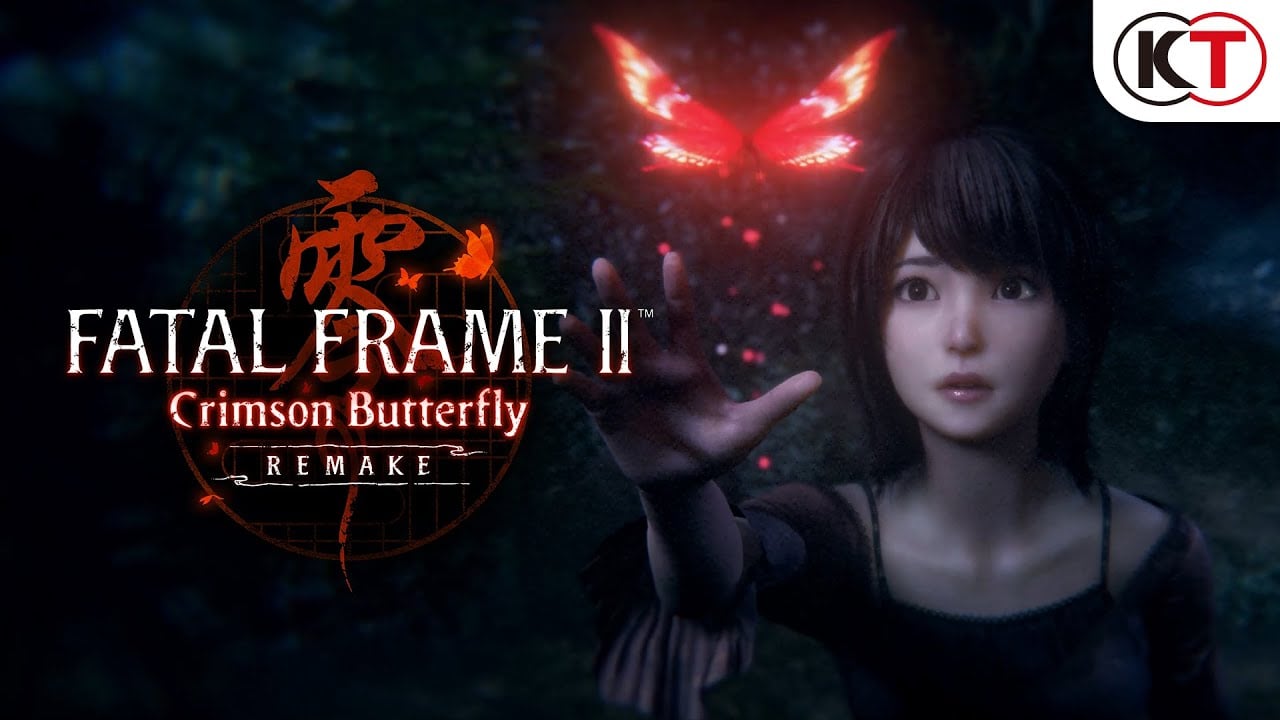
Summary:
We are heading back into Minakami Village with a fresh excuse to turn the lights on and pretend it’s for “better visibility.” Koei Tecmo has confirmed a free demo for FATAL FRAME II: Crimson Butterfly REMAKE arriving March 5, 2026, and the best part is that our save data carries over when the full game launches on March 12. That simple detail changes how we approach the demo. Instead of treating it like a haunted theme park ride we’ll abandon after ten minutes, we can play with purpose, collect what we can, and learn the rhythms of the Camera Obscura before the real nerves kick in.
This remake keeps the eerie core intact: twin sisters wander into an abandoned village overflowing with vengeful spirits, and the Camera Obscura is our only way to fight back. At the same time, we are getting new elements that expand both combat and lore. Broken Spirit Stones open windows into character pasts and unlock new side stories. New areas like the Umbral Mound and the candlelit hall of Eikado Temple add fresh dread, while enemy behavior ramps up through crimson malice, faster attacks, and rapid regeneration. On the toolkit side, Prayer Beads and Reversion Beads give us meaningful choices for upgrading and resetting the Camera Obscura, and new Special Shots plus filters offer tactical options like blinding a target or trading willpower for damage. We even get Twin Dolls to photograph and purify for rewards, and a Photo Mode for players who like their horror with a side of creativity. Finally, a Silent Hill f collaboration has been announced, with free costume DLC planned for a later date, setting up a crossover moment between two very different flavors of Japanese horror.
FATAL FRAME II: Crimson Butterfly REMAKE free demo release and what we can play
The demo for FATAL FRAME II: Crimson Butterfly REMAKE is set for March 5, 2026, and it’s positioned as a real taste of the remake rather than a tiny teaser that ends right when things get good. That matters because this series thrives on slow-burn dread. We do not need fireworks in the first minute, we need the kind of silence that makes you hear your own breathing, then question why the soundtrack suddenly went quiet. A demo window also gives us time to learn the remake’s flow: how exploration is paced, how often the game expects us to check corners, and how quickly danger can escalate once we commit to pushing deeper into the village. If you’re the type who likes to test settings, controls, and camera behavior before launch day, this is the perfect moment to dial everything in while the stakes are still low enough to laugh at our first panic shot.

Save data carryover and why it changes how we approach the demo
Save data carrying over to the full game on March 12, 2026 is the kind of feature that sounds simple, but it quietly reshapes how we play. Instead of sprinting through just to see a cutscene, we can explore like we actually live here now, which is a terrible idea in a haunted village, but you get the point. We can take our time with item routes, learn where the game likes to hide surprises, and get comfortable with how encounters begin and end. Carryover also rewards careful play. If the demo lets us collect useful resources or unlock early progression, that effort will not vanish when the full release drops. It’s basically the horror equivalent of packing snacks before a road trip, except the road trip is cursed and the snacks might be spiritual pressure points.
Release timing, platforms, and what launch week looks like
Koei Tecmo has set a tight one-week runway: demo on March 5, 2026, then the full launch on March 12, 2026. That’s a smart rhythm because it keeps excitement hot without dragging things out long enough for our courage to return. The demo becomes a warm-up lap where we relearn how Fatal Frame wants us to fight: by facing fear directly, lining up the shot, and trusting our timing. It also lets us decide which platform feels best for us before we commit. The game is coming to PlayStation 5, Nintendo Switch 2, Xbox Series X|S, and Windows PC via Steam, so most players have a way in. Launch week, then, becomes less about “Should we buy it?” and more about “Are we ready to step back into that village with everything we learned from the demo?” If you’ve ever bounced off a horror game because the controls felt unfamiliar under stress, this schedule is basically a courtesy. A terrifying courtesy, but still.
The core setup: twin sisters, an abandoned village, and the Camera Obscura
At the heart of Crimson Butterfly is a premise that’s painfully effective because it’s so human. Twin sisters wander into an abandoned village infested with vengeful spirits, and suddenly the world narrows to one question: how do we survive when the only weapon we have is a camera? The Camera Obscura is not a power fantasy tool. It forces us to look directly at the thing we want to avoid, hold steady, and press the shutter at the worst possible moment. That design is why Fatal Frame still hits differently. The village itself acts like a trap made of old rituals, quiet paths, and spaces that look normal until they absolutely do not. A remake like this has room to sharpen everything that already worked: eerie lighting, environmental storytelling, and that creeping feeling that the village is watching us back. The twins’ bond also adds tension and tenderness, because fear is louder when you’re responsible for someone else.
New side stories with Broken Spirit Stones
Broken Spirit Stones are one of the more interesting additions because they push the story outward without breaking the main thread. When we use them, we can delve into the past of various characters and uncover new side stories that expand the lore of Crimson Butterfly. That’s a big deal in a village-driven horror tale, because the scariest places often become scarier once we understand who suffered there and why the rituals turned rotten. Mechanically, this also gives exploration a new kind of reward. Instead of only hunting for items that help in combat, we are also chasing fragments of memory and context, the kind of details that make later scenes land harder. Think of it like finding an old photograph in a dusty drawer. The image itself is unsettling, but what it implies is worse, and suddenly you’re imagining everything that happened just outside the frame.
New locations that change pacing and atmosphere
New places sound like a simple bullet point, but in horror they’re basically new moods. The remake introduces fresh areas to explore, including locations like the Umbral Mound and the candlelit hall of Eikado Temple. New spaces matter because they can break our patterns. Once we think we know how the village “feels,” a new environment can flip the script and force us to read the world again from scratch. It also helps the narrative breathe. A classic haunted village can start to blur together if every path looks like the last one, so adding distinct landmarks gives the journey memorable beats. The best horror locations have a personality, almost like they’re characters, and if these new areas are designed well, we will feel that personality immediately. You know the feeling: you walk in, nothing attacks, and somehow that’s the worst part.
Umbral Mound and why it matters
The Umbral Mound is described as an ominous burial site tightly bound with ropes and hidden within dense bamboo groves, which is basically the recipe for dread in one sentence. Rope binding in ritual imagery often signals containment, as if something had to be restrained, respected, or both. A burial site also carries an automatic weight, because it implies history, loss, and unfinished business, and this series loves unfinished business. From a pacing perspective, a bamboo grove can be terrifying because it can hide movement and distort sound, making it harder to trust what we see or hear. That’s perfect for a game built around sensing spirits and reacting to sudden threats. Even if nothing jumps out, the setting itself can pressure us into moving carefully, and careful movement is exactly how horror games make minutes feel like hours.
Eikado Temple and the twin-statue imagery
Eikado Temple’s candlelit hall, with its pair of twin statues tied together by sacred cords, feels like a deliberate echo of the story’s twin-sister focus. Horror loves mirrors, doubles, and reflections, and a temple with bound twin statues can turn that theme into a visual punch. Candlelight also does something nasty to our senses. It creates soft edges, shifting shadows, and the kind of flicker that makes us question whether something moved or whether our eyes just betrayed us. Sacred cords imply ritual purpose, which in Fatal Frame usually means we are standing near the residue of a ceremony that went terribly wrong. That’s the kind of place where you expect the air to feel heavier, where even the silence seems curated. If the game uses this location to build tension through sound design and environmental detail, it could become one of those areas players talk about for years, the “I hated it, so I loved it” kind of place.
Combat escalation: crimson malice, wings, and pressure spikes
As we push deeper into the mystery of the village, the spirits do not just get stronger in a bland numbers-on-a-stat-sheet way. The remake describes a shift where evil spirits grow more desperate to attack and even sprout wings, entering a state shrouded in crimson malice. In that form, they rapidly regenerate health while attacking more frequently and with greater strength. That is a nasty combo because it punishes hesitation, and Fatal Frame is already a game that makes hesitation feel natural. When enemies heal quickly and attack aggressively, we cannot rely on slow, safe play forever. We have to take cleaner shots, understand our options, and stay calm when the camera view becomes a tunnel of panic. It’s like trying to thread a needle while someone keeps turning the lights off and on. The idea is not just fear, it’s pressure, and pressure is where horror becomes memorable.
Prayer Beads and Reversion Beads for Camera Obscura tuning
Prayer Beads and Reversion Beads give the remake a flexible upgrade loop that can support different play styles without forcing a single “correct” build. Prayer Beads can enhance the Camera Obscura in battle by increasing the number of focus points and improving reload speed, which directly affects how reliably we can land strong shots in tense moments. That matters because the Camera Obscura is not only a weapon, it’s a commitment. Every moment spent reloading is a moment where a spirit can close distance, and every missed focus point is a chunk of damage left on the table. Reversion Beads, meanwhile, let us reset unlocked upgrades, which is a relief for anyone who has ever regretted an early upgrade choice halfway through a horror game. It means we can experiment, adapt to tougher encounters, and fine-tune our approach as the village reveals what it expects from us.
Special Shots and filters that change the feel of every encounter
Special Shots are where the Camera Obscura starts to feel like a toolbox rather than a single blunt instrument, and filters are what shape that toolbox into something personal. Equipping different filters applies unique effects to Special Shots, letting us adapt our strategy to the situation and the spirit in front of us. The Paraceptual Filter can activate a Special Shot called “Blinding,” temporarily blinding the target and giving us a chance to escape, which is perfect for players who value survival and repositioning over brute force. The Radiant Filter can enable “Purging,” which sacrifices Mio’s willpower to deal increased damage, a trade-off that feels very on-brand for horror: power always costs something. These mechanics make fights more than just aiming and shooting. They become decisions, and decisions are scary because we can always pick wrong.
Why “Blinding” feels like a lifeline
In a horror game, escape options are emotional comfort as much as mechanical utility. “Blinding” is the kind of move that can save a run, not because it deletes the threat, but because it creates breathing room. Breathing room lets us recover our composure, reposition, and avoid getting cornered in a space that was clearly designed to make us feel trapped. It also supports a play style where we treat encounters like storms to endure rather than bosses to dominate. Not everyone wants to stand their ground when the spirit is sprinting at them with extra aggression, and that’s fine. A good horror game lets different kinds of fear coexist: the fear of being hit, and the fear of being forced to fight when you’d rather run.
Why “Purging” makes power feel risky on purpose
“Purging” sounds like a classic high-risk option: trade willpower to hit harder. That’s a perfect psychological hook because it turns desperation into a resource decision. When a spirit is regenerating rapidly or attacking relentlessly, the temptation to cash in willpower for damage will be real, and that temptation creates tension even before the shutter clicks. It also encourages us to think about pacing. Do we spend willpower now to end a fight quickly, or do we conserve it and risk a longer, messier encounter? That push and pull is where the Camera Obscura becomes more than a camera. It becomes a bargaining chip with the supernatural, and the supernatural never bargains fairly.
Twin Dolls, purification photography, and Point Exchange rewards
The Camera Obscura is not only for combat in this remake, and the Twin Dolls mechanic proves it. Twin Dolls are scattered across Minakami Village, modeled after the Twin Maidens and positioned as guardians against calamity. We can capture photographs of them, then purify them by photographing them together in the same frame, putting them and the emotions trapped within them to rest. That is a beautifully thematic use of the camera: not just to harm spirits, but to resolve something lingering. It also turns exploration into a puzzle of framing and observation. You are not only looking for the dolls, you are thinking about composition, positioning, and the story implication of “together.” Each purification unlocks more items in the Point Exchange, giving a clear reward loop that encourages thorough play without feeling like busywork. It’s eerie, it’s purposeful, and it fits the series’ tone like a glove soaked in cold water.
Point Exchange and the quiet satisfaction of earning safety
Horror games work best when safety feels earned rather than handed out, and Point Exchange rewards can support that feeling if they are balanced well. When we purify Twin Dolls and unlock more items, we are effectively turning bravery and curiosity into practical help. That’s a satisfying feedback loop because it rewards the exact behavior horror games love to punish: wandering off the main path and investigating strange things. The trick is that the village will not make that easy. Finding dolls, lining them up, and taking the right shot asks us to linger in places that might be dangerous. So every reward has a little story attached to it: we took a risk, we faced the discomfort, and we got something that might help later when the spirits stop playing nice. It’s like the game saying, “Yes, you can be clever, but you still have to be brave.”
Photo Mode and why it can work in a horror remake
A Photo Mode in a horror game can sound like it might break the tension, but it can also amplify what makes the setting memorable. The remake includes a Photo Mode with frames, stickers, and visual effects, letting players capture in-game moments and create unsettling souvenirs. If you love atmosphere, this is basically an invitation to document it, and Fatal Frame’s atmosphere is the whole meal. There’s also a fun little sting in the idea that you might capture an unexpected spirit while trying to take a nice shot. That’s the kind of feature that can turn into a community talking point fast, because everyone will have a story about the time they paused for a picture and got photobombed by something that should not exist. Used well, Photo Mode becomes another way the game encourages us to look closely at the world, and looking closely is exactly how this series gets under our skin.
Silent Hill f collaboration costumes and what “later” can imply
A collaboration with Silent Hill f has been announced, and the plan is to add free collaboration costumes at a later date. On paper, that’s cosmetic, but in horror, cosmetics can still be mood. Silent Hill f represents a different strain of fear, one that leans into psychological unease, and seeing that crossover acknowledged inside Crimson Butterfly is a neat nod to fans who like their nightmares with variety. The key detail is timing: the costumes are not arriving at launch, but as a future update, with more details expected in the coming weeks. That usually means we should treat it as a post-launch beat rather than something to plan around on day one. Still, free costume DLC can be a great excuse to return after finishing the story, especially if the remake’s new mechanics and endings encourage replay. Sometimes you need a reason to go back into the village. A crossover wardrobe might be the funniest possible reason, and horror games can always use a little humor as a pressure valve.
Conclusion
FATAL FRAME II: Crimson Butterfly REMAKE is lining up a strong run into March 2026: a free demo on March 5, then the full release on March 12, with save data carryover that rewards anyone who takes the demo seriously. The remake keeps the series’ most distinctive idea front and center, fighting with the Camera Obscura, while layering in new tools and new story angles that should make the village feel both familiar and freshly hostile. Broken Spirit Stones deepen the lore, new locations like the Umbral Mound and Eikado Temple expand the sense of place, and combat escalation through crimson malice pushes us to master upgrades, filters, and Special Shots instead of relying on luck. Add in Twin Dolls, Point Exchange progression, a Photo Mode that invites creative scares, and a Silent Hill f collaboration teased as free costume DLC later on, and we have a horror package that looks built for both newcomers and long-time fans. If you want to arrive at launch day feeling prepared, the demo week is our chance to learn the rules of the village before the village starts rewriting them.
FAQs
- When does the free demo release, and when does the full game launch?
- The demo releases on March 5, 2026, and the full game launches on March 12, 2026.
- Will progress from the demo carry over to the full release?
- Yes, save data from the demo carries over to the full version of the game.
- What is the Camera Obscura, and why is it so important?
- It’s our primary tool for fighting vengeful spirits by capturing and sealing them with photographs, turning confrontation into a high-tension timing challenge.
- What new mechanics stand out in the remake?
- Key additions include Broken Spirit Stones for new side stories, new locations like the Umbral Mound and Eikado Temple, Prayer Beads and Reversion Beads for upgrades and resets, plus Special Shots and filters such as Blinding and Purging.
- What’s confirmed about the Silent Hill f collaboration?
- Free collaboration costumes have been announced and will be added as downloadable content at a later date, with more details expected in the coming weeks.
Sources
- FATAL FRAME II: Crimson Butterfly REMAKE demo, Silent Hill f collaboration costume DLC announced, Gematsu, Jan 27, 2026
- FATAL FRAME II: Crimson Butterfly Remake gets a new trailer, demo announced, Silent Hill f DLC revealed, GoNintendo, Jan 28, 2026
- ‘Fatal Frame II: Crimson Butterfly Remake’ Demo Across All Platforms In March, Reveals Game Details, Silent Hill f Collaboration – Screens & Trailer, Worthplaying, Jan 27, 2026
- Fatal Frame 2: Crimson Butterfly Remake Switch 2 Demo And Silent Hill f DLC Collab Announced, Nintendo Life, Jan 28, 2026
- Silent Hill F, Fatal Frame 2 Remake Adding Free Crossover DLC on PS5, Push Square, Jan 28, 2026