














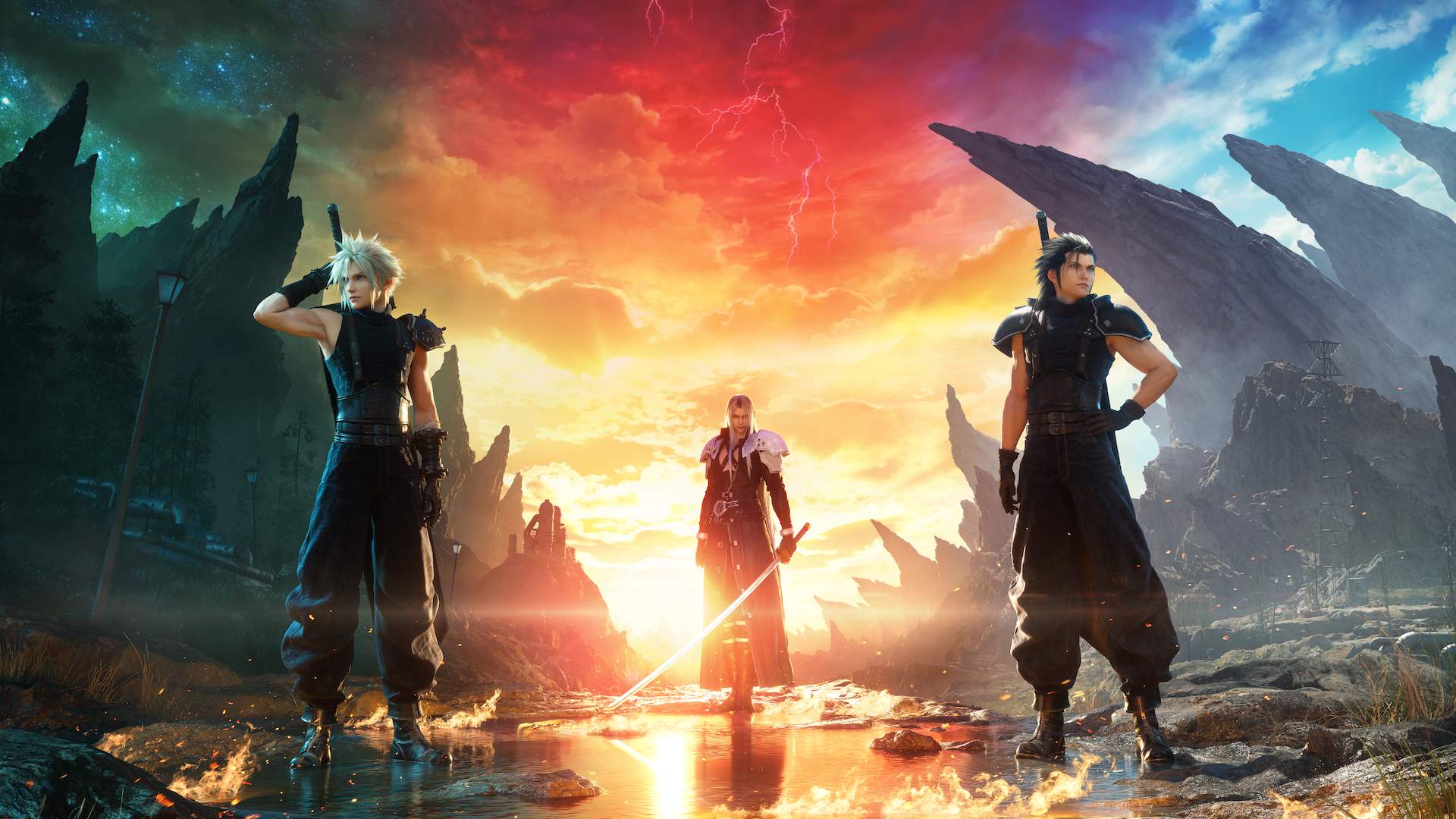
Summary:
Square Enix has put a clear date on the calendar: Final Fantasy VII Rebirth is coming to Nintendo Switch 2 on June 3, 2026, and that single detail changes the mood for anyone who’s been waiting to take this journey on a Nintendo handheld-style system. A lot of reveals tease a window and then vanish into fog, but a day and month you can actually plan around feels like a handshake. It also frames expectations in a healthier way. When a visually ambitious game shows up on a more portable-focused platform, it’s normal for the look to be tuned to fit the hardware, but the bigger question is whether the heart of the experience still beats the same. The announcement gives us room to think about what really matters here: the ability to pick up a massive RPG, play it in shorter sessions, and still feel like we’re getting the full sweep of the adventure rather than a watered-down souvenir.
What makes this moment extra interesting is how it reflects on Switch 2’s growing reputation as a home for major third-party releases that people genuinely care about, not just smaller spin-offs or late arrivals that feel like afterthoughts. Rebirth landing on a fixed date suggests confidence and a serious commitment, and it puts Switch 2 owners in the same conversation as everyone else instead of on the sidelines. If you’re already familiar with the series, June 3 looks like a “finally” moment. If you’re newer and you’ve been waiting for the right time to jump in, the announcement is also a nudge to get your setup ready, because Rebirth is the kind of game that rewards you when you can sink into its rhythm. In other words, this isn’t just a date. It’s permission to get excited with both feet on the ground.
Final Fantasy VII Rebirth lands on Switch 2 on June 3
June 3, 2026 is now the anchor point for anyone planning their next big RPG stretch on Nintendo Switch 2. The announcement didn’t dance around with vague timing, and that matters because it lets us plan like real people. Are we taking a day off? Are we clearing the weekend? Are we warning family and friends that we’ll be emotionally unavailable while we chase one more side objective? A fixed date also signals that this isn’t being positioned as a distant “maybe someday” project. It’s real, it’s scheduled, and it’s close enough that the hype doesn’t have time to turn into exhaustion. The best part is the clarity: we can stop guessing and start preparing, whether that means finishing what we’re currently playing, revisiting Remake if we want the freshest possible story context, or simply making sure we’ve got the storage and updates handled so launch week feels smooth instead of fiddly.

Why this date matters for Switch 2 owners
A June 3 launch is more than a calendar note because it lines up with how people actually use Switch 2. We’re not always sitting down for a four-hour block in front of a TV, and that’s where this platform shines. A game like Rebirth can be big, dramatic, and time-hungry, yet it can also be enjoyed in slices if the system makes it easy to dip in and out. That’s the magic trick. We can play a story-heavy RPG in handheld mode on the couch, switch to docked when we want the bigger view, and keep the same momentum. A firm date also means we can time our backlog choices smarter. If you’ve been curious about this series but haven’t started, you can map your path now instead of panic-buying later. And if you’re already invested, it gives you a clean runway to finish whatever you’re currently juggling before Rebirth shows up and politely takes over your free time.
What Rebirth is, and where it sits in the remake trilogy
Rebirth is the second entry in the modern remake project, which is a helpful way to frame expectations without getting lost in lore spirals. It continues the story after the events that pulled the party out of Midgar, and it expands the scope into a wider world where the stakes feel both more personal and more planet-sized at the same time. If Remake felt like a tightly wound spring, Rebirth is that spring finally released, stretching into bigger spaces, bigger choices, and bigger emotions. That shift is important because it’s where the adventure starts to feel like a journey rather than a contained mission. For Switch 2 players, this positioning matters because it answers the practical question: “What am I getting on day one?” We’re getting a major chapter, not a side story, and it’s one that carries weight. If you want the most satisfying ride, it’s smart to treat Rebirth as a continuation, not a standalone snack, because the characters, relationships, and conflicts are built to pay off over time.
The easy on-ramp if you’re new
If you’re new to Final Fantasy VII, the simplest way to avoid confusion is to think of Rebirth as a season two that expects you to remember the season one finale. That doesn’t mean you can’t jump in, but it does mean you’ll have a better time if you arrive with a little context. The good news is that context isn’t about memorizing every detail. It’s about knowing who the core party is, why Midgar mattered, and why the chase ahead feels so urgent. When you understand the emotional baggage the characters are dragging behind them, the quieter moments land harder, and the big reveals feel earned instead of random. On Switch 2, the practical play is to use the weeks before June 3 to get familiar with the key beats, whether that’s by playing Remake, watching a story recap, or reading a spoiler-free refresher. Think of it like arriving at a party where you already know a few names. You relax faster, you laugh more, and you spend less time pretending you caught what someone just said.
The “portable epic” appeal: why Switch 2 is a natural fit
There’s something almost rebellious about taking a massive, cinematic RPG and making it portable. It’s like stuffing an entire theme park into your jacket pocket and casually saying, “Yeah, I’ll do a few rides before dinner.” That’s the Switch 2 promise at its best. Rebirth is the kind of game that thrives on long sessions, sure, but it also thrives on momentum, and momentum is easier to keep when the system is ready whenever you are. A quick session can still mean meaningful progress: a story scene, a bit of exploration, a side task, or a few battles that sharpen your understanding of the combat flow. Portable play also changes how we relate to the world. Instead of only seeing it in “sit down and commit” mode, we can make it part of everyday life, which is a weirdly powerful thing for a story-driven game. And when you can switch between handheld and docked, you get the best of both moods: cozy, close-up play when you want it, and bigger-screen spectacle when you want the full cinematic punch.
Visual expectations and smart trade-offs
Let’s be honest with each other in the way only people who’ve lived through ports can be: when a visually ambitious game arrives on different hardware, the look is going to be tuned. That doesn’t have to be a scary sentence. In fact, “tuned” is often the right word because it implies intention, not surrender. The point is to preserve the feel of the adventure, the readability in combat, and the flow of exploration, even if some visual elements are adjusted to fit the system’s targets. What we should care about most is whether the game remains enjoyable and coherent, not whether every blade of grass is competing for an art award. A good port knows where to spend its budget. It keeps the image stable when it matters, avoids distractions that pull you out of the moment, and makes sure the controls and responsiveness feel reliable. If compromises exist, the best ones are the ones you stop noticing after ten minutes because you’re too busy chasing the next objective, laughing at party banter, or getting that “one more encounter” itch.
What “solid port” really means in real life
“Solid port” can sound like a polite phrase, but in practice it’s a very specific compliment. It means we can trust the moment-to-moment experience. Menus respond quickly. Movement feels consistent. Combat doesn’t wobble when things get hectic. The camera behaves itself instead of picking the worst possible angle like it’s doing a bit. It also means the game respects our time. We don’t want to fight the system to play the game. We want to fight monsters, solve problems, and get emotionally wrecked by story beats on schedule, thank you very much. A solid port also tends to embrace the platform’s strengths. Switch 2 players value convenience and flexibility, and a well-executed release leans into that with smooth transitions, sensible defaults, and a play experience that feels intentionally built for the system rather than awkwardly transplanted. In short, it’s the difference between “Look what we managed to squeeze in” and “This belongs here.”
World design and exploration: how the journey opens up
One of the biggest shifts after Midgar is the sensation of breathing room. Rebirth is positioned around the wider world beyond the city, and that matters because exploration changes the texture of the adventure. Instead of moving from one contained zone to the next, we get stretches that feel like travel, discovery, and curiosity paying off. This is where Switch 2 play habits can become an advantage. Exploration in short sessions is oddly satisfying because you can set tiny goals that still feel meaningful: reach the next settlement, clear a side objective, hunt for resources, or simply roam until you stumble into something you didn’t expect. The world becomes a series of little mysteries rather than a checklist. That also helps the story pacing, because you’re not forced to binge everything in one sitting. You can let big moments breathe, which is often how emotional scenes stick with you longer. A huge RPG can sometimes feel like a buffet that pressures you to overfill your plate. Portable play lets you treat it like tapas: a little of this, a little of that, and somehow you leave happier than if you tried to eat everything at once.
Why the chase hits harder outside Midgar
The core chase at the heart of Rebirth has a different energy when the setting opens up. In a city, danger can feel like it’s always around the corner, but it can also feel boxed in. Outside the city, the danger feels like it can come from anywhere, and the scale of what’s at stake starts to loom larger. That shift makes character motivations feel sharper because the world itself is now part of the pressure. You’re not just moving through corridors and streets. You’re moving through spaces that feel like they have history, distance, and consequences. That’s also where party dynamics become more noticeable. When the world is larger, the time spent traveling and reacting becomes a bigger slice of the experience, which is where personality shines. For players, this is where we often fall in love with a party, not because of big speeches, but because of the small comments, the arguments, the jokes, and the moments where someone quietly shows they care. It’s the difference between watching a story and living alongside it.
Combat flow and party identity
Final Fantasy VII’s modern combat identity is built on a satisfying balance: it wants to feel energetic and physical, but it also wants you to make smart choices, not just mash your way through everything. That blend is part of what makes Rebirth so appealing on a system like Switch 2, because it works in both short bursts and longer sessions. You can jump in for a few fights and still feel like you’re sharpening your skills, learning enemy patterns, and experimenting with party setups. Party identity matters here because the fun isn’t only in winning, it’s in how you win. Different characters push you toward different rhythms and different decisions, and that keeps combat from turning into background noise. A good RPG combat system is like a band. If everyone plays the same instrument, you get volume. If everyone plays a different instrument well, you get music. Rebirth’s appeal is that it encourages us to listen to that music, adjust the mix, and find our favorite groove, whether we’re playing docked on a big screen or handheld while half-watching the kettle boil.
Why responsiveness matters more than raw spectacle
When we talk about visual trade-offs, it’s easy to get distracted by screenshots, but gameplay feel is what decides whether a release becomes a long-term favorite. Responsiveness is the quiet hero. If the game reads inputs reliably, if camera movement feels predictable, and if combat feedback is clear, the experience feels good even when the system is working hard. That’s why many players forgive visual adjustments when the game plays smoothly. Nobody wants a gorgeous slideshow. We want a game that feels like it respects our hands. On a portable system, that matters even more because play sessions happen in all sorts of real-life conditions: different lighting, different distances from the screen, different levels of attention. Clear feedback and reliable performance are what keep the game enjoyable across those situations. If the release nails those fundamentals, the spectacle still lands, because the spectacle is being delivered through a game that feels good to control. That’s the kind of quality that makes people recommend a game with genuine confidence instead of adding a nervous “but” at the end.
Story tone and character momentum after Midgar
The reason people keep coming back to Final Fantasy VII isn’t only the plot, it’s the way the characters carry the plot like it’s personal. Rebirth, as the next big chapter, inherits all of that emotional momentum and has the opportunity to deepen it. After Midgar, relationships have room to evolve, secrets have room to breathe, and tension has room to stretch. That’s a delicious recipe for drama. For Switch 2 players, the big win is being able to experience those story beats in a way that fits everyday life. You can play a heavy scene, put the system down, and actually sit with it instead of rushing immediately into the next sequence. That’s not a small thing. Stories land differently when you give them space. This is also where the pursuit of Sephiroth stops being an abstract mission and starts feeling like a haunting. It’s the kind of narrative pressure that follows you, even when you’re not playing, which is exactly what a great RPG does. It turns your brain into a little theater that keeps running between sessions.
What the Nintendo Direct reveal signals about third-party support
A high-profile release date in a Nintendo Direct Partner Showcase carries a message that goes beyond one game. It says Switch 2 is being treated as a platform where major publishers want to show up with real intent, not just token releases. That matters because the health of a platform isn’t only about first-party hits, it’s about whether the system becomes a reliable home for the kinds of games people talk about all year. Rebirth landing on a firm date suggests a level of confidence from Square Enix, and it also adds weight to the broader idea that Switch 2 can host ambitious experiences that players previously assumed would skip Nintendo hardware entirely. That’s not just good for one fandom. It’s good for the ecosystem. When big releases arrive, they bring attention, they bring players, and they encourage more investment. It’s a domino effect, and Switch 2 owners benefit when the dominoes keep falling in the right direction. If you’ve ever felt that familiar frustration of watching announcements scroll by while your platform gets left out, this reveal is the opposite feeling. It’s being invited to the main table.
Why the timing feels deliberate
June is an interesting month for a release like this because it sits in a sweet spot where players are hungry for something substantial, and publishers often want a strong mid-year moment that doesn’t get crushed by late-year chaos. From a player perspective, it also means we get time to prepare without waiting forever. A release date too far away can make excitement leak out like air from a balloon. A release date too soon can cause stress, because you’re still finishing other games and wondering how you’ll make space. June 3 hits a nice middle ground. It gives the announcement punch, but it also gives you time to plan. That planning isn’t just emotional, it’s practical: what are you playing before then, what do you want to finish, and how do you want to experience Rebirth when it arrives? The best launches are the ones where you feel ready, not rushed, and the date makes that readiness feel achievable.
Pre-orders, planning, and how to get ready before June 3
If you’re the kind of person who likes to be ready on day one, the announcement also nudges you toward a simple checklist mindset. First, decide how you want to play: mostly handheld, mostly docked, or a mix. That choice can shape how you set up your space, from controller preferences to where you tend to play in the house. Second, consider your story readiness. If you haven’t played Remake, now is the time to map out whether you want the full experience or a recap approach. Third, make your Switch 2 setup feel launch-friendly. That means keeping system software updated, ensuring you have room for a major release, and planning your download timing so you’re not stuck watching a progress bar while everyone else is already posting spoiler warnings. Finally, set expectations that make you happy. If visual tuning exists, it doesn’t have to be a disappointment if you walk in valuing the right things: portability, story momentum, and the joy of having a massive RPG available wherever you are. That mindset is the difference between nitpicking and actually having fun, and fun is the whole point.
Conclusion
Final Fantasy VII Rebirth arriving on Nintendo Switch 2 on June 3, 2026 feels like the kind of news that turns a vague wish into a real plan. A date gives the excitement a spine. It lets us prepare, it lets us pace ourselves, and it lets us treat this release like an event rather than a rumor. If visual adjustments exist, the best way to think about them is as part of the normal reality of bringing ambitious games to different hardware, not as a reason to panic. What matters most is whether the experience holds together, whether it feels good to play, and whether the story and character moments still land with the weight they’re meant to carry. Switch 2’s biggest strength is that it fits into real life, and Rebirth is exactly the kind of journey that benefits from that flexibility. June 3 is close enough to feel exciting and far enough to feel manageable. Now we just have to do the hardest part: wait without staring at the calendar like it owes us money.
FAQs
- When does Final Fantasy VII Rebirth release on Nintendo Switch 2?
- Square Enix has confirmed a June 3, 2026 launch date for Nintendo Switch 2.
- Was the release date announced during a Nintendo Direct?
- Yes. The June 3 date was shared as part of Nintendo’s Partner Showcase messaging around upcoming Switch 2 releases.
- Do we know anything about differences in visuals on Switch 2?
- The expectation set around ports is that visuals can be tuned to fit the hardware, but the key focus is whether the game remains enjoyable and stable to play.
- Do we need to play Final Fantasy VII Remake before Rebirth?
- Rebirth is the second entry in the remake project, so playing Remake first is the best way to get the full story context and character buildup.
- What should we do now if we want to be ready for launch?
- Make sure your system is updated, plan storage space, decide whether you want to play Remake or watch a recap, and line up your play style for handheld or docked sessions.
Sources
- Latest Nintendo Direct: Partner Showcase features new and classic titles coming to Nintendo Switch 2 and Nintendo Switch, Nintendo Official Site, February 5, 2026
- Final Fantasy VII Rebirth Gets A Release Date For Switch 2, Nintendo Life, February 5, 2026
- Nintendo reveals an impressive Switch 2 lineup with Indiana Jones, Fallout 4, FF7 Rebirth, and more, The Verge, February 5, 2026
- Everything announced at the Nintendo Direct Partner Showcase including Oblivion, Final Fantasy 7 Rebirth, and some incredibly janky Resident Evil amiibo, TechRadar, February 5, 2026