














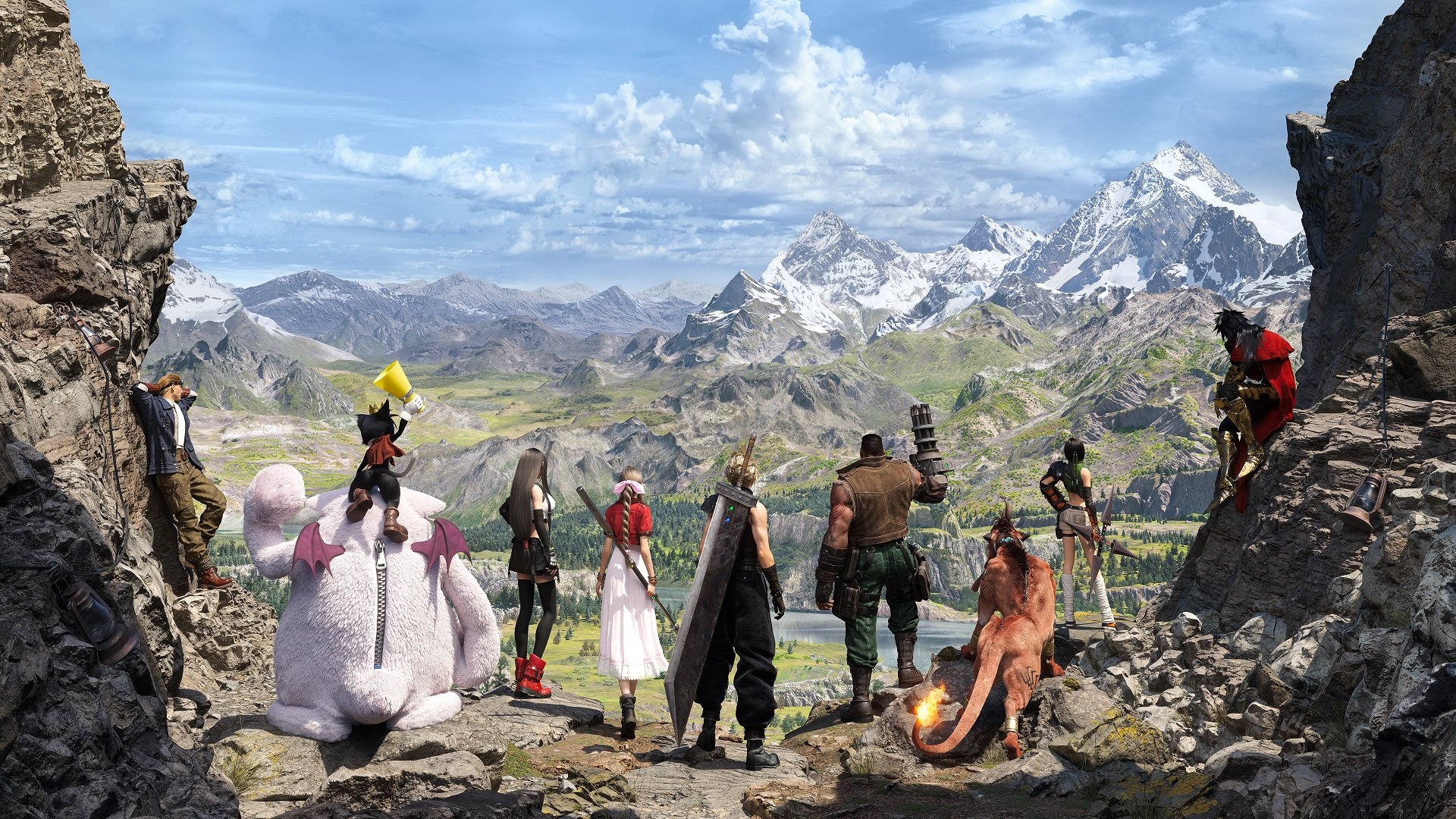
Summary:
We finally got the kind of confirmation that answers two big questions at once, while also teasing us in the most deliberate way possible. Naoki Hamaguchi has said the third Final Fantasy VII Remake game’s title is decided – it’s not floating in draft form, not stuck in a meeting loop, not waiting for a “someday” vote. The team narrowed it to two candidates, and Tetsuya Nomura made the call after Paris Games Week, which means the subtitle is officially locked even if we haven’t seen it on a trailer yet. That’s important because names in this trilogy are not random stickers. “Remake” and “Rebirth” do story work, and they help set expectations for what the next chapter is trying to say. A locked title is a quiet sign that the finale’s identity is sharpening, even if Square Enix is still choosing the right moment to show it.
At the same time, Hamaguchi confirmed something more technical but just as telling: the third game is sticking with Unreal Engine 4, not upgrading to Unreal Engine 5. On paper, that might sound like playing it safe. In practice, it often means playing it smart. If a team has spent years customizing an engine, building tools around it, and training everyone to squeeze performance out of it, switching late can be like changing the tires while the car is already on the highway. Keeping UE4 suggests continuity, stability, and a focus on shipping the best version of the finale with technology the team has already bent to its will. Put those two confirmations together, and we get a clear vibe: the plan is set, the foundations are familiar, and the next big reveal is about timing, not uncertainty.
Final Fantasy VII Remake Part 3’s name is locked – and that’s a bigger deal than it sounds
A subtitle might look like a small thing from the outside, but in a trilogy where every name pulls narrative weight, it’s closer to a flag planted in the ground. When Hamaguchi says the title is locked, we can treat that as a real milestone, not a casual comment tossed into an interview. A locked name suggests alignment – between the story direction, the tone of the finale, and the message the team wants you to feel before you even press Start. Think of it like naming a storm. You don’t name it because it’s cute, you name it because it’s real, it’s coming, and it needs an identity people will remember. In this series, the subtitle is part of the storytelling toolkit, and locking it means the finale’s “who we are” statement is settled, even if the team is still holding the curtain closed for now.
Why Square Enix can choose a title and still keep it under wraps
It can feel strange to hear “it’s decided” while the public still doesn’t know the answer, but that gap is pretty normal for big releases. Naming is one piece of the puzzle, and revealing is another. The reveal has to land when the team can support it with the right footage, the right messaging, and the right promise about what comes next. If the name drops too early, it risks turning into a guessing game that outpaces what the studio is ready to show. If it drops too late, it feels like a scramble. So the wait can be a strategy, not a delay. It’s the difference between writing a punchline and telling the joke. The punchline can be finished, but you still need the timing, the build-up, and the room quiet enough for it to hit.
What “locked” really means inside a modern AAA schedule
“Locked” is one of those production words that sounds simple but usually carries a lot of hidden work behind it. It implies approvals are done, internal documents can standardize around the chosen name, and teams that touch branding, UI, marketing assets, voiceover planning, and platform listings can all move forward without fear of rework. It’s also a signal that the studio isn’t treating the finale as a vague concept anymore. When the name is final, it tends to show up everywhere internally – in milestone decks, localization pipelines, and early packaging drafts. That doesn’t mean the public is about to see it tomorrow, but it does mean the studio has stopped debating what the finale should be called and started building everything around that choice. In other words, “locked” is less about hype and more about removing uncertainty from the machine.
Nomura’s decision-making role and the trilogy’s naming rhythm
Hamaguchi described the decision as something that ultimately landed with Tetsuya Nomura, and that detail matters because it connects the subtitle to the series’ creative steering wheel. Nomura’s involvement suggests the name isn’t just a neat-sounding word pulled from a list – it’s meant to harmonize with the trilogy’s broader intent. We already know these subtitles are doing double duty. They sound dramatic, sure, but they also hint at ideas the games explore: change, consequence, renewal, and the tension between what “should” happen and what can happen. When you put that in Nomura’s hands, you’re basically saying the title is part of the story’s language, not a separate branding exercise. The trilogy’s naming rhythm is also a kind of promise: each word should feel inevitable in hindsight. Locking the finale’s word is the team saying, “Yes, this is the one that fits.”
Two candidates, one winner – how that short list shapes expectations
Hearing that the team narrowed the finale down to two options is oddly revealing, even without the actual words on the table. It tells us the name wasn’t found in a panic or invented at the last second. It was debated, weighed, tested against the story’s meaning, and refined to a small set that could genuinely work. That’s like being told a chef tasted two sauces for the final dish and picked the one that made the whole plate click. You don’t know the ingredients yet, but you know the choice was deliberate. And because the trilogy has made its subtitles matter, a two-option shortlist implies both candidates probably had strong thematic connections. One won, but the fact there were only two suggests the creative vision had already narrowed into a very specific lane.
Why the subtitle matters for theme, not just a label
With this trilogy, the subtitle is part of the first conversation we have with the game. Before we know the opening scene, before we see the combat tweaks, before we learn what’s returning and what’s changing, the name sets a mood and pokes your brain with a question. “Remake” wasn’t simply a statement about rebuilding an old game. It became a loaded word with story implications. “Rebirth” didn’t just sound cool, it hinted at transformation and the idea that the world – and the path through it – could be reshaped. So the finale’s subtitle matters because it has to carry the emotional weight of an ending while still matching the trilogy’s vocabulary. It should feel like the final chapter’s thesis in one word. That’s a hard job for a single word, which is exactly why the decision being locked is newsworthy.
How “Remake” and “Rebirth” set the bar for the finale
The first two subtitles didn’t play it safe, and that’s the standard the finale has to meet. “Remake” became a wink, then a statement, then a challenge to assumptions about what we thought we were playing. “Rebirth” broadened the canvas and leaned into the idea of reinvention, not just continuation. If the finale’s name is going to sit beside those two, it needs to feel like the natural third beat in a trilogy rhythm. Not louder for the sake of being louder, but sharper, more final, more intentional. The title also has to survive the way players talk. It needs to work in headlines, in casual conversation, in that moment when someone texts a friend, “Have you seen the new trailer?” The bar is high because the earlier names earned trust. The finale’s subtitle has to land like the last note of a melody – something that makes the whole song feel complete.
Unreal Engine 4 stays – why the team isn’t jumping to UE5
Hamaguchi also confirmed the third game will keep using Unreal Engine 4 instead of moving to Unreal Engine 5, and that choice is easier to understand when we think like developers, not spectators. Engine switches are not a checkbox upgrade, they are an ecosystem change. Every tool, workflow, and custom feature built over years has to be revalidated, rebuilt, or replaced. And that’s before we even talk about the human side: the day-to-day muscle memory the team has developed, the debugging habits, the performance tricks, and the “we know where the bodies are buried” knowledge that only comes from long experience. If the team has heavily modified UE4 to fit their needs, sticking with it can be the difference between spending time finishing the game and spending time re-learning how to make the game. For a finale carrying massive expectations, familiarity can be a weapon.
Familiar tools can beat shiny tools when the finish line is close
It’s tempting to assume “newer engine equals better game,” but production rarely works that cleanly. Unreal Engine 5 has powerful features, but adopting it mid-stream can create risks that don’t show up on a feature list. The team would need to migrate systems, test every corner, and chase new bugs that come from changed foundations. That’s like renovating a house while you still live in it – you can do it, but you might spend months stepping over exposed wires. Hamaguchi’s point is straightforward: they’ve customized UE4 and know it inside out, so the benefit of switching has to be bigger than the cost. If the cost is lost time, unstable builds, or a slower pipeline, then the “shiny” option stops being shiny fast. Keeping UE4 suggests a focus on execution: stability, polish, and a smoother path to delivering the finale they want you to play, not just admire in screenshots.
What “modified UE4” suggests about the pipeline and tech stack
When a director says they’ve made “a lot of modifications,” that’s a hint that the team isn’t using Unreal Engine 4 as a default template. It suggests bespoke rendering tweaks, custom tooling, and systems built to serve Final Fantasy VII’s specific needs, from character-heavy cinematics to large environments to dense effects work. Over time, that kind of customization becomes its own platform inside the studio. It’s not just “UE4,” it’s “UE4 shaped into our version of UE4.” That matters because a custom engine layer is where a lot of quality lives – the subtle performance wins, the consistency of visual presentation, the ability to iterate quickly without breaking everything. It also means the team can keep stacking improvements on a foundation they already understand. If you’ve ever broken in a pair of boots, you know the feeling. A new pair might look nicer on the shelf, but the old pair fits your stride perfectly because it has already molded to you.
Where UE5 features would matter – and why the team can live without them
Unreal Engine 5’s headline features get a lot of attention for good reason, but a game doesn’t rise or fall on headlines alone. Yes, newer tech can enable certain lighting approaches and asset workflows, and it can help teams in specific scenarios. But the key question is whether those benefits are essential for what this finale needs to accomplish. If the team’s customized UE4 already supports their visual targets and performance goals, then UE5’s advantages might be more “nice to have” than “must have,” especially when weighed against migration risk. It’s also worth remembering that a skilled team can create stunning results on older tech when they know how to push it. A camera in the right hands beats a newer camera in uncertain hands. Sticking with UE4 doesn’t mean the finale will look dated – it means the team is betting on mastery, not novelty.
What this means for players – stability, scope, and the wait for the reveal
Put the two confirmations together and a clear picture forms. The finale’s identity is defined internally, and the technical foundation is staying consistent. For players, that can translate to fewer surprises in the areas that cause the most anxiety: performance stability, production momentum, and the risk of “we changed everything late and now it’s messy.” A locked title suggests the creative direction is settled enough to name it. A locked engine suggests the team is prioritizing execution over reinvention behind the scenes. That doesn’t magically answer every question we have about the finale’s scale, pacing, or surprises, but it does offer something rarer than hype: a sense of steadiness. We’re not watching a coin flip. We’re watching a team moving forward with decisions made, and that’s often when the next stage of reveals starts to feel closer.
How we can read the silence without inventing rumors
It’s easy to treat a secret title like a puzzle begging to be solved, but the safest reading is also the simplest one. The name is chosen, and Square Enix hasn’t shared it publicly yet. That’s it. Anything beyond that becomes guessing, and guessing can be fun until it hardens into “expectations” that the real reveal can’t possibly satisfy. The smarter way to handle the quiet is to focus on what the confirmed details actually tell us. The team is far enough along to lock a subtitle. The team is committed enough to their current technology to keep building on it. Those are solid signals. The reveal moment will come when it can be supported by what we all really want: a real look at the finale, not just a word. Until then, we can keep our excitement without turning it into a rumor factory. Anticipation is great. Hallucinating a headline is not.
Conclusion
We now have two firm anchors in the sea of “what’s next.” Hamaguchi says the third game’s subtitle is locked after being narrowed to two options, with Nomura making the final decision, which means the name exists as a finished choice even if the public hasn’t seen it yet. On the technical side, the team is sticking with Unreal Engine 4 because it’s already deeply customized and familiar, which can be a practical advantage when the goal is to finish strong and polish hard. Together, those details point to a finale that’s being built with intent and continuity rather than last-minute reinvention. The title reveal will happen when the timing is right, but the bigger takeaway is that key decisions are already made. If you’ve been craving signs of steadiness, this is one of the clearest ones we’ve had in a while.
FAQs
- Has the Final Fantasy VII Remake Part 3 title been revealed publicly?
- No. Hamaguchi said the title is locked internally, but the name itself has not been shared publicly yet.
- Who chose the final title for the third game?
- Hamaguchi said the decision was left to Tetsuya Nomura, and that Nomura chose one of the two shortlisted options after Paris Games Week.
- Why does the trilogy’s subtitle matter so much?
- Because “Remake” and “Rebirth” are tied to the trilogy’s themes and storytelling, not just a naming pattern, so the finale’s word carries extra meaning.
- Is Final Fantasy VII Remake Part 3 using Unreal Engine 5?
- No. Hamaguchi confirmed the team is sticking with Unreal Engine 4 rather than switching to Unreal Engine 5.
- Why would a team stick with UE4 instead of upgrading?
- Hamaguchi said the team has heavily modified UE4 to fit their needs, and it’s beneficial to keep using a technology base they know and have customized.
Sources
- Final Fantasy 7 Remake Part 3’s Title Has Finally Been Decided, GameSpot, January 23, 2026
- ‘It’s More Beneficial to Have Something We’re Already Familiar With’: Why Final Fantasy VII Remake Part 3 Will Use Unreal Engine 4, Wccftech, January 24, 2026
- Switch 2 ports of Final Fantasy 7 Rebirth and Part 3 are already in development, and the JRPGs’ director promises “pretty much exactly the same” experience as other platforms, GamesRadar+, January 22, 2026
- How Square Enix leveraged Unreal Engine to modernize FINAL FANTASY VII REMAKE, Unreal Engine, June 30, 2020