














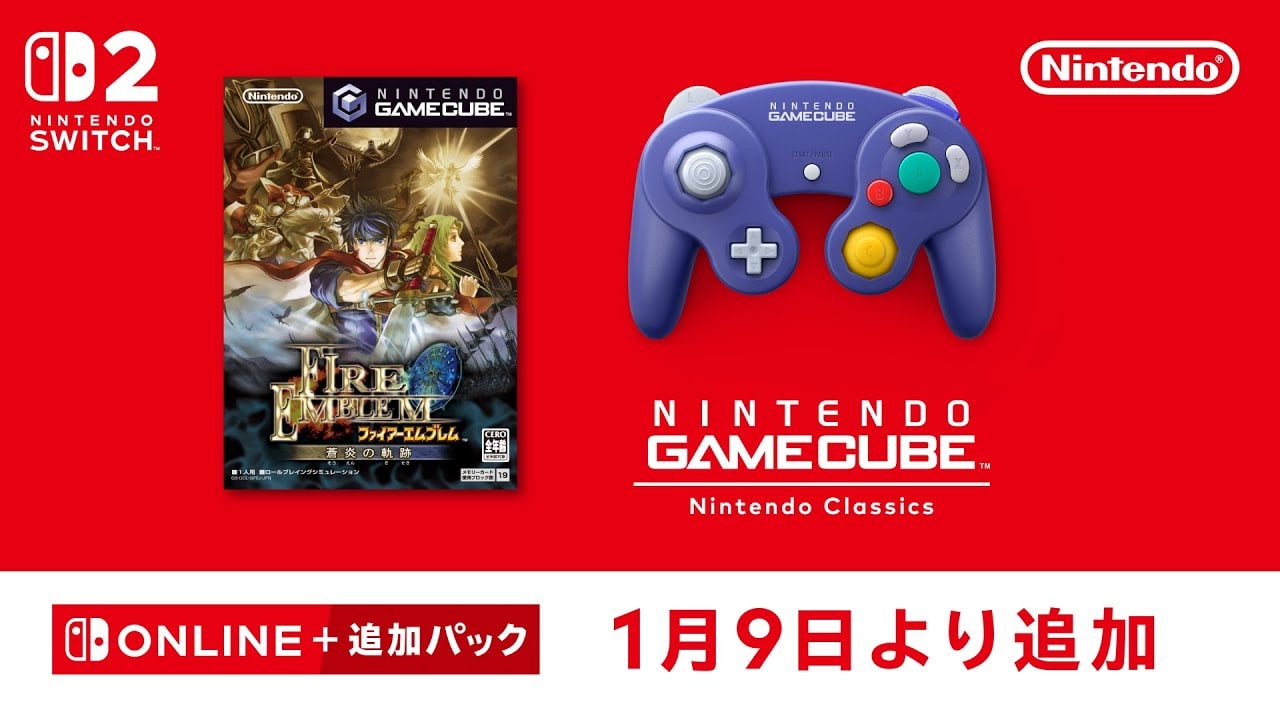
Summary:
Nintendo has added Fire Emblem: Path of Radiance to Nintendo GameCube – Nintendo Classics for Nintendo Switch Online + Expansion Pack members on Nintendo Switch 2, which means one of the most talked-about GameCube strategy RPGs is suddenly a lot easier to actually play. No hunting down a rare disc, no whispering prayers to second-hand pricing, no “maybe someday” backlog bargaining. We can just boot it up and get back to Tellius, where political tension is the weather forecast and every battle feels like it matters.
Path of Radiance stands out because it balances big, dramatic stakes with a cast that feels grounded. We follow Ike as he goes from “capable kid with a sword” to a leader who has to make hard calls, and the game never lets us forget that choices have weight. The series’ famous rule is here too: when a unit falls, they do not pop back up like nothing happened. That single idea turns each map into a little pressure cooker, the kind where you suddenly care a lot about positioning, rescue tactics, and not getting cute with risky attacks.
On Switch 2, the appeal is simple: it’s a clean way to experience the original pacing, maps, and story beats that people still reference when they talk about Fire Emblem’s best arcs. The addition also arrives with a Japanese trailer, which is a fun reminder of how Nintendo frames the game’s mood: tense, dramatic, and a bit ruthless. If you’re new, we can start smart and avoid early mistakes that snowball. If you’re returning, we can finally revisit Tellius without turning it into a museum trip. Either way, it’s a great day for tactics fans.
Fire Emblem: Path of Radiance lands in Nintendo Classics
Fire Emblem: Path of Radiance showing up in Nintendo GameCube – Nintendo Classics is the kind of news that makes strategy fans sit up a little straighter. This is a GameCube-era Fire Emblem that many people know by reputation, clips, and character cameos, but far fewer have actually played start to finish. Now we can jump in on Switch 2 through the subscription library, and that changes the vibe from “legendary and hard to find” to “okay, let’s do this tonight.” It also puts Tellius back in the spotlight, which feels right because this setting has a particular flavor: grounded conflict, uneasy alliances, and a world that does not magically fix itself after one heroic speech. If you like tactical games that reward patience and punish sloppy decisions, this one still has teeth. And yes, it’s the kind of teeth that bite back when you get overconfident.

What Switch Online + Expansion Pack members get on Switch 2
Access is tied to Nintendo Switch Online + Expansion Pack, and the key detail is that Nintendo GameCube – Nintendo Classics is positioned as a Switch 2 feature. So if you have the right membership and the right hardware, we can download the Nintendo Classics app and launch Path of Radiance from there. That structure matters because it sets expectations: we are not buying a standalone re-release, we are getting a curated library experience. In practical terms, that usually means convenience features that fit modern play habits, like jumping in for a map or two and then stepping away without losing momentum. It also means the game sits alongside other GameCube titles in the same hub, which is nice when you want to bounce between nostalgia and tactics depending on your mood. One day it’s swords and politics, the next it’s “why did we choose a harder difficulty, again?”
Where to find the GameCube library on your system
On Switch 2, we find Path of Radiance inside the Nintendo GameCube – Nintendo Classics app, which lives alongside the other Nintendo Classics apps you might already use. The smoothest approach is simple: make sure the Switch Online membership is active, head to the Nintendo Classics section, and download the GameCube app if it is not installed yet. From there, the game appears as part of the available titles list, and we can launch it like any other library entry. If you want the most authentic feel, Nintendo also sells a dedicated GameCube-style controller for Switch 2 owners, which is a fun option if you miss that old-school button layout. It is not required, but it can make the whole experience feel like pulling a favorite jacket out of the closet and realizing it still fits. The goal is getting you in-game quickly, not turning setup into a side quest.
Why this particular Fire Emblem matters
Path of Radiance matters because it hits a sweet spot Fire Emblem does really well when it is on form: sharp tactical maps, a story that builds steadily instead of sprinting, and characters who feel like they belong in the world’s mess. This is not just “win battles, save kingdom, roll credits.” Tellius is built around long-standing mistrust between groups, political pressure that keeps shifting, and villains who are not simply evil because they enjoy being booed. It is also a GameCube title with a distinct presentation style for the era, including fully voiced scenes that help key moments land. Add permadeath to that mix, and suddenly every skirmish has emotional consequences. We are not just moving pieces on a board. We are protecting people we have invested time in, and that’s where the tension comes from. If you have ever reset a map because one unit took a single unlucky crit, you already know the feeling.
The Tellius setting and why players still talk about it
Tellius sticks because it feels like a continent with history, not a theme park that exists only for the next battle. The game sets up two major groups, the human beorc and the half-human laguz, and it does not treat their relationship like a simple misunderstanding that can be fixed with one heartfelt conversation. Instead, we get a messy reality: fear, prejudice, fragile diplomacy, and people who genuinely believe they are doing the right thing even when they are making everything worse. That backdrop makes the tactical gameplay feel more grounded, because the conflicts are not random. When we fight, it usually connects to a larger pressure point in the story. The pacing also gives us time to live with consequences, so the world-building lands in a way that feels natural. If you like settings where the politics actually matter, Tellius is the kind of place you remember.
Ike, the Greil Mercenaries, and a story that earns its stakes
Ike is a great lead because he starts as someone capable but not polished, and that makes his growth feel earned rather than handed to him with a shiny “chosen one” sticker. He is tied to the Greil Mercenaries, which gives the early portion of the story a grounded lens: we are not royalty at a council table, we are working professionals dealing with danger because it is the job. Then the world widens, and Ike has to learn fast, not just in combat but in leadership, diplomacy, and the uncomfortable art of making decisions when every option has a downside. That’s where Path of Radiance shines. It lets the drama build in layers, and it gives characters room to react like people, not like quest-givers. You can feel the stakes climb, and when the game asks you to care, it has already done the work to make that care real.
Laguz and beorc tensions and how the map battles reflect it
The beorc and laguz divide is not just lore, it influences how we read the world and how we experience the fights. When a setting has real social tension, even small scenes can feel loaded, and Path of Radiance uses that weight to make its conflicts feel sharper. The tactical side benefits too, because laguz units bring their own identity and rhythm to the battlefield, which changes how we plan turns and manage threats. It is the kind of design choice that turns “another army” into something with personality and rules you have to respect. And since permadeath is always hovering like a storm cloud, we cannot afford to treat battles as disposable. We learn to read enemy ranges, protect key units, and use terrain like it actually matters, because it does. The result is a game where story tension and gameplay tension feel like they are holding hands the whole time.
What to expect when we play it today
Starting Path of Radiance today is a little like walking into a classic restaurant that still cooks the old recipes the right way. The menu is familiar if you know Fire Emblem, but the seasoning is very Tellius. We move units on grid-based maps, manage weapons, consider terrain, and try to set up clean kills without exposing someone to a counterattack that ruins our day. The hook is not speed, it is decision-making. Each turn is a small puzzle, and the game is happiest when you solve it with smart positioning rather than brute force. We also get that classic Fire Emblem tension where a single mistake can spiral, especially if you get sloppy near the end of a map. The good news is that once the systems click, it becomes satisfying in a way that feels earned. The bad news is that you might start muttering “one more turn” like it’s a life motto.
Core combat loop, permadeath pressure, and smart pacing
The combat loop is built around reading the board, planning trades, and setting up safe engagements. We check enemy attack ranges, we bait opponents into bad positions, and we use supports, healing, and rescue tools to keep the army intact. Permadeath is the big emotional lever, because it turns every decision into a small gamble. Even when you are winning, you are never fully relaxed, because a bad hit rate swing or an unexpected enemy skill can change the mood instantly. Path of Radiance also tends to reward measured play. It is not asking you to rush forward blindly. It is asking you to advance with a plan, protect your vulnerable units, and accept that sometimes the smartest move is to slow down. The pacing supports that style, giving you time to build your squad and understand who does what best. If you enjoy tactical games that respect your brain, this loop still holds up.
How we build an army without grinding our patience away
One of the nicest things about Path of Radiance is that we can shape a strong team without turning the game into an endless chore. The trick is to spread experience with intention. We want our core units to stay ahead of the curve, but we also do not want a single over-leveled hero dragging a pack of undercooked allies through late-game maps. We rotate who gets finishing blows, we use healers actively so they grow naturally, and we pay attention to who is falling behind. The game also gives us tools that help smooth progression, which is important because permadeath punishes teams that rely too heavily on one or two stars. When you build with balance in mind, you create flexibility, and flexibility is what saves you when a map throws a surprise at you. Think of it like packing for a trip: you do not bring twelve pairs of shoes, but you also do not bring only flip-flops.
Quick habits that save units and save sanity
If we want fewer heartbreak resets, a few habits go a long way. First, we treat enemy range overlays like sacred text, because they tell us where disasters are waiting. Second, we stop ending turns with squishy units in the open, even if the map looks “basically safe,” because the game loves punishing optimism. Third, we use terrain and positioning with intent – forests, chokepoints, and defensive tiles are not decoration. Fourth, we keep a mental list of who can rescue whom, because pulling an exposed unit out of danger is often better than trying to heal through the problem. Fifth, we accept that sometimes the best play is boring, like pulling back for one turn to set up a safer push. It is not cowardice, it is tactics. The goal is not to look cool on turn five. The goal is to still have an army on turn twenty.
Audio and presentation, including the new Japanese trailer
Presentation is part of why Path of Radiance still feels memorable. It sits in that GameCube style where 3D maps and voiced scenes help the drama land, without burying you in visual noise. The tone leans serious, but it does not forget to breathe, and the cast gets room to feel human rather than just functional. The Japanese trailer shared alongside the Nintendo Classics release is a nice reminder of that mood, showing off the game’s identity as a dramatic tactical RPG where growth feels rewarding and loss feels final. It is also a fun contrast if you are used to later Fire Emblem entries, because this one is not trying to be flashy for the sake of it. It is trying to feel weighty. When you boot it up on Switch 2, that weight still comes through in the way battles unfold and in how story beats are framed. If you have ever missed the vibe of older Fire Emblem storytelling, this is a good reunion.
Tips for returning players and first-timers
Whether you are brand new to Tellius or coming back after years, the early hours are where we set ourselves up for a smoother ride. Path of Radiance rewards thoughtful habits, and it is kinder when you build a foundation instead of improvising every map. For first-timers, the best mindset is to treat each battle like a puzzle, not a sprint. We do not need perfect play, but we do need consistent play. For returning players, the biggest trap is confidence. You remember the broad strokes, but the details will still surprise you, and the game will happily punish rusty positioning. The good news is that the systems are readable, and once you settle in, the flow becomes addictive in a pleasant, “why is it 2 a.m.” way. We can keep it fun by focusing on smart priorities and letting the game’s drama do what it does best.
Early-game priorities that pay off late
Early on, we want to build reliability. That means leveling a few core combat units who can handle enemy phases without exploding, keeping a healer active so support is always available, and investing in units with good long-term growth rather than chasing only immediate damage. We also want to pay attention to positioning tools like rescue and trade, because they make your turns cleaner and reduce risk. Another smart priority is learning what each unit is for. Some are built to hold a line, some are built to secure kills, and some are built to support the team in less obvious ways. If we treat everyone like they should do the same job, we end up disappointed and occasionally devastated. The goal is not to create one unstoppable superstar. The goal is to create a team where losing one person does not collapse your entire plan. Because in this game, that can happen, and it can happen fast.
How to approach supports, bonus experience, and difficulty
Supports matter in Path of Radiance because they reward steady teamwork and make units feel more connected, both mechanically and emotionally. If we want those benefits, we keep compatible units near each other consistently, not just for one dramatic moment. Bonus experience is another tool that can smooth your roster, and the best use is strategic: we can patch holes, help someone catch up, or push a key unit over an important threshold. Difficulty-wise, we should aim for a setting that keeps battles tense without turning every map into a punishment marathon. If you are new, it is fine to choose a mode that lets you learn systems without constant resets. If you are experienced, the fun often comes from managing risk and optimizing your turns, not from suffering. The best playthrough is the one you actually finish, not the one that turns your free time into a negotiation with your own sanity.
Conclusion
Fire Emblem: Path of Radiance arriving in Nintendo GameCube – Nintendo Classics on Switch 2 is a win for anyone who loves tactical RPGs with real stakes. We get a respected GameCube entry that still stands out for its pacing, its world-building, and its ability to make every battle feel personal. Tellius remains a strong setting because it treats conflict as complicated, not convenient, and Ike remains a great lead because his growth feels earned. Add in the ever-present pressure of permadeath, and we have a game that rewards careful thinking without feeling like homework. Whether you are jumping in for the first time or returning with a grin and a little fear, this release makes it easier to experience a Fire Emblem that has stayed in the conversation for a reason. Now the only real question is simple: are we ready to protect every unit like they are made of glass, or are we going to learn the hard way?
FAQs
- Do we need Nintendo Switch Online + Expansion Pack to play it on Switch 2?
- Yes. Fire Emblem: Path of Radiance is available through Nintendo GameCube – Nintendo Classics, which is tied to Nintendo Switch Online + Expansion Pack on Nintendo Switch 2.
- Where do we access the game after subscribing?
- We download and open the Nintendo GameCube – Nintendo Classics app on Switch 2, then launch Fire Emblem: Path of Radiance from the library list inside that app.
- Is permadeath part of the experience here?
- Yes. If a unit falls in battle, they do not return, which is why positioning, healing, and risk management matter so much.
- Is the Switch 2 GameCube controller required?
- No. It is optional. We can play with standard Switch 2 controls, but the GameCube-style controller is there if you want a more nostalgic feel.
- What is the smartest first-time approach to avoid constant resets?
- Play patiently, check enemy ranges every turn, spread experience across a reliable core team, and use terrain and rescue tools to reduce risk instead of forcing flashy plays.
Sources
- Fire Emblem: Path of Radiance comes to Nintendo Classics!, Nintendo Official Site, January 8, 2026
- 【1月9日追加】「ニンテンドー ゲームキューブ Nintendo Classics」に『ファイアーエムブレム 蒼炎の軌跡』を追加。, Nintendo (Japan) Topics, January 9, 2026
- Path of Radiance is now available to play on Switch 2, The Verge, January 9, 2026
- Nintendo GameCube – Nintendo Classics adds Fire Emblem: Path of Radiance, Gematsu, January 8, 2026
- Nintendo Expands Switch 2’s GameCube Library With Another Game, Nintendo Life, January 9, 2026