














Summary:
Fortnite Chapter Seven Pacific Break drags the fight away from the familiar Battle Bus and throws everyone into a glitter soaked version of the US west coast. Instead of hopping out of a flying bus, you Storm Surf onto the new Golden Coast island, riding a massive wave toward neon covered streets, beachfront strips and studio backlots that look like they fell straight out of Los Angeles. That one change already shakes habits, but Pacific Break goes much further. The update adds a self revive device, lets players roll around while downed, and even allows drivable reboot vans so clutch rescues suddenly feel like Hollywood chase scenes rather than quiet menu moments. At the same time, OG, Reload and Blitz are briefly off stage, Battle Pass collaborations with Kill Bill and Back to the Future headline the season, and new weapons plus wingsuits reshape how fights and rotations play out. Put together, Pacific Break feels like a soft reset for Fortnite, where veteran players need to rethink their instincts and newcomers get a flashy, story driven place to jump in without feeling lost.
Welcome to Fortnite Chapter Seven Pacific Break
Chapter Seven Pacific Break feels like Epic decided to turn Fortnite into a summer blockbuster and then leave the cameras rolling all season. The island is now the Golden Coast, a sun blasted sprawl that mixes palm trees, coastal highways and studio backlots with the usual Fortnite weirdness. Matches open with players surfing in on a roaring storm wave rather than dropping from the Battle Bus, so even the first seconds of a round have a different rhythm. You see the coastline racing past under your board, spot clusters of other players carving toward the same stretch of sand, and suddenly that first landing choice feels more like picking a surf break than pinging a square on the map. For long time players it is a jolt that snaps everyone out of old patterns, while newcomers get to learn a fresh flow at the same time as everyone else.

Golden Coast island and the new Storm Surf drop
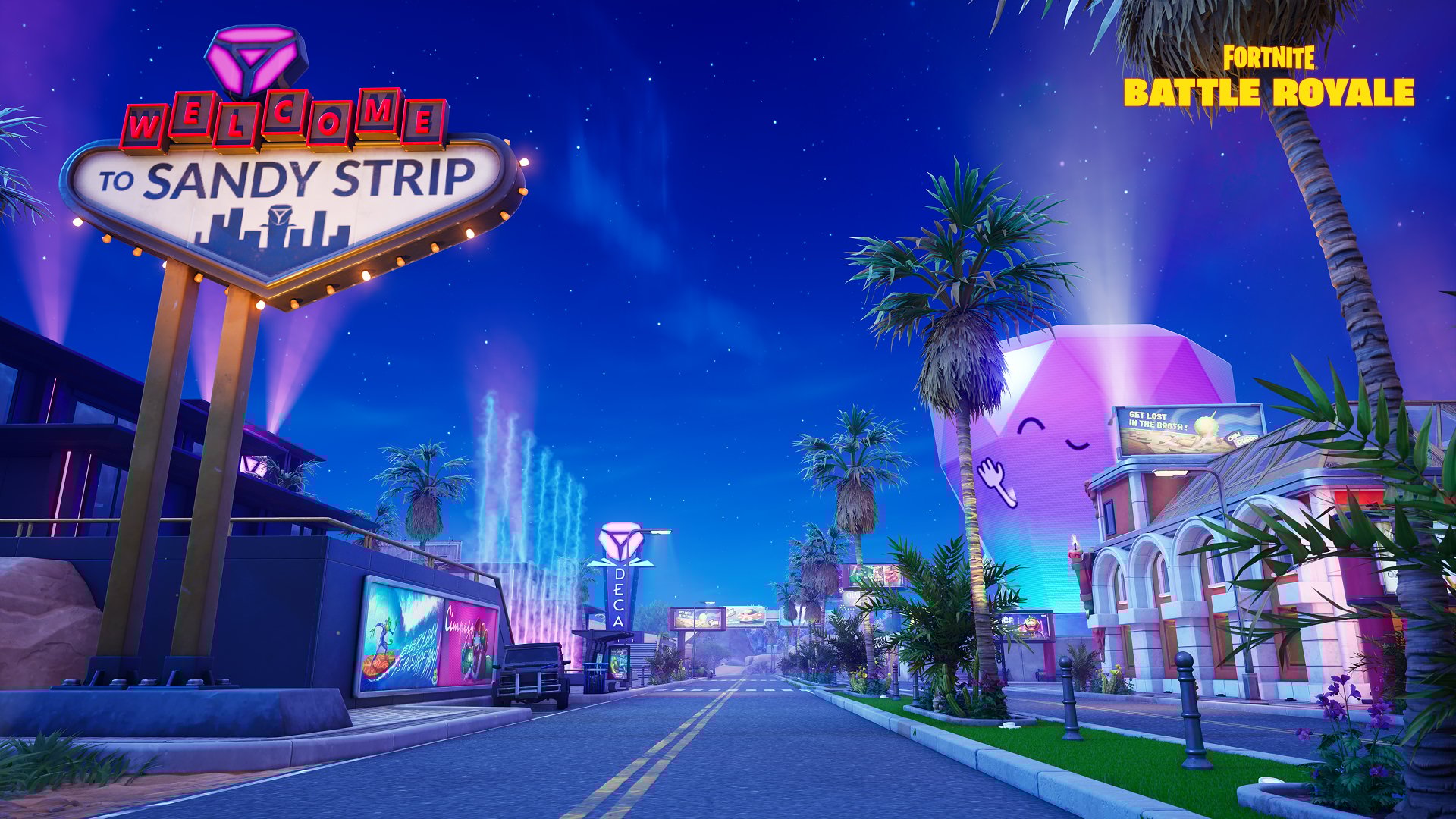
The Golden Coast map leans hard into its Hollywood inspiration, which shows up not just in the skyline but in how matches naturally unfold. Storm Surf drops limit early landing spots because you are riding along a moving wave instead of flying high above the full island, so the first circles feel more concentrated and scrappy. You might all carve toward Battlewood Boulevard with its giant sign on the hill, or dive for Sandy Strip where neon motel signs glow over the beachfront road. Other matches pull you toward amusement park chaos in Wonkeeland, quiet suburbs in Humble Hills or industrial corners like Classified Canyon and Sus Studios. Because Storm Surf lines change, you cannot rely on a single safe route either, which makes every first minute a quick scan for open rooftops, unlooted chests and the nearest vehicle or wingsuit pickup that can yank you out of trouble.
How matches feel different without the Battle Bus
Pulling the Battle Bus out of rotation does more than change the opening animation. It breaks muscle memory that players have built up over years of marking the bus route, aiming for far off corners and gliding in at the last second. Storm Surf pushes everyone closer to the coast and lowers the ceiling on how long you can delay your landing, so hot drops are more common and contested zones heat up faster. Without the traditional bus path to plan around, rotations start earlier, especially once players realize how quickly third parties can ride in along roads or glide in from nearby balloon lifts. That shift also makes sound awareness more important, because you will hear vehicles, DBNO rolling and boss fights sooner than before. It all adds up to a faster, more chaotic early game that rewards decisive landing calls and quick looting over slow, low risk glides.
Pacific Break map points of interest and LA style hotspots
Golden Coast is packed with new named locations that lean into specific movie flavored fantasies. Battlewood Boulevard riffs on the idea of a hillside sign and studio backlot, with billboards, set pieces and winding streets that are perfect for medium range fights. Sandy Strip gives classic beach town energy, where low rooftops and parked cars create messy close quarters skirmishes around convenience stores and diners. Wonkeeland reads like a mashup of theme parks, fairground rides and candy colored clutter that turns every fight into a game of line of sight peekaboo. Further inland you find Humble Hills and Fore Fields, which give more breathing space for snipers and anyone who enjoys rotating along tree lines. Because each area has different verticality, cover and loot density, you quickly start to treat them like roles in a movie: party zones for frantic pushes, quieter districts for setting up ambushes, and studio corners for boss hunting or challenge grinding.
Self revive device and DBNO movement upgrades
One of the biggest mechanical changes in Pacific Break sits in how Down But Not Out works. The new self revive device turns every knock into a question for both sides of a fight. If you are holding one, you can choose to burn it and crawl behind cover, getting yourself back on your feet without waiting for a teammate. That is powerful, but the season also gives downed players a whole set of movement tricks. You can roll and tumble down slopes to slide away from danger, sprint while DBNO at the cost of energy, and even hop onto ziplines, ascenders or into the passenger seat of a car. Suddenly, a knocked opponent is not just a stationary target. They can throw themselves into a reboot van, tumble off a hill or ride a line into a different lane of fire, which creates more decisions about whether to chase, thirst or hold your angle and risk them slipping away.
Drivable reboot vans and new team rescue plays
Drivable reboot vans might be the most cinematic addition in Pacific Break, because they take a mechanic that usually happened quietly at the edge of a fight and turn it into moving objectives. Instead of defending a fixed van, squads can hijack one, load a teammate into the back and drive toward safer ground while the reboot countdown ticks. That opens up plays where one player peels off with the van while the rest hold a ridge, or where you slam the van down a main street as a distraction while friends rotate on foot. Enemies have to decide whether to blow the van, chase it with vehicles of their own, or ignore it in favor of holding high ground. Combined with the updated DBNO movement, clutch reboots feel more like chase scenes from an action film than quiet, static revives behind a rock.
Pacific Break loot pool, new weapons and returning classics
Epic has refreshed the loot pool to match the stunt heavy vibe of Pacific Break. New firearms like the Iron Pump Shotgun, Twin Hammer Shotguns, Deadeye Assault Rifle and Holo Rush SMG all try to reward crisp aim without feeling clunky. The Iron Pump hits like a truck up close, while Twin Hammers let you barrel through tight hallways with back to back blasts. Deadeye fills the role of a disciplined mid to long range rifle, and Holo Rush becomes the go to choice for shredding builds and armor in cramped rooms. On top of that, the Arc Lightning Gun and Forsaken Vow Blade pull in more playful tools that zap vehicles, zip between enemies or slice through cover. Classics like the All Terrain Kart, Enforcer AR and Dual Micro SMGs return alongside Chug Jugs, Shield Kegs and Shockwave Grenades, so every match feels like a mix of fresh toys and old comfort picks.
Battle Pass skins from Kill Bill, Back to the Future and more
The Battle Pass doubles down on the Hollywood framing by putting crossovers front and center. The Bride from Kill Bill arrives as a headline outfit, complete with the kind of vengeful energy that fits a player dropping into three man third parties. Marty McFly represents Back to the Future, giving you a way to literally rep time travel swagger while sprinting across Golden Coast rooftops. Alongside those collabs, original characters like Miles Cross, Cat Holloway, Carter Wu and a new Dark Voyager variant fill out the cast with looks that range from glamorous movie star to stunt performer. The pass itself shifts toward a more flexible page structure, where you pick which character set to progress instead of grinding through a fixed order. That means you can chase your favorite outfit first rather than slogging through cosmetics that do not fit your vibe.
Where OG, Reload and Blitz fit into Chapter Seven
When Pacific Break first lands, OG, Reload and Blitz are temporarily vaulted, which gives the main Battle Royale playlist room to breathe. In the story, the Dark Voyager destroys the Battle Bus, so those modes step away while the island deals with the fallout. On the schedule side, they are due to return shortly after launch with new maps like Surf City for Reload and Starfall Island for Blitz, plus a fresh Ranked rollout. For players this pause does two things. It nudges everyone toward Golden Coast to experience the new systems, and it keeps the season from splitting the population too hard across too many queues. Once the modes return, they will likely feel fresher because people have had time to learn wingsuits, DBNO movement and the new loot pool in standard matches first.
Simple Build, wingsuits and other quality of life tweaks
Hidden underneath the flashy collabs and map changes are a bunch of smaller tweaks that quietly improve how matches feel. Wingsuits are the big headline, acting as reusable mobility tools that let you launch upward from certain spots and glide across half the island in a single swoop. They feel like a middle ground between redeploy gliders and rift items, and they make repositioning after third partying much smoother. Simple Build joins Simple Edit in the settings as a training wheel option for newer players, letting you face a direction and drop basic structures without juggling full keybinds. Quality of life improvements like clearer hit markers, ammo indicators in the inventory and a more flexible emote wheel round things out. None of these changes grab attention on their own, but together they strip out small frustrations that used to stack up across long play sessions.
Practical tips to win more often in Pacific Break
Winning on Golden Coast comes down to embracing the new rhythm rather than trying to force old habits to fit. Land early along the Storm Surf path at a named location with quick access to vehicles or wingsuits, which gives you a clean route out if third parties crash your first fight. Prioritize a mix of one hard hitting close range weapon, a flexible mid range rifle and at least one mobility tool so you can chase knocks or bail from losing trades. If you find a self revive device, treat it as insurance and do not be shy about using it when a fight goes sideways, especially in trios or quads where staying alive for a few more seconds can flip a skirmish. Drivable reboot vans reward squads that communicate, so set up roles where one player focuses on van driving while others clear flanks. Finally, keep an eye on Rift anomalies and boss spawns, because grabbing a boss kit or storm wide buff at the right moment can turn a scrappy endgame into a highlight reel finish.
Conclusion
Pacific Break takes Fortnite out of its comfort zone in all the right ways. Golden Coast pushes everyone into a flashy version of Los Angeles where every match feels like a small action film, from the moment you Storm Surf onto the beach to the last circles swirling around neon signs and studio lots. Self revive devices, drivable reboot vans and agile DBNO movement give squads more second chances and more ways to create dramatic reversals, while wingsuits, new weapons and returning vehicles keep rotations unpredictable. Collaborations with Kill Bill and Back to the Future fit naturally into that movie themed backdrop instead of feeling bolted on. At the same time, the temporary break for OG, Reload and Blitz focuses attention on the main Battle Royale experience so people can actually feel the difference this chapter brings. If you are returning after a break or dropping in for the first time, Pacific Break offers a loud, stylish entry point where everyone is still figuring out the best routes, loadouts and plays, which is often when Fortnite is at its most fun.
FAQs
- What is the biggest gameplay change in Fortnite Chapter Seven Pacific Break?
- The standout change is the move from Battle Bus drops to Storm Surf entries on the new Golden Coast island. You now ride a massive wave toward the map, which compresses early landing options and speeds up first fights. That shift combines with self revive devices, updated DBNO movement and drivable reboot vans to make every knock and rotation feel more dynamic compared to earlier chapters.
- How does the self revive device work in Pacific Break matches?
- If you have a self revive device in your inventory when you go Down But Not Out, you can trigger it to bring yourself back without needing a teammate to hold your hand. You still need a bit of time and some cover, so it is not a magic button, but it gives solo players and separated teammates a real safety net. Rivals have to decide whether to push hard to finish you or peel off before you pop back up with a chance to trade.
- What makes the Golden Coast map different from previous Fortnite islands?
- Golden Coast leans into a west coast and Hollywood theme, with POIs like Battlewood Boulevard, Sandy Strip, Wonkeeland and Sus Studios mixing studio sets, beaches and neon strips. Sightlines tend to be tighter near the shore and more open inland, so fights range from rooftop brawls to long range duels along highways and fields. The layout also features more vehicles, balloons and wingsuit launch points that tie locations together in a way that encourages fast third partying.
- Are OG, Reload and Blitz gone for good in Chapter Seven?
- No, those modes are only temporarily vaulted at the start of Pacific Break. In the story, the destruction of the Battle Bus takes them offline, but they are scheduled to return with new maps and Ranked support after the initial launch window. The temporary break nudges players toward Golden Coast so everyone can get used to Storm Surfing, wingsuits and the new loot pool before those playlists come back into rotation.
- Which Battle Pass skins should players aim for first in Pacific Break?
- That depends on your taste, but many players will likely chase The Bride from Kill Bill or Marty McFly from Back to the Future early on, since they are the loudest crossovers. Others may prefer original outfits like Cat Holloway, Miles Cross or Carter Wu, especially with their extra styles unlocked through quests in Blitz Royale, Reload and Battle Royale. Because the pass lets you focus progression on specific character sets, you can immediately grind toward the look that best fits your playstyle or favorite drop spot.
Sources
- Fortnite Battle Royale Chapter Seven Pacific Break – v39.00 Update Notes, Fortnite.com, November 29, 2025
- Fortnite Chapter Seven Pacific Break Brings the Game to the Golden Coast, Adds Self-Revive and New DBNO Options, Wccftech, November 30, 2025
- Fortnite Chapter 7 Season 1 Patch Notes Pacific Break, Battle Pass, and More, Beebom, November 30, 2025
- Chapter 7 Season 1, Fortnite Wiki, November 30, 2025
- Everything New in Fortnite Chapter 7 Season 1, Times of India, November 30, 2025
- Fortnite Seasonal Events, Wikipedia, November 30, 2025