














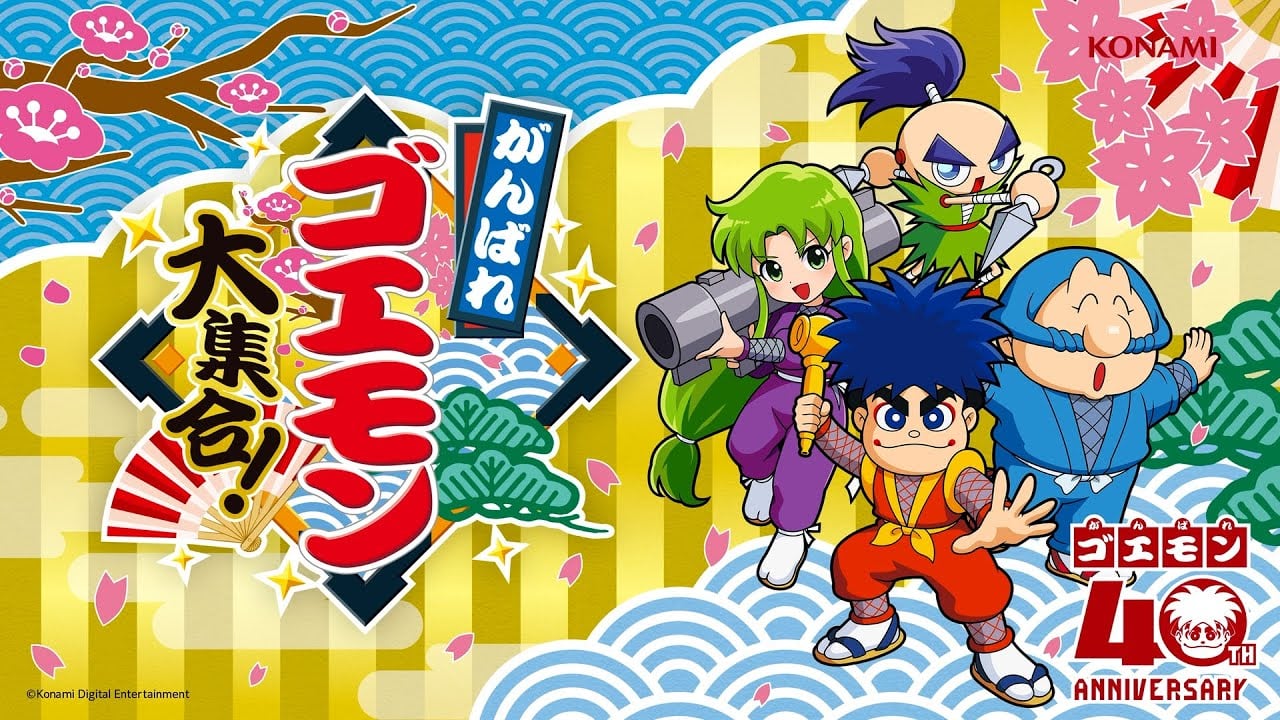
Summary:
Ganbare Goemon Daishuugo! is Konami and M2 pressing the big, shiny “remember this?” button, but doing it with real intent. Instead of tossing out one nostalgic rerelease and calling it a day, we’re getting a full spread of 13 classic Ganbare Goemon games, covering action, action-adventure, side-scrolling oddities, puzzle surprises, and a couple of RPG turns that remind you the series has always been allergic to staying in one lane. It was revealed during Japan’s Partner Showcase, and it lands in Japan on July 2, 2026 for Nintendo Switch and PlayStation 5, with a broader digital footprint that also includes PC via Steam. That date matters because it’s close enough to feel real, but far enough away to build hype without turning anticipation into torture.
What makes this collection worth talking about is the shape of it. We’re not just cherry-picking the “most famous” moments. We’re getting a timeline that starts back in 1986 and stretches to 2000, letting you watch the series evolve from scrappy action roots into weirder, louder, more experimental territory. If you grew up with the Mystical Ninja name in the West, this is a chance to meet a bunch of relatives you’ve only heard whispered about. If you’ve never touched Goemon at all, this is basically a buffet where you can sample a little of everything until you find your favorite flavor. Either way, it’s a reminder that retro isn’t only about pixels and nostalgia. It’s about personality, and Goemon has always had enough personality to fill a parade.
Ganbare Goemon Daishuugo arrives as a long-awaited series celebration
Some series get remembered with a polite nod and a dusty museum label. Goemon does not do polite, and this release doesn’t either. Ganbare Goemon Daishuugo! shows up like a festival float turning the corner, blasting music, tossing confetti, and daring you not to smile. Konami is framing this as a special collection tied to the series hitting its 40th anniversary, and that context fits perfectly because Goemon has always felt like a celebration of Japanese folklore filtered through slapstick comedy and arcade energy. If you’ve ever wanted a single place to understand why people still talk about Goemon with that warm, slightly chaotic affection, this is it. The point isn’t to prove these games are flawless. The point is that they’re lively, specific, and unapologetically themselves. That’s rare in any era, and it’s even rarer in retro collections that sometimes feel like they were assembled by spreadsheet instead of by fans.

What Konami and M2 are actually bringing to Switch and PS5
This isn’t just “Konami dumps ROMs into a folder.” M2’s involvement changes the expectation right away, because M2 has built a reputation for treating older games like living artifacts instead of old furniture. That matters when you’re talking about a long-running series that bounced between genres and hardware generations. We’re getting 13 titles, and the lineup is built to show range rather than only highlight the obvious crowd-pleasers. Think of it like a greatest-hits album that also sneaks in the weird B-sides, because the band knows those are the songs the real fans scream for. On Switch and PS5, the appeal is also practical. These platforms are where a lot of people keep their daily play habits now, so the collection isn’t asking you to rearrange your life to visit the past. It’s bringing the past onto the same shelf as your modern backlog, right next to the games that are currently stealing your free time.
Release details that matter: date, platforms, and what “Japan first” means
Ganbare Goemon Daishuugo! launches in Japan on July 2, 2026, and the announced platforms include Nintendo Switch and PlayStation 5, with PC via Steam also listed for the download version. Physical editions are positioned for Switch and PS5 in Japan, which is a big deal for collectors who still like that satisfying snap of a case closing on a shelf. The tricky part is the regional reality. Goemon has a history of being difficult outside Japan, with only parts of the series officially reaching Western audiences under different names. So “Japan first” can feel like a polite way of saying “Japan only,” at least for now. Still, this kind of release tends to create pressure in a good way. When a collection exists, is packaged cleanly, and has modern storefront infrastructure behind it, the path to wider availability becomes more realistic than when everything is scattered across decades and hardware barriers. If you’re outside Japan and hoping, the smartest move is to watch how Konami talks about demand and how the storefront listings evolve closer to launch.
The 13-game lineup, explained in plain language
The lineup is the heart of the whole thing, and it’s also where the personality of the collection shines. These are not all the same type of game wearing different hats. Some are straight action, some lean into action-adventure, a couple swing into RPG territory, and one takes a puzzle-shaped detour that feels like the developers dared themselves to get weird. The years covered stretch from 1986 to 2000, which means you’re watching design trends shift in real time. Early entries can feel sharp and direct, like an arcade cabinet that wants your attention right now. Later games tend to experiment more with structure, presentation, and pacing, like a comedian who’s gotten comfortable enough to stretch a bit. Here’s the full set included in Ganbare Goemon Daishuugo!, as announced: Ganbare Goemon! Karakuri Douchuu (1986), Ganbare Goemon 2 (1989), Ganbare Goemon Gaiden: Kieta Oogon Kiseru (1990), Ganbare Goemon: Yukihime Kyuushutsu Emaki (1991), Ganbare Goemon: Sarawareta Ebisumaru! (1991), Ganbare Goemon Gaiden 2: Tenka no Zaihou (1992), Ganbare Goemon 2: Kiteretsu Shougun McGuiness (1993), Ganbare Goemon 3: Shishi Juurokube no Karakuri Manjigatame (1994), Ganbare Goemon Kirakira Douchuu: Boku ga Dancer ni Natta Wake (1995), Soreyuke Ebisumaru! Karakuri Meiro – Kieta Goemon no Nazo!! (1996), Ganbare Goemon: Kurofune Tou no Nazo (1997), Ganbare Goemon: Tengu-tou no Gyakushuu! (1999), and Ganbare Goemon: Seikuushi Dynamites Arawaru!! (2000). If you’re scanning that list and thinking “that’s a lot,” you’re right, and that’s the fun. It’s a sampler platter big enough to turn curiosity into a full-on craving.
Ganbare Goemon! Karakuri Douchuu (1986) and why beginnings matter
The first entry is where the series plants its flag, and it’s worth starting here even if you plan to bounce around later. Older action games can feel like they’re speaking a stricter language, with fewer tutorials and more “figure it out” energy, but that’s part of the charm if you approach it with the right mindset. Think of it like trying a classic street food recipe: simple ingredients, bold flavor, and no patience for distractions. Karakuri Douchuu establishes the tone that Goemon keeps remixing for years: historical vibes, comic exaggeration, and a rhythm that pushes you forward. When you jump from this to later titles, you’ll notice how the series keeps its identity while changing its shape. That contrast is one of the best reasons to play the lineup in a loose chronological order, at least at first.
Ganbare Goemon 2 (1989) and the early action formula getting sharper
Sequels in this era often feel like developers responding directly to what players did in the first game. More of this, less of that, and a few new tricks thrown in like a magician adding flashier hand movements. Ganbare Goemon 2 sits in that zone where the foundation is familiar, but the edges are cleaner. It’s still action-forward, still built around that classic cadence of challenge and progression, but it tends to feel more confident about what it wants to be. If the first game is a rough sketch with bold ink, the second is the same drawing with better lines and stronger contrast. It’s also a good reminder that “retro difficulty” isn’t always unfair difficulty. Sometimes it’s just a different kind of expectation: pay attention, learn patterns, and celebrate small victories like they’re fireworks.
Action-heavy roots: why the early entries still hit
Goemon’s action games have a particular kind of bounce to them. Even when the mechanics are simple, the worlds tend to feel playful rather than sterile. The series loves to mix the familiar with the unexpected, like tossing a modern joke into a period drama and somehow making it work. That energy helps the older titles age better than you might expect, because the appeal isn’t only technical. It’s emotional and tonal. If you’ve ever played an old game and felt like it had a personality, like it was winking at you through the screen, that’s the Goemon vibe. These games also work well as short sessions. You can pick one up, make progress, laugh at something ridiculous, and put it down without needing a three-hour commitment. In 2026, that kind of “snackable” play is honestly a superpower.
The RPG side of Goemon: the Gaiden games and what makes them different
Not everyone expects Goemon to show up in RPG form, which is exactly why the Gaiden entries are such an interesting inclusion. RPGs give the series room to breathe. Instead of everything being about reflexes and immediate action, the pace can lean into story beats, party structure, and progression systems that reward time and curiosity. Ganbare Goemon Gaiden: Kieta Oogon Kiseru (1990) and Ganbare Goemon Gaiden 2: Tenka no Zaihou (1992) represent that alternate lane, and they help explain why Goemon fans can be so passionate. The series isn’t a one-trick pony. It’s more like a performer who can juggle, sing, and tell jokes, sometimes all in the same routine. If you love RPG structure, these entries can become your anchor points in the collection. If you don’t usually play RPGs, they can still work as a palate cleanser between action-heavy stretches, giving your thumbs a break without killing the momentum.
How to approach the Gaiden entries if you’re mostly here for action
If you’re an action-first player, the easiest way to enjoy the Gaiden games is to treat them like a change of scenery rather than homework. Don’t go in demanding the same tempo as the action titles. Go in expecting character, humor, and that Goemon weirdness delivered through different tools. The best moments in RPGs often come from accumulation, like a joke getting funnier the third time because you understand the setup now. Give yourself permission to play in shorter bursts, especially early on, and focus on learning what the game thinks is rewarding. Once that clicks, the pacing stops feeling slow and starts feeling like a steady rhythm. It’s the difference between sprinting and hiking. Both can be fun, but you don’t pack the same snacks for each.
The Super Famicom era vibe: bigger worlds, stranger comedy, sharper pacing
The Super Famicom years are where Goemon starts to feel like it’s stretching its arms and taking up more space in the room. Titles like Ganbare Goemon: Yukihime Kyuushutsu Emaki (1991) and Ganbare Goemon 2: Kiteretsu Shougun McGuiness (1993) are often the ones people point to when they talk about the series with that starry-eyed enthusiasm. There’s a sense of scale and creativity that fits the hardware leap, and the humor lands with more confidence. The games also tend to feel more varied moment to moment, which is great if you like surprises. One minute you’re in a straightforward action flow, the next the game throws a quirky twist at you that makes you laugh, groan, and keep playing anyway. It’s like riding a rollercoaster designed by someone who also writes comedy sketches. You may not always predict the next turn, but you’ll remember how it felt.
Ganbare Goemon 3 (1994) and the action-adventure glow-up
Ganbare Goemon 3: Shishi Juurokube no Karakuri Manjigatame (1994) sits in that sweet spot where action and adventure start blending more naturally. Instead of feeling like a set of separate stages, the experience leans toward a broader journey, with systems and ideas that make you feel like you’re traveling through a world rather than simply clearing obstacles. The appeal here is also tonal. Goemon’s comedy and style thrive when there’s room for them to breathe, and action-adventure structure provides that space. If you want a single entry in the collection that hints at why the series became such a lasting cult favorite, this is a strong candidate. It’s the kind of game that makes you think, “Oh, this is why people won’t shut up about Goemon,” and honestly, that’s a compliment.
Ebisumaru’s spotlight and the oddball puzzle detour
Ebisumaru has always been a chaos engine in the best way, and the collection doesn’t shy away from that. Ganbare Goemon: Sarawareta Ebisumaru! (1991) and Soreyuke Ebisumaru! Karakuri Meiro – Kieta Goemon no Nazo!! (1996) show how the series can pivot tone while staying true to itself. The puzzle entry, especially, is the kind of inclusion that tells you the curators wanted variety, not just safe picks. Puzzle games in a franchise collection can feel like the weird cousin at the family gathering, but sometimes the weird cousin is the most fun person there. The key is to approach it with curiosity. If you hit a wall, laugh, step away, and come back later. That playful approach fits Goemon’s spirit anyway. This series has never been about being perfectly serious, so you don’t need to treat every challenge like an exam.
Why the “odd” entries are often the most memorable
In a big collection, it’s easy to gravitate toward what looks familiar. Action game, action game, another action game, done. But the strange entries are often what sticks in your brain afterward, because they surprise you. They also help you understand the series’ creative confidence. When a franchise is willing to try a puzzle format or shift the spotlight to a side character, it usually means the creators feel secure in the world they’ve built. That security is part of Goemon’s charm. It’s not afraid to be silly, and it’s not afraid to experiment. Those traits age well, because originality doesn’t expire the way technical specs do.
Quality-of-life features we should care about in retro collections
When people get excited about retro collections, they usually talk about the game list first, but the features around the games can make or break the experience. The best modern collections respect your time. They give you ways to enjoy older design without forcing you to relive every frustration from decades ago. With M2 involved, expectations naturally rise for thoughtful touches that improve accessibility and usability without turning the games into something they’re not. Even small things can matter a lot, like how quickly you can jump between titles, whether menus are smooth, and whether the presentation feels curated rather than slapped together. If you’re planning to play a bunch of these games, the collection’s structure becomes part of the fun. It should feel like walking through a well-organized arcade, not digging through a messy drawer of cartridges hoping the next one works.
Who this collection is for, and how to approach it if you’re new
This collection has two obvious audiences, and it does a nice job of serving both. For longtime fans, it’s a reunion. It’s seeing familiar faces again, plus meeting some entries you may have only heard about through screenshots and late-night forum threads. For newcomers, it’s a low-pressure entry point. You don’t have to commit to one massive game and hope you like it. You can try a title from 1986, then jump to something from the mid-90s, then test an RPG, then pivot into a puzzle game if your brain wants a different workout. If you’re new, the best approach is to follow your curiosity. Pick the game that matches your mood that day, and don’t worry about “doing it right.” Goemon is a buffet, not a single fixed meal. The only wrong move is forcing yourself to keep eating something you don’t like when there are twelve other plates right there.
The bigger picture: what this could mean for Goemon’s future
A collection like this is more than nostalgia. It’s also a signal. Konami choosing to spotlight Goemon with a 13-game release suggests the company sees value in the series’ identity and history, especially when retro collections are one of the clearest ways to measure modern interest in older IP. If this collection sells well, it creates a practical argument for more Goemon in the future, whether that’s additional releases, broader regional availability, or even new projects. It doesn’t guarantee anything, but it shifts the conversation from “remember when” to “people are paying attention now.” And that’s powerful. Goemon has a distinct vibe that stands out even today, because it isn’t trying to be cool in the modern, glossy sense. It’s cool in the way a street festival is cool: loud, colorful, imperfect, and impossible to ignore once you’re there. If you’ve been waiting for Konami to treat Goemon like it matters again, this is a real moment.
Conclusion
Ganbare Goemon Daishuugo! feels like a celebration with substance. It’s not only a nostalgic nod, it’s a clear, packed collection that shows the series’ range across 13 games, from early action roots to RPG detours and offbeat experiments. With a Japan release date of July 2, 2026 on Nintendo Switch and PlayStation 5, it’s close enough to plan for and exciting enough to talk about now without feeling like a distant rumor. If you’re a longtime fan, it’s a chance to revisit a whole era in one place. If you’re new, it’s a perfect excuse to meet Goemon without pressure, one game at a time, following whatever looks fun. Either way, this collection reminds us why Goemon still has that spark: it’s playful, bold, and weird in a way that makes gaming feel like a party.
FAQs
- When does Ganbare Goemon Daishuugo! release in Japan?
- It releases in Japan on July 2, 2026 for Nintendo Switch and PlayStation 5, with a download version also listed for Steam on PC.
- How many games are included in the collection?
- The collection includes 13 classic Ganbare Goemon titles spanning releases from 1986 through 2000.
- Is there a physical edition?
- Yes. Physical editions have been announced for Nintendo Switch and PlayStation 5 in Japan.
- Does it include RPG entries, or is it all action?
- It includes both. Alongside multiple action-focused games, it also contains RPG entries such as the Gaiden titles and later RPG releases.
- Is an overseas release confirmed?
- No overseas release has been confirmed. The announcement and release details currently focus on Japan.
Sources
- 『がんばれゴエモン大集合!』7月2日(木)発売!, KONAMI, February 6, 2026
- Ganbare Goemon Daishuugo! collection announced for PS5, Switch, and PC, Gematsu, February 5, 2026
- がんばれゴエモン大集合! | KONAMI(コナミ), KONAMI, February 6, 2026
- がんばれゴエモン大集合!発売告知トレーラー 2026年7月2日発売! | KONAMI (コナミ), YouTube, February 6, 2026
- Konami And M2 Announce New Goemon Switch Collection, Here Are The 13 Retro Titles Included, Nintendo Life, February 6, 2026